

Choosing metal detectors for beachcombing requires more attention to ground conditions than ordinary park or field detecting. Beaches combine dry sand, wet conductive salt, black sand, shallow surf, modern aluminum trash, bottle caps, small jewelry, and changing tide conditions. A detector that works well on dry inland soil may become noisy or unstable when moved onto wet salt sand.
Goldot-Tec’s waterproof-detector category specifically identifies saltwater conductivity as one of the main challenges of beach detecting. The site highlights simultaneous multi-frequency and pulse-induction systems as two important approaches for wet sand, saltwater, and underwater use.
The best metal detectors for beachcombing therefore need more than a waterproof search coil. Saltwater stability, suitable search modes, target separation, manageable weight, full waterproofing where required, and a coil suited to the beach environment all affect how productive a search can be.
Why Beachcombing Needs a Different Detector Setup
A beach is not one detecting environment.
It normally includes several zones:
- Dry upper sand
- Damp transition sand
- Wet salt sand
- Tidal cuts
- Shallow water
- Surf zone
- Black-sand concentrations
- Areas containing heavy modern trash
The detector may behave differently in each.
Dry sand can often be searched with settings similar to ordinary inland ground. Wet salt sand is more difficult because saltwater is conductive and can create responses that resemble metal to less suitable detectors.
Goldot notes that specialized waterproof detectors use multi-frequency or pulse-induction technology to reduce the effects of conductive salt and mineralized beach conditions.
For that reason, buyers researching metal detectors for beachcombing should prioritize saltwater behavior before maximum advertised depth.
Wet Salt Sand vs Dry Sand Performance
Dry sand is generally the easier part of the beach.
A conventional detector may perform normally there because the sand contains less conductive saltwater.
The situation changes as you move closer to the water.
Wet salt can cause:
- False signals
- Unstable Target ID
- Excessive ground response
- Reduced useful sensitivity
- Difficulty recognizing weak targets
A detector with a dedicated Beach Mode or simultaneous multi-frequency operation can be easier to stabilize.
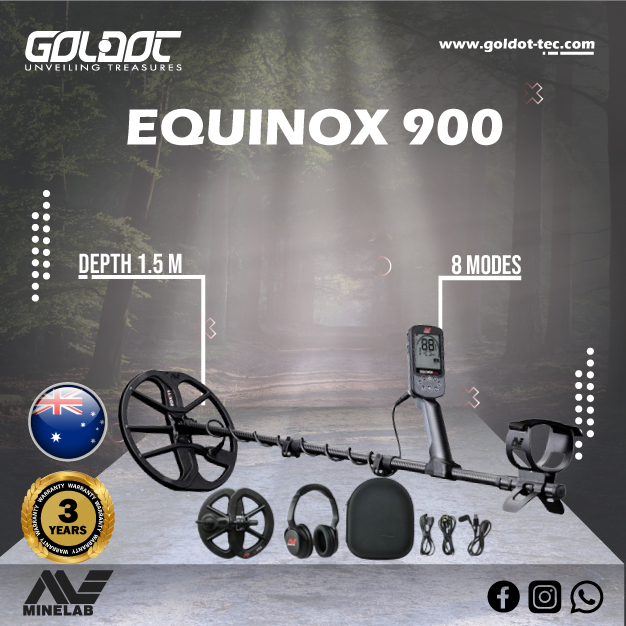
The Minelab EQUINOX 900, for example, uses Multi-IQ simultaneous multi-frequency technology and includes dedicated Beach search settings. Goldot also documents automatic, manual, and tracking ground balance together with high-resolution Target ID.
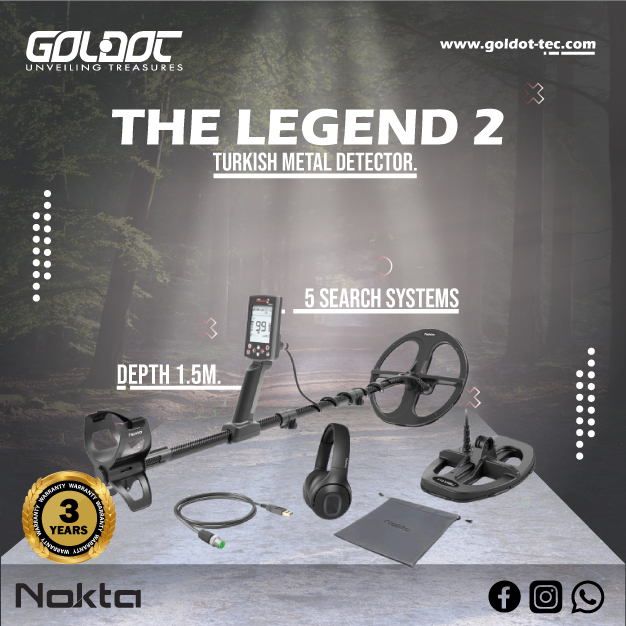
Nokta The Legend 2 uses simultaneous multi-frequency technology and includes Beach Mode alongside Park, Field, Relic, and Gold programs.
These features make both relevant when comparing metal detectors for beachcombing across dry and wet zones.
Three Strong Beach Detector Profiles
A practical comparison should focus on how the detector fits the beach rather than assigning unsupported universal depth rankings.
| Detector | Technology | Beach Strength | Waterproofing |
|---|---|---|---|
| Minelab EQUINOX 900 | Multi-IQ simultaneous multi-frequency | Strong all-round wet/dry beach platform | IP68 to 5 m |
| Nokta Legend 2 | Simultaneous Multi-Frequency | Beach Mode, target separation, lighter construction | IP68 to 5 m |
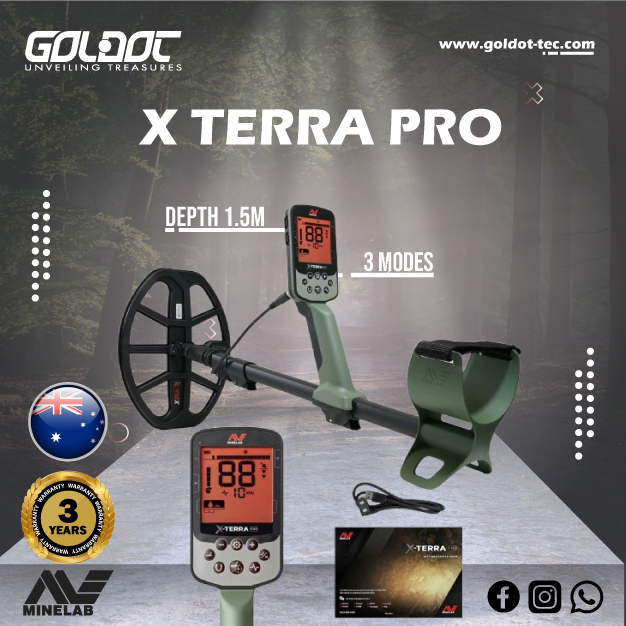
| Minelab X-TERRA PRO | Selectable frequency | Simpler Beach Mode and accessible controls | IP68 to 5 m |
These are different approaches rather than a strict best-to-worst ranking.
EQUINOX 900 for Mixed Beach Hunting
The EQUINOX 900 is one of the more versatile metal detectors for beachcombing because it combines wet-sand capability with detailed Target ID and multiple coil options.
Goldot documents:
- Multi-IQ technology
- Park, Field, Beach, and Gold environments
- 119 Target ID segments
- Auto, manual, and tracking ground balance
- Adjustable recovery controls
- Fully waterproof construction to 5 meters
- 11-inch and 6-inch coils in the documented package
- Carbon-fiber collapsible shaft
For beach use, the larger coil can help cover open sand efficiently, while the smaller coil may become useful around dense trash, beach entrances, concession areas, or heavily used swimming zones.
The combination of waterproofing and detailed target information makes it especially relevant to users looking for coins, rings, jewelry, and mixed targets.
Nokta Legend 2 for Trashy Beach Zones
The Legend 2 is another strong candidate among metal detectors for beachcombing.
Goldot documents a fully waterproof IP68 design, simultaneous multi-frequency operation, Beach Mode, and FerroCheck, which provides additional information about ferrous content.
This can matter because busy beaches often contain:
- Bottle caps
- Foil
- Pull tabs
- Fishing equipment
- Small iron fragments
- Coins
- Rings and jewelry
The Legend 2 package described by Goldot includes both an 11-inch and an 8-inch waterproof DD coil.
That creates useful flexibility.
The larger coil suits open ground coverage, while the smaller coil can improve target separation in crowded search zones.
X-TERRA PRO for a Simpler Beach Setup
Not every beachcomber needs simultaneous multi-frequency technology.
The Minelab X-TERRA PRO provides a simpler approach using PRO-SWITCH selectable-frequency technology. Goldot documents Park, Field, and Beach modes, with the detector fully waterproof to 5 meters.
It also provides:
- High-resolution Target ID
- Auto, manual, and tracking ground balance
- Noise cancellation
- Pinpoint mode
- Multiple audio configurations
- Lightweight collapsible design
- Handgrip vibration
Goldot specifically states that its Beach configuration is designed for conductive saltwater and wet sand.
This makes X-TERRA PRO worth considering for users who want metal detectors for beachcombing with straightforward controls and waterproof construction but do not need the broader multi-frequency architecture of EQUINOX or Legend 2.
Waterproofing Levels You Should Check
“Waterproof” can refer to different things.
A detector may have:
- Waterproof search coil only
- Weather-resistant control unit
- Fully waterproof control unit
- Full submersible construction
- Waterproof detector but non-submersible headphones
For beachcombing, this distinction is important.
Someone searching only dry sand may not need full underwater protection.
A user who regularly enters shallow water should strongly consider a fully waterproof detector.
A detectorist planning deeper underwater searching also needs to verify:
- Headphone waterproofing
- Maximum supported depth
- Charging-port seals
- Coil compatibility
- Underwater audio method
The best metal detectors for beachcombing are therefore matched to the depth of water the user genuinely expects to enter.
Best Detector Features for Jewelry and Coin Hunting
Beach jewelry can be challenging because valuable targets may overlap with the conductivity ranges of unwanted aluminum.
Aggressive discrimination can therefore cause useful targets to be missed.
Instead of rejecting large portions of the Target ID scale, beginners should learn to combine:
- Numerical Target ID
- Audio tone
- Signal repeatability
- Target size
- Sweep direction
- Recovery speed
Small gold jewelry can produce very different responses from larger rings.
This makes stable sensitivity and careful audio interpretation especially important.
Goldot’s EQUINOX and Legend documentation both emphasize detailed target information and separation controls for mixed-target locations.
Coil Size for Open Beaches and Trashy Areas
Coil selection changes how metal detectors for beachcombing behave.
Larger Coils
A larger coil is useful for:
- Open dry sand
- Large wet-sand flats
- Covering ground quickly
- Areas with relatively little trash
The primary advantage is coverage.
Smaller Coils
A smaller coil is often better for:
- Dense aluminum trash
- Beach access points
- Around concession areas
- Volleyball courts
- Crowded swimming zones
- Iron contamination
The advantage is target separation.
A beach detector should therefore have a useful coil ecosystem rather than forcing the operator to use one configuration for every location.
Handling Bottle Caps, Foil, and Beach Iron
Modern beach trash is unavoidable.
Trying to eliminate every unwanted signal can also remove potential jewelry targets.
A better approach is to learn which signals deserve investigation.
Check questionable targets from at least two directions.
If the signal remains consistent, investigate further.
Bottle caps and irregular iron may produce changing responses when approached from another direction, while many coins and rings remain more stable.
Features such as FerroCheck on Legend 2 or high-resolution Target ID and iron controls on EQUINOX 900 can provide additional information, but they should support field judgment rather than replace it.
Detecting in Shallow Water and Surf Zones
Water movement changes recovery technique.
A target that is easy to recover on dry sand can become difficult when waves repeatedly refill the hole.
For surf-zone metal detectors for beachcombing, useful equipment includes:
- Fully waterproof detector
- Long-handled sand scoop
- Secure headphones
- Finds pouch that drains water
- Appropriate footwear
The detector should be swept more deliberately because moving water can affect coil control.
Keep the coil close and relatively parallel to the bottom rather than lifting it sharply at the end of each sweep.
Beach Recovery Tools That Save Time
A detector is only half of the beach setup.
Useful tools include:
- Sand scoop
- Pinpointer for dry sand
- Finds pouch
- Small digging tool for upper beach areas
- Equipment tether for water use
- Fresh-water rinse container or access
A scoop with holes allows sand to fall away while retaining the target.
Longer handles can reduce repeated bending and are useful in shallow water.
After saltwater use, rinse suitable detector components with fresh water according to the manufacturer’s care instructions. Salt left on shafts, connectors, and hardware can create long-term problems.
A Simple Beachcombing Search Pattern
A systematic pattern helps cover productive ground.
Try:
- Begin parallel to the shoreline.
- Search a defined strip.
- Turn at the end.
- Overlap the previous sweep path.
- Record zones producing several targets.
- Tighten the search grid around productive areas.
Tide changes can expose new ground.
Cuts, troughs, shell lines, and areas where heavier material accumulates can deserve extra attention. Goldot’s waterproof-detector guidance specifically identifies troughs, sandbar areas, and changing beach structure as useful environmental indicators for detectorists.
Choosing the Right Detector for Your Coastline
The best metal detectors for beachcombing depend on where you hunt most often.
Choose EQUINOX 900 when you want a flexible simultaneous multi-frequency system with detailed Target ID and several coil options.
Choose Legend 2 when simultaneous multi-frequency, lighter ergonomics, FerroCheck, and multiple waterproof coils suit your style.
Consider X-TERRA PRO when you prefer simpler selectable-frequency operation with dedicated Beach Mode and full waterproof construction.
Goldot’s waterproof metal detectors section contains additional beach and underwater options, while the wider metal detectors for sale catalog can be used to compare land and water-capable systems.
Frequently Asked Questions
What technology is best for saltwater beach detecting?
Simultaneous multi-frequency and pulse-induction systems are two important technologies for conductive salt conditions. Multi-frequency detectors generally provide stronger conventional discrimination, while PI systems are often selected for difficult mineralized or saltwater conditions.
Are metal detectors for beachcombing fully waterproof?
Not all of them. Check whether the entire detector is submersible or only the coil. EQUINOX 900, Legend 2, and X-TERRA PRO are all documented by Goldot as fully waterproof to 5 meters.
Which coil is best for beach searching?
A larger coil is useful for covering open sand, while smaller coils can improve target separation around dense trash.
Should I reject foil while hunting for jewelry?
Use caution. Small gold jewelry can overlap with common trash responses, so aggressive rejection may cause desirable targets to be missed.
Is dry sand easier than wet salt sand?
Generally yes. Conductive saltwater creates additional ground response, which is why Beach Modes and salt-capable technologies are important.
Should beach equipment be rinsed after use?
Yes. After salt exposure, rinse appropriate components with fresh water according to the manufacturer’s maintenance instructions.
Conclusion
Selecting metal detectors for beachcombing is mainly about matching technology to wet sand, saltwater, trash levels, target type, and water depth.
EQUINOX 900 provides strong multi-frequency versatility and detailed target information. Legend 2 combines simultaneous multi-frequency technology with waterproof construction and useful ferrous analysis. X-TERRA PRO offers a simpler waterproof beach platform with selectable frequencies.
Whatever detector you choose, beach success also depends on controlled sweep technique, sensible coil selection, learning trash responses, using an efficient recovery scoop, searching productive tide zones, and cleaning equipment after salt exposure.
The best metal detectors for beachcombing are not simply the machines with the longest feature list—they are the detectors that remain stable, understandable, and practical in the exact coastline conditions you plan to search.