A good underwater metal detector must match the way you actually search. A diver recovering a lost ring in saltwater needs a compact, secure tool with a usable alert. A person covering a wide dry beach may need a full-size detector instead. This guide compares two compact dive-oriented choices sold by Goldot, the Nokta PulseDive Scuba Detector and the Quest Scuba Tector, and explains the practical checks to make before buying. For a direct model comparison, see our PulseDive versus Scuba Tector comparison.
For snorkeling and shallow-water recovery, one-handed control, a wrist lanyard and a vibration alert can matter more than an impressive depth claim. For scuba diving, check the exact model’s rated immersion depth, seals, charging-port cover and whether its controls can be locked against pressure. For wet sand and surf, look for stable operation in conductive saltwater. Neither compact detector should be presented as a substitute for a full-size machine when the job is efficiently covering a large beach. Detection depth into the seabed is different from waterproof depth: a 60 m water rating says how far the housing may be submerged under specified conditions, not how deeply it will detect a buried coin.
The Nokta PulseDive Scuba Detector uses pulse induction (PI) at 3 kHz, according to Nokta. It is not a simultaneous multi-frequency detector, and the manufacturer’s listed detection settings are audio, vibration, combined audio and vibration, and LED indication. The standard Scuba Detector package has a 20 cm (8 in) coil, although packages and accessories can vary by seller and region. Nokta lists an IP68 waterproof rating to 60 m (200 ft), five sensitivity levels, a rapid retune function, dive mode that locks the keys and a security lanyard. A compatible pinpointer tip can convert the platform for pinpoint recovery; confirm that the tip is included in the specific package before assuming it comes in the box.
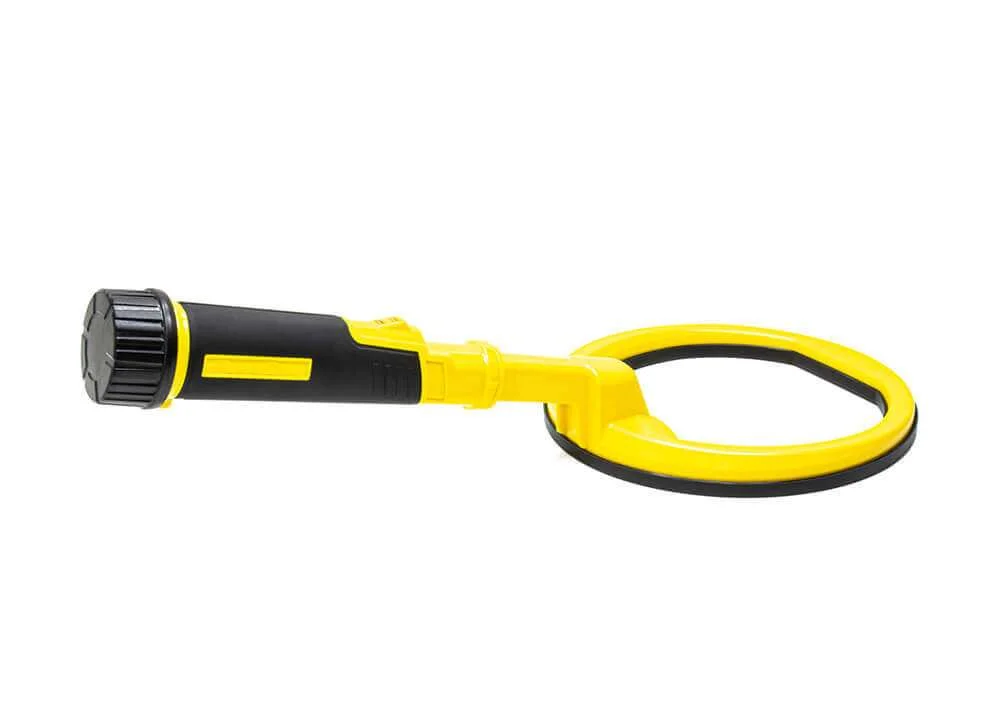
Pulse induction is useful in conductive saltwater because it can be operated stably where some VLF settings demand more adjustment. That does not guarantee identification of every target: compact PI equipment can respond to unwanted metal as well as valuables. Plan to inspect more targets. The PulseDive’s vibration option is especially useful when hearing an audio signal through water is inconvenient, while the LED helps when visibility is poor. Check the manual for the appropriate procedure before opening or charging the detector after a dive.
Goldot’s Scuba Tector product listing describes an orange, compact pulse-induction detector with a mono coil and audio, vibration and LED alerts. It lists a 60 m waterproof rating. Quest also sells Scuba Tector II and Scuba Tector Pro, so their coils, accessories and published ratings should not be silently applied to an older Scuba Tector listing. Ask for the exact model name or product code, the included coil and current manufacturer documentation when requesting a quote. This is more reliable than choosing by a generic “Scuba Tector” label or a price taken from an unrelated generation.
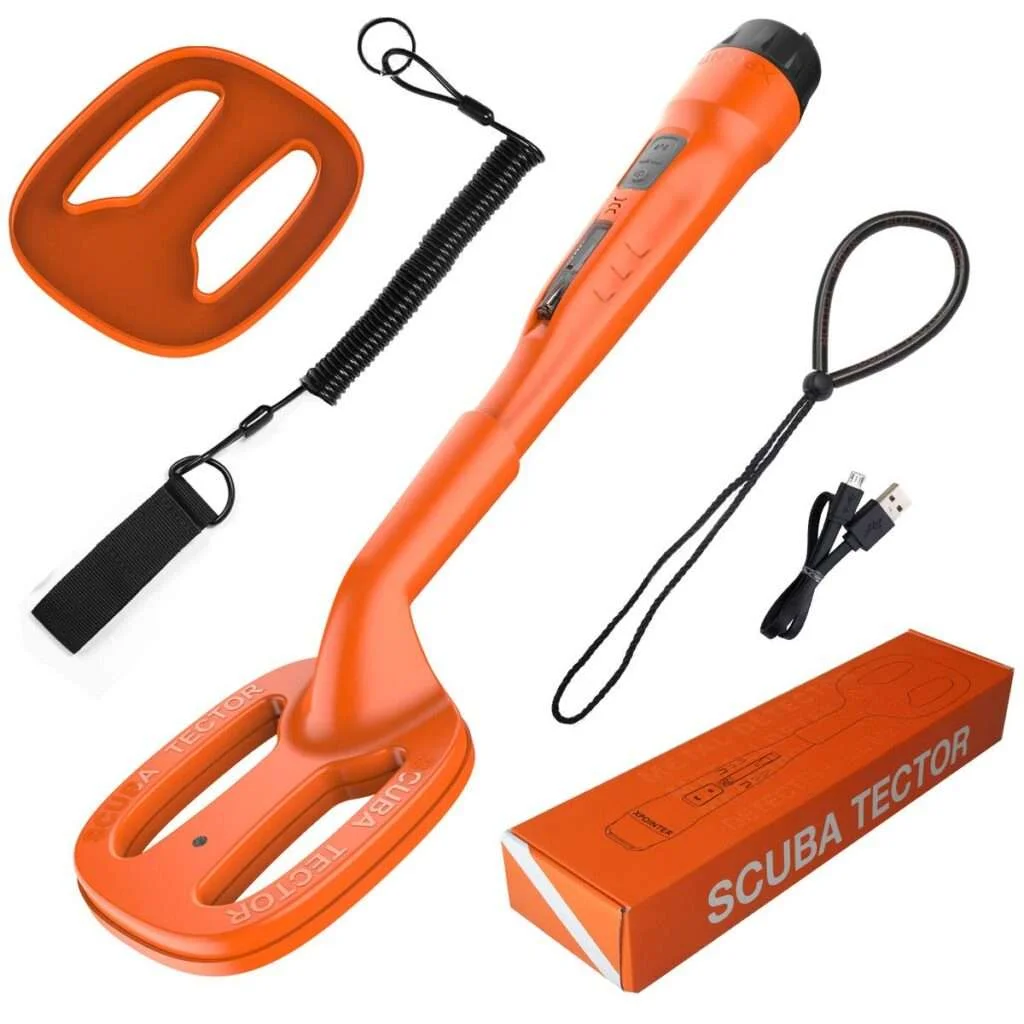
The Quest shape may appeal to buyers who want a simple hand-held search tool for confined spaces, snorkeling or recovery around rocks. Its suitability for a particular dive depends on the documented rating of the exact unit and its condition. A used detector with damaged seals should never be trusted merely because the model was originally sold as waterproof.
| Buying question | Nokta PulseDive Scuba Detector | Quest Scuba Tector listing |
|---|---|---|
| Search method | Pulse induction, 3 kHz per Nokta | Pulse induction in Goldot’s listing; verify the exact Quest generation |
| Water rating | Up to 60 m (200 ft) per Nokta | 60 m stated on the Goldot listing; confirm against the exact model’s manual |
| Alerts | Audio, vibration, audio plus vibration and LED | Audio, vibration and LED stated in the listing |
| Useful distinction | Scuba-coil platform with optional pinpointer conversion and dive key lock | Compact hand-held design; generation and package must be checked |
| Before ordering | Confirm coil size and whether pinpointer accessories are included | Confirm generation, coil, accessories and current water rating |
The right choice follows the task, not a blanket “best detector” claim. Choose the PulseDive when its documented 20 cm scuba coil, dive mode and possible pinpointer conversion fit your work. Consider the Scuba Tector when its hand-held format and the verified package fit your retrieval style. If you need to search long stretches of beach, compare full-size underwater-capable models as well; compact tools are usually better at recovering a localized target than sweeping a broad area.
Saltwater is conductive and can cause unstable responses on some detectors. PI technology is attractive for submerged search because of its saltwater stability, but it does not make the machine immune to interference, poor technique or metal trash. Move the coil consistently, overlap passes and retune when conditions change. Practice with known targets in the water you will actually search. If you need stronger target discrimination on dry or wet beach, learn the trade-offs in our VLF versus PI detector guide. Avoid comparing technologies using only a claimed maximum depth: target size, orientation, substrate, salinity, coil and setup all affect the result.
No. Nokta specifies pulse induction at 3 kHz for the PulseDive Scuba Detector. Its audio and vibration choices are alert settings, not separate beach, relic or multi-frequency search modes.
No. It describes submersion of the detector housing under the stated product conditions. Detection into sand or seabed depends on the target, coil, ground and settings and is much shallower.
Compare the exact unit being offered. Quest markets multiple Scuba Tector generations, including II and Pro. Do not mix the specifications of one version with photos, prices or accessories from another.
Yes, they can be useful for shallow water and localized recovery, subject to each model’s instructions. For covering a large beach quickly, a full-size detector may be more efficient. Match the detector to your search area before purchasing.
For buyers who value a published technical specification and a scuba-coil platform with flexible alerts, the PulseDive is a clear shortlist candidate. The Scuba Tector may be equally practical for compact hand-held recovery, provided you verify which Quest generation and accessories the listing supplies. Compare the current packages, run a realistic target test where possible, and request a quote for the exact equipment you intend to use underwater.