0
Welcome
Sign In Register
AR

THE ULTIMATE GUIDE TO METAL DETECTION

Everything from kHz Frequencies and Soil Minerals to Spotting Fake Detectors and Choosing the Best Brands Worldwide.

Beyond the Hobby: Uses & Authenticity

Metal detectors have evolved from simple hobbyist tools into highly sophisticated scientific instruments. Today, they are used for a vast array of applications: industrial security, military demining, professional archaeology, finding lost jewelry on beaches, and deep-earth gold prospecting. A modern detector utilizes electromagnetism, sending an energy field into the ground that reacts with metallic objects, bouncing a signal back to the user's control box.

However, the booming treasure-hunting industry has created a dangerous pitfall: Fake Metal Detectors. How do you know the difference between a fake and a real metal detector? Real devices rely on proven physics (Pulse Induction, VLF, or Ground Penetrating Radar) and are manufactured by established brands. They offer genuine 'Ground Balance' to filter out earth noise. Fake detectors, often sold cheaply online, are merely empty plastic shells containing generic circuit boards that trigger random LED lights and beeps without actually penetrating the soil. To guarantee you are buying the best metal detector worldwide, always purchase from authorized, certified dealers like Goldot and verify the device's serial number with the manufacturer.


Professional Gold Metal Detector Evaluation
Metal Detector Frequencies and Minerals

The Science of Frequency (Hz & kHz)

If there is one crucial key to understanding metal detectors, it is the frequency. Measured in Hertz (Hz) or Kilohertz (kHz), the frequency dictates how many times the electromagnetic signal is transmitted and received per second. Why is this so important? Because it directly determines what kind of target you will find and how deep the machine can search.

Low Frequencies (e.g., 3 kHz - 7 kHz): These produce longer, slower wave cycles. They easily penetrate deep into the ground and bypass minor soil mineralization, making them perfect for finding large, deeply buried targets like iron relics, treasure chests, or large coins. However, they struggle to detect tiny targets.

High Frequencies (e.g., 20 kHz - 80 kHz): These produce rapid, short waves. They are exceptionally sensitive and are the absolute best choice for finding microscopic gold flakes or thin jewelry. The tradeoff? They do not penetrate as deeply and are highly susceptible to being disrupted by minerals in the dirt. Modern advanced detectors often use 'Multi-Frequency' technology, scanning the ground with high and low frequencies simultaneously for ultimate precision.

The 4 Types of Search Systems

Choosing the best metal detector depends entirely on selecting the right 'Search System' for your specific goals. Here is a breakdown of the core technologies dominating the worldwide market:

1. VLF (Very Low Frequency)The most common system. Uses two coils (transmitter and receiver). Excellent for discrimination (telling gold from trash iron) and coin hunting at shallow to medium depths.
2. PI (Pulse Induction)Sends high-voltage pulses of electricity into the ground. It is completely immune to high soil mineralization and salt water. The undisputed king for finding deep natural gold nuggets in tough terrains.
3. 3D Ground ScannersUses advanced magnetometers and sensors to create a visual 3D map of the underground on a tablet or screen. Essential for detecting massive treasures, voids, caves, and ancient tombs up to 25+ meters deep.
4. Long Range LocatorsDesigned to detect the ionic fields emitted by metals buried for many years. Used to scan vast, open areas from a distance to pinpoint the general location of a target before using a VLF or PI detector.

Soil Types & The Mineral Challenge

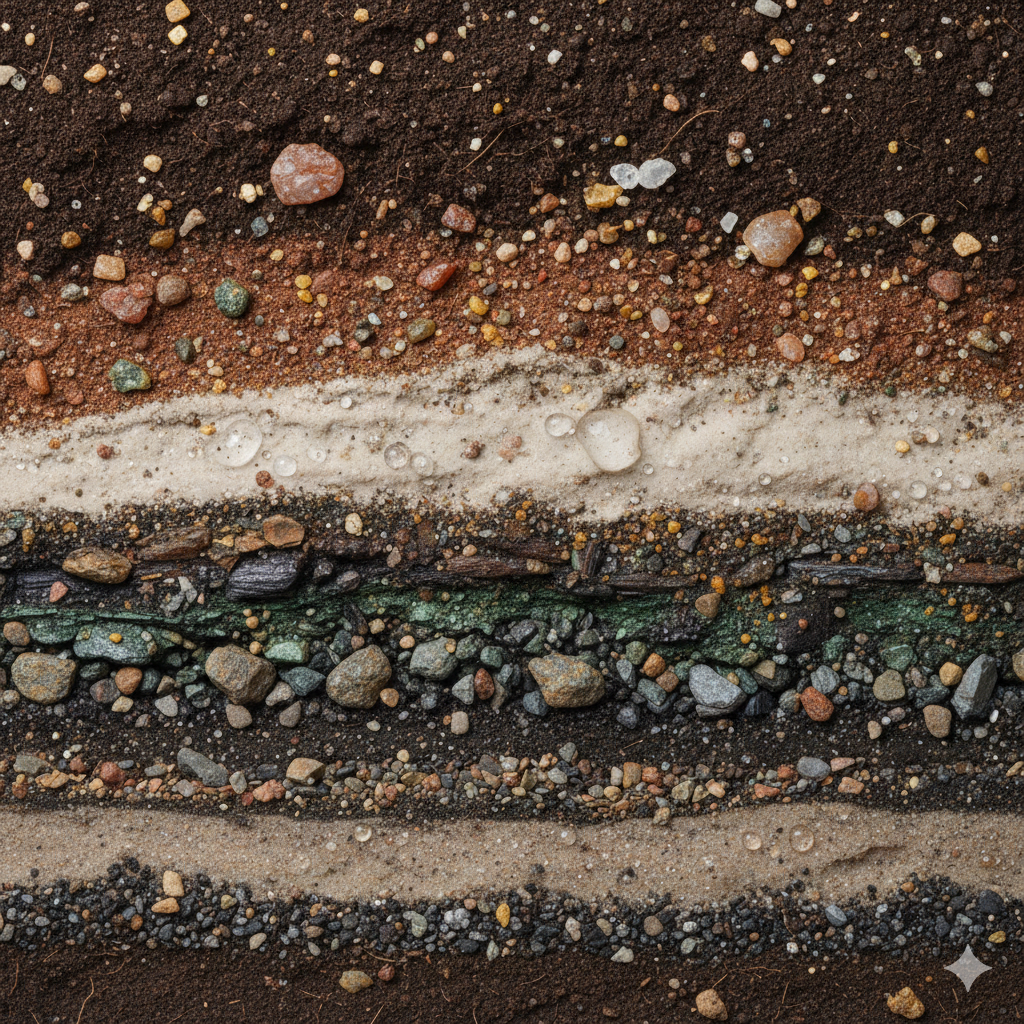
The ground is not just empty dirt; it is an active chemical environment. The relationship between metal detectors and the kind of soil you are walking on is critical. Why are minerals very important? Because elements like iron oxides (red dirt, magnetite) and conductive salts have their own magnetic footprint. When you swing a basic detector over highly mineralized soil, the machine 'sees' the ground itself as a massive piece of metal, causing it to scream with false signals.

Different soils require different approaches. Sandy, neutral soil is easy to penetrate and perfect for high-frequency VLF machines. Volcanic rock or hot rocks are severely mineralized and demand a Pulse Induction (PI) machine, which inherently ignores mineral delays. Wet beach sand is highly conductive due to salt; standard detectors will fail here, requiring specialized multi-frequency or PI technology. The true mark of a professional device is its 'Ground Balancing' feature, allowing the processor to cancel out the natural minerals and reveal only the artificial targets hiding beneath.

How Different Soil Types Affect Detectors
Weather Effects on Metal Detection Best Daytime for Prospecting

The Impact of Weather & Time of Day

Many amateurs overlook how the atmosphere affects detection. The weather and the specific daytime play a massive role in how deep and accurately your metal detector can perform. When it rains, the water acts as a conductive bridge in the soil. This wetness allows your detector's electromagnetic field to penetrate significantly deeper ('the halo effect'). However, this moisture also amplifies the signals of junk minerals, requiring you to constantly adjust your ground balance.

Furthermore, the time of day is crucial due to temperature fluctuations. High noon in a desert environment subjects the detector's search coil and control box to intense heat. This heat can cause 'thermal drift'—a physical expansion of the internal copper coils that slightly alters the kHz frequency, leading to erratic behavior and false signals. This is why professional prospectors highly favor early morning or late afternoon sessions. Premium detectors are built with temperature-compensating electronics to stabilize the machine, regardless of the sun's intensity.

The Leading Brands: Who Makes the Best?

Minelab (Australia)

Undoubtedly the world leader in Pulse Induction and Multi-Frequency technology. Machines like the GPX and CTX series dominate gold fields globally because of their unmatched ability to ignore harsh mineralization.

Groundtech & OKM (Germany)

The absolute pinnacle of 3D Ground Scanning. If you are looking for deep caves, ancient tunnels, or buried hoards meters below the surface, German engineering provides the most accurate visual radar systems available.

Garrett (USA)

Famous for robust, user-friendly VLF detectors. From airport security wands to the legendary AT Pro series used by river and relic hunters, Garrett is synonymous with reliable, waterproof detection.

Nokta Makro (Turkey)

A disruptive force offering high-end features (like simultaneous multi-frequency and waterproofing) at incredibly competitive prices. They have revolutionized what users expect from modern mid-tier devices.

Frequently Asked Questions (FAQ)

How do I distinguish between a real and a fake metal detector?

Real detectors have a verified serial number, professional packaging, and are sold by authorized dealers. Fake devices often lack proper branding, feel unusually light (empty shells), and use random LED lights instead of a functional screen interface. Always verify with the manufacturer's website.

Why is the kHz frequency important?

Frequency determines the target type. Low frequencies (e.g., 5 kHz) penetrate deeper for large objects. High frequencies (e.g., 40 kHz) are sensitive to small gold nuggets but have less depth. Professional machines often offer multi-frequency options to handle both.

How do minerals in the soil affect detection?

Minerals like iron oxide create a 'ground fog' that confuses the detector, causing false signals. This reduces depth significantly. Pulse Induction (PI) detectors are best for this as they ignore the ground minerals and focus only on the metal.

What is the best time of day to use a metal detector?

Early morning or late afternoon is best. High noon sun can overheat the coil, causing 'thermal drift' which makes the machine unstable. Also, damp ground from morning dew can improve conductivity.

Ready to Dig Deeper?

Stop wasting time with fake devices or the wrong frequencies. Equip yourself with the world's most proven professional technology.

Shop Verified Detectors