
Choosing the best metal detector for beginners starts with a practical question: what will you search for, and where? A first-time buyer looking for coins in a permitted park needs different features from someone searching wet beach sand or rocky ground. The right entry level metal detector should make signals understandable, feel comfortable to carry, and leave room to improve your skills. It does not need the most complicated controls or impressive-sounding depth claims.
This buying guide compares simple metal detectors with more adjustable options for US hobbyists. It also explains why a child-friendly unit and an adult beginner detector are not necessarily the same purchase. Use your target, terrain, experience, and intended package to make a shortlist before ordering from Goldot-Tec.

Why the Best Metal Detector for Beginners Matters
When you start, you do not need a machine with a hundred buttons. You need an easy to use metal detector that lets you learn basic signals without constant adjustments. Simple startup, clear audio, an adjustable shaft, and a manageable search coil can be more useful than specialist modes you will rarely select.
The best metal detector for beginners balances straightforward operation with enough control to deal with ordinary ground conditions. Modern entry-level equipment can offer useful discrimination, sensitivity settings, and search modes. However, those features differ by model, so do not assume that every basic unit works equally well on wet salt sand, highly mineralized soil, and dry park grass.
If you are mainly interested in coins and historical objects, explore coin and relic detector options before choosing a particular model. The category helps you focus on conventional metal detection rather than advanced scanners designed for very different projects.
Entry-Level Detector Use-Case Comparison
The models below represent different starting points. They are examples of buyer fit, not a ranking by guaranteed performance. An exact model matters because features vary across product families.
| Model | Intended User | Verified Buying Feature | Best Fit or Important Limitation |
|---|---|---|---|
| Nokta 1st Swing | Children and younger hobby beginners | Compact, simple controls and waterproof construction | Youth-focused design; the manufacturer lists it as discontinued, so confirm any remaining stock rather than treating it as a standard adult recommendation |
| Minelab VANQUISH 340 | Adult beginners seeking simple controls | Multi-IQ, three search modes and a waterproof V10 coil | Good for coins and jewelry; the control unit is not fully submersible |
| Garrett ACE 200 | Adults beginning on ordinary land sites | One-touch operation and digital Target ID | Practical for parks and dry sand; only its search coil is submersible |
| Bounty Hunter Tracker IV | Casual adult hobbyists | Three operating modes and an 8-inch waterproof coil | Straightforward analog controls; no numerical Target ID or waterproof control box |
For adults comparing the best metal detector for beginners, prioritize shaft fit, readable target information, and the sites you actually expect to visit. The Nokta 1st Swing may be suitable for an appropriately sized younger user, but it should not be the default comparison against full-size adult machines. Ask about current alternatives if this discontinued model appears in an old buying guide.
What Makes an Easy to Use Metal Detector
The hallmark of the best metal detector for beginners is not that it rejects every unwanted item. It is that the operator can understand what the detector is reporting and make sensible decisions without complicated tuning. Good discrimination can reduce some iron responses, but it cannot identify every buried object or prevent all trash digs.
Use this practical feature checklist when comparing a simple metal detector:
- Clear controls: Power, search mode, sensitivity, and volume should be easy to find and adjust.
- Understandable feedback: Audible target tones or a readable Target ID help a new user learn what different responses may mean.
- Useful search presets: Coin, jewelry, park, or beach modes can simplify the first setup, where provided.
- Comfortable weight and fit: A balanced detector and adjustable shaft make practice less tiring.
- Manageable ground settings: Automatic or preset ground handling may reduce beginner setup work, but site conditions still affect stability.
- A realistic learning curve: The manual and available support should explain how to sweep, pinpoint, and respond to interference.
For a buyer willing to learn additional options, The LEGEND 2 controls and package deserve comparison. Its simultaneous multi-frequency platform and multiple search modes provide flexibility, although the extra adjustment choices may be unnecessary for someone who wants only a very simple first outing.
Discrimination Helps but Does Not Identify Treasure
A signal is not proof of a valuable target. Pull tabs, foil, bottle caps, coins, and jewelry can produce overlapping responses. Too much discrimination can also silence wanted targets. Start with a sensible preset, compare repeatable signals from different sweep directions, and dig a range of targets while learning. This approach builds skill more reliably than expecting a detector to distinguish valuable metal perfectly.

Investing in an Entry Level Metal Detector
The best metal detector for beginners can be a smart long-term purchase when it suits the operator’s actual use. The deciding factors are reliability, comfortable handling, current support, and the flexibility you will use. A modest detector with clear signals can be more enjoyable than an advanced machine whose settings are difficult to understand.
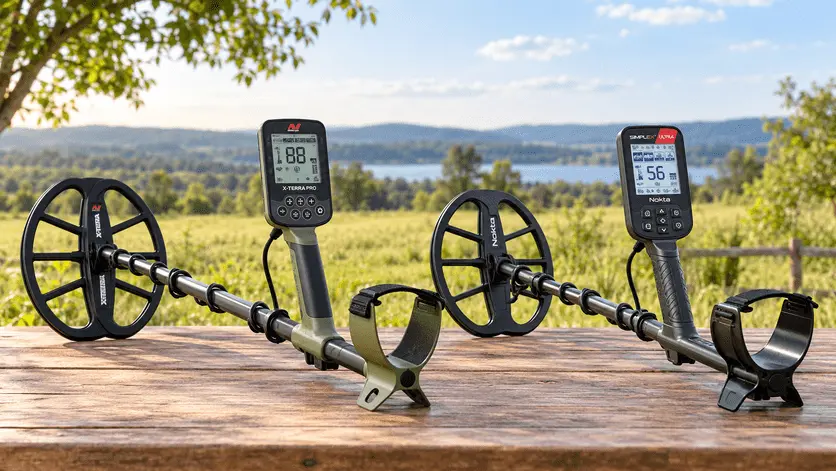
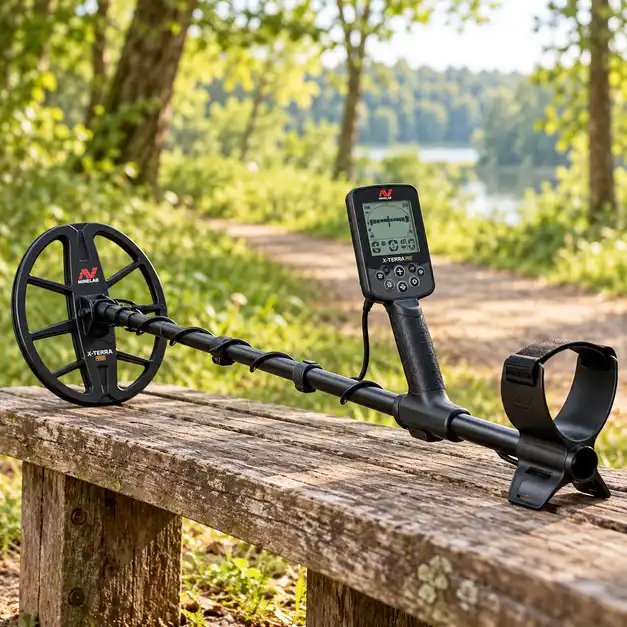
For adult buyers seeking a practical first device with room to grow, review Minelab X-TERRA PRO details. Its Park, Field, and Beach programs and PRO-SWITCH selectable single-frequency operation offer more control than some basic machines. However, it is not a simultaneous multi-frequency detector, and beginners should start with the default mode appropriate to their site rather than changing every setting at once.
The manufacturer’s waterproof rating for X-TERRA PRO covers the detector to its stated limit when correctly assembled and used. That differs from machines such as VANQUISH 340 or ACE 200, whose waterproof search coils do not make their control boxes submersible. Compare those details before choosing equipment for wet conditions.
Feature Comparison for a First Purchase
The original basic-versus-advanced comparison is more useful when it focuses on ownership demands instead of price or unsupported timelines.
| Feature | Simple Beginner Detector | More Advanced Conventional Detector |
|---|---|---|
| Learning curve | A smaller number of controls and presets | More settings to understand and test |
| Weight and comfort | Often designed around straightforward carrying | Varies widely; premium does not always mean heavier |
| Target information | Basic tones, icons, or numerical IDs depending on model | May offer more detailed IDs, audio options, and filtering |
| Ground handling | Preset or simplified adjustments on some models | More manual, automatic, or tracking options depending on model |
| Best buyer | Someone prioritizing an uncomplicated first search | Someone expecting varied sites and willing to learn extra controls |
| Package check | Included coil, batteries, basic audio, manual | Coil configuration, headphones, charging, firmware, and support |
After comparing features, compare your beginner detector shortlist using the exact models you are considering. Confirm the current version and included equipment instead of assuming every package with the same detector name is identical.
Strategic Buying for US Parks and Beaches
Before choosing the best metal detector for beginners, decide where most of your searches will take place. A dry inland park, a saltwater beach, and a mineralized field are not interchangeable. The best option depends on the target and local conditions, not just a waterproof label.
Parks, Backyards, and Permitted Relic Sites
For coins and jewelry at an authorized location, consider easy target information, iron rejection, manageable weight, and a coil that can work around litter and obstacles. A VANQUISH 340 or ACE 200 may suit a straightforward first search. Remember that local rules can restrict digging even if detecting itself is allowed. Obtain permission on private land, and check public-site rules before entering with equipment.
Beaches and Wet Ground
Coastal searches require attention to conductive salt, wet sand, and the waterproof rating of the entire system. Multi-frequency technology can be useful for changing beach conditions, but performance still depends on settings and the exact environment. A waterproof coil alone permits only the manufacturer’s specified coil exposure, not submersion of an unprotected control box.
If you plan to alternate between inland sites and more demanding coastal conditions, assess Equinox 900 for broader search needs. Its Multi-IQ platform, Park, Field, Beach, and Gold modes, and waterproof construction offer flexibility. However, its broader feature set requires a greater commitment to learning than a basic entry-level model, so it is an option to compare rather than an automatic first purchase.
Mineralized Ground and Natural Gold
A beginner detector designed for coins may also respond to gold jewelry. Tiny natural gold nuggets in strongly mineralized ground are another problem. Specialist gold detectors may use different frequencies or pulse-induction technology to address difficult conditions. Conventional VLF machines, PI prospecting equipment, and professional 3D survey systems serve different purposes. Do not buy a scanner or long-range system for everyday coin hunting merely because it sounds more powerful.
The Role of Technology in a Simple Metal Detector
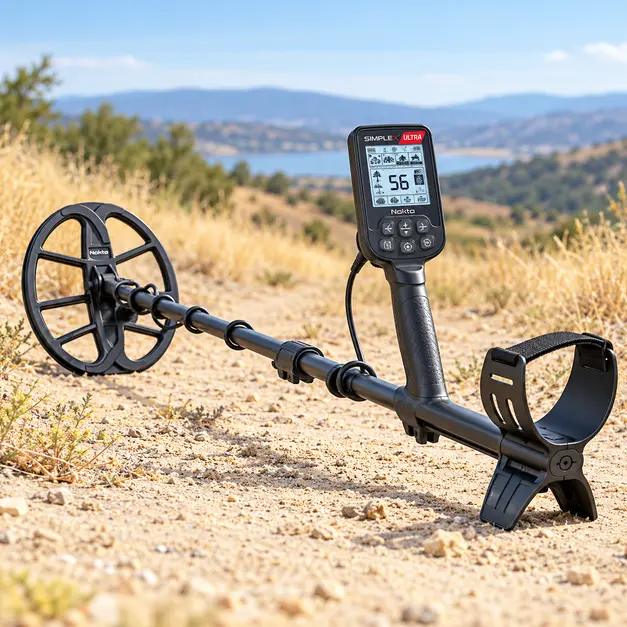
A beginner-friendly metal detector can be simple to operate while still offering advanced detection technology. It analyzes signals received by the search coil and converts them into clear audio tones, visual icons, or numerical target IDs. When choosing the best metal detector for beginners, the priority is finding a device that makes these signals easy to understand, helping new users identify potential targets and make confident decisions in different detecting environments.
A preset ground response can save setup time, but a simple detector does not automatically cancel every mineralized-soil signal. Sensitivity may need adjustment near electrical interference or unusually noisy ground. Likewise, a larger coil may cover more area, but it may be harder to maneuver around trash and rocks. Coil selection is a practical purchasing decision, not a guarantee of greater depth.
Technology should support the search goal. A basic VLF or multi-frequency conventional detector fits many first-time coin and jewelry buyers. Dedicated PI equipment has a different role in challenging ground, while 3D scanners require deliberate surveys and data interpretation. Neither specialist category makes more sense for a beginner simply because it offers more features.
Why Easy Controls Improve Beginner Confidence
The greatest challenge for a newcomer is often learning what the machine is telling them. The best metal detector for beginners makes that learning process manageable. Clear signals and an understandable manual help users develop repeatable habits instead of changing several settings after each uncertain response.
Beginners should expect to recover ordinary metal trash as part of learning. Discrimination helps prioritize signals but cannot promise that every accepted target is a coin or valuable object. Even an experienced operator needs to consider target orientation, surrounding metal, soil moisture, and the way a signal changes when approached from another direction.
A Practical First-Day Routine
Keep your initial session simple rather than trying every feature at once:
- Read the startup and safety instructions. Confirm which components can get wet and how the detector is powered.
- Test familiar objects in a permitted area. Compare a coin, a pull tab, and a small iron object while keeping conditions consistent.
- Select the recommended starting mode. Use the site’s most appropriate preset, then run noise cancellation if the model provides it.
- Practice overlapping sweeps. Keep the coil level and move at a steady pace rather than rushing across the ground.
- Listen for repeatable responses. Compare the signal from more than one direction and use pinpointing if available.
- Record what you learn. Note the setting, site conditions, signal, and actual recovered item.
This routine may take several outings to become comfortable. No reliable detector can guarantee that every user will master target identification within a fixed number of minutes.
Long-Term Durability and Value
The best metal detector for beginners should withstand normal field use and suit the buyer as their skills improve. Instead of judging a detector by marketing promises, check build quality, coil protection, shaft adjustment, power requirements, warranty terms, and available support.
A waterproof rating is especially important to verify. The discontinued Nokta 1st Swing was built for younger users and had waterproof construction, but that does not make it the right size or long-term choice for every adult. Likewise, a waterproof search coil on a Tracker IV or VANQUISH 340 does not protect the entire detector from immersion.
Think about how you will use the machine over the next season. For occasional family outings, straightforward controls may remain ideal. If you expect longer searches, more varied sites, or additional modes, a detector such as X-TERRA PRO or The LEGEND 2 may offer a better development path. Buy the capability you expect to use, not complexity for its own sake.
Check the Whole Package Before Ordering
Finding the best metal detector for beginners is only part of the decision; the included equipment also matters. Ask Goldot-Tec to confirm the exact configuration for US delivery and check:
- Which search coil and protective cover are supplied
- Whether headphones are included or optional
- What batteries or charging equipment are required
- Whether a finds pouch, digging tool, or pinpointer must be obtained separately
- The detector’s complete waterproof limitations
- Manufacturer warranty terms and available after-sales help
- Current stock, delivery options, and any setup assistance
Do not assume an accessory shown in a product photo comes with every configuration. Also avoid buying extra coils immediately unless your planned sites give you a clear reason.
Choosing the Best Metal Detector for Beginners Before Checkout
The final decision should narrow to two suitable detectors, not an endless list of specifications. Ask yourself whether you want basic coin hunting, coastal versatility, or a machine with additional controls you are ready to learn.
For a child or young beginner, consider physical fit and age suitability first. For an adult who wants simple operation, prioritize readable feedback and the right coil for local ground. For an adult ready to develop additional skills, look at X-TERRA PRO or compare more capable multi-frequency models. None of these choices provides guaranteed finds or a fixed detection depth. Actual performance depends on the target’s size, material, orientation, soil mineralization, moisture, settings, coil, interference, and operator technique.
Before checkout, share your primary target, state, search terrain, experience level, and preferred package with Goldot-Tec. Ask for a recommendation and written confirmation of the detector version, included accessories, availability, and delivery details. A clear match is more valuable than a claim that one model is universally best.
Frequently Asked Questions
Is the Nokta 1st Swing a good first detector for adults?
It was designed mainly for younger users and is now listed as discontinued by Nokta. Adults should compare full-size beginner models for comfort, controls, current support, and availability rather than assuming a compact children’s detector will suit them.
Can an entry level metal detector find gold jewelry or natural gold?
Many conventional detectors can respond to gold jewelry, but tiny natural nuggets in mineralized ground may require a specialist prospecting machine. Detection is never guaranteed. Start with the target and conditions before choosing a detector category.
What should I confirm before ordering a beginner detector in the US?
Confirm the exact model, waterproof limits, included coil, power equipment, warranty, and current availability. Then describe your main target, terrain, and experience to Goldot-Tec and request a beginner package that matches your planned searches.
Choose Your First Detector with Goldot-Tec
The best metal detector for beginners is the one that makes your first searches understandable while fitting your actual targets and terrain. A basic conventional detector may be ideal for coins and jewelry; a more adjustable model may suit someone who expects to explore several environments. Neither choice should be based on exaggerated depth claims or the promise of effortless valuable finds.
Contact Goldot-Tec for Availability and personalized US buying advice. Share where you plan to detect, what you hope to search for, and whether you prefer the simplest controls or a platform with room to grow. The team can help you compare suitable models, confirm current package contents, and choose a practical first detector before you place an order.