

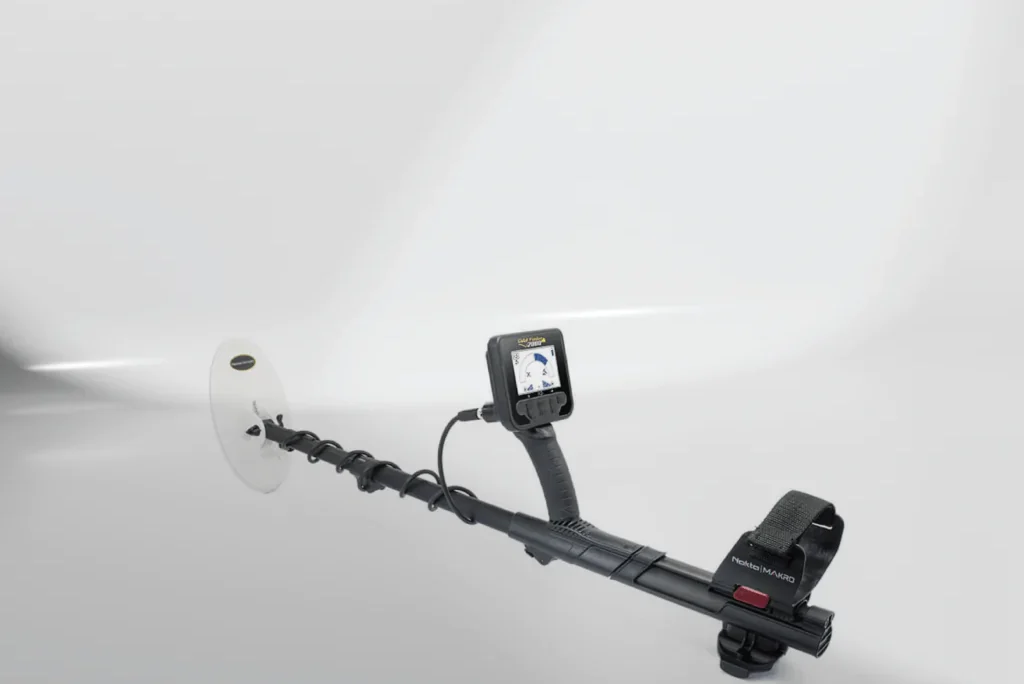
Selecting a gold detector and scanner in 2026 starts with defining what type of gold you want to locate. Natural-gold nuggets, buried jewelry, coins, treasure bars, mineralized veins, and gold stored inside underground structures do not require the same technology.
A conventional gold detector responds directly to metallic targets. A pulse induction machine is designed for goldfields and mineralized soil. A 3D gold scanner can show underground anomalies or mineralized zones, while smart imaging systems estimate target shape, dimensions, and position.
This guide compares the main detector categories and leading models for prospecting, deep treasure, imaging, and professional underground surveys.
What This Keyword Means for Buyers
The phrase gold detector and scanner can refer to several systems:
- A VLF gold detector and scanner.
- A pulse induction gold detector.
- A deep-seeking pulse detector.
- A smart target-imaging detector.
- A 3D ground scanner.
- A mineral-scanning system.
- A ground-penetrating radar.
Before purchasing, identify whether the goal is:
| Target | Suitable Technology |
|---|---|
| Small natural nuggets | High-frequency VLF or specialist gold detector |
| Gold in mineralized ground | Pulse induction |
| Large buried gold objects | Deep pulse detector |
| Target shape and dimensions | Smart imaging |
| Gold associated with underground structures | 3D scanning or GPR |
| Mineralized gold zones | Mineral Scan and geological investigation |
Top Detector Models to Consider
| Detector | Best Application | Technology |
|---|---|---|
| Minelab GPZ 8000 | Flagship natural-gold prospecting | GeoZVT |
| Minelab GPX 6000 | Gold in difficult mineralized ground | GeoSense-PI |
| Garrett Axiom | Value-focused professional gold prospecting | Pulse induction |
| OKM eXp 7000 Pro Plus | Gold, treasure, minerals, tunnels, and cavities | 3D scanning and VLF |
| OKM Rover C4 | Mineral scanning and underground anomalies | 3D Ground Scan |
| Nokta Invenio Pro | Shape, dimensions, depth, and metal analysis | Smart imaging |
Minelab GPZ 8000
The GPZ 8000 is Minelab’s current flagship gold detector and scanner. It uses next-generation GeoZVT technology, Echo Sonic Pro audio, and a selection of Z-Set concentric toroidal coils for different target sizes and ground conditions.
Best for:
- Serious natural-gold prospecting.
- Small through large nuggets.
- Challenging goldfields.
- Professional prospecting campaigns.
Main advantage: Specialist technology designed specifically around natural-gold performance.
Main limitation: It is a premium natural-gold detector and scanner rather than a cavity scanner.
Minelab GPX 6000
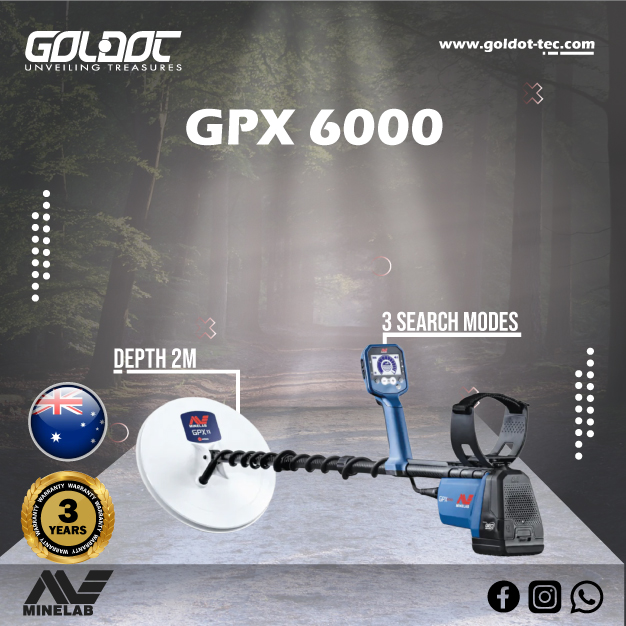
The GPX 6000 uses GeoSense-PI technology to analyze ground and target signals in mineralized environments.
It weighs approximately 2.1 kilograms and provides automatic ground balancing and noise control, making it more approachable than many older professional pulse systems.
Best for:
- Mineralized goldfields.
- Small and larger nuggets.
- Prospectors wanting simpler professional operation.
- Salt-affected or difficult ground.
Main advantage: Strong pulse performance with automatic assistance.
Main limitation: Limited conventional target discrimination.
Garrett Axiom
The Garrett Axiom is a professional pulse induction option for natural-gold prospecting.
It is available in different coil packages, including mono and Double-D configurations.
Best for:
- Mineralized ground.
- Small natural-gold targets.
- Desert prospecting.
- Buyers wanting a lower entry point than some flagship gold machines.
Main advantage: Professional PI technology in a relatively manageable package.
Main limitation: It does not provide 3D images or detailed coin-style discrimination.
OKM eXp 7000 Pro Plus
The eXp 7000 combines conventional VLF detection, 3D Ground Scan, Mineral Scan, Tunnel Scan, Magnetometer, Live Scan, and Pinpointer functions.
Best for:
- Buried gold objects.
- Natural-gold mineral zones.
- Treasure containers.
- Tunnels and cavities.
- Archaeological anomalies.
Main advantage: Several detection and imaging functions in one professional system.
Main limitation: Its full value depends on operator training and scan interpretation.
Read Ultimate Gold Scanner GR-4 Dual vs OKM EXP 7000 for another specialist comparison.
OKM Rover C4
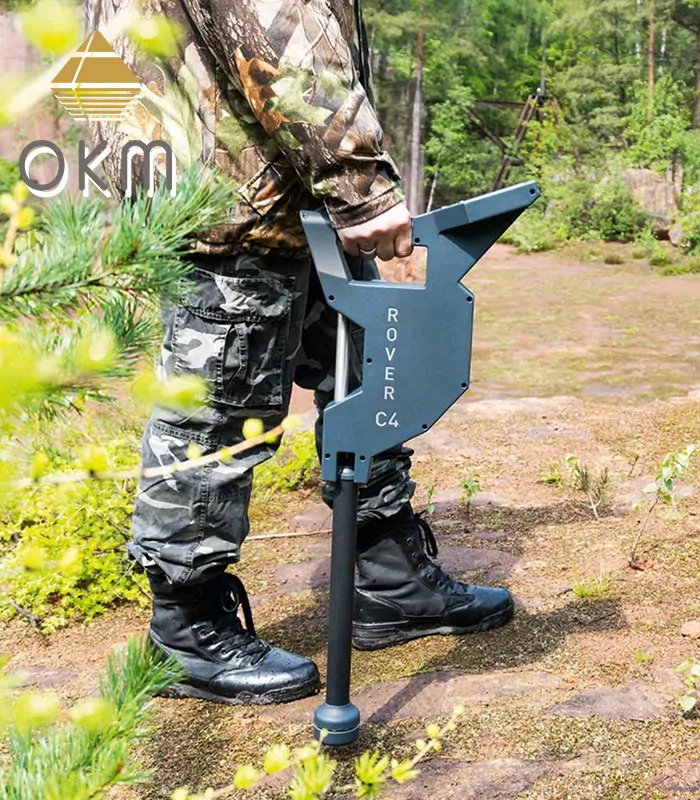
The Rover C4 provides 3D Ground Scan, Mineral Scan, Magnetometer, and Pinpointer functions.
OKM demonstrates Gold Detector and Scanner Mineral Scan as a method for identifying responses associated with natural-gold mineralization.
Best for:
- Mineralized gold zones.
- Treasure anomalies.
- Cavities.
- Professional pre-excavation scanning.
Main advantage: A more focused 3D scanning platform than the larger eXp system.
Main limitation: It cannot replace a specialist nugget detector for routine goldfield searching.
Nokta Invenio Pro
The Invenio Pro can display estimated target shape, dimensions, depth, position, and ground anomalies.
Best for:
- Buried gold objects.
- Treasure containers.
- Metal discrimination.
- Target-dimension analysis.
- Possible cavities.
Main advantage: Useful visual information before excavation.
Main limitation: It is not the first choice for tiny natural-gold nuggets.
Key Features and Technologies
High-Frequency VLF
First, high-frequency VLF technology is suitable for small nuggets and relatively shallow gold targets, particularly when detailed target response and lightweight operation are important.
However, its stability may decline in highly mineralized or salt-affected ground.
Pulse Induction
By comparison, pulse induction technology is generally more suitable for mineralized soil, black sand, and natural-gold prospecting where conventional VLF systems may become unstable.
Moreover, PI detectors can provide improved depth on medium and large targets, although their discrimination is usually more limited.
GeoZVT and Specialist Gold Systems
Meanwhile, GeoZVT and other specialist gold technologies are designed to improve natural-gold performance across different nugget sizes and difficult ground conditions.
Therefore, they are normally selected by serious prospectors rather than buyers who mainly search for coins or jewelry.
3D Gold Scanning
In contrast, a 3D gold scanner does not simply respond to one metallic target.
Instead, it records structured underground measurements and displays possible anomalies through dedicated software.
For example, these anomalies may be associated with large metallic objects, treasure containers, mineralized zones, cavities, or structural changes.
Smart Imaging
Furthermore, Gold Detector and Scanner smart imaging systems estimate target dimensions, depth, and location by combining detector responses with movement or positional data.
Nevertheless, an estimated image should not be treated as final proof that the detected object is gold.
Depth Performance and Accuracy
Detection depth changes according to several connected factors, including:
- Nugget or target size.
- Gold purity and shape.
- Soil mineralization.
- Ground moisture.
- Coil size.
- Search technology.
- Target orientation.
- Nearby iron.
- Operator settings.
For example, a small natural nugget normally produces a weaker signal than a large metallic gold object.
As a result, tiny nuggets are usually more difficult to detect at significant depth.
By contrast, a large treasure container can produce a stronger response because it contains more metal and presents a larger target area.
However, that result should never be used as proof that the same detector can locate a tiny nugget at a similar depth.
Therefore, buyers should compare depth claims only when the seller identifies the target size, soil conditions, coil, technology, and testing method.
Best Uses: Gold, Treasure, Coins, Beach
A waterproof multi-frequency detector may be be better than a professional scanner when searching for Gold Detector and Scanner solutions for gold jewelry on beaches.
Price Range and Value Comparison
| Detector | General Investment Level |
|---|---|
| Garrett Axiom | Premium specialist |
| GPX 6000 | Premium gold specialist |
| GPZ 8000 | Flagship gold specialist |
| Invenio Pro | High professional |
| Rover C4 | High professional |
| eXp 7000 Pro Plus | Ultra-professional |
The GPZ 8000 was officially listed at $9,999 in the U.S. at the time of verification, while OKM listed the eXp 7000 Pro Plus at €29,990 plus VAT, shipping, and possible fees.
Prices differ according to country, package, coils, software, taxes, and support.
Pros and Cons of Leading Options
| Detector | Advantage | Limitation |
|---|---|---|
| GPZ 8000 | Flagship natural-gold specialization | High cost |
| GPX 6000 | Strong PI performance and easier controls | Limited discrimination |
| Garrett Axiom | Professional gold capability | No imaging |
| eXp 7000 | Multi-mode professional exploration | Training required |
| Rover C4 | 3D and Mineral Scan | Not a routine nugget detector |
| Invenio Pro | Target dimensions and shape | Less suitable for tiny nuggets |
How to Choose the Right Device
For natural-gold prospecting, the Gold Detector and Scanner category includes specialist models such as the GPZ 8000, GPX 6000, and Garrett Axiom, which provide high-performance detection across different budgets and mineralized-ground conditions.
By comparison, a Deepmax Z2 or another suitable deep pulse detector is more appropriate when the main target is a large buried metallic gold object.
Meanwhile, buyers who need visualization, mineral scanning, or underground-structure analysis should consider the eXp 7000, Rover C4, or Invenio Pro.
In addition, compare Best 3D Ground Scanner – GR-4 Dual vs Others, Groundtech A2 vs Klayzer Max 2D 3D Metal Detector, and Find the Best Deep Gold Detectors for Sale before selecting the final system.
Ultimately, the correct choice depends on whether the project requires direct metal detection, natural-gold sensitivity, deep-target response, mineral analysis, or underground imaging.
Common Buying Mistakes to Avoid
First, avoid confusing natural gold with buried jewelry because both targets require different detector technologies and search settings.
Similarly, do not purchase a professional 3D scanner when the main objective is locating tiny natural-gold nuggets.
On the other hand, a specialist nugget detector is not the correct choice for identifying tunnels, cavities, or underground structural changes.
Moreover, never trust one advertised depth figure without checking the target size, soil conditions, coil, and testing method.
In addition, ignoring soil mineralization can result in unstable performance and unrealistic field expectations.
Likewise, using the wrong search coil may reduce small-target sensitivity, ground coverage, or target separation.
Furthermore, an underground image should not be treated as automatic proof that an anomaly contains gold.
Finally, avoid purchasing advanced equipment without training, warranty protection, and technical support.
Final Recommendation and FAQs
Choose the GPZ 8000 for flagship natural-gold prospecting, GPX 6000 for difficult ground and easier professional operation, and Garrett Axiom for a strong PI alternative.
Choose the eXp 7000 for advanced multi-mode exploration, Rover C4 for focused mineral and 3D scanning, and Invenio Pro for target-shape analysis.
What is the difference between a gold detector and scanner?
A gold detector responds directly to metallic targets. A scanner collects structured data to display anomalies, dimensions, or underground changes.
Which detector is best for natural gold?
The GPZ 8000, GPX 6000, and Garrett Axiom are specialist natural-gold options for different budgets and field requirements.
Can a 3D gold scanner detect tiny nuggets?
It is generally less suitable than a dedicated nugget detector for very small natural-gold targets.
Can a gold scanner identify gold automatically?
No. It may identify a metallic or mineralized anomaly, but confirming gold requires additional evidence.
Which device is best for buried gold treasure?
A deep pulse detector or Gold Detector and Scanner smart imaging system may be suitable, depending on target size, soil conditions, and whether underground visualization is needed.