

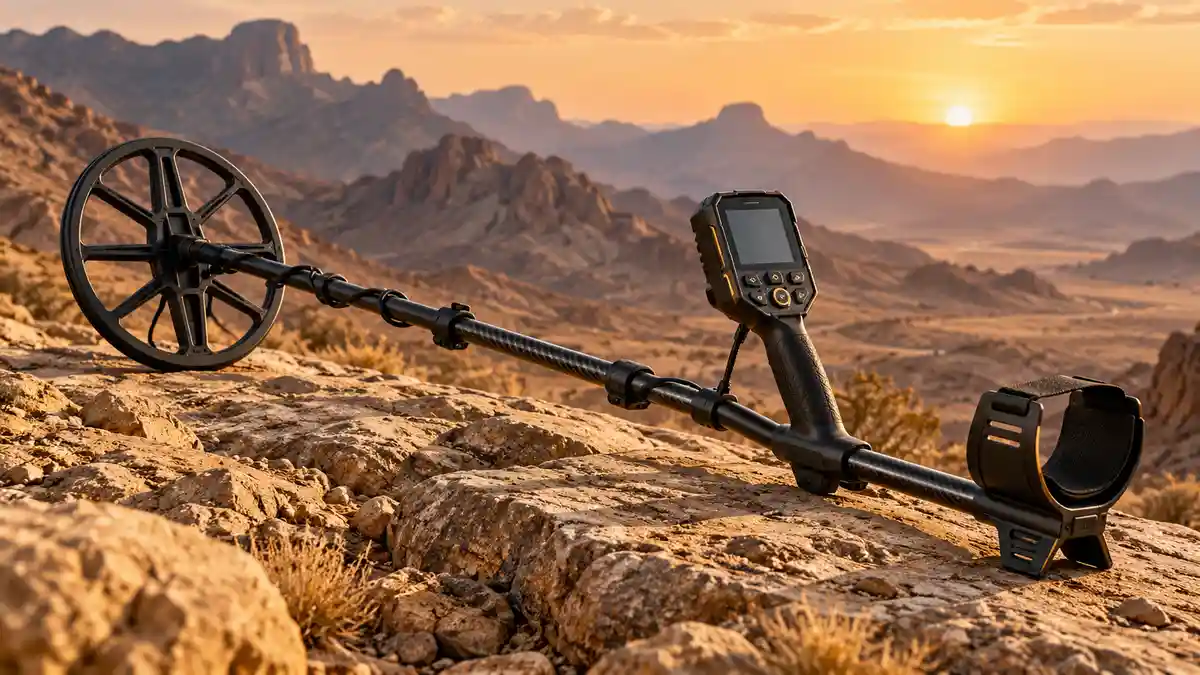
Good Gold Detectors should match the natural gold you expect to find, your US prospecting terrain, and your experience rather than a generic star ranking. A small nugget in Arizona mineralized ground presents different challenges from a gold ring on a beach or a long search across rocky Colorado terrain. Before buying, compare ground handling, the supplied coil, manageable controls, and after-sales support.
Therefore, US buyers should not define reliability by the highest advertised depth or the most expensive detector. A reliable machine is one that performs the job it was designed for and gives the operator a usable, repeatable field workflow.
Small natural-gold targets create different requirements from gold jewelry. Likewise, mild ground can favor a different detector from strongly mineralized soil.
The right search coil matters as well. A compact coil can make more sense around rocks and restricted terrain. Meanwhile, another prospecting area may reward greater coverage.
Controls also need to match the operator. Advanced settings create little value when the user cannot interpret the detector correctly.
Finally, support matters. Coil compatibility, warranty terms, replacement equipment, package contents, and technical guidance can all affect long-term ownership.
This is not another ranking; it gives US buyers five practical checks for finding a suitable detector.
If you want a wider shortlist after these checks, use our broader gold detector comparison before requesting a package.
Five Gold Detector Checks for US Buyers
A reliable buying decision can start with five practical checks:
- Target: Are you searching for tiny natural nuggets, larger pieces, or gold jewelry?
- Ground: Is your site mild, highly mineralized, conductive, or affected by hot rocks?
- Coil: Does the search area favor precise movement or broad coverage?
- Controls: Can you manage manual adjustments, or would automatic assistance suit you better?
- Support: Which compatible components, warranty terms, and help are available for your US order?
These five checks remove unsuitable machines before you compare extra features. The sections below explain how each check changes your buying decision.
Check 1 — Match the Detector to the Target
The word “gold” describes several different search problems.
Natural nuggets in mineralized ground are not the same as gold rings on a beach. Likewise, a fine nugget creates a different detector response from a larger natural-gold target.
Therefore, define the primary target first.
A small-gold prospector may value high sensitivity and controlled coil movement.
Meanwhile, a user working difficult ground may prioritize stability.
Another buyer may want one detector for gold jewelry, coins, relics, and occasional prospecting.
That buyer needs versatility rather than a dedicated nugget platform.
For this reason, the first sign of a good gold detector is target fit.
Check 2 — Match the Technology to the Ground
Ground conditions can change detector behavior dramatically.
Mineralization may create noise that competes with faint gold signals. Conductive soil can also change the ideal setup.
Therefore, the detector needs technology suited to the site.
High-frequency and gold-focused multi-frequency systems can provide strong sensitivity to small targets.
However, severe mineralization may shift the buying decision toward Pulse Induction or another specialist platform.
Do not treat one technology as universally superior.
Instead, match it to the ground you actually expect to search.
Check 3 — Choose the Coil for the Search
A good detector with the wrong coil can create a poor field setup.
Therefore, coil selection deserves the same attention as the control unit.
Smaller coils generally provide easier maneuverability.
They can also help around exposed rock, vegetation, and restricted terrain.
Larger coils increase ground coverage.
However, they can become harder to control in tight areas.
Consequently, coil choice should follow target size, terrain, mineralization, and session length.
Check 4 — Match Controls to Your Skill Level
A professional detector may provide advanced ground settings, manual sensitivity, several coils, and detailed audio options.
However, more control is not always better for every buyer.
Beginners may gain more value from automatic functions and clear feedback.
Meanwhile, experienced prospectors may prefer manual adjustments because they understand how the ground affects the detector.
Therefore, a good gold detector should match the operator as well as the target.
Check 5 — Confirm Support Before Buying
Reliability continues after the detector arrives.
For that reason, buyers should check warranty terms, accessories, compatible coils, battery equipment, training, and seller support.
Ask whether replacement components remain available.
Also confirm what comes in the package.
A detector can match your terrain perfectly but still create ownership problems if the required coil or battery equipment is difficult to obtain.
Support should therefore form part of the purchase decision.
What Makes a Gold Detector Reliable?
When judging Good Gold Detectors, reliability should describe more than construction quality.
A useful prospecting detector also needs repeatable responses and a field setup that the operator understands.
Repeatable Target Information
A useful target response should encourage another pass.
Therefore, prospectors often check suspicious signals from more than one direction.
A repeatable response deserves more attention than random noise.
However, repeatability does not prove that a target is gold.
Hot rocks, iron, ground variation, and other metal can still produce responses.
The detector helps identify a target worth investigating. The recovery provides the final confirmation.
Stable Operation Matters
Maximum sensitivity is not the same as maximum usable performance.
An unstable machine can produce constant audio changes.
As a result, weak genuine targets may become harder to recognize.
A stable setting can often provide a better search.
Therefore, good gold detectors should allow the operator to find a workable balance between sensitivity and stability.
Build and Ergonomics Matter
Prospecting often involves long walking sessions.
Consequently, weight and balance can affect how consistently the operator controls the coil.
A detector that becomes uncomfortable after several hours may reduce search coverage.
Transport also matters.
Compact shafts can help buyers who travel to remote sites.
However, ergonomics should support the target requirement rather than replace it.
Ground Handling Versus Small-Gold Sensitivity
One of the hardest decisions when comparing Good Gold Detectors involves balancing sensitivity with ground handling.
The two requirements often overlap, but they are not identical.
When Small-Gold Sensitivity Leads
A buyer focused on fine natural gold may prioritize a gold-focused high-frequency or multi-frequency detector.
For example, the Minelab GOLD MONSTER 2000 uses Multi-Au simultaneous multi-frequency technology.
Minelab specifies operation across a high-frequency range designed for gold prospecting.
The detector also uses a compact 5-inch Double-D standard coil.
Therefore, it can suit buyers who prioritize small targets and controlled movement.
In addition, automatic sensitivity and ground functions can reduce setup work.
Buyers prioritizing small nuggets can review GOLD MONSTER 2000 package details and confirm the supplied coil before ordering.
When Difficult Ground Leads
Strong mineralization can change the buying decision.
In those conditions, Pulse Induction can become more relevant.
The GPX 6000 uses Minelab’s GeoSense-PI platform.
It also provides Normal, Difficult, and Severe ground options.
Therefore, it fits buyers who need a specialist prospecting system for challenging ground.
Double-D and Monoloop coil options create additional setup choices; confirm the specific coils supplied in the current US package.
US buyers can review the GPX 6000 prospecting configuration when difficult-ground prospecting is the main goal; confirm the exact included coils.
When You Need a Flagship Specialist Platform
Experienced prospectors may require a more specialized system.
The GPZ 8000 uses GeoZVT and supports Minelab’s Z-Set coil range.
Its available Z13, Z17, and Z18 coils serve different ground, target, and coverage priorities.
Therefore, the platform can suit buyers who already understand advanced gold prospecting.
However, its specialist capability may be unnecessary for occasional use.
The detector becomes a good purchase only when the search plan justifies the platform.
Do Not Choose Technology From the Acronym
VLF, Multi-Au, PI, GeoSense-PI, and GeoZVT describe different approaches.
However, none of these acronyms independently tells you which detector to buy.
Target size still matters.
Ground still matters.
Coil selection also matters.
Therefore, translate technology into a field benefit before paying for it.
Five Detector Examples by Buying Role
The following models illustrate why Good Gold Detectors serve different buying roles.
They are not ranked from strongest to weakest.
Instead, each one serves a specific buyer. This suitability table summarizes the five existing examples; the explanations below remain important when evaluating your terrain and package.
| Detector | Target and Buyer Fit | Main Reason to Compare | Confirm Before Ordering |
|---|---|---|---|
| GOLD MONSTER 2000 | Smaller natural gold, buyers wanting manageable controls | Gold-focused Multi-Au and compact standard coil | GM2000 coil, weather limits, battery equipment |
| GPX 6000 | Natural gold in difficult mineralized ground | GeoSense-PI ground handling | Coil combination, charging and headphones |
| GPZ 8000 | Advanced natural-gold prospecting | GeoZVT with Z-Set coil choices | Z13/Z17/Z18 availability and actual package |
| Garrett Axiom | PI prospecting across varied target and ground conditions | Different search modes and Mono/DD choices | Supplied coil, Iron Check conditions, accessories |
| MANTICORE | Goldfield use alongside coins, jewelry and beaches | Multi-IQ+ conventional versatility | Goldfield setup, coil, water-rated accessories |
GOLD MONSTER 2000 for Small-Gold Priorities
GOLD MONSTER 2000 can suit buyers who want a lightweight natural-gold platform with automatic functions.
It weighs approximately 1.25 kg.
In addition, the shaft collapses to about 65 cm.
That combination supports portability.
Multi-Au technology also gives the detector a gold-focused simultaneous multi-frequency platform.
However, its control pod is rainproof rather than fully submersible.
Likewise, buyers working severe ground may decide that another technology better fits the site.
Choose it when small-gold sensitivity, low weight, and manageable controls lead the decision.
GPX 6000 for Mineralized Ground
GPX 6000 moves the buyer into professional PI prospecting.
GeoSense-PI analyzes ground and target signals while the detector operates.
Its automatic ground assistance can also reduce setup work.
The detector weighs approximately 2.1 kg and collapses to around 67 cm.
Therefore, it provides a relatively portable professional package.
However, buyers should still expect a learning curve.
Audio interpretation and coil choice remain important.
Choose GPX 6000 when difficult ground is a central problem that the detector needs to solve.
GPZ 8000 for Advanced Prospecting
GPZ 8000 sits in a more specialized position.
GeoZVT, Z-Set coils, advanced ground modes, and Echo Sonic Pro audio target serious natural-gold work.
Therefore, the platform makes the most sense for experienced users.
Its Z13 coil favors a more compact terrain strategy.
Meanwhile, the Z18 provides broader coverage and another target emphasis.
The Z17 serves another balance involving conductive ground and EMI.
This coil ecosystem illustrates why reliable detector selection cannot stop at the model name.
The package needs to match the search.
Garrett Axiom for Flexible PI Prospecting
Garrett Axiom uses Ultra-Pulse technology.
It also provides Fine, Normal, Large, and Salt modes.
Therefore, buyers can adapt the detector to different target and ground priorities.
Garrett supports Mono and Double-D coil configurations as well.
The detector also provides several ground-track speeds and Iron Check with appropriate DD coils.
This makes the Axiom relevant when buyers want professional PI performance with a broad coil ecosystem.
However, a PI detector still does not provide the same detailed target identification as a premium conventional coin detector.
Choose Axiom when difficult-ground prospecting and coil flexibility matter more than coin-style discrimination. Before deciding, compare Garrett Axiom package options and verify the supplied Mono or Double-D search coil.
MANTICORE for Gold Plus Other Targets
Not every buyer needs a gold-only detector.
MANTICORE uses Multi-IQ+ and includes a Goldfield search mode.
It also provides 2D target identification and several conventional search programs.
Therefore, it can suit buyers who search for gold but also want coins, jewelry, relics, and beach targets.
Its 1.3 kg weight supports long conventional sessions.
In addition, the detector carries an IP68 waterproof specification to 5 meters.
However, a serious nugget hunter working difficult mineralized ground may still prefer a dedicated prospecting system.
MANTICORE becomes a good gold detector when versatility is part of the requirement.
Target Type Before Detector Brand
Brand familiarity can make shopping for Good Gold Detectors easier.
However, it should not control the purchase.
Fine Natural Gold
Fine gold usually rewards sensitivity and careful coil placement.
Therefore, a lightweight gold-focused detector can provide strong practical value.
A smaller coil may also improve maneuverability.
However, difficult mineralization can still influence the ideal technology.
Mixed Nugget Sizes
A buyer expecting small, medium, and occasional larger gold may want broader flexibility.
Professional PI systems can become more relevant here.
The available coils also matter.
Therefore, evaluate the complete ecosystem.
Gold Jewelry
Gold jewelry creates another search problem.
A ring on a beach does not require the same machine as a natural nugget in a mineralized goldfield.
Target identification and saltwater handling may become more important.
Therefore, a versatile multi-frequency detector can provide a better match.
Large Metallic Gold Targets
Large buried metallic targets may require another search strategy.
A specialist deep-target system can become more appropriate.
Do not assume that the most sensitive fine-gold detector also solves the large-target problem best.
Arizona Prospecting Example
Arizona provides a useful example of choosing Good Gold Detectors through the five checks.
However, this example does not assume that all Arizona ground behaves the same way.
Use an authorized prospecting site and evaluate the actual conditions.
Start With the Gold Size
Imagine a buyer who expects mostly small natural gold.
That target may move the shortlist toward a sensitive gold-focused detector.
However, mineralization could change the final decision.
Therefore, target size only starts the process.
Evaluate the Ground
If the site produces difficult mineralization, stability becomes more important.
The buyer may then compare a sensitive Multi-Au system with professional PI options.
This is where the tradeoff becomes practical.
Do you prioritize very low weight and simpler control?
Or does the ground justify a professional PI platform?
Select the Coil
Rocky or restricted terrain may reward a smaller coil.
Meanwhile, open ground may allow broader coverage.
Therefore, the Arizona example should end with a coil decision, not only a detector decision.
Match the Operator
A new prospector may prefer automatic functions.
An experienced user may want more control.
This choice can move two buyers at the same site toward different machines.
Both choices can still be reasonable.
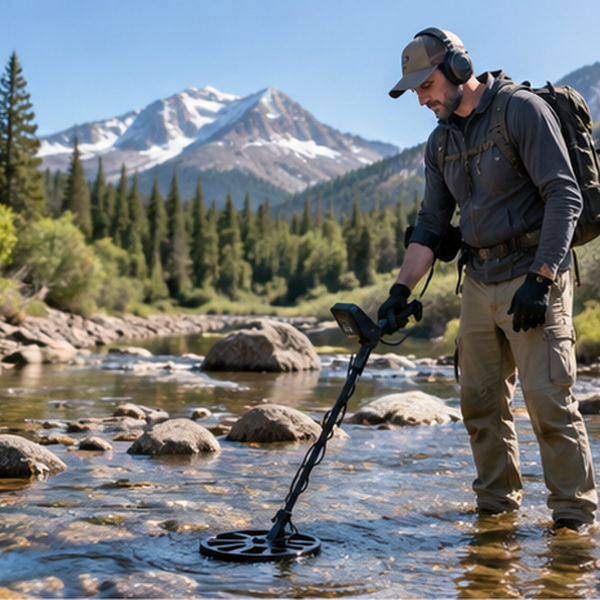
Colorado Prospecting Example
Colorado provides another useful application of the five Good Gold Detectors buying checks.
Again, this is a hypothetical authorized prospecting scenario.
The state name does not define the detector.
Terrain Can Change the Package
A buyer walking uneven or confined terrain may prioritize weight.
A compact shaft can also help during transport.
Therefore, portability can rise in importance.
However, a lightweight detector should still match the target and ground.
Search Duration Matters
Long field sessions can make ergonomics important.
A lighter machine can help the operator maintain coil control.
Meanwhile, heavier specialist systems may justify the additional weight when their technology solves a real ground problem.
Therefore, the buyer needs to balance comfort against capability.
Support Matters Before a Remote Trip
A remote prospecting plan increases the importance of battery preparation and compatible accessories.
Therefore, confirm the supplied batteries and charging equipment before traveling.
Likewise, check warranty and support information.
A small missing accessory can create a large problem far from home.
Search Coil Suitability
When comparing Good Gold Detectors, coils often receive less attention than the detector itself.
However, they can change the field experience significantly.
Choose the search coil by terrain, likely nugget size, and the detector’s approved coil ecosystem. These trade-offs matter more than treating one size as the most powerful:
- Small coils: Easier placement around bedrock, bushes, and tight spaces; useful for careful small-gold searching, but they cover less ground per sweep.
- Medium coils: A practical compromise between maneuverability and coverage; often a sensible starting point when the supplied coil matches your main site.
- Large coils: More ground coverage and potentially greater emphasis on larger targets, but additional weight, obstacles, and ground response may make them less convenient.
These are general choices, not guaranteed depth results. Always confirm that the exact coil is approved for your detector and decide whether the standard package already meets your needs.
Controls and Operator Skill
Good Gold Detectors should help the operator make useful decisions.
However, the best control system differs by user.
Automatic Controls for Simpler Setup
Automatic sensitivity, noise cancellation, or ground tracking can reduce setup work.
This can benefit newer prospectors.
It can also help experienced users who want to spend less time changing settings.
However, automation does not eliminate field technique.
Coil control and signal checking remain necessary.
Manual Controls for Experienced Users
Manual sensitivity and ground adjustments can provide more control.
However, the operator needs to understand why the change is required.
Increasing sensitivity without considering stability can make the detector harder to use.
Therefore, manual control becomes a benefit only when the operator can interpret the result.
Audio Learning Matters
Natural gold does not always create a dramatic signal.
Therefore, audio interpretation can become important.
Practice with known targets can help the user learn the detector.
However, controlled practice should teach signal behavior rather than create unrealistic depth claims.
Support, Warranty and Package Reliability
Good Gold Detectors also require a dependable purchase package.
Therefore, review more than the specifications.
Confirm the Exact Coil
Dealer configurations can differ.
Ask which search coil comes with the package.
If another coil is shown in promotional material, confirm whether it is actually included.
Confirm Power Equipment
Check the battery system.
Then review charging equipment.
Remote prospecting makes these details especially important.
Do not rely on an old package description.
Confirm Warranty Terms
Warranty coverage can vary by manufacturer and region.
Therefore, ask which terms apply to your US purchase.
Also confirm which documents you will receive.
Ask About Technical Support
A professional detector can create questions after delivery.
Therefore, ask what setup or technical assistance Goldot-Tec provides.
Support can add real value, especially when you move to a new detector technology.
When an Upgrade Makes Sense
When replacing Good Gold Detectors, a new model should solve a real problem.
Otherwise, an upgrade may provide little practical value.
Upgrade When Ground Limits the Current Detector
If your current machine becomes unstable in the ground you search most often, another technology may help.
Therefore, ground handling can justify an upgrade.
Upgrade When the Target Changes
A buyer moving from beach jewelry to serious natural-gold prospecting may need a specialist machine.
Likewise, a small-gold prospector moving into another target scale may need a different coil or platform.
Upgrade When Ergonomics Matter
Weight and transport can justify a change.
However, do not sacrifice the required technology only to reduce weight.
The detector still needs to solve the search problem.
Do Not Upgrade Only for a Newer Model
A newer detector may provide useful improvements.
However, the current machine may already fit your terrain and target.
Therefore, identify a specific limitation before replacing it.
Gold Detector Limitations Buyers Should Accept
Even Good Gold Detectors have performance limits.
Understanding those limits improves the purchase.
No Fixed Depth Applies Everywhere
Detection depth changes with target size, shape, orientation, ground, coil, settings, and technique.
Therefore, do not use one depth number as a reliability test.
Target ID Does Not Confirm Gold
Visual or numeric information can help classify a target.
However, it cannot guarantee gold before recovery.
Ground Balance Does Not Remove All Ground Effects
Ground handling improves stability.
However, severe conditions can still affect the detector.
Therefore, technique remains important.
One Coil Cannot Optimize Every Search
A standard coil can provide a useful compromise.
However, another site may benefit from a different size or construction.
This is why coil compatibility forms part of long-term value.
Common Gold Detector Buying Mistakes
Choosing Good Gold Detectors starts with avoiding the wrong purchase, not adding another feature.
Choosing Only by Maximum Depth
A large buried test target tells you little about fine-gold performance.
Therefore, compare relevant target sizes.
Ignoring Mineralization
Mild ground and difficult ground can require different equipment.
Do not assume that a detector performing well in one environment will behave identically elsewhere.
Buying Too Much Detector
A beginner searching small natural gold may not need a flagship system.
A simpler machine may provide better practical value.
Buying Too Little Detector
The opposite can also happen.
A serious prospector working difficult mineralization may outgrow an entry-level platform quickly.
Therefore, think about how often you will prospect.
Ignoring the Coil Ecosystem
Future coil choices can extend the usefulness of a detector.
Therefore, check compatibility before purchasing.
Ignoring Support
A detector is not only hardware.
Training, warranty, accessories, and technical support can influence ownership.
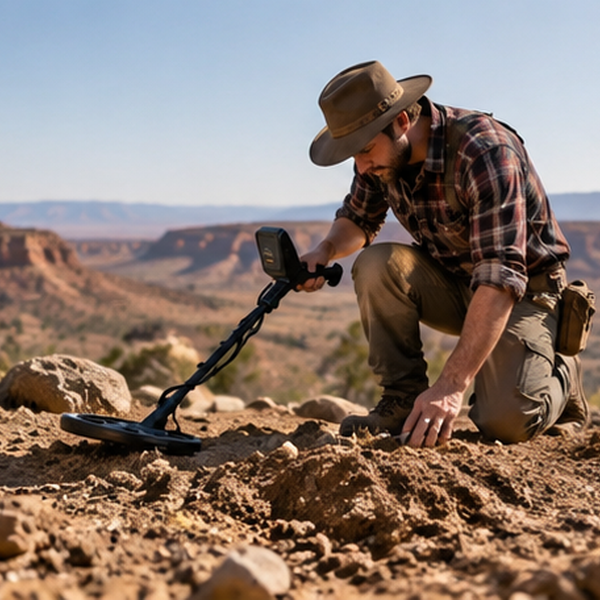
Good Gold Detectors Buyer Checklist
Before requesting your US package, write down answers to these five checks:
- Target — What type of gold will you search most often? How small are the expected nuggets? Will you also search for other targets?
- Ground — Is the soil mildly or strongly mineralized? Is it conductive? Are hot rocks common at the intended site?
- Coil — Is the terrain open, rocky, or restricted? Do you need precise fine-gold work or wider coverage? Which approved coil is actually included?
- Controls — How much prospecting experience do you have? Do you want automatic operation or more advanced audio and ground adjustments?
- Support — What warranty applies in the US? Which accessories, batteries, chargers, and compatible coils come with the offer? What setup help is available?
Once you answer these questions, model comparison becomes easier. Browse available gold detector options before asking Goldot-Tec to match the correct detector and coil package to your field plan.
Frequently Asked Questions
What makes good gold detectors reliable?
A reliable gold detector should match the expected target size and ground conditions. It should also provide a stable setup that the operator can use correctly. Coil suitability, battery equipment, construction, warranty, and technical support matter as well. Reliability does not mean guaranteed depth or guaranteed gold recovery. Instead, look for repeatable target responses, appropriate technology, verified specifications, and a package suited to your field plan.
Should a beginner choose the same gold detector as an experienced prospector?
Not always. A beginner may gain more value from automatic sensitivity, simpler ground handling, lower weight, and a manageable interface. An experienced prospector may prefer a professional PI or specialist platform with more control and several coil choices. However, ground conditions can outweigh experience level. Therefore, a beginner working very difficult mineralization should still choose technology suited to that environment and then plan for training.
How can I compare my gold detector options before buying?
Start with target size, soil conditions, terrain, coil requirements, and experience level. Then compare only detectors that meet those requirements. If you want a wider shortlist after completing these checks, use Goldot-Tec’s Best Gold Detector 2026 comparison. Finally, ask Goldot-Tec to confirm the current package, compatible coils, included equipment, warranty terms, support, availability, and delivery options for your US state.
Shop Your US Gold Prospecting Match
Good Gold Detectors do not need to win a universal ranking.
They need to fit the buyer.
A small-gold prospector may prioritize GOLD MONSTER 2000.
Meanwhile, difficult mineralized ground can move the decision toward GPX 6000 or Garrett Axiom.
Experienced users may require the specialist capability of GPZ 8000.
Another buyer may choose MANTICORE because gold is only one part of a wider coin, jewelry, relic, and beach search plan.
All of these choices can be valid.
The deciding factors are the same five checks.
Start with the target.
Then evaluate the ground.
Next, choose the correct coil strategy.
Afterwards, match the controls to your experience.
Finally, confirm the package and support.
An Arizona prospecting plan may emphasize small gold and difficult ground.
A Colorado project may make terrain, transport, and long-session ergonomics more important.
However, neither state automatically determines the detector.
The actual site should guide the purchase.
Buying in the United States? Ask Goldot-Tec about availability and delivery options for your state. Share your target size, expected ground conditions, terrain, experience level, and coil requirements. Then request a prospecting package that matches the way you actually plan to search.