

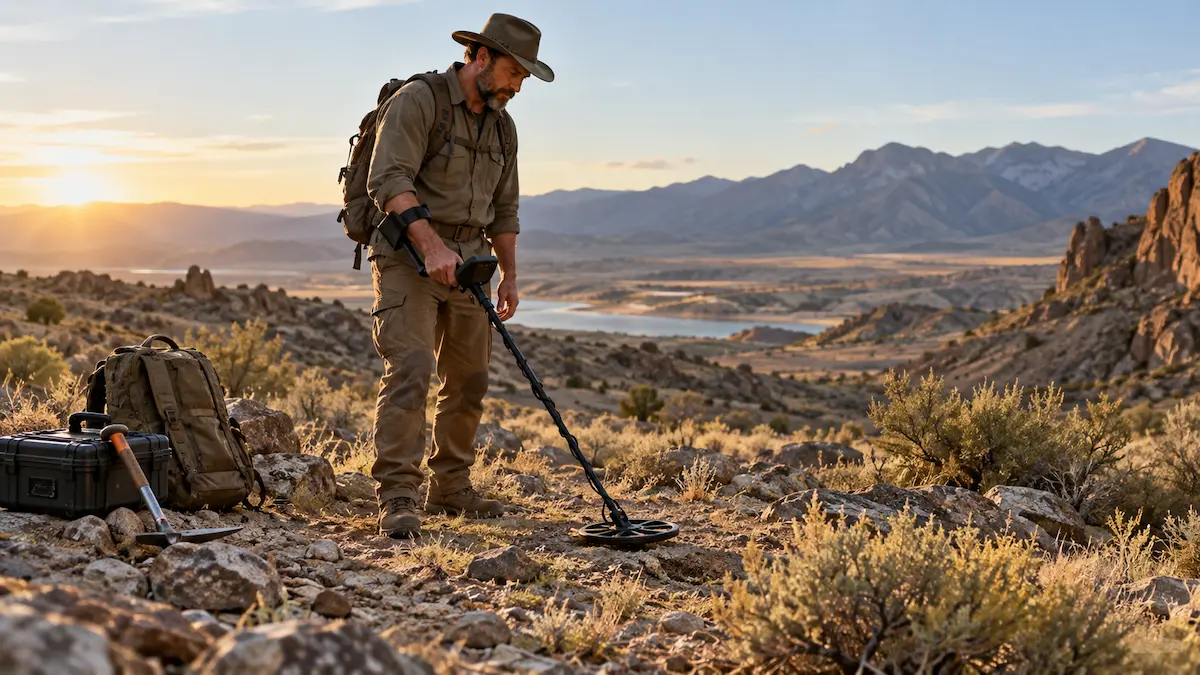
Choosing the Best Gold Detector 2026 starts with the type of natural gold you expect to search for. Therefore, US buyers should not select a detector from one depth claim or a general ranking alone.
Small nuggets create different buying priorities from larger natural-gold targets. Likewise, mild ground can require a different setup from difficult mineralized terrain.
Your experience level also matters. A new prospector may value automatic controls and a compact coil. However, an experienced operator may prefer a specialist platform with more ground control.
For that reason, this guide focuses on detectors that have a clear role in raw-gold prospecting. It does not fill the list with beach machines, general coin detectors, or 3D scanners.
The shortlist includes current professional PI systems, Minelab’s ZVT and GeoZVT platforms, specialist gold-focused detectors, and high-frequency options for smaller targets.
If you already know that natural gold is your main objective, you can also explore Goldot-Tec gold detectors and compare the available US prospecting options.
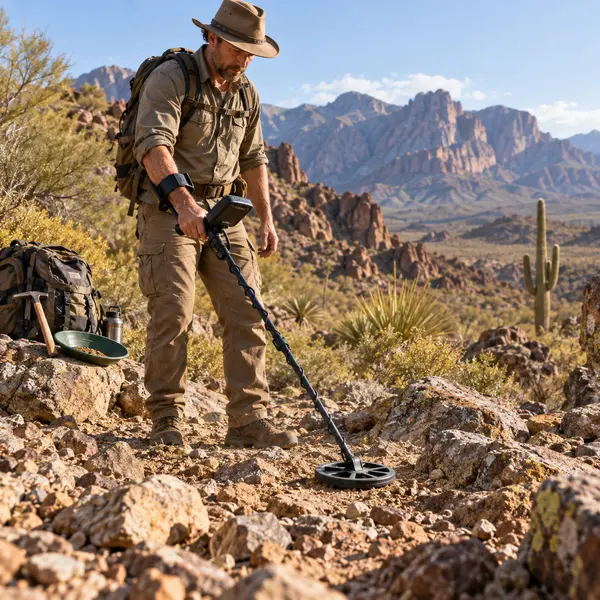
Gold Detector Choices for US Prospectors
No single detector fits every US prospecting project. Instead, each model should solve a specific field problem.
A buyer searching small natural gold may prioritize sensitivity and coil control. Meanwhile, difficult ground can move the decision toward a PI or another specialist platform.
Portability also matters. For example, long walks or remote access can make detector weight an important buying factor.
The following shortlist ranks ten relevant prospecting detectors by buying role. Therefore, the order should not be treated as a guaranteed depth ranking.
| Detector | Main Technology | Best Buying Role |
|---|---|---|
| Minelab GPZ 8000 | GeoZVT | Advanced natural-gold prospecting |
| Minelab GPX 6000 | GeoSense-PI | Difficult ground and flexible nugget sizes |
| Garrett Axiom | Pulse Induction | Mineralized ground and professional prospecting |
| Minelab GPZ 7000 | ZVT | Experienced gold prospectors |
| Gold Monster 2000 | Multi-Au | Small gold and easier operation |
| Minelab SDC 2300 | MPF Pulse Induction | Compact all-terrain gold searching |
| XP ORX | High-frequency selectable platform | Lightweight small-gold prospecting |
| Gold Monster 1000 | 45 kHz VLF | Simpler small-gold searching |
| Garrett Goldmaster 24K | 48 kHz VLF | Fine-gold sensitivity |
| Nokta Gold Kruzer | 61 kHz VLF | High-frequency prospecting and wet conditions |
Top 10 Best Gold Detectors 2026
1. Minelab GPZ 8000
The GPZ 8000 sits at the specialist end of Minelab’s current gold range. It uses GeoZVT technology and supports Z-Set concentric toroidal coil options.
Therefore, it makes the most sense for advanced prospectors who want a platform designed around demanding natural-gold work.
The detector offers several ground-focused search modes. In addition, coil choices let the buyer match the setup more closely to target size and terrain.
However, GPZ 8000 should not become the automatic purchase for every buyer. Its specialist platform suits users who actually need that level of prospecting equipment.
Who Should Choose GPZ 8000
Consider it when natural gold forms the main search target.
It also fits experienced users who understand ground response and subtle signals. Moreover, it can suit buyers who want several coil strategies.
Beginners should first decide whether a simpler detector would cover their normal sites.
US buyers can review the Minelab GPZ 8000 configuration before requesting package availability.
2. Minelab GPX 6000
GPX 6000 uses GeoSense-PI technology. Therefore, it belongs in the professional PI prospecting category.
The platform focuses on gold searching in difficult environments. In addition, automatic ground and noise functions reduce some setup work.
Its coil options also support different search priorities. For example, one coil can suit fine-gold work while another can support broader coverage.
Why Choose GPX 6000
Choose it when mineralized ground plays a major role in your search.
It also suits prospectors who want a professional PI system without moving to the GPZ platform.
Moreover, its relatively compact design can help during long field sessions.
However, buyers should still confirm the exact coil package before ordering.
3. Garrett Axiom
Garrett Axiom uses Pulse Induction technology and targets serious gold prospectors.
Its search modes include Fine, Normal, Large, and Salt. Therefore, the operator can adapt the machine to different target and ground priorities.
Garrett also uses its Terra-Scan ground-balance system on the Axiom platform.
When Axiom Makes Sense
Axiom deserves attention when difficult mineralization is common.
Likewise, it can suit buyers who want a professional PI detector with several coil options.
Fine mode focuses strongly on smaller targets. Meanwhile, Large mode shifts the search priority toward larger targets and difficult ground.
As a result, Axiom offers a clear alternative for prospectors comparing professional PI platforms.
4. Minelab GPZ 7000
GPZ 7000 remains relevant in 2026. However, buyers should understand its technology correctly.
The detector uses ZVT technology rather than conventional PI. It also uses a Super-D coil and dedicated gold and ground modes.
Therefore, GPZ 7000 still fits experienced natural-gold prospectors who value its established platform.
GPZ 7000 or GPZ 8000
The newer GPZ 8000 changes the buying discussion.
As a result, new buyers should compare both platforms rather than assuming the GPZ 7000 remains the automatic premium choice.
Existing GPZ 7000 users may have another decision. They should identify which newer features would solve a real field need before changing equipment.
In either case, target size and terrain should lead the comparison.
5. Minelab Gold Monster 2000
Gold Monster 2000 focuses on natural-gold prospecting with Minelab’s Multi-Au platform.
It operates across simultaneous frequencies and provides several ground modes. In addition, it gives the user numeric target information.
The detector also uses a compact 5-inch standard Double-D coil.
Small-Gold Buyer Fit
Gold Monster 2000 can suit buyers who prioritize smaller natural-gold targets.
Moreover, its automatic functions can reduce the setup burden for less experienced users.
Ground options also provide flexibility as conditions change.
However, buyers should not interpret easier controls as guaranteed field performance. Mineralization, target size, and technique still matter.
You can review the current Gold Monster 2000 package before ordering.
6. Minelab SDC 2300
SDC 2300 uses MPF Pulse Induction technology.
Its biggest buying difference is its compact, rugged design. The detector folds down significantly for transport.
In addition, the complete system can operate underwater within its stated limit.
Best Use for SDC 2300
Consider SDC 2300 when small natural gold and difficult ground are both important.
It can also suit buyers who work around rocky gullies or water.
Moreover, its compact design can help prospectors who travel with limited equipment space.
However, it uses a fixed Minelab coil format. Therefore, buyers who want a broad factory coil range may prefer another platform.
7. XP ORX
XP ORX offers a very different prospecting experience.
The platform supports high frequencies and includes Gold and Fine Gold programs. Therefore, it can suit small-target work.
Its lightweight wireless design also separates it from heavier professional PI systems.
Choose ORX for Mobility
ORX makes sense when low weight matters.
For example, a prospector covering large areas on foot may value the lighter setup.
Its Fine Gold program also targets mineralized ground and smaller gold.
However, ORX belongs to a different technology category from Axiom or GPX 6000. Consequently, buyers should not compare them through one depth figure.
8. Minelab Gold Monster 1000
Gold Monster 1000 remains a specialist gold detector with a 45 kHz VLF platform.
Automatic ground tracking and sensitivity controls simplify the basic workflow.
Therefore, it can still suit buyers who want a focused natural-gold machine without many advanced controls.
Best Fit for Newer Prospectors
The detector works well as a buying option for users who prioritize simplicity.
Its 5-inch coil configuration also suits focused small-target searching.
However, Gold Monster 2000 adds newer technology and more target information.
As a result, buyers should compare the two based on field requirements rather than age alone.
9. Garrett Goldmaster 24K
Garrett Goldmaster 24K uses a 48 kHz platform designed around small-gold prospecting.
High-frequency VLF technology can provide strong sensitivity to small low-conductive targets.
Therefore, this model fits prospectors working mild to moderate ground where small-gold sensitivity leads the buying decision.
Who Should Consider Goldmaster 24K
Consider it when you want a dedicated VLF gold detector.
It also suits buyers who prefer a more traditional high-frequency prospecting platform.
However, very difficult mineralization may move the decision toward PI equipment.
Ground conditions should therefore come before brand preference.
10. Nokta Gold Kruzer
Gold Kruzer uses a 61 kHz VLF system.
It provides several search modes and automatic, manual, and tracking ground balance.
In addition, Nokta designed the system for full submersion within its stated waterproof limit.
Gold Kruzer Buying Role
The high operating frequency makes Gold Kruzer relevant to fine-target prospecting.
Its waterproof design can also help in suitable wet prospecting environments.
However, high frequency alone does not make one detector universally better.
Instead, compare ground response, coil requirements, ergonomics, and your normal target size.
Best Gold Detector 2026 by Target Size
Target size should narrow the shortlist before you compare extra features.
Fine and Small Gold
Small targets often favor sensitive, gold-focused systems.
Gold Monster 2000 belongs strongly in this category. Likewise, Gold Monster 1000, Goldmaster 24K, XP ORX, and Gold Kruzer deserve consideration.
A compact coil can also help around bedrock and narrow spaces.
However, small-gold sensitivity does not guarantee easy operation in severe mineralization.
Mixed Nugget Sizes
Prospectors who expect a wider target-size range may prefer a more flexible professional platform.
GPX 6000 and Garrett Axiom fit this role well.
Their PI-based approaches also make them relevant where mineralization creates problems for high-frequency VLF equipment.
Advanced Natural-Gold Projects
GPZ 8000 and GPZ 7000 sit closer to the specialist end of this guide.
These systems suit buyers willing to learn a more advanced prospecting workflow.
However, the correct model still depends on terrain, target size, coil choice, and operator experience.
Match Detector Technology to Ground Conditions
Technology should solve a ground problem. Therefore, avoid choosing PI, VLF, or another system because the acronym sounds more professional.
High-Frequency VLF
High-frequency VLF systems can perform strongly on small natural-gold targets.
Goldmaster 24K and Gold Kruzer are clear examples.
Gold Monster 1000 also uses a gold-focused VLF platform.
However, difficult mineralization can make high sensitivity harder to manage.
Pulse Induction
PI systems generally offer stronger ground handling in demanding prospecting conditions.
GPX 6000, Garrett Axiom, and SDC 2300 fall into this broad category.
Still, each system uses different processing and controls.
Therefore, do not treat all PI detectors as identical.
ZVT and GeoZVT
GPZ 7000 uses ZVT technology.
Meanwhile, GPZ 8000 moves to Minelab’s newer GeoZVT platform.
Both belong to specialist natural-gold prospecting rather than general recreational metal detecting.
Consequently, buyers should compare them according to real field needs.
Planning for Alaska or Nevada Conditions
State names alone do not tell you which detector to buy.
Instead, start with the actual site.
Alaska Prospecting Preparation
An Alaska prospecting trip can involve very different weather, terrain, access, and ground conditions depending on location and season.
Therefore, check the detector’s stated operating limits before the trip.
Battery planning also matters in remote areas.
Likewise, transport size can influence the choice when equipment must travel long distances.
SDC 2300 and other compact systems may appeal to mobile prospectors. Meanwhile, another site may justify a larger professional platform.
Most importantly, confirm land status and prospecting permissions before detecting.
Nevada Gold Search Planning
Nevada also contains varied prospecting environments.
Therefore, do not assume every site has identical mineralization.
First, identify the land and claim status.
Next, consider the actual ground response and expected gold size.
Then, choose the detector technology.
A PI platform may make sense in difficult ground. However, a high-frequency system can remain useful when small targets dominate and ground conditions allow stable operation.
Beginner and Experienced Prospector Choices
Experience level should shape the purchase.
New Prospectors
Beginners often benefit from fewer setup decisions.
Gold Monster 1000 offers a straightforward workflow.
Meanwhile, Gold Monster 2000 adds more information while retaining automatic functions.
Goldmaster 24K can also suit buyers who specifically want a high-frequency gold platform.
However, beginners should not select a detector only because marketing describes it as easy.
Practice still matters.
Experienced Prospectors
Experienced users may want more ground control and coil flexibility.
Therefore, GPX 6000 and Garrett Axiom can become more relevant.
GPZ 8000 also serves the advanced end of natural-gold prospecting.
However, more technology only creates value when the operator needs it.
Search Coil Planning Before You Buy
The detector is only one part of the system.
Coil choice can change maneuverability, target response, and ground coverage.
Small Coils
Compact coils can work well around rocks and exposed bedrock.
They can also help when precise coil placement matters.
Therefore, prospectors focused on smaller gold may value a compact setup.
Larger Coils
Larger coils can increase ground coverage.
They may also suit different target-size priorities.
However, they become less convenient in tight terrain.
As a result, do not automatically choose the largest coil available.
Confirm the Package
Always confirm the exact coil supplied with your Goldot-Tec package.
In addition, check the batteries, charging equipment, headphones, carrying equipment, and other included components.
Do not assume a product photo represents the complete order.

Gold Detector Package Selection for USA Buyers
A commercial buying decision should end with the correct package.
Therefore, make a short field plan before contacting Goldot-Tec.
Define Your Primary Goal
State whether you mainly expect small natural gold, mixed nuggets, or a specialist prospecting project.
Next, describe the ground.
Then, explain your experience level.
Describe Your Search Environment
Tell Goldot-Tec whether the site is rocky, open, wet, remote, or difficult to access.
Also mention whether portability matters.
This information can change the recommended setup.
Confirm Before Ordering
Ask about current availability.
Then confirm the supplied coil and accessories.
Likewise, review warranty terms and delivery options for your state.
A suitable package should support your real prospecting plan.
Common Gold Detector Buying Mistakes
Several mistakes can lead to the wrong detector.
Buying Only for Advertised Depth
No detector provides one guaranteed depth for every gold target.
Target size changes the response.
So do orientation, ground conditions, coil choice, moisture, interference, and technique.
Therefore, avoid selecting a detector from one depth number.
Assuming PI Is Always Better
PI can provide important advantages in difficult ground.
However, high-frequency detectors can be highly useful for small-gold work.
The correct technology depends on the site.
Buying a General Detector for Specialist Prospecting
A general coin detector can detect gold.
However, that does not automatically make it the best raw-gold prospecting purchase.
This guide therefore prioritizes gold-focused platforms.
Ignoring Weight and Transport
Long prospecting days involve repeated sweeping and walking.
Consequently, ergonomics can influence real field use.
Consider the complete detector and coil setup before ordering.
Ignoring Land Access
Owning the right detector does not give permission to prospect anywhere.
Therefore, verify land ownership, claim status, and applicable rules before detecting.
Best Gold Detector 2026 Buying Summary
The Best Gold Detector 2026 is the detector that matches your gold size, ground, experience, and field plan.
GPZ 8000 fits advanced buyers who want Minelab’s current flagship gold platform.
GPX 6000 and Garrett Axiom make strong choices for professional PI prospecting.
GPZ 7000 remains relevant for experienced ZVT users.
Meanwhile, Gold Monster 2000 focuses strongly on smaller natural-gold targets and manageable operation.
SDC 2300 adds compact PI capability for demanding terrain.
XP ORX offers an especially lightweight high-frequency approach.
Gold Monster 1000 keeps the workflow simpler.
Finally, Goldmaster 24K and Gold Kruzer give buyers additional high-frequency options for fine-gold prospecting.
Do not select your detector from the model name alone.
Instead, identify the primary target first.
Then evaluate the ground.
Afterwards, choose the technology and coil.
Finally, request a package that matches your actual use.
Frequently Asked Questions
Does gold size change which detector I should choose?
Yes. Smaller natural-gold targets often place more importance on sensitivity, coil size, and controlled sweep technique. Therefore, high-frequency and dedicated small-gold systems can make sense. Larger or mixed target sizes may shift the decision toward another platform. Ground mineralization should also influence the final choice.
Which gold detector suits a beginner?
A beginner should prioritize manageable controls and a detector that matches the real target. Gold Monster 1000 offers a simpler gold-focused workflow. Meanwhile, Gold Monster 2000 adds more target information and ground options. However, a new buyer working difficult mineralized ground may still need another technology. Therefore, choose by site conditions as well as experience.
How do I know which Goldot-Tec options are currently available?
Tell Goldot-Tec your target size, expected terrain, experience level, and US delivery state. Then ask the team to confirm the current detector options, coil configuration, included accessories, warranty terms, and delivery choices. Availability can change, so confirm the exact package before placing your order.
Choose Your US Gold Prospecting Package
Buying the right gold detector starts with a specific field objective.
First, decide whether small natural gold is your main priority.
Next, assess the ground and expected mineralization.
Then, consider portability and coil requirements.
After that, compare the prospecting platforms that fit those conditions.
The final step is package confirmation.
Buying in the United States? Ask Goldot-Tec about availability and delivery options for your state. Explain whether you are preparing for permitted prospecting in Alaska, Nevada, or another US location. Then request a setup based on your target size, ground conditions, experience level, and field requirements.