

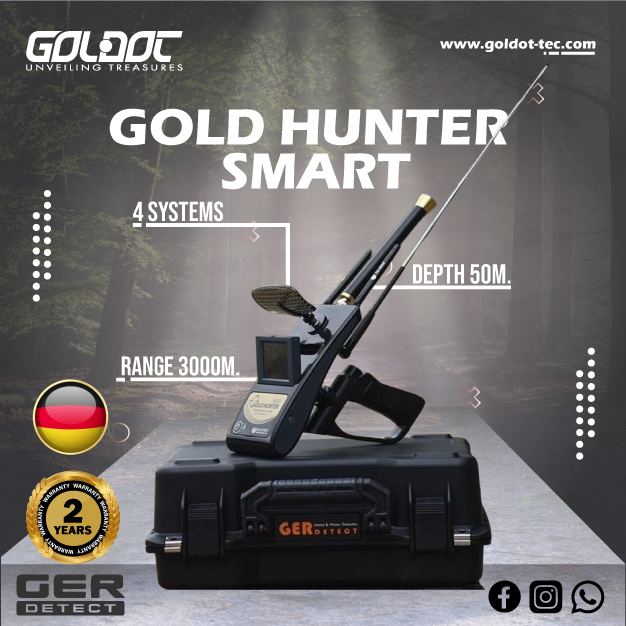
Evaluating an Apron long range locator in 2026 requires more than reading the maximum range or depth displayed on a product page. Buyers should examine the exact model, published specifications, operating method, target-selection claims, warranty, testing conditions, and whether performance can be repeated when the operator does not know where the target is located.
Long-range locator products are marketed differently from conventional coil-based metal detectors, so claimed range, depth, and discrimination should be treated as specifications to verify rather than guaranteed field results.
This guide explains what is currently documented about Apron systems, what buyers should test, how to design a repeatable field evaluation, and when a conventional detector may provide a more suitable solution.
What the Apron Long Range Locator Is
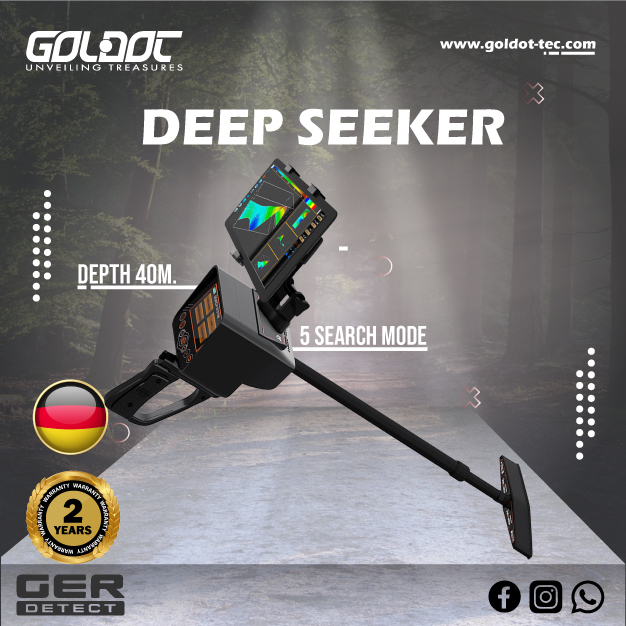
The Apron Range is marketed as a long-range area-scanning system. A current retailer listing describes adjustable scanning distance, multiple target modes, ground-balancing functions, frequency controls, and titanium L-shaped receiver rods.
The same listing publishes the following specifications:
| Area | Published Specification | What Buyers Should Verify |
|---|---|---|
| Scanning range | 300–2,100 meters | Repeatable detection at defined distances |
| Maximum depth | Up to 18 meters | Target size, material, soil and test method |
| Target modes | Gold, silver, copper, bronze and others | Blind discrimination accuracy |
| Ground functions | APR and DGB | Performance in different soil conditions |
| Frequency control | DDS with manual adjustment | How frequency relates to measurable detection |
| Antenna system | WCC with titanium L rods | Operator influence on indication |
| Weight | Approximately 4.6 kg | Confirm package configuration |
These figures are published seller specifications, not independent test results.
What Buyers Should Verify Before Purchasing
Before buying an Apron long range locator, request enough information to distinguish documented hardware specifications from performance claims.
Important documentation includes:
- Exact model name and model generation
- Manufacturer identification
- Current user manual
- Complete package contents
- Written scanning-range specifications
- Written depth specifications
- Target-size requirements for depth claims
- Explanation of target discrimination
- Battery and charging specifications
- Serial-number verification
- Warranty duration and coverage
- Repair procedure
- Training availability
- Return and refund conditions
A demonstration alone should not replace written documentation.
Buyers comparing this type of equipment can also review the broader category of long range metal detectors before deciding whether the operating principle fits their intended search.
How Long-Range Locator Claims Should Be Evaluated
Performance claims become useful only when the conditions behind them are defined.
For example, a stated detection depth has limited meaning without knowing:
- Target material
- Target dimensions
- Target mass
- Burial depth
- Soil type
- Mineralization
- Ground moisture
- Nearby metallic interference
- Operator position
- Number of successful repetitions
The same principle applies to horizontal scanning distance.
A device responding once during a demonstration does not establish repeatable metal detector accuracy. A useful test should determine whether the response occurs consistently under controlled conditions.
This is particularly important for systems involving operator-held rods. The U.S. Geological Survey notes that traditional dowsing methods involving rods and similar instruments have not demonstrated reliable performance under scientific examination. That does not by itself test a specific Apron model, but it makes controlled blind testing especially important when evaluating any operator-responsive locating system.
Designing a Repeatable Field Test
A practical test of an Apron long range locator should reduce the possibility that the operator already knows the answer.
Define the Target
Record:
- Metal type
- Dimensions
- Weight
- Burial depth
- Ground conditions
- Starting distance
Do not change these factors during the same test series.
Hide the Target Location From the Operator
Another person should position the target without telling the operator which test location contains it.
This helps separate device response from visual clues or expectations.
Use Multiple Test Positions
Prepare several possible locations.
Some should contain targets and others should contain nothing.
The operator should not know which is which.
Repeat the Test
One successful indication is insufficient.
Run multiple trials and record:
- Correct detections
- Missed targets
- False positives
- Incorrect discrimination
- No-target responses
The results can then be compared with the success rate expected by chance.
Why Blind Testing Is More Useful Than Demonstrations
A normal demonstration may allow information to reach the operator unintentionally.
For example, the operator may notice:
- Disturbed soil
- Marker positions
- Vehicle tracks
- Changes in terrain
- Assistant behavior
- Previous target locations
Blind testing removes many of these clues.
A stronger evaluation asks a simple question:
Can the Apron long range locator identify the correct target location repeatedly when the operator does not know where it is?
If target discrimination is claimed, the test should also determine whether the device can distinguish gold from another metal without the operator knowing which material is present.
Environmental Factors That Can Affect Testing
Field conditions should remain as consistent as possible.
Record factors including:
- Wind
- Terrain slope
- Nearby vehicles
- Fences and large metal structures
- Electrical cables
- Communication equipment
- Soil mineralization
- Ground moisture
- Operator fatigue
- Search direction
Changing several conditions simultaneously makes the results difficult to interpret.
Marketing Claims vs Measurable Performance
A useful buying guide converts marketing language into questions that can actually be tested.
| Marketing Claim | Measurable Question |
|---|---|
| Long detection range | At what distance can a defined hidden target be located repeatedly? |
| Deep detection | What target size can be found at a measured depth? |
| Gold discrimination | Can hidden gold be distinguished from other metals during blind trials? |
| Ground balancing | Does performance remain consistent across different soil conditions? |
| High accuracy | What percentage of trials are correct? |
| Reduced false signals | How many no-target locations produce an indication? |
This approach provides more useful information than descriptions such as “excellent accuracy” or “professional performance.”
Confirming a Located Area With a Second Method
A long-range indication should ideally be considered a search lead rather than final confirmation.
After identifying an area, confirm it using another appropriate method.
Depending on the target, this may include:
- Conventional coil detector
- Pulse induction detector
- Ground scanner
- Magnetometer
- Ground-penetrating radar
- Geological investigation
Using two independent methods reduces the risk of excavating based only on one unexplained response.
Apron Long Range Locator vs Conventional Metal Detector
The two categories should not automatically be treated as substitutes.
| Requirement | Long-Range Locator | Conventional Detector |
|---|---|---|
| Broad-area reconnaissance | Claimed primary application | Usually limited |
| Coins and small metallic targets | Requires verification | Common application |
| Repeatable coil response | Not coil based | Standard operating principle |
| Target ID | Model dependent | Available on many models |
| Pinpointing | Requires confirmation | Common feature |
| Mineralized-ground searching | Claimed on some systems | Specialized PI/VLF options available |
| Independent confirmation | Recommended | Can itself serve as confirmation |
Buyers whose main objective is finding coins, jewelry, relics, or natural gold at conventional detecting distances may find standard metal detectors easier to evaluate through repeatable target testing.
Apron Long Range Locator Price and Overall Value
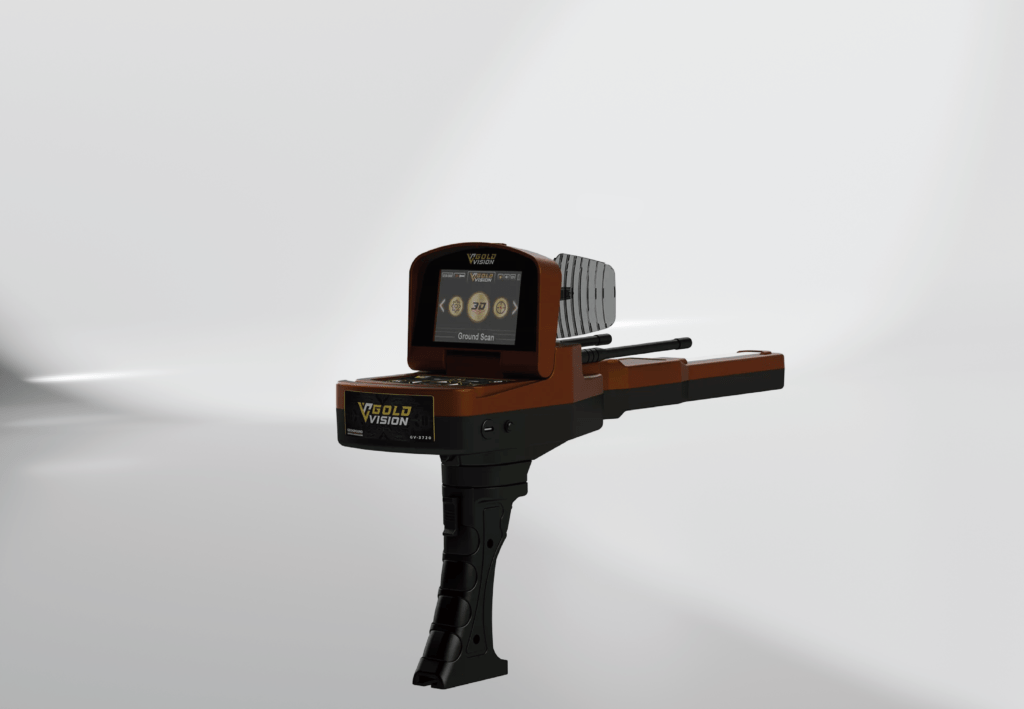
There is no single Apron long range locator price that should be assumed for every market or model.
Before comparing quotations, check whether the package includes:
- Main locator unit
- Receiver rods or antennas
- Charger
- Battery
- Transport case
- User manual
- Training
- Warranty
- Software or accessories
Also calculate shipping, customs duties, taxes, payment fees, and possible warranty transportation.
A lower purchase price does not represent better value if the performance required by the buyer cannot be demonstrated under repeatable conditions.
Questions About Warranty, Training, and Returns
Before payment, ask the seller:
- Can I perform my own blind test?
- Can the test use my own target?
- What performance is guaranteed in writing?
- What happens if results cannot be reproduced?
- Is training included?
- Where are repairs completed?
- Who pays international warranty shipping?
- Are accessories covered?
- What is the return period?
- Are opened or field-tested detectors returnable?
These conditions can be as important as the equipment specification.
Frequently Asked Questions
What is an Apron long range locator?
It is a category of area-scanning equipment marketed for locating selected underground targets from a distance. Exact functions depend on the Apron model.
How deep can an Apron long range locator detect?
Some seller documentation publishes depth claims of up to 18 meters for Apron Range systems, but buyers should request the target size, soil conditions, and test procedure behind any depth figure before treating it as expected field performance.
Can it discriminate between gold and other metals?
Apron Range listings include selectable target modes. The practical discrimination accuracy should be verified through blind tests using different hidden materials.
How should I test an Apron locator before buying?
Use known targets, several possible locations, no-target control positions, multiple repetitions, and an operator who does not know the target location.
Is a demonstration enough?
No. A demonstration can show how the controls operate, but repeatable blind testing provides stronger evidence about detection performance.
Should I confirm a target with another detector?
Yes. Confirming an indicated area using a conventional detector, scanner, or another appropriate geophysical method provides stronger evidence before excavation.
Is an Apron long range locator better than a conventional detector?
That depends on the application. For conventional coin, relic, jewelry, or nugget detecting, coil-based detectors provide a more established and directly testable response. A long-range system should be evaluated according to whether its claimed advantages can be reproduced for your intended targets.
The Apron long range locator should therefore be selected on documented specifications, repeatable testing, warranty protection, and suitability for the intended search—not on maximum range or depth figures alone. Define the target, test the system without knowing the target location, record the results, and independently confirm any suspected area before making a major buying or excavation decision.