

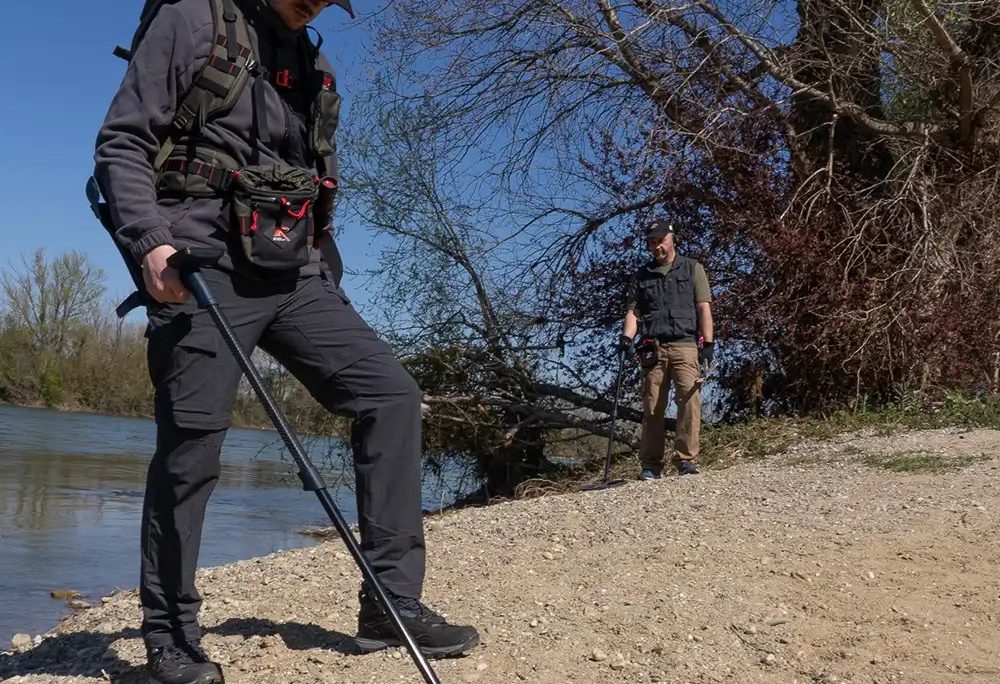
Choosing the best amateur metal detector is not about finding the machine with the longest specification list. Amateur detectorists need equipment that helps them develop real skills: recognizing target tones, understanding Target ID, maintaining a controlled sweep, adjusting sensitivity, learning ground balance, pinpointing accurately, and deciding when an uncertain signal deserves investigation.
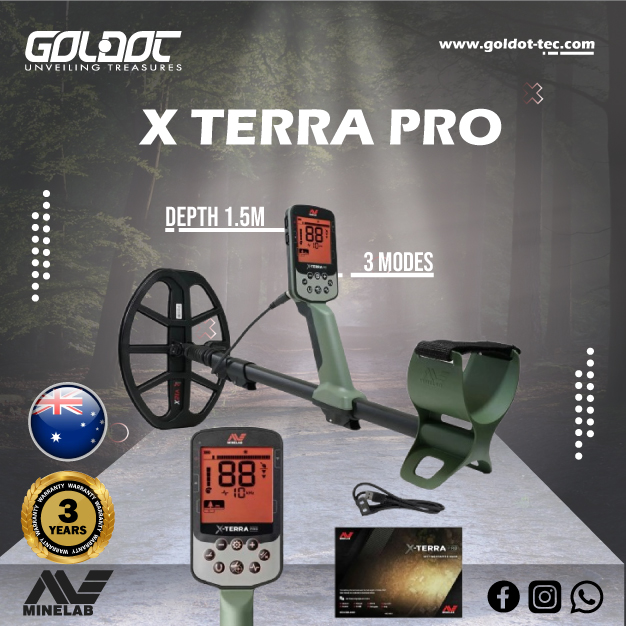
Goldot-Tec currently lists several detectors that fit this progression, including Nokta Simplex Lite, Minelab X-TERRA PRO, and XP ICON. The three represent different learning approaches. Simplex Lite emphasizes straightforward single-screen operation, X-TERRA PRO combines accessible preset modes with additional frequency control, while XP ICON introduces simultaneous multi-frequency technology in a lightweight wireless platform.
The best amateur metal detector should therefore provide enough simplicity for enjoyable weekend detecting while leaving enough capability for the user to improve instead of immediately needing another machine.
What the Best Amateur Metal Detector Should Do Well
An amateur detector should teach useful detecting habits without creating unnecessary complexity.
The most valuable features include:
- Clear Target ID
- Recognizable audio tones
- Simple search modes
- Adjustable sensitivity
- Ground-balance controls
- Pinpoint function
- Comfortable weight and shaft adjustment
- Versatile stock search coil
- Waterproof construction where useful
- Stable operation in common hunting environments
A detector does not need every professional adjustment to be effective.
The best amateur metal detector should allow the operator to spend more time learning targets and less time constantly changing settings.
That is especially important during the first months, because better technique often produces more improvement than adding more controls.
Avoid Toy Detectors and Overly Complex Machines
Amateur buyers can make two opposite mistakes.
The first is choosing equipment with so few useful controls that it becomes limiting as soon as the user understands the basics.
The second is purchasing a highly specialized professional platform and spending every hunt changing settings without understanding why.
A strong amateur machine sits between those extremes.
Look for:
- Several useful terrain modes
- Target discrimination
- Reliable pinpointing
- Enough sensitivity adjustment
- Practical ground control
- Software updates where supported
- A coil ecosystem that allows later specialization
The objective is gradual improvement.
Nokta Simplex Lite: A Straightforward Skill-Building Platform
Nokta Simplex Lite is one of the clearest candidates for the best amateur metal detector when easy operation is the priority.
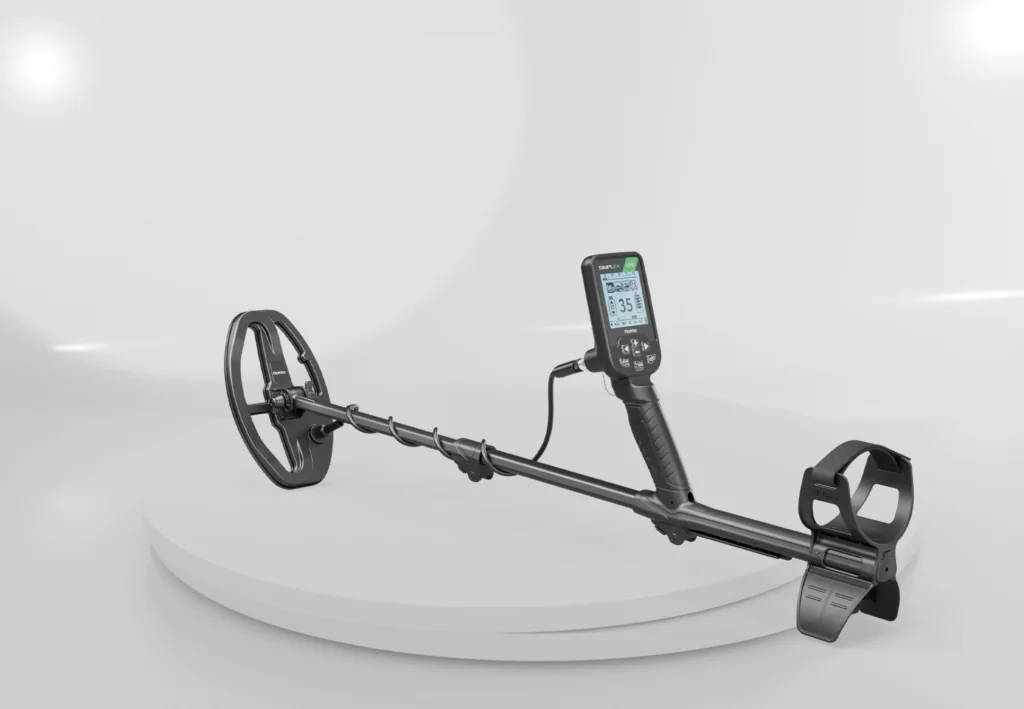
Goldot-Tec documents a 15 kHz operating frequency with Terrain, Park, Beach, and All Metal modes. It also provides a 01–99 Target ID scale, pinpoint mode, automatic and manual ground adjustment, sensitivity control, frequency shift, iron rejection, vibration, and lighting functions.
The detector is fully waterproof to 5 meters and weighs approximately 1.2 kg. Its adjustable shaft collapses significantly for transportation.
Why It Works for Amateur Practice
Simplex Lite gives users enough information to learn:
- The difference between stable and unstable Target IDs
- How iron sounds compared with non-ferrous targets
- How sensitivity affects stability
- How Beach Mode behaves differently from Park Mode
- How pinpointing improves recovery accuracy
The single-screen approach also reduces menu distraction.
Instead of continuously modifying settings, an amateur can focus on the relationship between sound, target number, sweep direction, and what eventually comes out of the ground.
Minelab X-TERRA PRO: A Strong Step-Up First Detector
The X-TERRA PRO is especially interesting when the buyer wants the best amateur metal detector to remain useful after the beginner stage.
Goldot-Tec describes Park, Field, and Beach search environments together with PRO-SWITCH technology, allowing manual selection of 5, 8, 10, or 15 kHz. It also provides automatic, manual, and tracking ground balance, high-resolution Target ID, multiple audio modes, noise cancellation, sensitivity adjustment, and pinpointing.
The detector is IP68 waterproof to 5 meters and weighs approximately 1.3 kg in its documented configuration.
Why an Intermediate Detector Can Be a Smart First Buy
An amateur does not need to experiment with every frequency immediately.
Start by using:
- Park for everyday public-ground detecting
- Field for open terrain and relic-style searching
- Beach when working conductive sand environments
Later, frequency selection becomes a useful learning tool.
This progression helps users understand that detector performance changes according to target type and ground conditions rather than one setting always being superior.
XP ICON: Lightweight Multi-Frequency Learning
XP ICON takes a different route toward the best amateur metal detector.
Goldot-Tec describes it as an ultra-lightweight, fully wireless detector using XP FMF Fast Multi-Frequency technology. The page specifically presents the interface as intuitive and turn-on-and-go while remaining suitable for more experienced detectorists.
This combination can appeal to an amateur who wants modern multi-frequency technology without beginning with a highly complicated professional control system.
Practical advantages include:
- Wireless architecture
- FMF simultaneous multi-frequency operation
- Lightweight construction
- Simple factory programs
- Ground-control options
- Adjustable detection settings
- Waterproof construction to 5 meters
For adults who detect during long weekend sessions, low weight can be almost as important as an additional technical feature.
Search Modes That Help Amateur Users Progress
Search modes should provide useful starting points, not become settings the user never understands.
A good progression looks like this:
Park Mode
Learn Target ID and modern-trash behavior.
Parks may contain:
- Coins
- Aluminum
- Bottle caps
- Foil
- Jewelry
- Iron fragments
This environment is excellent for learning dig-or-skip decisions.
Field or Terrain Mode
Open ground teaches sweep control, overlap, and how weaker targets sound without the constant interruption of modern trash.
Beach Mode
Beach searching introduces conductive salt, different ground responses, and the importance of using a detector designed for the environment.
The best amateur metal detector should make movement between these environments understandable rather than requiring a completely new setup every time.
Target ID, Audio Tones, and Dig Decisions
Target ID is useful, but amateurs should avoid treating one number as absolute identification.
A buried object may change its response because of:
- Orientation
- Depth
- Corrosion
- Soil mineralization
- Nearby metal
- Coil position
Use a simple test.
When a target appears:
- Sweep it normally.
- Shorten the sweep.
- Watch the Target ID.
- Turn approximately 90 degrees.
- Sweep again.
- Compare the audio.
- Decide whether the response repeats.
The best amateur metal detector helps provide enough information to make this process easier, but field experience teaches the final interpretation.
Detector Weight for Weekend Use
Comfort is frequently underestimated.
A detector may look light when held for thirty seconds inside a store but feel very different after several hours of repetitive swinging.
Goldot documents Simplex Lite at approximately 1.2 kg and X-TERRA PRO around 1.3 kg, while XP ICON is specifically positioned around an ultra-lightweight architecture.
Also adjust:
- Shaft length
- Armrest position
- Grip
- Coil angle
A correctly fitted detector reduces unnecessary wrist effort and makes consistent sweep height easier.
Practice Drills That Improve Results Faster
The best amateur metal detector becomes much more useful when the owner practices intentionally.
Build a Small Test Area
Place known targets on or in controlled ground:
- Coin
- Iron nail
- Aluminum pull tab
- Brass object
- Small jewelry item
Sweep each target from several angles.
Learn the sound before trying to memorize numbers.
Practice Pinpoint Accuracy
Place a coin where you can see it.
Sweep normally until it produces a signal, then use Pinpoint and predict the exact center.
Repeat until your target recovery becomes consistent.
Adjust Sensitivity Gradually
Start moderately.
Increase sensitivity until the detector becomes noticeably unstable, then reduce it slightly.
This teaches an important lesson: maximum sensitivity is not automatically the best operating setting.
Log Real Finds
Record:
- Target ID
- Audio behavior
- Search mode
- Soil type
- Actual recovered object
After several hunts, patterns become much more useful than generic online Target ID charts.
Recognizing Unstable Signals
An amateur should learn not to reject every imperfect response.
Iron, nearby targets, depth, and unusual orientation can produce inconsistent signals.
Instead of immediately ignoring one, try:
- Changing sweep direction
- Shortening the sweep
- Reducing sensitivity slightly
- Moving the coil more slowly
- Checking whether the signal has a repeatable center
This skill becomes particularly important at older sites containing dense iron.
When to Change Search Coils
Do not buy multiple coils immediately.
Learn the stock coil first.
After enough field experience, you may discover that you need:
Better separation: consider a smaller coil for iron-heavy or trash-filled locations.
Greater coverage: consider a larger coil for clean open fields.
Better maneuverability: use a smaller or narrower coil around rocks, vegetation, or foundations.
The best amateur metal detector should ideally offer enough accessory compatibility that the owner can adjust the platform later rather than replacing the entire detector.
When an Intermediate Detector Is the Smarter First Buy
Simple equipment is helpful, but not everyone needs the most basic detector.
X-TERRA PRO or XP ICON may make sense as a first purchase when the user already knows they will:
- Detect regularly
- Search several terrain types
- Hunt beaches
- Learn advanced Target ID
- Experiment with frequency behavior
- Keep the detector for several seasons
Simplex Lite remains attractive when minimum setup complexity is more important.
The right amateur detector should match how seriously the hobby will be pursued.
A Practical Amateur Detector Shortlist
| Detector | Best Fit | Main Skill-Building Strength |
|---|---|---|
| Nokta Simplex Lite | Straightforward amateur detecting | Modes, Target ID, discrimination, pinpointing |
| Minelab X-TERRA PRO | Amateur wanting room to develop | Frequency selection and broader controls |
| XP ICON | Lightweight modern setup | Wireless FMF and multi-terrain progression |
These profiles are more useful than ranking the machines by unsupported universal depth.
Frequently Asked Questions
What is the best amateur metal detector for someone completely new?
Nokta Simplex Lite is particularly easy to learn because Goldot documents a single-screen interface, four main search modes, Target ID, pinpointing, and automatic/manual ground adjustment.
Should an amateur start with a multi-frequency detector?
It is not required. A straightforward single-frequency detector can teach excellent fundamentals. Multi-frequency systems become especially useful when the operator expects varied terrain or wants broader adaptability.
Is X-TERRA PRO too advanced for an amateur?
No. Goldot specifically describes it as easy to start by selecting Park, Field, or Beach, while its additional controls provide room to grow as skills improve.
Does a better detector automatically provide better finds?
No. Search location, sweep technique, coil control, target interpretation, and recovery discipline all matter. A skilled operator with a familiar detector can outperform a poorly trained user with more sophisticated equipment.
When should an amateur upgrade?
Upgrade when you can identify a specific limitation: poor saltwater performance, insufficient target separation, unsuitable weight, lack of required waterproofing, or a need for more specialized technology.
What should I practice during my first month?
Focus on Target ID repeatability, tones, pinpointing, controlled sweep height, moderate sensitivity, different search modes, and recording what signals actually become after recovery.
Conclusion
The best amateur metal detector is a machine that helps the user become a better detectorist rather than simply providing more settings.
Simplex Lite emphasizes straightforward operation and core detecting skills. X-TERRA PRO provides a clear pathway into frequency control and broader adjustments. XP ICON combines lightweight wireless construction with modern FMF technology for users who want a more advanced starting platform.
Choose based on how often you plan to detect, what environments you will search, and how much technical learning you enjoy. Then practice with known targets, maintain consistent sweep technique, log your finds, and learn why signals change.
That experience will ultimately matter more than chasing the longest specification sheet.
Explore additional best metal detectors or browse the wider metal detector store when you are ready to compare other detector categories.