

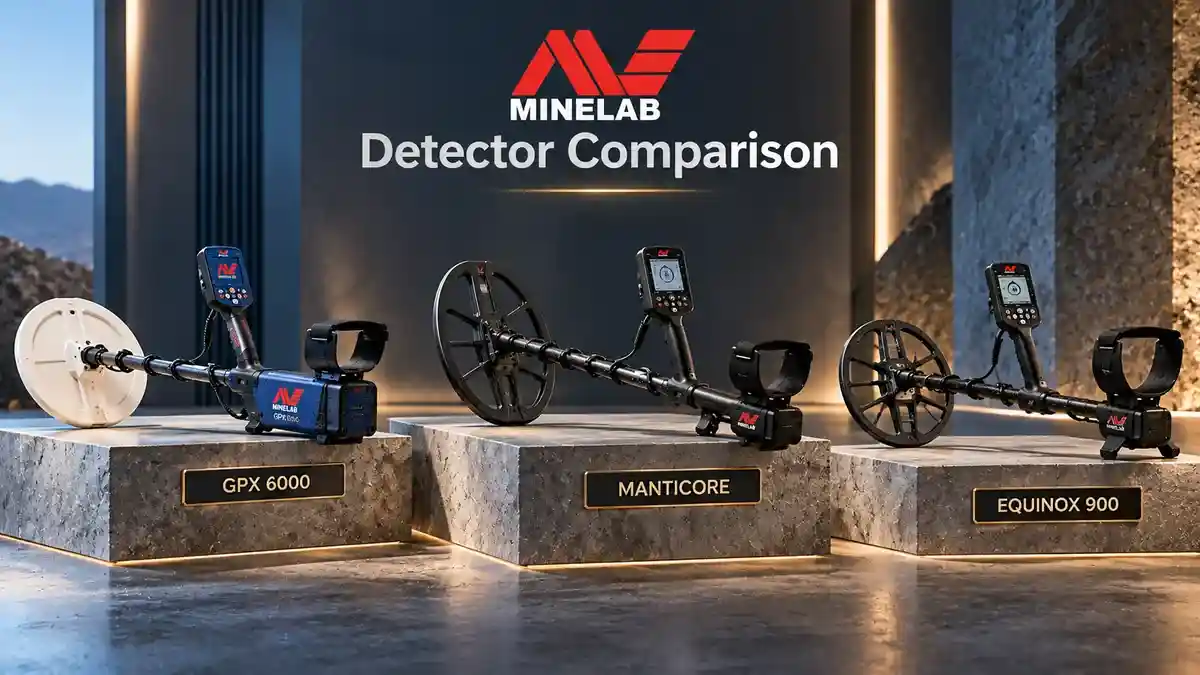
A Minelab metal detector comparison chart helps US buyers choose the right detector for their targets, ground conditions, and experience. A conventional detector designed for coins, jewelry, and wet beaches serves a different purpose from a specialist pulse-induction machine intended for natural-gold prospecting in mineralized soil.
Minelab offers several detector families, including X-TERRA, EQUINOX, MANTICORE, GOLD MONSTER, GPX, and GPZ. Each provides different technologies, search modes, coil configurations, and operating requirements.
This guide compares Minelab models according to their intended applications, practical advantages, and limitations. Whether you are searching authorized sites in Texas, prospecting in Arizona, or detecting along permitted Florida beaches, the goal is to select suitable equipment before requesting your Goldot-Tec package.
Minelab Detector Families at a Glance
The first step in using a Minelab metal detector comparison chart is understanding the role of each detector family.
Minelab offers conventional metal detectors for coins and relics alongside dedicated prospecting systems designed for natural gold.
The main families include:
- X-TERRA family: Accessible conventional detecting with straightforward search controls and selectable operating frequencies on X-TERRA PRO.
- EQUINOX family: Multi-IQ simultaneous multi-frequency technology for coins, jewelry, relics, beaches, and selected gold-prospecting applications.
- MANTICORE: Advanced Multi-IQ+ technology with detailed two-dimensional target information.
- GOLD MONSTER family: Specialist natural-gold detectors focused on small-target sensitivity and manageable operation.
- GPX family: Pulse-induction systems designed for natural-gold prospecting, including difficult mineralized ground.
- GPZ family: Advanced specialist gold-prospecting systems using Minelab’s dedicated gold-detection technologies.
- VANQUISH and Safari: Conventional treasure-detecting platforms offering different levels of multi-frequency operation and user control.
Each family serves a particular purpose.
For example, EQUINOX and MANTICORE can provide valuable Target ID information for mixed-target searches, while GPX and GPZ equipment emphasizes specialist natural-gold detection.
Buyers can explore the Minelab detector range to review available model categories before narrowing their shortlist.
Minelab Metal Detector Comparison Chart by Search Purpose
The following Minelab metal detector comparison chart focuses on buyer suitability rather than repeating a long list of technical specifications.
It identifies the main target, expected experience level, purchasing advantage, and practical limitation of each model.
| Minelab Model | Primary Search Target | Experience Level | Main Buying Advantage | Practical Limitation |
|---|---|---|---|---|
| X-TERRA PRO | Coins, jewelry, relics, parks, beaches | Beginner to intermediate | Straightforward controls and selectable single frequencies | Does not provide simultaneous Multi-IQ operation |
| EQUINOX 900 | Coins, jewelry, relics, beaches, occasional natural gold | Intermediate to advanced | Multi-IQ versatility and detailed Target ID | Less specialized than professional PI systems for difficult goldfields |
| MANTICORE | Premium coin, jewelry, relic, and beach searches | Intermediate to advanced | Multi-IQ+ and detailed 2D Target Trace | Advanced controls require additional learning |
| GOLD MONSTER 1000 | Small natural-gold nuggets | Beginner to intermediate prospector | 45 kHz VLF and automatic ground assistance | Less versatile for conventional coin hunting; control box is not submersible |
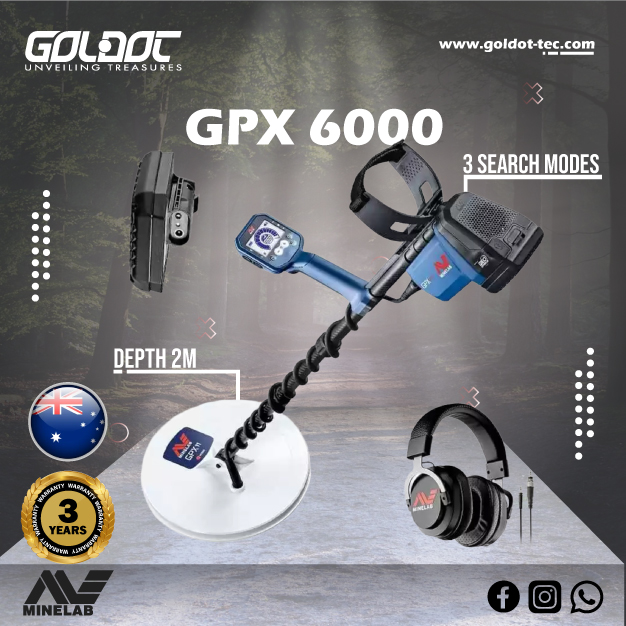
| GPX 6000 | Natural gold in mineralized ground | Intermediate to professional prospector | GeoSense-PI and specialist ground handling | Less conventional Target ID information; control box is rainproof |
| GPZ 7000 | Advanced natural-gold prospecting | Advanced to professional | ZVT technology and specialist goldfield capability | More demanding equipment and less suitable for general coins and beaches |
This table does not establish one universally superior Minelab detector.
Instead, it helps eliminate models that do not match the planned search.
For example, a buyer mainly interested in beach jewelry may benefit more from EQUINOX 900 than from GPX 6000.
However, difficult gold-bearing ground can justify moving toward a specialist prospecting system.
X-TERRA PRO for Accessible General Detecting
The Minelab X-TERRA PRO provides an accessible starting point in this Minelab metal detector comparison chart.
It combines conventional target identification with controls that allow the operator to develop additional detecting skills.
The detector uses PRO-SWITCH technology, allowing selection of individual operating frequencies according to the search mode.
Its available frequencies include 5, 8, 10, and 15 kHz, with the 8 kHz option used for Beach operation.
Unlike EQUINOX 900, X-TERRA PRO does not use simultaneous Multi-IQ technology.
Best Applications for X-TERRA PRO
X-TERRA PRO can suit buyers interested in:
- Coins and jewelry at authorized parks.
- Historical relic searching.
- General field detecting.
- Beach detecting within the manufacturer’s recommendations.
- Developing practical detecting skills.
- Straightforward operation with room for adjustment.
The detector provides Park, Field, and Beach search modes, ground-balance controls, and audio options.
It also carries an IP68 waterproof rating to 5 meters.
However, underwater searching requires compatible accessories, and the waterproof rating should not be interpreted as guaranteed saltwater performance.
X-TERRA PRO Buying Considerations
Its main advantage is providing a manageable learning path.
A beginner can start with suitable factory settings and gradually explore frequency selection, sensitivity, discrimination, and audio behavior.
However, buyers who regularly encounter several target categories may prefer a simultaneous multi-frequency system.
Review X-TERRA PRO buying details before selecting the detector, and confirm the included coil, charging equipment, audio accessories, and current availability.
EQUINOX 900 for All-Terrain Detecting
The EQUINOX 900 occupies an important position in the Minelab metal detector comparison chart because it supports several conventional detecting applications.
Its Multi-IQ technology processes multiple frequencies simultaneously, providing versatility across different targets and ground conditions.
The detector includes Park, Field, Beach, and Gold search programs.
It also provides a 119-segment Target ID system, adjustable recovery settings, and several audio options.
Best Applications for EQUINOX 900
EQUINOX 900 can suit buyers who regularly search for:
- Coins and jewelry.
- Historical relics.
- Targets in wet or dry beach sand.
- Mixed metallic objects in parks and fields.
- Occasional natural-gold nuggets.
- Targets across different ground conditions.
The detector’s versatility makes it relevant to users who want one conventional platform for several environments.
However, its Gold mode should not be confused with the specialist capabilities of Minelab’s professional PI equipment.
EQUINOX 900 Package Considerations
EQUINOX 900 weighs approximately 1.27 kg and uses a collapsible carbon-fiber shaft.
It is also IP68 waterproof to 5 meters according to Minelab.
Manufacturer documentation identifies EQX11 and EQX06 coils in the standard model configuration, although buyers should confirm what a particular dealer package includes.
The choice of coil can affect maneuverability and target separation.
For example, a compact coil can be useful around iron contamination, while a larger coil can provide additional coverage in open ground.
Before ordering, compare EQUINOX 900 package details and confirm the supplied coils, headphones, charging accessories, and warranty arrangements.
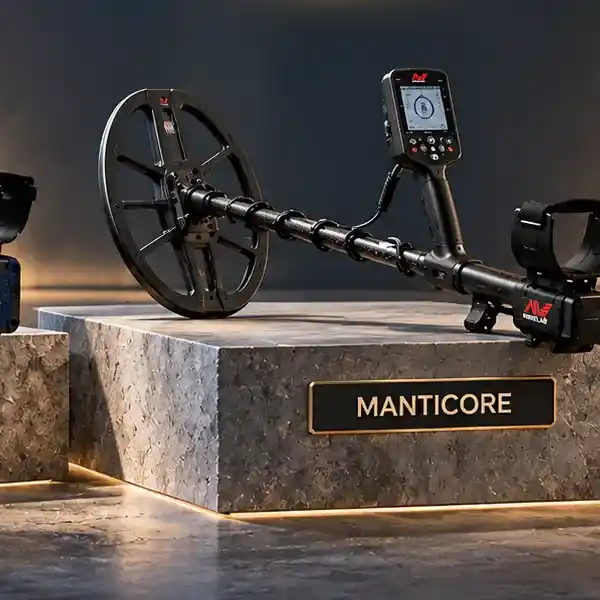
MANTICORE for Advanced Target Analysis
MANTICORE moves the Minelab metal detector comparison chart toward advanced conventional detecting.
The detector uses Multi-IQ+ technology and provides a two-dimensional Target Trace system.
This display presents information about conductive and ferrous target characteristics, helping operators evaluate complicated responses.
However, visual target information remains an interpretation of detector signals rather than guaranteed identification of a buried object.
Best Applications for MANTICORE
MANTICORE deserves consideration for:
- Historical sites containing iron contamination.
- Heavily searched parks.
- Coin and jewelry detection.
- Wet and dry beach environments.
- Mixed metallic targets.
- Users who value detailed audio and target analysis.
Its advanced identification features can be useful when unwanted iron and desirable targets occur close together.
Nevertheless, no discrimination system can reliably remove every unwanted signal without affecting some potentially valuable targets.
MANTICORE Buying Limitations
MANTICORE weighs approximately 1.3 kg and features a carbon-fiber shaft.
Its IP68 waterproof rating allows operation to 5 meters within the manufacturer’s requirements.
However, advanced search controls can create a learning period.
A buyer who only needs simple coin detecting may not use every feature available on this platform.
In contrast, experienced users who regularly adjust target information and audio settings may find those controls valuable.
Review the MANTICORE target-analysis package and confirm the standard coil, additional compatible coils, audio equipment, and current package contents.
Minelab Models for Natural-Gold Prospecting
Natural-gold searching requires a separate part of the Minelab metal detector comparison chart.
Small nuggets, difficult mineralization, and rocky terrain create different requirements from conventional coin or jewelry detecting.
Gold-focused VLF equipment and professional PI detectors can both be useful, but their advantages depend on actual field conditions.
GOLD MONSTER 1000 for Small Gold
GOLD MONSTER 1000 is a specialist 45 kHz VLF detector designed for natural-gold prospecting.
It provides automatic ground handling, noise cancellation, and sensitivity adjustment.
The detector also uses a Gold Chance indicator to support target evaluation.
Best suited to:
- Beginners learning natural-gold prospecting.
- Small gold nuggets.
- Restricted rocky areas.
- Bedrock cracks and narrow gullies.
- Buyers who prefer automatic assistance.
Its compact coil configuration can help operators search around rocks and vegetation.
However, the Gold Chance indicator does not guarantee that a recovered object will contain gold.
Another important limitation concerns waterproofing.
The search coil is waterproof within its specified rating, but the control box is rain-resistant rather than fully submersible.
Therefore, buyers should not treat GOLD MONSTER 1000 as a dedicated underwater detector.
GPX 6000 for Mineralized Goldfields
GPX 6000 serves another buyer category.
It uses Minelab’s GeoSense-PI technology for specialist gold detection in difficult ground.
The system analyzes ground and target signals while operating and provides automatic ground-handling assistance.
Its main applications include:
- Natural-gold prospecting.
- Mineralized gold-bearing ground.
- Searches involving different nugget sizes.
- Professional or frequent prospecting.
- Conditions where conventional VLF detection becomes difficult.
However, PI technology does not eliminate every ground response or guarantee greater depth on every target.
Search coil selection, ground settings, and operator technique remain important.
GPX 6000 weighs approximately 2.1 kg and has compatible Double-D and Monoloop coil options.
Its search coils are waterproof to their stated limit, while the control unit is splash- and rain-resistant rather than fully submersible.
Buyers considering professional prospecting should review the GPX 6000 prospecting configuration and confirm the supplied coils, batteries, headphones, charging equipment, and support.
GPZ Models for Specialist Gold Prospecting
The GPZ family serves experienced buyers whose main objective is serious natural-gold prospecting.
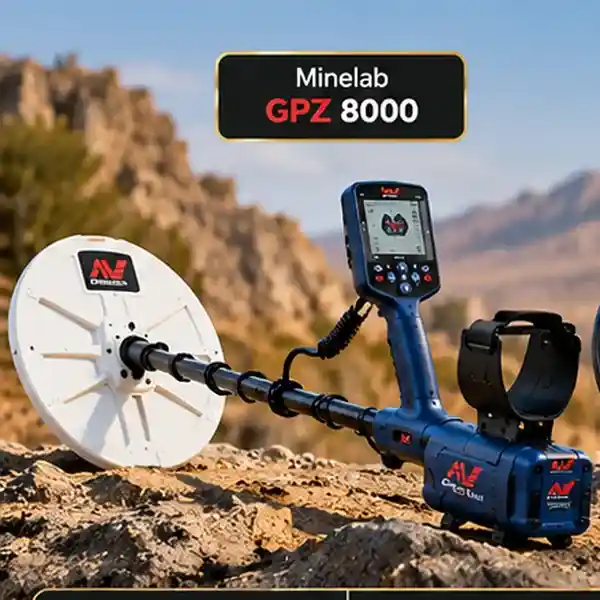
Minelab GPZ 7000 uses ZVT technology and a specialist Super-D coil system.
It is designed for demanding goldfield applications rather than general recreational coin hunting.
Goldot-Tec also lists GPZ 8000 in its wider Minelab range.
However, buyers should evaluate the two models separately because their technologies, coil systems, and package requirements differ.
GPZ systems can suit users who:
- Regularly search authorized goldfields.
- Have substantial prospecting experience.
- Need specialist ground-handling capability.
- Understand audio and target-response interpretation.
- Can manage professional equipment and accessories.
Their specialist capabilities may be unnecessary when the primary target is beach jewelry or park coins.
Best Minelab Choices for Coins and Relics
Conventional target identification plays a larger role in coin and relic hunting than in some specialist natural-gold applications.
For these searches, the most relevant Minelab families include X-TERRA, EQUINOX, MANTICORE, VANQUISH, and established FBS models such as Safari.
Conventional Detector Options
- X-TERRA PRO: Suitable for buyers who want straightforward operation and selectable single frequencies.
- VANQUISH 540 Pro-Pack: An alternative for conventional coin and jewelry detecting, with package details requiring confirmation.
- EQUINOX 900: Useful for buyers moving between parks, fields, beaches, and occasional prospecting.
- MANTICORE: Relevant to experienced users seeking detailed target information and advanced controls.
- Safari: An established Full Band Spectrum platform that may suit buyers looking for a more traditional detecting workflow.
The best choice depends on the site, expected target, required discrimination, and operator experience.
For example, heavily contaminated relic locations may make recovery behavior and smaller search coils particularly important.
Meanwhile, open fields can favor different coil configurations.
No conventional detector can guarantee that its Target ID will correctly identify every buried object.
Beach and Water Detection Options
Waterproofing deserves a separate section in the Minelab metal detector comparison chart because protection differs significantly between model families.
A waterproof coil does not mean the detector’s control unit can be submerged.
Waterproof Ratings by Model
Minelab identifies the following protection levels for relevant models:
- X-TERRA PRO: IP68 waterproof to 5 meters.
- EQUINOX 900: IP68 waterproof to 5 meters.
- MANTICORE: IP68 waterproof to 5 meters.
- EQUINOX 800: Waterproof to 3 meters.
- GOLD MONSTER 1000: Waterproof search coil, rain-resistant control box.
- GPX 6000: Waterproof search coils to their specified limit, splash- and rain-resistant control unit.
- GPZ 7000: Waterproof search coil, with separate protection limits for the control housing.
These ratings should not be generalized across every Minelab product.
Additionally, underwater searches can require compatible waterproof headphones and properly secured connections.
Saltwater stability and full-device waterproofing are separate purchasing considerations.
Therefore, buyers planning regular beach searches should evaluate both features before ordering.
Target Identification and User Controls
The Minelab metal detector comparison chart becomes more useful when buyers understand how different families present target information.
Conventional Target Identification
EQUINOX 900 provides a 119-segment Target ID system.
MANTICORE adds a two-dimensional display with conductive and ferrous information.
These features can help conventional detectorists assess signals and decide which targets deserve investigation.
However, Target ID can be affected by ground conditions, target orientation, nearby metal, and signal strength.
Gold Prospecting Information
GOLD MONSTER 1000 uses a Gold Chance indicator designed around natural-gold prospecting.
GPX and GPZ systems prioritize specialist gold responses and difficult-ground operation.
As a result, their controls and information should not be judged solely against conventional coin-detector displays.
A larger number of identification features does not automatically make one machine better for natural gold.
Weight, Ergonomics, and Travel Practicality
A Minelab metal detector comparison chart should also consider how equipment feels during long detecting sessions.
Weight, balance, shaft configuration, and transport requirements can change how practical a detector becomes in the field.
Practical Ergonomic Factors
- Detector weight: A lighter platform may help reduce fatigue during extended searches.
- Shaft configuration: Adjustable and collapsible shafts can improve transport and carrying convenience.
- Search coil weight: Larger coils may increase coverage but can also change balance.
- Session duration: Frequent long searches make comfort and consistent coil movement important.
- Terrain access: Rocky ground, steep slopes, and vegetation may favor compact equipment.
- Transport requirements: Professional prospecting systems may need extra space for batteries, coils, and carrying equipment.
Approximate Minelab Detector Weights
Manufacturer specifications identify the following approximate operating weights:
- X-TERRA PRO — 1.3 kg.
- EQUINOX 900 — 1.27 kg.
- MANTICORE — 1.3 kg.
- GOLD MONSTER 1000 — 1.33 kg.
- GPX 6000 — 2.1 kg.
- GPZ 7000 — 3.32 kg.
These figures provide a general comparison.
However, the complete field package can weigh more when additional coils, batteries, accessories, and carrying equipment are included.
Buyers traveling to remote prospecting sites should evaluate the complete setup rather than selecting a detector from control-unit weight alone.
Beginner-Friendly vs Advanced Minelab Models
The best Minelab detector is not necessarily the model with the largest number of settings.
Experience level should influence the purchase because additional controls offer benefits only when the operator understands how to use them.
Simpler Minelab Options
Buyers who prefer straightforward operation may consider:
- X-TERRA PRO: For general detecting with accessible search programs.
- GOLD MONSTER 1000: For natural-gold prospecting with automatic assistance.
These models serve different targets, so simplicity should not be the only comparison factor.
Intermediate and Advanced Options
Buyers willing to learn additional controls may consider:
- EQUINOX 900: For versatile conventional detecting and adjustable target information.
- MANTICORE: For advanced target analysis and detailed audio customization.
- GPX 6000: For specialist PI prospecting in challenging ground.
- GPZ family: For experienced users with dedicated natural-gold requirements.
These categories describe operating demands rather than a universal quality ranking.
Professional equipment may still be appropriate for a less-experienced buyer when the project requires it, provided suitable training is available.
How to Choose Without Unnecessary Features
Use the Minelab metal detector comparison chart to narrow your options before requesting a package.
The most useful approach starts with the expected target and finishes with written confirmation of the detector configuration.
Step 1 — Define Your Primary Target
Decide whether your main objective involves coins, jewelry, relics, natural-gold nuggets, or mixed targets.
A buyer focused on small natural gold should not automatically choose the same detector as someone searching Florida beaches.
Step 2 — Describe the Ground
Identify the normal search environment.
Consider mineralization, wet salt sand, iron contamination, rocky terrain, and potential electromagnetic interference.
These factors can change which technology is suitable.
Step 3 — Match the Technology
Choose X-TERRA PRO when straightforward selectable-frequency detecting meets your needs.
Consider EQUINOX 900 for multi-frequency versatility or MANTICORE for advanced conventional target analysis.
Evaluate GOLD MONSTER for small natural gold and specialist GPX or GPZ systems when the ground and prospecting requirements justify them.
Step 4 — Assess Your Experience
Decide whether you prefer factory search programs or more advanced adjustments.
A complicated detector can be a poor purchase when its additional features remain unused.
However, a professional machine may be justified if its specialist technology solves a clear field problem.
Step 5 — Confirm the Complete Package
Ask Goldot-Tec to identify:
- Exact detector model and version.
- Standard search coil.
- Additional compatible coils, if required.
- Headphones and audio accessories.
- Battery and charging equipment.
- Waterproof limitations.
- Warranty documentation.
- Training and technical support requirements.
Step 6 — Confirm Your US Order
Provide your US delivery state and intended search conditions.
Ask Goldot-Tec to check current availability, exact package contents, and delivery options before completing the order.
This avoids relying on outdated product listings or assuming optional accessories are included.
Frequently Asked Questions
Which Minelab detector is suitable for a beginner?
X-TERRA PRO is a practical option for beginners interested in coins, jewelry, and general detecting because it provides accessible search modes and room to learn additional settings. GOLD MONSTER 1000 is another option when the buyer specifically wants to search for natural gold.
Should I choose EQUINOX 900 or MANTICORE?
EQUINOX 900 offers broad Multi-IQ versatility and detailed Target ID for conventional searches. MANTICORE adds Multi-IQ+ technology and two-dimensional Target Trace information. Buyers should compare their experience, required target analysis, and complete packages before ordering.
Which Minelab detector should I buy for natural gold?
GOLD MONSTER 1000 can suit small-gold prospecting where a simpler VLF platform matches the conditions. GPX 6000 uses GeoSense-PI for specialist prospecting in challenging ground, while GPZ systems serve more advanced applications. The correct choice depends on nugget size, mineralization, terrain, and operator experience.
Choose Your Minelab Detector with Goldot-Tec
A Minelab metal detector comparison chart should help buyers eliminate unsuitable equipment before choosing a specific model.
X-TERRA PRO provides an accessible route into conventional detecting, while EQUINOX 900 offers broader multi-frequency versatility.
MANTICORE appeals to buyers who need advanced target information, and GOLD MONSTER 1000 focuses on small natural-gold prospecting.
For professional goldfield applications, GPX and GPZ systems provide specialist technologies designed around different prospecting requirements.
However, no detector guarantees a particular discovery or detection depth. Performance depends on target size, metal composition, mineralization, moisture, settings, search coil, interference, and operator technique.
Buying in the United States? Contact Goldot-Tec for Availability and a personalized Minelab recommendation. Share your primary target, ground conditions, experience level, and delivery state, then request a comparison of suitable models and complete package configurations before placing your order.