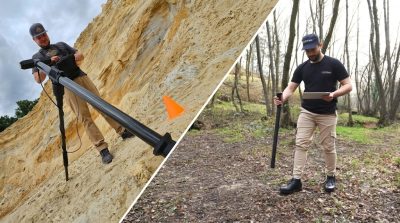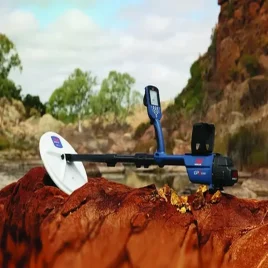


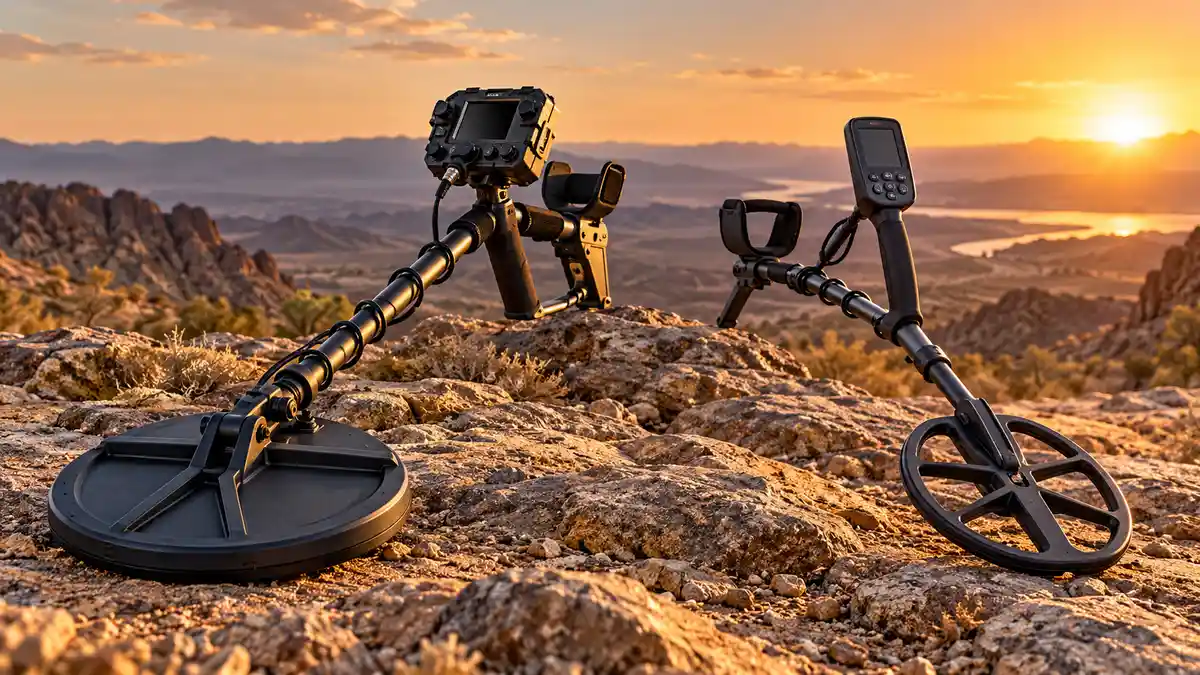
Choosing between PI vs VLF detector technology is an important buying decision for US prospectors searching for natural gold, coins, jewelry, or buried metallic targets. Each technology offers different benefits depending on target size, soil mineralization, search conditions, and operator experience. The right system should help you work effectively in your usual terrain rather than simply promise greater detection depth.
A VLF metal detector may provide useful sensitivity to small targets and more detailed discrimination, while a pulse induction metal detector can offer advantages in challenging mineralized ground. However, neither technology guarantees gold recovery or superior depth in every environment.
This guide explains the technical differences, compares suitable detector models, and helps you select the correct equipment and coil package for your search. Whether you are prospecting in Arizona, exploring Nevada goldfields, or searching authorized Florida beaches, understanding these differences can support a more informed purchase.
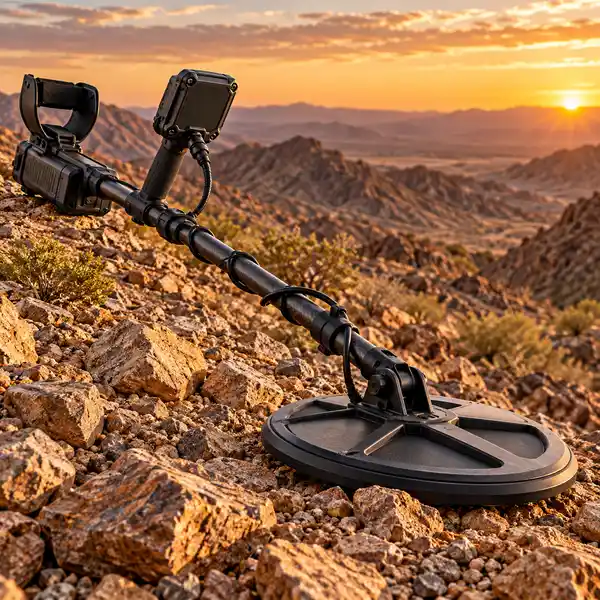
How Pulse Induction vs VLF Detectors Work
Understanding the PI vs VLF detector comparison begins with how each system detects metallic objects and responds to surrounding ground conditions.
Both technologies use electromagnetic principles, but their signal generation and processing methods differ.
VLF Metal Detector Technology
A VLF metal detector uses a continuous alternating electromagnetic field to detect metallic targets. Its search coil typically includes transmitting and receiving windings that work together to identify changes caused by nearby metal.
This technology offers several practical buying advantages:
- Target discrimination: Helps distinguish some ferrous and non-ferrous responses, allowing users to prioritize potentially interesting targets.
- Small-target sensitivity: Gold-focused high-frequency VLF detectors can respond effectively to small natural nuggets under suitable conditions.
- Target identification: Many conventional models provide numerical or audio information to support digging decisions.
- Adjustable settings: Users can configure sensitivity, ground balance, and discrimination according to their experience and environment.
- Versatile applications: Suitable configurations can support coin hunting, jewelry searches, relic detecting, and natural-gold prospecting.
However, highly mineralized soil can affect VLF stability and reduce usable sensitivity.
For buyers interested in small natural gold, the GOLD MONSTER 1000 VLF detector offers a relevant example. Its 45 kHz VLF system and automatic ground balance make it worth comparing for nugget prospecting, especially when simpler operation matters.
Pulse Induction Metal Detector Technology
A pulse induction metal detector transmits electromagnetic pulses through its search coil and evaluates the resulting signal decay to identify metallic targets.
Unlike the conventional continuous-wave approach used by VLF systems, PI detectors use pulse-based signal processing.
Their main advantages include:
- Mineralized-ground handling: Suitable PI systems can remain useful where strong ground responses challenge conventional detectors.
- Natural-gold prospecting: Specialist PI machines are designed to investigate gold targets across different mineralization conditions.
- Large-target applications: Certain PI systems support larger search coils or frames for substantial buried metallic objects.
- Salt-affected environments: Appropriate PI settings can help operators search conductive ground.
- Specialist configurations: Different coils, ground modes, and audio controls can support professional prospecting requirements.
However, PI technology does not completely eliminate mineralization effects, electromagnetic interference, or unwanted signals.
Moreover, many PI systems provide less detailed target discrimination than conventional VLF detectors.
The buying decision should therefore depend on your target and ground conditions rather than assuming PI always provides superior results.
PI vs VLF Detector Core Feature Comparison
| Feature | VLF Metal Detector | Pulse Induction Metal Detector |
|---|---|---|
| Small natural gold | Gold-focused high-frequency models can provide strong small-target sensitivity | Specialist PI models can detect small gold, with results depending on ground, coil, and settings |
| Discrimination | Often provides more detailed target identification and iron rejection | Generally more limited, although some models offer iron-checking functions |
| Mineralized soil | Performance depends on ground balance and detector design | Often offers advantages in difficult mineralized conditions |
| Saltwater environments | Suitable simultaneous multi-frequency models can perform effectively | Appropriate PI systems can handle salt-affected ground, sometimes with less discrimination |
| Coil configuration | Compact and medium coils suit many conventional searches | Coil choices can support specialist prospecting and larger metallic targets |
| Operator experience | Simple and advanced models are available | Some models offer automatic assistance, while others require more experience |
| Primary buying benefit | Target information, versatility, and suitable small-target sensitivity | Specialist ground handling and target-specific performance |
Neither technology wins every category. The strongest choice depends on the search application.
Why Prospectors Choose Pulse Induction Metal Detectors
One important reason to compare PI vs VLF detector technology is the effect of difficult soil on field performance.
Natural-gold prospecting locations may contain iron-rich minerals, hot rocks, conductive ground, and other conditions that complicate target detection.
In parts of Arizona and Nevada, for example, ground mineralization can become an important consideration when selecting a detector. However, conditions vary between individual sites and should be assessed separately.
Better Suitability for Difficult Ground
A suitable pulse induction metal detector can help reduce certain unwanted ground responses while maintaining sensitivity to metallic targets.
This makes PI technology attractive to prospectors who regularly encounter challenging mineralization.
However, the practical advantage depends on:
- Type and intensity of mineralization.
- Size and conductivity of the expected target.
- Selected ground settings.
- Search coil configuration.
- Nearby electromagnetic interference.
- Operator experience and sweeping technique.
Therefore, a PI detector should be selected because it addresses a real ground-handling problem, not simply because it is described as powerful.
GPX 6000 for Professional Gold Prospecting
The Minelab GPX 6000 provides a relevant example of specialist PI equipment.
Its GeoSense-PI technology analyzes ground and target signals while the detector operates, helping users maintain a workable search setup in challenging environments.
The detector also provides different ground settings and compatible coil options for different prospecting conditions.
Buyers considering professional natural-gold searches can review the GPX 6000 pulse induction detectorbefore requesting an appropriate package.
For US prospectors, the main purchasing considerations include ground conditions, expected nugget size, coil selection, weight, power requirements, and available technical support.
PI Discrimination and Its Limitations
Although PI detectors can provide useful performance in difficult ground, discrimination remains an important difference.
Many VLF machines offer detailed numerical target identification and adjustable iron rejection.
PI models commonly depend more heavily on audio interpretation and investigation of repeatable signals.
Some professional PI detectors include additional iron-checking features, but these should not be treated as complete material identification.
Consequently, buyers searching trash-heavy parks may prefer conventional VLF or multi-frequency equipment.
VLF Metal Detectors for Small Gold and Coin Hunting
The other side of the PI vs VLF detector decision involves target information, sensitivity to smaller objects, and ease of operation.
For many US hobbyists, a suitable VLF metal detector offers an effective combination of functionality and manageable controls.
High-Frequency VLF for Natural Gold
Gold-focused VLF detectors often use higher operating frequencies to support sensitivity to smaller, low-conductivity targets.
This makes them relevant to prospectors searching for small nuggets in suitable ground.
The Minelab GOLD MONSTER 1000 is one example, offering a 45 kHz operating frequency and automatic functions that can reduce initial setup work.
However, high operating frequency does not guarantee improved performance in every environment.
Severe mineralization can still affect signal stability, while target orientation, coil movement, and sensitivity settings influence detection.
Therefore, buyers should compare small-gold suitability and ground-handling requirements together.
VLF for Coins and Relics
Conventional VLF detectors can also suit coins, jewelry, and historical relics.
In these applications, detailed target information can be more useful than selecting a specialist prospecting machine.
Useful features include:
- Numerical Target ID for evaluating possible targets.
- Adjustable discrimination for reducing selected unwanted responses.
- Recovery-speed controls where available.
- Audio options for interpreting different target signals.
- Compatible search coils for open ground or iron-contaminated locations.
However, discrimination does not guarantee that accepted signals represent valuable metal. Jewelry, aluminum, and other targets can share overlapping responses.
For authorized parks and historical sites, choose equipment that helps you investigate signals efficiently.
Multi-Frequency Detectors for Versatile Searching
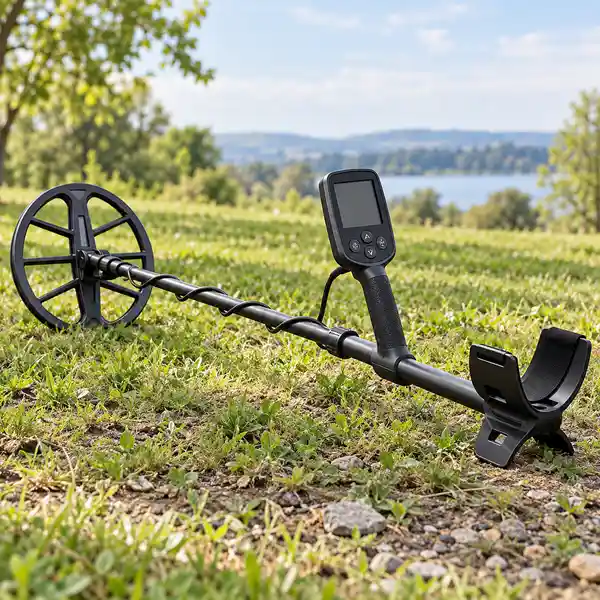
Modern simultaneous multi-frequency technology adds another dimension to the PI vs VLF detector comparison.
A multi frequency metal detector uses multiple frequency components during detection, potentially improving versatility across different target types and ground conditions.
However, simultaneous multi-frequency systems are not the same as pulse induction technology.
Many popular multi-frequency detectors belong to the broader VLF-based conventional detection category.
Advantages of Multi-Frequency Operation
A suitable multi-frequency platform can provide several buying benefits:
- Versatility across coins, jewelry, relics, and selected gold-search applications.
- Target identification for conventional detecting.
- Search modes designed for different environments.
- Ground-handling features for changing conditions.
- Saltwater-oriented operation on models designed for beach use.
However, not every multi-frequency machine uses identical signal processing or provides the same performance.
A detector with several operating frequencies should not automatically be considered deeper than a specialist PI system.
Equinox 900 for Broader Search Needs
The Minelab Equinox 900 uses Multi-IQ simultaneous multi-frequency technology.
It also provides conventional search programs for Park, Field, Beach, and Gold applications.
This makes it relevant to buyers who want one detector for several kinds of metallic targets rather than a dedicated goldfield-only platform.
Before choosing a versatile configuration, compare the Equinox 900 multi-frequency option and assess whether its search modes, waterproof design, coil choices, and controls suit your planned use.
For buyers who primarily search wet beaches, the correct waterproof setup and target identification may matter more than specialist PI capability.
PI vs VLF Detector Choices by Search Environment
Different search environments require different priorities.
Rather than selecting one universally superior technology, compare how a particular detector handles the actual conditions you expect.
Best Use Cases for PI vs VLF Detector Technology
| Hunting Scenario | Technology to Compare | Main Buying Reason | Important Limitation |
|---|---|---|---|
| Park coins and jewelry | VLF or simultaneous multi-frequency | Target ID, discrimination, and recovery speed | Valuable targets can overlap with trash signals |
| Small natural gold | High-frequency gold-focused VLF or specialist PI | Small-target sensitivity and suitable ground handling | Mineralization and coil choice affect performance |
| Mineralized goldfields | Specialist PI or other gold-focused platforms | Stability in difficult ground | PI does not eliminate every unwanted response |
| Wet saltwater beaches | Salt-capable multi-frequency or suitable PI | Management of conductive salt responses | Waterproof ratings and discrimination vary |
| Large buried metallic objects | Appropriate PI or deep-target system | Suitable coil configuration and target-scale response | Large coils may be unsuitable for small objects |
| General relic hunting | VLF or multi-frequency | Iron handling, audio information, and target separation | Difficult soil may require additional adjustments |
This comparison helps buyers choose the right technology category before selecting an individual model.
Garrett Axiom for Difficult Ground
The Garrett Axiom is another specialist pulse induction detector worth comparing.
It uses Ultra-Pulse technology and offers Fine, Normal, Large, and Salt search modes.
The detector also supports different coil configurations and Iron Check functionality with compatible Double-D coils.
These features make the Garrett Axiom prospecting options relevant to buyers who need a configurable PI system.
However, Iron Check should not be confused with complete identification of buried metals.
Choose the Axiom according to your main target, terrain, expected ground conditions, and required coil setup.
Search Coil Selection for PI and VLF Detectors
When evaluating PI vs VLF detector performance, search coils deserve attention alongside the control unit.
A detector’s actual field behavior can change with coil size, construction, and compatibility.
Small Search Coils
Smaller coils can provide useful advantages in restricted locations.
They are often worth considering for:
- Rocky prospecting areas.
- Tight spaces around vegetation.
- Locations containing nearby unwanted metal.
- Carefully controlled searches for smaller targets.
However, smaller coils cover less ground with each sweep.
Therefore, they may require more time when searching large open areas.
Medium Search Coils
Medium-sized coils often provide a practical compromise between coverage and maneuverability.
For buyers beginning with a new detector, the manufacturer’s standard configuration may be sufficient.
However, the exact coil should still be checked against the expected target size and ground conditions.
Large Search Coils
Larger coils may increase ground coverage and suit certain larger-target applications.
However, they can also increase working weight, complicate maneuvering, and respond differently to mineralized ground.
They are not automatically the strongest option for small nuggets.
Before ordering, confirm the approved coil models and compatibility with the specific detector version.
PI vs VLF Detector Buying Requirements
Choosing between PI vs VLF detector systems should involve more than a comparison of technology names.
A buying decision should account for the complete equipment package and the conditions in which it will operate.
Target and Ground Requirements
Start by identifying your primary target and usual search environment.
For example, a buyer prospecting for small natural gold in mild soil may prioritize different features from someone searching strongly mineralized ground.
Write down:
- Primary target type and expected size.
- Soil conditions and degree of mineralization.
- Water exposure and salt conditions.
- Terrain accessibility and search area.
- Current experience with detector settings.
- Required coil and audio configuration.
These details help determine whether VLF, simultaneous multi-frequency, or PI technology deserves priority.
Package and Ownership Requirements
Before requesting a detector package, confirm:
- Exact model and current product configuration.
- Standard coil and available compatible alternatives.
- Waterproof limitations of the detector and accessories.
- Battery and charging equipment.
- Headphones and audio connectivity.
- Manufacturer warranty terms.
- Setup assistance and technical support.
- Current availability and delivery arrangements in the United States.
The same detector may be offered in different configurations, so never assume that an optional coil or accessory is included without confirmation.
Compare the Correct Gold Detector Category
If your search focuses on natural nuggets rather than beach jewelry or general coin hunting, begin by reviewing the most relevant category.
Goldot-Tec provides compare gold detector categories options for buyers evaluating prospecting equipment.
Compare the appropriate technologies first, then narrow the shortlist according to ground conditions, expected gold size, operating experience, and package requirements.
Understanding Detection Depth and Field Limitations
A major problem in the PI vs VLF detector debate is the assumption that one technology always provides greater detection depth.
In practice, detection depth depends on several interacting factors.
Target Size and Orientation
A large metallic object can generate a different response from a tiny nugget.
Similarly, the orientation of a flat coin or irregular gold specimen affects its electromagnetic response.
Therefore, comparing detectors through a universal depth figure can be misleading.
Ground Mineralization
Highly mineralized soil can introduce unwanted signals that affect sensitivity and stability.
Although suitable PI systems often provide advantages in difficult ground, they do not become immune to all environmental effects.
Likewise, well-configured VLF machines can remain effective in conditions appropriate to their design.
Sensitivity and Coil Settings
Maximum sensitivity does not always produce the best usable performance.
If a detector becomes unstable, weak target responses may be harder to interpret.
A stable setup with suitable sensitivity, correct ground handling, and consistent coil movement can offer a better search experience.
Operator Skill and Target Identification
Experienced operators learn how repeatable signals change with target position, surrounding ground, and sweep direction.
They also understand when a different coil or detector category may offer an advantage.
However, no system can guarantee that a particular signal represents gold before recovery and confirmation.
Choosing PI or VLF for US Prospecting
US buyers should connect the PI vs VLF detector decision to an actual location and project.
For example, Arizona and Nevada prospecting can involve mineralized terrain, while Florida beach searches introduce different saltwater and access considerations.
Arizona and Nevada Goldfields
A buyer planning authorized natural-gold prospecting should begin with the expected nugget size and site conditions.
For small gold in suitable ground, a gold-focused VLF detector may deserve consideration.
For more difficult mineralization, a specialist PI detector may offer practical advantages.
However, neither state automatically requires one technology.
Always verify land access, mining claims, and applicable prospecting rules before searching.
Florida Beach Searching
Beach users should distinguish between dry sand, wet salt sand, surf, and underwater searches.
A suitable simultaneous multi-frequency detector can provide useful discrimination and saltwater-oriented operation.
A PI detector may also be relevant where the ground is particularly challenging.
However, many beach hunters benefit from detailed Target ID because public beaches can contain substantial metallic trash.
Waterproof construction must also match the intended exposure, including the control unit, coil, and audio accessories.
Selecting a System for Long-Term Use
For regular prospecting, consider whether your primary target and environment are likely to change.
A versatile conventional detector may suit buyers who alternate between coins, jewelry, and occasional gold prospecting.
A specialist PI system may be more appropriate when difficult mineralized goldfields dominate the search plan.
The goal is not to buy every technology, but to choose equipment that solves a practical field requirement.
Frequently Asked Questions
Is a PI detector always deeper than a VLF detector?
No. PI technology can provide advantages in challenging mineralized ground and certain larger-target applications. However, actual depth depends on target size, soil conditions, coil choice, settings, and operator technique. A suitable VLF detector may perform better for particular small targets or conventional detecting tasks.
Which technology should I buy for small natural gold?
A gold-focused high-frequency VLF detector can be a useful choice for small nuggets in suitable ground. However, strongly mineralized locations may justify specialist PI equipment. Compare your expected gold size, soil conditions, operating experience, and available coils before ordering.
Can Goldot-Tec help me choose between PI and VLF detectors?
Yes. Share your search location, target type, expected size, soil conditions, and experience level. Goldot-Tec can help you compare suitable detector categories, review package configurations, and confirm current availability and delivery options for your US state.
Choose Your PI or VLF Detector with Goldot-Tec
The PI vs VLF detector decision should follow the work you intend to perform rather than claims about unlimited depth or guaranteed gold recovery.
For small natural gold and conventional coin or jewelry searches, a suitable VLF or multi-frequency detector may provide the sensitivity, discrimination, and flexibility you need.
For serious prospecting in difficult mineralized conditions, a specialist pulse induction metal detector may offer a more appropriate ground-handling approach.
However, target size, soil composition, search coil configuration, operator experience, and available support remain important regardless of the technology.
Buying in the United States? Contact Goldot-Tec for Availability and a detector recommendation suited to your prospecting plans. Share your target, terrain, experience, and preferred search method, then request a comparison of PI and VLF configurations, confirm the included accessories, and choose the package that fits your project before completing your order.