

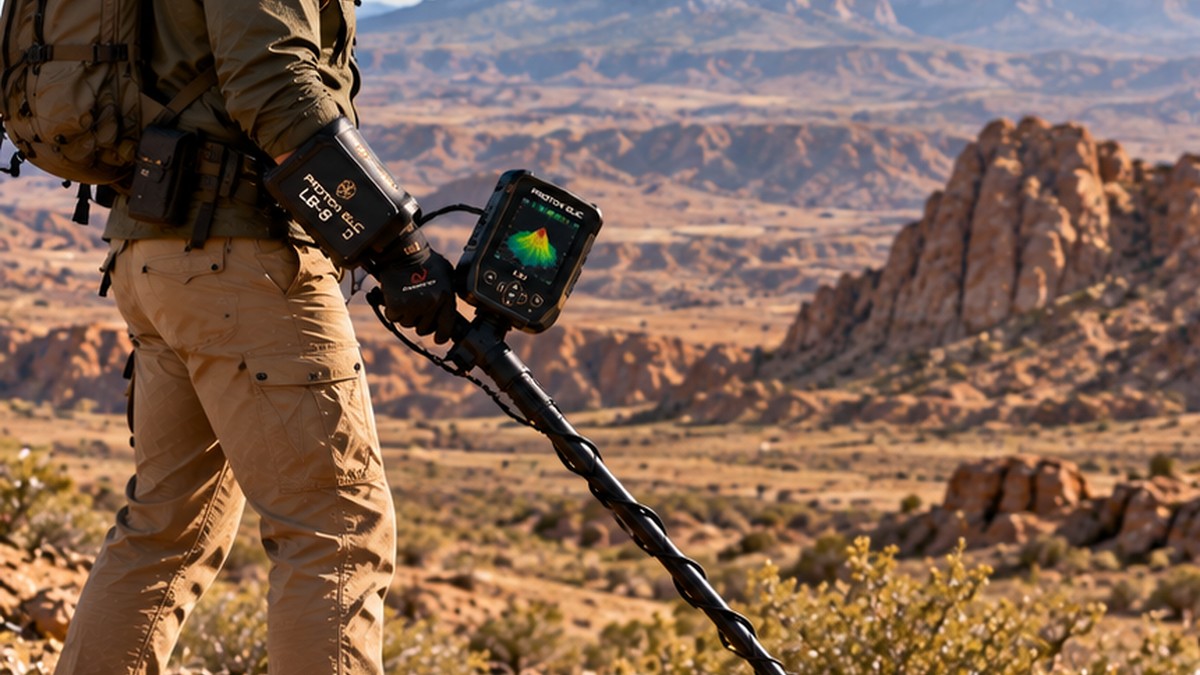
This Proton Elic LB-8 Review is for US buyers considering a professional underground survey system rather than a conventional sweep-and-dig metal detector. The LB-8 combines thermal measurements, magnetic-field sensing, LED feedback, software-assisted analysis, and manufacturer-described 3D/4D presentation functions.
However, the purchase should begin with version verification. Current manufacturer documentation contains conflicting LB-8 sensor descriptions, so Goldot-Tec should confirm the exact hardware, software, package, training options, and US availability before you order.
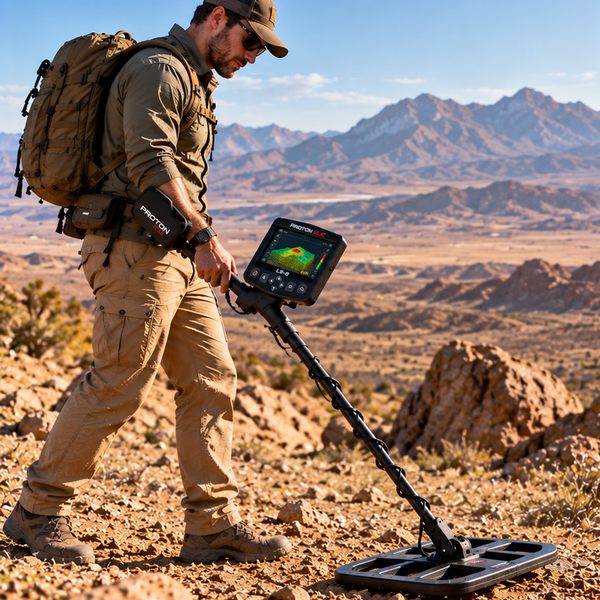
LB-8 Suitability for US Survey Buyers
The Proton Elic LB-8 belongs in a structured investigation workflow.
It is not designed primarily for fast coin hunting in parks or recreational jewelry recovery.
Projects That Fit the LB-8 Workflow
The current manufacturer description positions the system around investigations involving:
Metallic anomalies.
Buried metallic objects.
Cavities.
Tunnels.
Underground rooms.
Storage-like structures.
Cave-related searches.
Professional underground investigations.
Therefore, the buyer should already have a project question before selecting the system.
For example, an operator may need to identify zones that deserve closer inspection across an authorized property.
That is different from walking randomly while waiting for a conventional detector tone.
When a Conventional Detector Makes More Sense
A coil-based detector can offer a clearer workflow when the target area is already small and the operator needs direct metallic response.
For example, individual coins, shallow relics, jewelry, and small conventional targets usually do not require a multi-sensor survey platform.
Therefore, do not purchase LB-8 merely because it offers more types of data.
Select it when structured underground investigation is genuinely part of the project.
Verify the Exact LB-8 Version First
Model verification is one of the most important parts of this Proton Elic LB-8 Review.
The current Assuva documentation does not describe the sensor configuration consistently.
Conflicting Magnetic Sensor Documentation
One section of the current manufacturer page describes the adaptive LB-8 as using eight sensors.
However, another section on the same page describes four cesium magnetic multi-sensors alongside the thermal and LiDAR components.
Those two descriptions cannot simply be treated as identical.
Therefore, the buyer should request written confirmation for the exact unit being offered.
Verify the Serial-Numbered Hardware
Before payment, ask Goldot-Tec to confirm:
Exact model designation.
Hardware revision.
Serial number.
Physical magnetic-sensor count.
Thermal sensor configuration.
LiDAR inclusion.
LED layout.
Software version.
Battery configuration.
User manual.
Warranty terms.
The serial number and documentation should correspond to the supplied device.
Do Not Copy Specifications From Another Proton Model
The Proton family contains several versions.
Therefore, a specification from LB-16 should not automatically be applied to LB-8.
Likewise, older LB-8 documentation may not describe a currently supplied revision.
The safest purchase path is unit-specific verification.
You can review the current Proton Elic LB-8 configuration details and then request confirmation of the exact US package.
LB-8 Operating Workflow
The usefulness of LB-8 depends heavily on survey discipline.
A multi-sensor system becomes less useful when the operator cannot reproduce the measurement.
Prepare the Survey Area
Start by defining clear boundaries.
Next, identify a fixed starting position.
Also document obvious environmental variables.
These can include:
Vehicles.
Fences.
Large surface metal.
Electrical installations.
Nearby buildings.
Other detecting equipment.
Ground disturbance.
Wet areas.
Terrain changes.
This information gives the operator context when interpreting unusual responses.
Keep Movement Consistent
During the first pass, maintain a repeatable operating position.
Try to keep:
Similar device orientation.
Consistent walking direction.
Controlled speed.
Known reference points.
Similar sensor positioning.
This creates more useful data than changing direction immediately after every response.
Mark the Anomaly
When an unusual response appears, mark the physical location.
However, finish the planned pass first.
Then return to the area.
Repeat the survey under similar conditions.
A repeatable response deserves more attention than a single unusual indication.
Check From Another Direction
Where the manufacturer’s operating method allows it, approach the suspicious zone from another suitable direction.
The visual result does not need to appear perfectly identical.
However, a physical anomaly should remain associated with approximately the same area.
If the indication moves dramatically each time the operator changes position, investigate the method before assuming a buried target exists.
Thermal, Magnetic and LiDAR Information
LB-8 combines several types of information.
However, none should be treated as automatic proof of a specific underground object.
64-Pixel Thermal System
Assuva documents a thermal array arranged as four rows by sixteen columns.
That produces 64 sensing points within the documented viewing angle.
The system detects thermal differences.
However, a thermal difference does not automatically mean gold, metal, or a tunnel.
Environmental factors can also create thermal variation.
Therefore, operators should record:
Sun exposure.
Time of day.
Surface temperature.
Moisture.
Recently disturbed soil.
Nearby structures.
The manufacturer also warns against direct sunlight exposure.
This reinforces the importance of controlled operating conditions.
Magnetic Measurements
Assuva describes the magnetic sensors as measuring DC magnetic-field strength.
This makes magnetic variation part of the survey.
However, an anomaly should not be interpreted automatically as a valuable metal.
Nearby ferrous objects, infrastructure, geology, and other environmental factors can influence a magnetic measurement.
Therefore, repeatability matters.
LED Feedback
The current manufacturer description associates red LED feedback with metallic responses.
Blue feedback is associated with cavity or tunnel responses.
This can provide immediate field guidance.
However, the LED color should be treated as an indication rather than final target identification.
Red does not prove gold.
Likewise, blue does not prove the presence of an underground room.
LiDAR on the LB-8
The current Assuva LB-8 description includes customized LiDAR.
Its role is associated with the manufacturer’s broader targeting and software workflow.
However, buyers should confirm that the exact supplied revision includes this component.
Do not assume that every historical LB-8 package has identical hardware.
Software and Data Interpretation
Professional survey equipment should be judged partly by the software workflow.
The LB-8 manufacturer describes dedicated 3D/4D presentation and analysis functions.
3D and 4D Are Data Presentations
The software output is not a photograph of the underground target.
Instead, it is a visualization derived from sensor information.
Therefore, the operator should evaluate:
Position.
Shape consistency.
Repeated measurements.
Field context.
Possible interference.
Results from another detection method.
A visually impressive scan is not enough by itself.
Preserve Original Data
A professional workflow should preserve the original project files.
After each important scan:
Name the project.
Record the survey location.
Note the direction.
Save the original data.
Keep a copy before additional processing.
Then compare repeated passes.
This reduces the risk of selecting only the visualization that best matches the operator’s expectations.
DAT and GRID Workflow
Assuva describes DAT and GRID file-related functions in the LB-8 software workflow.
Therefore, software requirements should form part of the purchase.
Before ordering, ask:
Which software edition is supplied?
Which file formats can be saved?
What computer operating system is supported?
Are software updates included?
Can data move between computers?
Does training include file handling?
These questions matter for professional use.
Computer and Package Requirements
A gallery photograph should not determine what the US package contains.
Instead, request the complete configuration in writing.
Confirm the Computer Requirement
Manufacturer documentation clearly describes a software-assisted workflow.
However, buyers should confirm whether a laptop, tablet, or another computer is included in the actual Goldot-Tec package.
Ask which system requirements apply.
Also confirm whether the software is already installed.
Confirm Power Equipment
The LB-8 uses rechargeable power.
Therefore, confirm:
Battery supplied.
Battery condition.
Charging adapter.
US power compatibility.
Charging procedure.
Field power options.
Do not wait until a survey trip to check these items.
Confirm Carrying Equipment
Professional equipment may require protective transport.
Ask whether the package contains:
Main carrying case.
Sensor protection.
Charging storage.
Computer protection where applicable.
Cables.
Manuals.
Field accessories.
This becomes particularly important when equipment will travel between US projects.
Choosing Between LB-8 and LB-16
The LB-8 versus LB-16 decision should be based on documented workflow differences.
More sensors should not automatically be translated into guaranteed extra depth.
Documented Comparison
| Area | Proton Elic LB-8 | Proton Elic LB-16 |
|---|---|---|
| Thermal system | 64-pixel 4×16 array | 64-pixel 4×16 array |
| Magnetic sensor documentation | Current Assuva page conflicts between 8 and 4 | 16 JEO PHASE magnetic sensors |
| LED documentation | 16 LEDs described | 32 LEDs documented by Goldot |
| LiDAR | Customized LiDAR described by Assuva | Not presented as the central current LB-16 sensor |
| Software workflow | Manufacturer-described 3D/4D and DAT/GRID functions | PC analysis with Bluetooth transfer documented |
| Additional option | Verify exact supplied hardware | Goldot lists optional IF Doppler Radar |
| Main buying question | Verify exact revision first | Decide whether larger documented sensor array solves the project |
This table does not declare one model universally better.
Instead, it highlights what the buyer should verify.
LB-8 Buying Logic
LB-8 may make sense when its documented thermal, magnetic, LiDAR, LED, and software workflow fits the project.
However, the hardware discrepancy must be resolved before purchase.
Therefore, LB-8 buyers should prioritize exact-version documentation.
LB-16 Buying Logic
LB-16 provides clearer current documentation around its 16-point JEO PHASE magnetic sensor arrangement.
Its current Goldot configuration also describes Bluetooth connectivity, 32 LEDs, and an optional IF Doppler Radar module.
However, additional sensors do not automatically guarantee greater practical depth.
Target dimensions, soil, environment, operator technique, and survey method still matter.
Buyers considering that platform can review the Proton Elic LB-16 system separately before deciding.
Sensor Count Does Not Equal Guaranteed Depth
This distinction is critical in the Proton Elic LB-8 Review.
Sensor quantity describes part of the measurement system.
It does not provide a universal depth result.
Target Size Changes the Response
A large underground structure is not comparable with a small metallic object.
Therefore, a demonstration involving a substantial target should not be used to predict small-target performance.
Soil Conditions Change Measurements
Mineralization and local geology can influence sensor data.
Moisture can also change environmental conditions.
Therefore, one result should not be generalized to every US site.
Operator Technique Matters
The operator controls:
Starting position.
Orientation.
Movement.
Repeat passes.
Data labeling.
Software interpretation.
Therefore, poor survey technique can reduce the value of additional sensing points.
Manufacturer Maximums Are Not Guarantees
Assuva publishes maximum range and depth claims for Proton systems.
However, those claims are associated with conditions and proper operation.
Therefore, this article does not convert those figures into a promised US field result.
Request evidence relevant to your target and project instead.
Texas Survey Equipment Planning
Consider a hypothetical authorized Texas property with an uncertain underground anomaly.
The project team wants structured information before deciding whether further investigation makes sense.
Define the Survey Question
First, determine whether the suspected target is:
Metallic.
A possible cavity.
A structural anomaly.
Unknown.
This influences how LB-8 data should be interpreted.
Remove Avoidable Variables
Before scanning, note:
Vehicles.
Fencing.
Buried utilities where known.
Surface metal.
Electrical infrastructure.
Buildings.
Recently disturbed soil.
These factors can complicate magnetic or thermal interpretation.
Create Survey Zones
Divide the site into defined sections.
Give each section a reference.
Then perform controlled passes.
If one area produces an interesting response, record it.
Afterwards, repeat the measurement.
Confirm the Result
An LB-8 response should narrow the investigation.
It should not automatically determine excavation.
For a suspected metal target, another appropriate metal-detection method can provide useful secondary evidence.
A suspected cavity may need another survey method.
This layered workflow reduces the risk of overinterpreting one sensor output.
Colorado Project Scanner Choice
Now consider a hypothetical authorized Colorado site.
The terrain is uneven, and the survey team expects both environmental variation and possible underground anomalies.
Plan for Terrain
Rocky terrain can affect operator movement.
Therefore, scan paths need extra planning.
Mark reference points before beginning.
Then keep the device orientation as consistent as practical.
Thermal Conditions Need Attention
Elevation, sun exposure, rocks, shade, and surface conditions can create temperature differences.
Therefore, thermal readings require context.
Do not label every temperature variation as underground evidence.
Record environmental conditions.
Then repeat suspicious measurements.
Choose LB-8 or LB-16 From the Workflow
A Colorado team should not select LB-16 simply because it has a larger documented magnetic-sensor array.
Instead, ask whether the project needs that configuration.
Likewise, do not select LB-8 merely because LiDAR appears in its documentation.
The question is whether the feature supports the actual survey method.
Training and Operator Skills
Professional use requires more than learning where the controls are located.
Therefore, training should be confirmed before ordering.
Field Preparation Training
Training should cover:
Survey boundaries.
Reference points.
Environmental notes.
Metal interference.
Thermal conditions.
Stable movement.
Repeat measurements.
This establishes the field routine.
Software Training
The operator should also understand:
Opening project files.
Naming data.
Reading visualizations.
Comparing scans.
Preserving originals.
Exporting supported files.
Recognizing uncertain results.
Software training can be as important as physical device operation.
Interpretation Training
A professional operator should understand what the system cannot prove.
For example:
Red does not automatically prove gold.
Blue does not automatically prove a tunnel.
A 3D image is not an underground photograph.
More sensors do not guarantee greater depth.
One scan does not establish repeatability.
These limitations should be part of training.
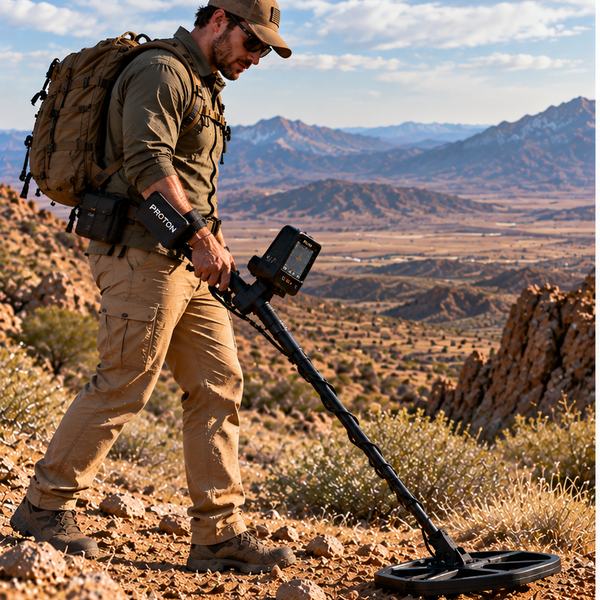
LB-8 Package Assessment
Before purchasing, convert the project requirements into a package checklist.
Hardware
Confirm:
Exact LB-8 version.
Actual sensor configuration.
64-pixel thermal system.
LiDAR where applicable.
LED layout.
Main control components.
Serial number.
Software
Confirm:
Exact software version.
PC requirements.
Activation method.
Updates.
DAT/GRID support.
Data-export options.
Technical support.
Power
Confirm:
Battery.
Charger.
US compatibility.
Expected operating procedure.
Backup-power requirements.
Transport
Confirm:
Protective case.
Sensor bag.
Computer case if supplied.
Cable storage.
Transport instructions.
Documentation
Request:
User manual.
Serial documentation.
Warranty.
Package inventory.
Training scope.
Repair procedure.
This gives the US buyer a complete purchasing record.
When Another Scanner Makes More Sense
LB-8 should not be forced into every professional project.
Another system may provide a better fit.
Choose LB-16 When Its Documented Sensor Layout Matters
LB-16 may deserve consideration when the buyer specifically needs the documented 16-point JEO PHASE magnetic array.
However, the buyer should still justify that need from the project.
More sensing points alone do not make the purchase correct.
Compare Professional Imaging Systems
Other projects may need another scanning method completely.
Therefore, buyers can compare professional ground scanning systems before committing.
Consider:
Measurement technology.
Survey method.
Software.
Training.
Target type.
Site conditions.
Team experience.
Do not select by product complexity alone.
Use Direct Detection for Narrow Metal Targets
If the site already has a small target zone and the objective is simply to confirm metal, a direct detector may be easier to operate.
A multi-sensor scanner can add unnecessary workflow.
Therefore, use professional scanning because you need survey information, not because it appears more advanced.
Proton Elic LB-8 Purchase Checklist
Before requesting the US package, answer several questions.
Version
Which LB-8 revision is being supplied?
How many magnetic sensors are physically fitted?
Does the manual match the unit?
Project
What target type is expected?
Is the search zone large or already narrow?
Does the project need thermal information?
Does LiDAR support the workflow?
Software
Which software comes with the device?
Who will operate it?
Does the team need training?
How will data be backed up?
Fieldwork
Can the operator maintain a repeatable survey path?
Are environmental variables documented?
How will suspicious zones be rescanned?
Confirmation
Which second method will confirm an important anomaly?
This question should be answered before the field project starts.
Frequently Asked Questions
How should I choose between Proton Elic LB-8 and LB-16?
Start with the documented workflow rather than sensor count alone. Both current versions document a 64-pixel thermal array, but LB-16 has a clearly documented 16 JEO PHASE magnetic-sensor system, while the current LB-8 manufacturer page conflicts between eight and four magnetic sensors. LB-8 also documents customized LiDAR. Confirm the exact LB-8 revision first, then decide whether either configuration solves a real survey requirement.
What training should I confirm before ordering LB-8?
Ask for training covering site preparation, thermal and magnetic conditions, stable movement, repeat scans, LED interpretation, software use, project-file management, DAT/GRID functions where supported, and secondary confirmation. Training should also explain the system’s limitations. A useful program teaches the operator to challenge an anomaly rather than treat every color or software image as proof of a buried target.
What software and equipment should I confirm in my US package?
Request written confirmation of the exact LB-8 unit, sensor configuration, thermal system, LiDAR where applicable, LED arrangement, battery, charger, protective cases, software version, computer requirements, license or activation terms, supported file formats, updates, manual, training, warranty, and technical-support scope. Also ask Goldot-Tec to confirm current availability and delivery options for your state.
Request Your Proton Elic LB-8 US Package
This Proton Elic LB-8 Review supports buyers who need structured underground survey information rather than simple recreational metal detection. Its value depends on exact hardware verification, disciplined data collection, software interpretation, and repeatable fieldwork.
Buying in the United States? Ask Goldot-Tec about availability and delivery options for your state. Send your Texas, Colorado, or other authorized project’s survey goals, team experience, software requirements, and training needs, then request a written LB-8 package with the exact version and included equipment clearly confirmed.