

To recommend metal detectors based on accuracy and local permit guidelines, buyers must answer two questions together: which detector suits the intended target, and whether detecting is allowed at the exact location. A capable detector can still be the wrong choice if the land is protected, historically sensitive, or subject to special permission.
A practical 2026 buying process starts with permission, then considers target type, soil, detector technology, coil choice, Target ID, and operator technique. When you recommend metal detectors based on accuracy and local permit guidelines, accuracy should mean repeatable field information rather than an invented percentage, while legal compliance should be verified with the responsible landowner or authority.
Start With Permission Before Choosing a Detector
First identify who manages the land. Private property, municipal parks, state recreation areas, National Forest System land, BLM property, beaches, and National Park Service areas can operate under different rules.
Private-land permission is a sensible starting point, but it does not override archaeological, heritage, or mineral laws. National Park Service rules generally prohibit metal-detector use in park areas except for limited authorized activities. Forest Service guidance can allow low-impact recreational searching in suitable areas, but archaeological and historic resources remain protected and some areas may be closed.
That is why a responsible attempt to recommend metal detectors based on accuracy and local permit guidelines should never describe a machine itself as “permit compliant.” Legality depends on the activity, location, land status, and target.
Matching Detector Technology to Your Search Target
Goldot-Tec carries different detector technologies because coin hunting, beach searching, natural-gold prospecting, and professional underground surveys do not require the same tools.
Coins, Jewelry, Relics, and Beaches
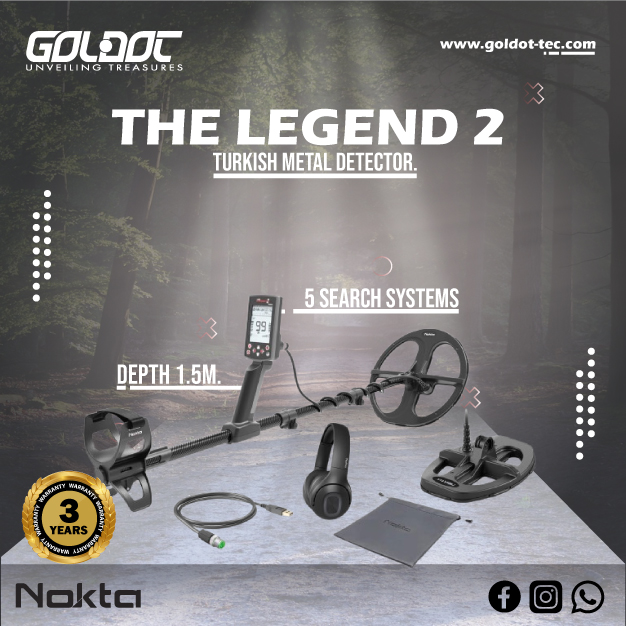
For mixed detecting, simultaneous multi-frequency systems are a strong category to compare. Goldot-Tec documents the Nokta The Legend 2 with simultaneous multi-frequency operation, Park, Field, Beach, Gold, and Relic modes, numerical Target ID, FerroCheck ferrous information, and multiple coils.
The Minelab Equinox 900 is another versatile option, using Multi-IQ with Park, Field, Beach, and Gold modes, ground-balance controls, high-resolution Target ID, and different coil sizes.
Small Natural Gold
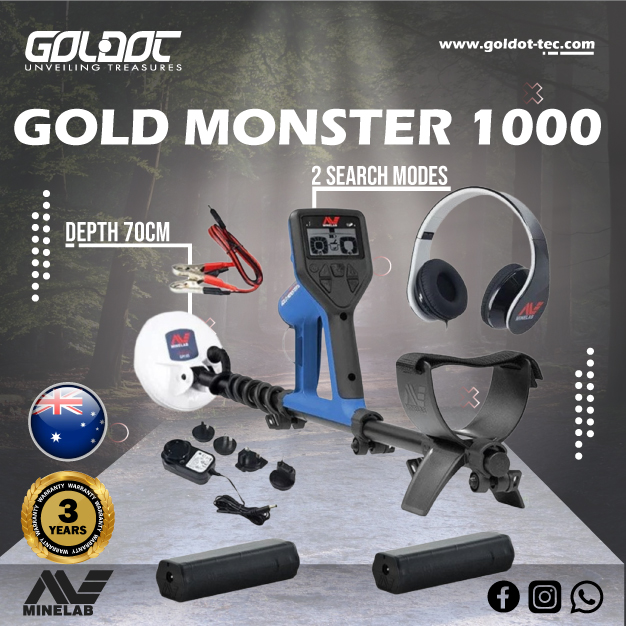
For fine natural gold, a specialist high-frequency VLF detector may be more appropriate. Goldot-Tec lists the Gold Monster 1000 as a 45 kHz VLF detector with Gold and Deep All Metal modes, automatic ground handling, adjustable sensitivity, and a Gold Chance indicator.
You should recommend metal detectors based on accuracy and local permit guidelines only after deciding whether “accuracy” means stable coin ID, separation around iron, small-gold sensitivity, or repeatable anomaly location.
What Actually Affects Target Accuracy
Metal detector accuracy is not a fixed percentage. A response can change because of:
- Target size, conductivity, orientation, and depth
- Soil mineralization, salt, and moisture
- Search-coil dimensions
- Nearby iron or modern trash
- Detector settings and frequency
- Sweep speed and operator technique
A useful target usually becomes more convincing when it repeats from more than one direction. Instead of trusting one number, shorten the sweep, approach from another angle, listen to the audio, and compare Target ID behavior.
When you recommend metal detectors based on accuracy and local permit guidelines, repeatability is more useful than unsupported claims such as “95% accurate.”
Ground Conditions That Change Detector Performance
Soil can make the same detector behave differently from one site to another. Mineralized ground can reduce Target ID stability, wet salt can challenge inland-oriented settings, and dense iron can mask desirable objects.
Simultaneous multi-frequency systems are worth comparing when several terrain types are expected. High-frequency VLF detectors can respond strongly to fine natural gold. Pulse-induction systems deserve consideration where severe mineralization is the main problem.
Coil choice matters too. A smaller coil can improve separation in dense iron and trash, while a larger coil covers more ground. The correct setup depends on the site rather than the largest available coil.
Recommended Detector Types by Search Scenario
This table gives a practical way to recommend metal detectors based on accuracy and local permit guidelines without pretending one detector is best everywhere.
| Search Scenario | Detector Direction | Accuracy Priority | Permission Check |
|---|---|---|---|
| Coins and jewelry on private land | Multi-frequency detector | Stable ID and separation | Written owner permission |
| Relics on older property | Fast-recovery detector | Separation around iron | Check heritage restrictions |
| Beach jewelry | Salt-capable multi-frequency | Stability in wet salt | Verify beach rules |
| Small natural gold | High-frequency VLF or suitable PI | Ground handling | Check prospecting rules |
| Large underground anomalies | Specialist deep or imaging system | Repeatable anomaly position | Confirm scanning and excavation permission |
Goldot-Tec’s broader professional metal detectors category is useful once the target and search method are clear.
Public Land, Private Property, and Restricted Areas
Legal rules should be checked at the property level. Saying “metal detecting is legal in this state” is too broad for a real search.
National Park Service areas generally prohibit metal-detector use except for narrow authorized purposes. Forest Service guidance generally allows recreational detecting in appropriate National Forest locations where protected archaeological or historical resources are not involved, but local closures still matter.
BLM properties also vary by site, so anyone trying to recommend metal detectors based on accuracy and local permit guidelines should direct users to the exact managing office rather than generalizing about federal land. Some BLM-managed historic locations explicitly prohibit metal detecting because of protected cultural resources.
For private property, obtain owner permission and clarify whether digging is allowed.
How to Check Local Detecting Rules Before You Go
Use this process:
- Identify the landowner or managing agency.
- Find the official page for the exact park, beach, forest, or property.
- Check whether metal detecting is specifically addressed.
- Ask whether digging or artifact recovery has separate restrictions.
- Confirm whether written authorization or a permit is required.
- Ask what to do if a historically significant object is found.
This check should happen before travel, not after arriving with the detector.
Responsible Recovery and Site Protection
Permission to detect does not always mean unrestricted digging. Where recovery is allowed:
- Use the smallest practical recovery method.
- Restore plugs and holes.
- Avoid damage to vegetation and infrastructure.
- Leave archaeological features undisturbed.
- Follow any reporting requirement attached to the site.
Forest Service guidance protects archaeological and historic resources and advises users to leave discovered remains undisturbed and notify the appropriate office.
If the real task is screening people at entrances rather than searching land, that is a separate category. Goldot-Tec’s security metal detectors section covers walk-through and handheld security equipment.
Practical Pre-Search Compliance Checklist
Before you recommend metal detectors based on accuracy and local permit guidelines for a real search, confirm:
- The target and soil conditions are defined.
- Detector technology matches the search goal.
- The exact landowner or authority is known.
- Current rules for the property have been checked.
- Written permission is available where appropriate.
- Heritage restrictions have been reviewed.
- The coil suits target density and terrain.
- Questionable targets will be checked from multiple directions.
- Recovery holes will be restored where digging is allowed.
Frequently Asked Questions
How do I recommend metal detectors based on accuracy and local permit guidelines?
To recommend metal detectors based on accuracy and local permit guidelines, first identify the target, terrain, and soil, then choose technology that produces stable, repeatable responses. Separately verify detecting, digging, and artifact rules with the exact landowner or managing authority.
Is there one metal detector with the highest accuracy?
No. Practical accuracy changes with target size, soil, mineralization, nearby iron, coil choice, settings, and operator technique. Compare repeatability, separation, and ground handling instead of a universal percentage.
Can I use a metal detector in a U.S. national park?
National Park Service rules generally prohibit metal-detector use in park areas except for limited authorized activities. Check the individual park and current NPS rules before visiting.
Is metal detecting allowed in National Forests?
It can be allowed for low-impact recreational searches in appropriate areas, but archaeological resources are protected, some areas have restrictions, and mineral prospecting can involve additional rules. Contact the local ranger district before detecting.
Which detector type is best for mixed parks, fields, and beaches?
A simultaneous multi-frequency detector is a strong category to compare. Nokta The Legend 2 and Minelab Equinox 900 are examples currently documented on Goldot-Tec.
Conclusion
The safest way to recommend metal detectors based on accuracy and local permit guidelines is to treat performance and permission as separate filters. First choose technology that matches the target, soil, and search method. Then verify whether detecting and recovery are allowed at the exact property.
For mixed coins, jewelry, relics, and beaches, multi-frequency platforms provide useful versatility. For small natural gold, specialist high-frequency VLF or appropriate PI equipment may be more suitable. Stable operation, repeatable signals, sensible coil choice, and controlled recovery matter more than unsupported accuracy percentages.
Before searching, confirm current rules with the landowner or responsible authority. Appropriate equipment plus verified access produces a stronger 2026 buying decision.