The best metal detector for coins depends on where you search and how much control you want over target identification. A quiet field, a park with modern trash and a saltwater beach place different demands on the same machine. This guide compares three current Goldot-Tec listings by their documented technology and buying role, then gives practical checks before you choose a package.
| Model | Technology | Use to compare |
|---|---|---|
| Minelab Safari | Full Band Spectrum multi-frequency | Established coin, jewelry and relic patterns for land searches |
| Minelab X-TERRA PRO | Selectable single frequency | Park and field coin searches with adjustable frequency choices |
| Minelab EQUINOX 900 | Multi-IQ simultaneous multi-frequency | Versatile searches, including parks and wet beach conditions |
Technology names do not establish a universal depth ranking. Coin size, orientation, burial conditions, soil, nearby trash, coil and settings all affect the response.
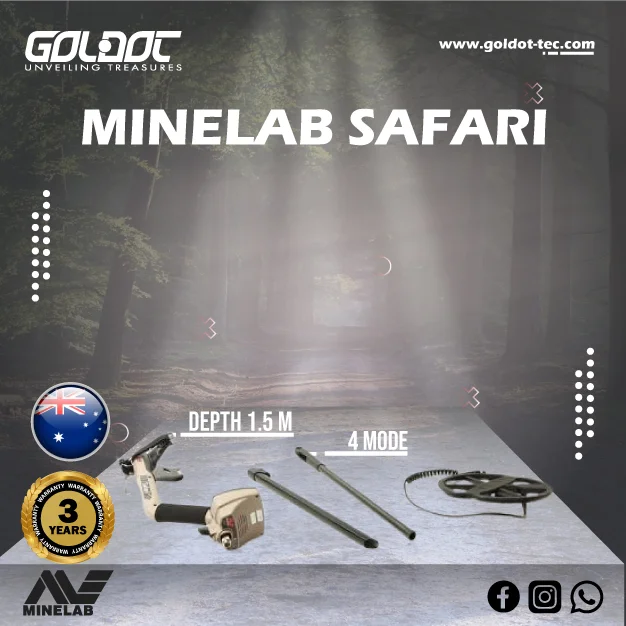
The Safari uses Minelab Full Band Spectrum technology and offers preset Coin, Jewellery, Relic and All Metal search patterns. Those controls can help a buyer who wants a familiar land-search workflow and is willing to learn its target ID and discrimination. Minelab lists a waterproof search coil, but the control box must be kept dry. Compare the current Minelab Safari package for its coil, power equipment, warranty and stock before treating it as the right offer.
Choose a coin pattern as a starting point, then test known local coins and common trash targets. Aggressive discrimination can also suppress desirable objects with overlapping responses; a target ID is a clue, not proof of a buried coin.
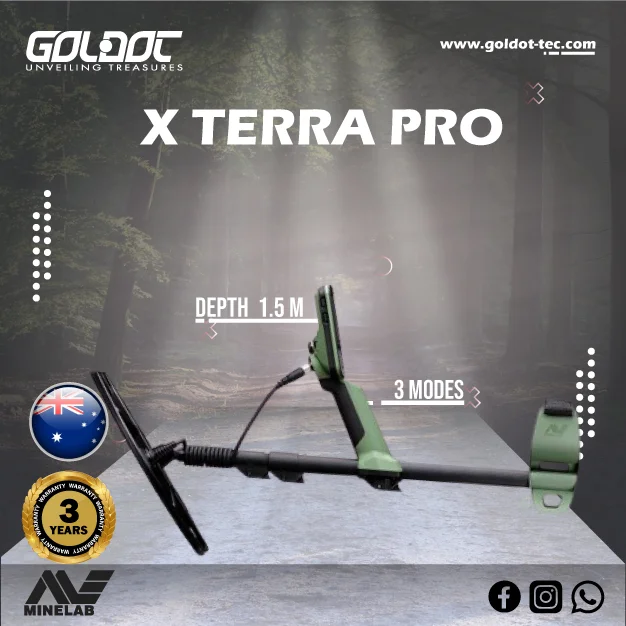
The X-TERRA PRO uses PRO-SWITCH single-frequency operation. Minelab lists 5, 10 and 15 kHz choices in Park and Field modes and an 8 kHz Beach setting. It also includes target ID, pinpointing and an IP68 water rating to five metres for the assembled detector. It is a different choice from simultaneous multi-frequency: the operator selects one frequency for the search mode and conditions.
Review the Minelab X-TERRA PRO configuration for the included coil and audio accessories. A buyer who searches coins mainly in parks and fields may value the mode choices and manageable setup; confirm that the offered package fits the search area rather than buying solely by a frequency number.
The EQUINOX 900 combines Multi-IQ simultaneous multi-frequency operation with Park, Field and Beach modes. Minelab specifies an IP68 rating to five metres and includes two Double-D coils and ML85 wireless headphones in its listed standard package. That flexibility can be useful if coin searches move between inland sites and conductive wet sand.
Check the actual Minelab EQUINOX 900 package against your main search goal. The additional modes and controls are valuable only when you use them well; they do not guarantee more coins or a fixed depth in every soil.
Coin hunting often means separating promising repeatable signals from foil, iron and modern debris. Test with coins and trash similar to the site, vary the sweep direction, and compare tone with target ID before deciding to recover. A smaller coil can improve maneuverability in crowded ground; a larger coil covers open ground faster. The supplied coil and optional alternatives should be part of the purchase comparison.
For an adult’s first detector, our beginner detector guide explains controls and first-search priorities. If wet beach coins are the main target, compare the water and salt-sand considerations in the beach detector guide.
There is no single winner for every site. Target size, soil and nearby iron matter. Compare the three models in the ground and trash conditions you expect to encounter.
It offers useful flexibility, particularly when conditions change, but a selectable single-frequency machine may fit a simpler park or field workflow. The coil, settings and operator remain important.
No. Many objects share similar responses. A repeatable signal can guide recovery, while inspection confirms the object.