

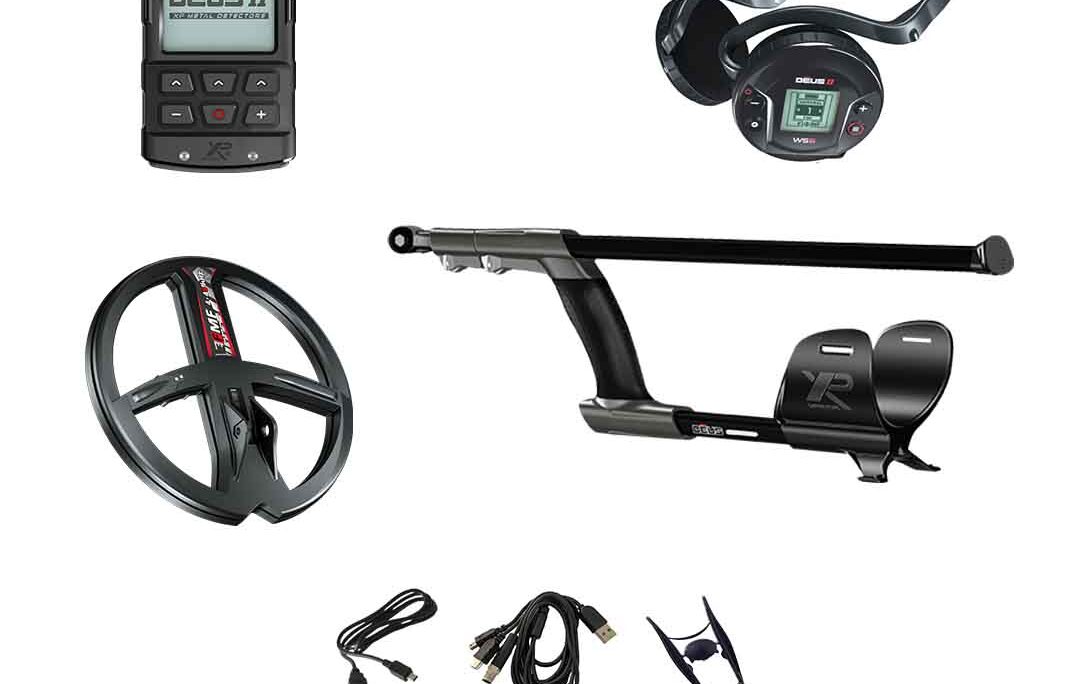
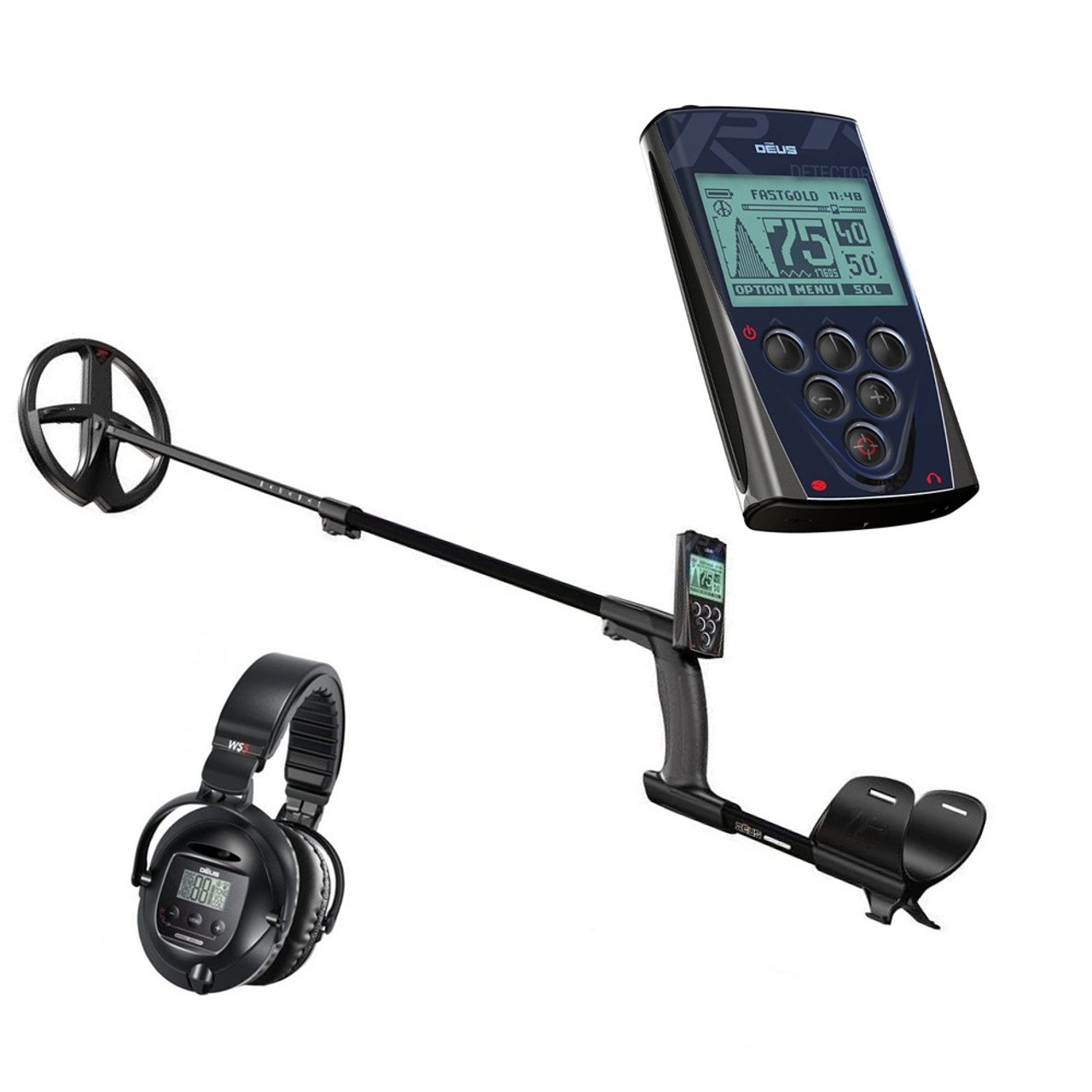
The XP Deus 2 RC + WS6 package is designed for detectorists who want the flexibility of XP’s wireless DEUS II platform while retaining both a full remote control and a compatible wireless audio component. Rather than judging this configuration only by metal detector price or advertised depth, buyers should understand what each component contributes, how the wireless architecture changes field operation, and whether paying for both RC and WS6 makes sense for the way they actually hunt.
Goldot-Tec currently presents the XP DEUS II platform as a lightweight, wireless, Fast Multi-Frequency detector suitable for coins, relics, beaches, general treasure hunting, and underwater searching. Goldot also documents communication between the coil, remote control, headphones, and compatible accessories through XP’s wireless architecture.
The value of the XP Deus 2 RC + WS6 configuration therefore lies less in one headline performance number and more in modular control, audio flexibility, cable-free ergonomics, advanced search adjustments, and the ability to configure the detector around different field situations.
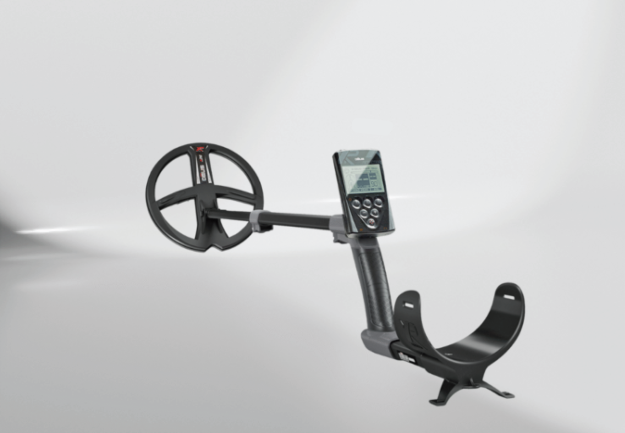
XP Deus 2 RC + WS6 Package Explained
The first thing to understand is that DEUS II is a modular detector system. The search coil performs detection and communicates wirelessly with other compatible components rather than relying on conventional cables running between the coil, control box, and headphones.
In an XP Deus 2 RC + WS6 configuration, the two components named in the package are:
- DEUS II Remote Control, or RC
- WS6-compatible wireless audio/control component
Goldot’s DEUS II material confirms that XP’s ecosystem is based on wireless communication between the coil, remote, headphones, and compatible pinpointer. Goldot also specifically lists WS6 among compatible DEUS II headphone options on its XP XTREM HUNTER technical page.
The exact search coil and other accessories can vary by package, so buyers should never assume that every listing using “RC + WS6” includes the same coil.
Before ordering, verify:
- Exact FMF coil model and size
- DEUS II remote control
- WS6 component
- Telescopic stem
- Charging cables
- Coil cover
- Any supplied headphone frame
- Warranty
- Current firmware
- Additional accessories
Package verification is especially important because XP offers multiple DEUS II configurations and Goldot currently carries other versions of the platform, including specialized HF2 arrangements.
What the Remote Control Adds to the Setup
The RC is the most complete interface in this configuration.
Goldot’s DEUS II information describes the platform as offering Fast Multi-Frequency technology, customizable programs, visual target information, ground adjustments, discrimination functions, and wireless accessory management. The current Goldot DEUS II HF2 configuration lists 12 factory programs plus 12 user-customizable programs.
For an owner, that makes the remote particularly useful when a hunt requires frequent changes.
You may want the RC available when:
- Comparing target information visually
- Changing search programs
- Adjusting discrimination
- Changing sensitivity
- Modifying ground settings
- Managing audio configuration
- Saving customized programs
- Checking component status
- Updating or managing the detector ecosystem
The RC therefore adds control convenience. It should not be described as increasing detection depth simply because it is present.
Actual target response depends on the search coil, target dimensions, target conductivity, ground conditions, mineralization, settings, interference, and sweep technique.
How WS6 Fits Into the Wireless Ecosystem
The WS6 is relevant because XP’s architecture does not require a conventional wired headphone connection between the user and detector.
Goldot specifically lists WS6 as compatible with the DEUS II ecosystem on its XTREM HUNTER page, alongside WSAII and WSAII XL options.
This means the practical benefit is mainly about audio and modularity rather than adding a second detection technology.
The wireless approach can help by:
- Removing a headphone cable from the detector shaft
- Reducing snagging during woodland searching
- Simplifying movement around obstacles
- Supporting a lighter-feeling field setup
- Allowing compatible components to communicate as part of one system
Goldot repeatedly identifies the wireless architecture as one of the DEUS II’s major distinguishing characteristics. Its current comparison content highlights lightweight construction, rapid recovery, wireless components, and underwater flexibility as important reasons buyers may prefer DEUS II over competing premium detectors.
Choosing How You Want to Control the Detector
One of the most useful aspects of an XP Deus 2 RC + WS6 setup is that you are buying into a modular architecture rather than one fixed control arrangement.
The remote is the logical primary interface when maximum access to settings and visual data is important.
A detectorist working a heavily contaminated historical site, for example, may frequently adjust:
- Reactivity
- Discrimination
- Audio
- Ground response
- Program selection
- Sensitivity
A simpler field session may require fewer adjustments.
That distinction matters because experienced users do not necessarily operate the detector the same way on every hunt.
The package becomes valuable when you want several control and audio options available rather than being locked into one minimal configuration.
FMF Technology and Search Flexibility
Goldot identifies Fast Multi-Frequency, or FMF, as the core technology behind DEUS II.
Its current product and comparison pages state that the detector can operate using simultaneous multi-frequency processing and also provide selectable individual frequencies within the platform. Goldot’s current DEUS II comparison content references 49 selectable individual frequencies between 4 and 45 kHz on the standard DEUS II architecture.
That flexibility is relevant because different targets and environments can respond differently to frequency choices.
For example, users may encounter:
- Small low-conductive targets
- Larger high-conductive coins
- Iron-contaminated relic sites
- Dry beaches
- Wet salt sand
- Mineralized ground
- Farmland
- Woodland
FMF helps position DEUS II as a multi-purpose detector rather than a machine designed around one narrow target category.
This is one reason the XP Deus 2 RC + WS6 package should be evaluated primarily as an all-terrain detector setup instead of according to one maximum-depth specification.
Search Adjustments Available During a Hunt
The original draft associated adjustments directly with deeper detection, but that relationship is more complicated.
Settings affect detector behavior, but increasing a sensitivity value does not automatically produce useful additional depth.
A more practical interpretation is:
| Adjustment Area | Practical Purpose |
|---|---|
| Search program | Adapts the detector to different site types |
| Sensitivity | Balances response with stability |
| Discrimination | Helps manage unwanted target responses |
| Ground settings | Adapts the detector to soil conditions |
| Reactivity | Helps manage closely spaced targets |
| Audio configuration | Changes how target information is presented |
| Frequency strategy | Adapts response to target and terrain conditions |
The best setup is usually the one that remains stable enough for the operator to recognize repeatable target responses.
Excessive sensitivity in difficult soil or electromagnetic interference can make interpretation harder rather than better.
Field Advantages of a Modular Wireless Setup
The field advantages of XP Deus 2 RC + WS6 are easiest to understand during long detecting sessions.
Fewer Cables
Traditional detectors may use cables running from the search coil to the control unit and from the control unit to headphones.
XP’s design reduces that physical connection structure.
Goldot describes DEUS II as a fully wireless ecosystem in which compatible components communicate through XP’s radio protocol.
Easier Packing
Separate components can be organized independently for travel or storage.
This is useful when moving between detecting sites or transporting equipment in smaller cases.
Modular Replacement
A modular detector ecosystem also means the user should think about individual components when charging and preparing for a hunt.
Instead of treating the detector as one battery-powered object, check every wireless component that will be needed in the field.
Better Ergonomic Flexibility
Goldot repeatedly identifies low weight as a DEUS II advantage. Its current comparison content positions the detector strongly for users who prioritize ergonomics and long search sessions.
Removing unnecessary cable weight and allowing separate components contributes to that design philosophy.
Comfort, Weight, and Long Search Sessions
Goldot currently states that some DEUS II configurations can begin at approximately 750 grams, depending on configuration.
The exact weight of an XP Deus 2 RC + WS6 setup depends on:
- Coil size
- Whether the remote is mounted
- Stem configuration
- Audio arrangement
- Accessories
This is why package weight should be checked according to the exact configuration rather than quoting one number for every DEUS II package.
A larger coil may improve ground coverage but can change balance.
A smaller coil may make movement easier in:
- Dense woodland
- Rocky areas
- Excavated ground
- Iron-contaminated sites
Ergonomics should therefore be evaluated according to where the detector will actually be used.
Waterproof Use Requires Understanding the Components
Goldot describes the XP DEUS II platform as waterproof to 20 meters when used in the appropriate underwater configuration.
However, buyers should distinguish the detector’s waterproof components from every headphone option.
Goldot’s XTREM HUNTER compatibility table specifically describes:
- WSAII XL as IP68
- WSAII as compatible
- WS6 as weatherproof
Therefore, an XP Deus 2 RC + WS6 owner planning underwater searches should verify the correct underwater audio arrangement instead of assuming that the WS6 itself is intended for diving.
For normal land use, beach searching, or weather exposure, this distinction may be less important.
For diving, it becomes critical.
Which Users Need Both RC and WS6?
Not every DEUS II buyer automatically needs the same package.
The XP Deus 2 RC + WS6 arrangement makes the most sense for users who value both a complete remote interface and wireless audio flexibility.
It may suit:
- Advanced hobby detectorists
- Relic hunters
- Coin hunters
- Beach detectorists
- Users who frequently change settings
- Detectorists working different terrain types
- Buyers who value modular equipment
- Existing XP ecosystem users
A simpler package may be sufficient for someone who:
- Uses only a small number of programs
- Rarely changes advanced settings
- Wants minimum equipment
- Has a tightly controlled budget
The question should therefore be whether the additional component will actually be used.
XP Deus 2 RC + WS6 Package Value vs Simpler Configurations
Package value should be calculated from included hardware rather than marketing language.
Consider this framework:
| Buying Question | Why It Matters |
|---|---|
| Is the RC included? | Determines access to the full remote interface |
| Is WS6 included? | Changes the wireless audio/control arrangement |
| Which coil is supplied? | Major influence on package purpose and price |
| Is the stem included? | Required for a complete detector setup |
| What charging equipment is supplied? | Multiple wireless components require charging |
| Is warranty included? | Important for premium electronics |
| Which firmware is installed? | Affects current functionality |
| Are accessories included? | Can change total ownership cost |
Goldot currently lists a DEUS II configuration among its best sellers at $2,150, and its specialized DEUS II Gold HF2 WSAII XL product page also shows $2,150. That does not establish a universal XP Deus 2 RC + WS6 price, because coil and headphone packages differ. Buyers should confirm the live price for the exact RC + WS6 configuration before payment.
You can compare current XP and multi-frequency detectors before deciding which package offers the right combination.
Detection Depth: Avoid One Universal Number
There is no responsible single depth number for every DEUS II target.
Goldot’s own broader metal-detector guidance notes that performance varies according to factors such as:
- Frequency
- Soil mineralization
- Salt conditions
- Surface iron
- Target characteristics
- Operator technique
A large metal object and a small coin are not comparable targets.
Likewise, changing coils, programs, reactivity, ground settings, or environmental conditions can change target response.
When evaluating an XP Deus 2 RC + WS6 package, prioritize repeatable target identification and suitability for the intended site instead of choosing it because of a claimed universal depth.
Setup Checklist for a New XP Deus 2 RC + WS6 Owner
Before the first serious hunt:
Charge Every Component
Check the:
- Remote
- Coil
- WS6
- Any additional wireless accessory
A modular wireless system works best when the user remembers that components have separate power requirements.
Confirm Wireless Pairing
Make sure the required components are communicating correctly before reaching the field.
Check the Coil
Confirm:
- Correct coil is selected
- Coil is physically secure
- Coil cover is installed if supplied
- Battery is sufficiently charged
Choose a Starting Program
Avoid changing every advanced setting immediately.
Start with a program appropriate to the environment and learn its audio response before making major custom changes.
Save Useful Programs Carefully
If you develop a configuration that works well for a particular site type, save it with a clear purpose.
Examples include:
- Iron-heavy relic site
- Open field
- Wet beach
- General coins
Prepare a Backup Audio Plan
For long hunts, understand which compatible audio options are available in case one component is not usable.
Update Only When Necessary
Before firmware changes, check the current system version and follow the appropriate supported process.
The goal is to begin with a stable, understood configuration rather than changing software immediately without knowing the existing setup.
Seller, Warranty, and Support Checks
Goldot currently identifies itself as a dealer of XP equipment and provides product testing, training, technical assistance, and warranty information across its detector pages.
Before ordering, ask:
- Is this specifically RC + WS6?
- Which coil is included?
- What is the exact current price?
- Is every component new?
- What warranty applies?
- Is training available?
- Which firmware is installed?
- Are all charging cables supplied?
- Is a coil cover included?
- What is the return procedure?
- Is technical support available after purchase?
You can also review the wider Goldot detector store when comparing DEUS II against other multi-frequency detectors.
Detecting and excavation requirements can vary by country, land type, historical status, and landowner. Always obtain permission where required and check relevant local authorities before searching protected or restricted locations.
Frequently Asked Questions
Is XP Deus 2 RC + WS6 a complete detector package?
It can form a highly complete DEUS II configuration, but buyers must verify the exact coil, stem, charging equipment, and accessories included in the specific listing. The phrase XP Deus 2 RC + WS6 alone does not establish every package component.
Does WS6 increase the detection depth of DEUS II?
It should not be described that way. WS6 belongs to the wireless ecosystem and audio/control arrangement. Detection performance depends primarily on factors such as the coil, target, soil, detector settings, and environmental conditions.
Why buy both the remote control and WS6?
The combination provides a full remote interface together with wireless audio flexibility. It is particularly useful for users who want comprehensive setting access while maintaining XP’s cable-free field workflow.
Can the XP Deus 2 RC + WS6 be used at the beach?
The DEUS II platform is presented by Goldot as suitable for land, beach, and underwater environments thanks to FMF technology. However, underwater users should confirm the correct waterproof audio accessory because Goldot describes WS6 as weatherproof rather than as the dedicated diving headphone option.
How many programs does DEUS II provide?
Goldot’s current DEUS II product information lists 12 factory programs and 12 user-customizable program slots for the platform.
Is the RC + WS6 package worth buying in 2026?
It can offer strong value for users who will genuinely use the remote control’s advanced interface and the additional wireless flexibility. Buyers who need a simpler setup should compare the cost of reduced DEUS II configurations before deciding.
Conclusion
The XP Deus 2 RC + WS6 configuration is most compelling for detectorists who value modular control, lightweight ergonomics, Fast Multi-Frequency operation, and XP’s wireless ecosystem. Its advantage is not that adding WS6 magically increases depth or accuracy; its strength is that the package gives the user more flexibility in how the DEUS II is controlled, heard, configured, and carried.
Before choosing an XP Deus 2 RC + WS6 package, confirm the exact search coil, RC, WS6, charging equipment, warranty, firmware, and live price. Then decide whether both control components solve a real field requirement.