

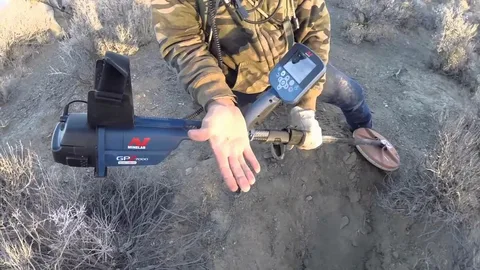
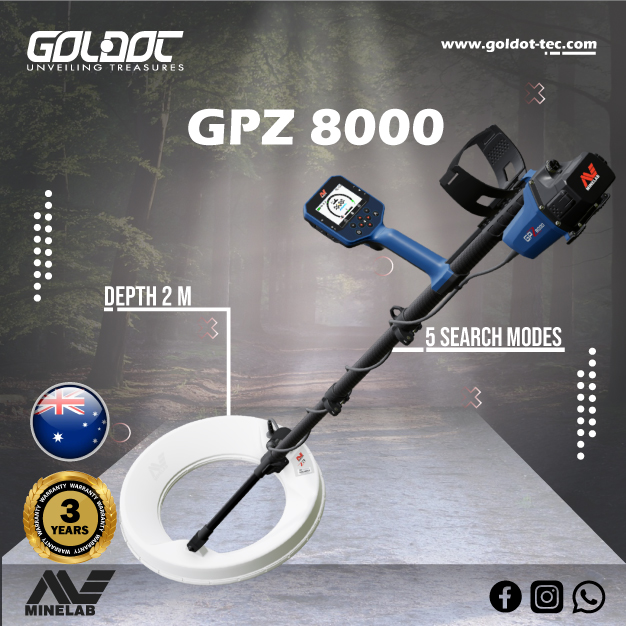
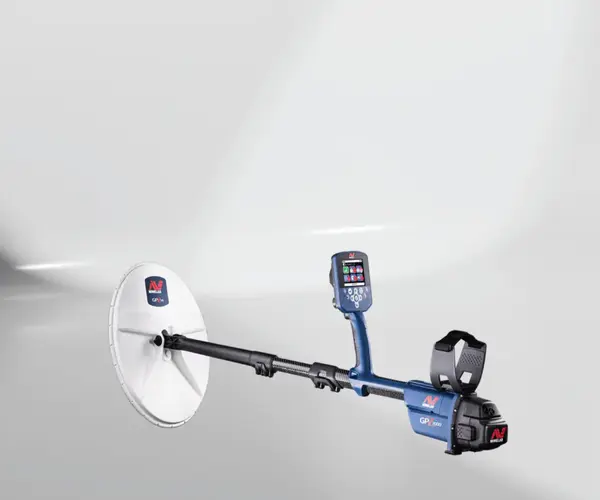
The Minelab GPZ 8000 vs GPZ 7000 decision is best made around your ground, targets, coil package and hours of use. Minelab lists the newer GPZ 8000 at 2.78 kg with GeoZVT technology and compatible Z13, Z17 and Z18 concentric toroidal coils. The GPZ 7000 is listed at 3.32 kg with ZVT technology and the GPZ14 Super-D coil. Those published specifications establish real differences; they do not establish that one detector will find every nugget deeper in every field.
GPZ 8000 vs GPZ 7000 at a glance
| Specification | GPZ 8000 | GPZ 7000 |
|---|---|---|
| Minelab detection technology | GeoZVT | ZVT |
| Listed operating weight | 2.78 kg | 3.32 kg |
| Coil family | Z13, Z17 and Z18 concentric toroidal options | GPZ14 Super-D supplied in Minelab’s standard specification |
| Water protection stated by Minelab | Detector, coil and WM 14: 1 m for less than 30 minutes | Coil: 1 m; detector body is not waterproof |
| Search setup | Difficult, Difficult Deep, Normal Deep and Normal Extra Deep modes | High Yield, General and Extra Deep gold modes, with ground-type settings |
| Buying question | Does the newer control and chosen coil justify the package cost for your sites? | Does your current coil and established workflow already cover the work? |
Specifications are from the GPZ 8000 technical sheet and GPZ 7000 technical sheet. Check the current regional package before ordering: the supplied coil and accessories can vary by market and configuration.
How the detection systems differ
The GPZ 7000 uses Minelab’s Zero Voltage Transmission (ZVT) system with a Super-D coil. It was designed for gold prospecting in difficult ground and remains a serious detector. Its three gold modes and three ground-type options allow the operator to trade sensitivity, ground response and search pace for the site. A stable threshold and repeatable signal matter more than simply setting every control to maximum.
The GPZ 8000 is built around GeoZVT and a newer family of Z-Set concentric toroidal coils. Minelab promotes improved signal control in mineralized, conductive and interference-heavy ground. That is a manufacturer performance description, not an independent result for your particular field. The four named modes make it especially important to learn what the Normal and Difficult settings do before comparing responses with a GPZ 7000.
Neither GPZ platform should be treated as an ordinary pulse-induction detector simply because both target deep gold. If you are comparing detector families more broadly, use our VLF vs PI selection guide for the practical differences, then review the GPZ systems on their own specifications.
Coils change the comparison
Minelab lists three compatible GPZ 8000 concentric toroidal coils: the Z13, Z17 anti-interference and Z18. A smaller coil can be more manageable around rocks or vegetation; a larger coil covers more ground per sweep and may suit a different target and terrain. Coil choice also changes balance and the feel of a long session. Do not compare an 8000 with one coil to a 7000 with another and attribute the entire result to the detector electronics.
The GPZ 7000 standard specification includes the GPZ14 14 by 13 inch Super-D coil. Ask which coil, skid plate and accessories are actually in the seller’s package. If an alternative coil is proposed, confirm manufacturer compatibility and warranty coverage. The current GPZ 8000 listing and GPZ 7000 product listing are the right places to check each offered configuration.
Weight, balance and long field sessions
On Minelab’s listed figures, the GPZ 8000 weighs 0.54 kg less than the GPZ 7000. That is a meaningful specification, but comfort also depends on shaft adjustment, coil choice, harness setup and the way the operator swings. The GPZ 8000 specifications list a Pro-Swing 125 harness, while the GPZ 7000 lists a Pro-Swing 45 harness in the standard supplied accessories. Compare the exact regional bundle, then wear and swing both systems if possible.
A practical shop demonstration should include ten to fifteen minutes of normal sweeping, not just holding the detector upright. Check whether the coil follows uneven ground without strain, how the display reads in sunlight, whether controls can be reached with gloves, and how the full kit packs for your vehicle or travel. A lighter detector that is poorly adjusted may still tire the user.
Water resistance and field conditions
The distinction is substantial. Minelab rates the GPZ 8000 detector, coil and WM 14 module for immersion to one meter for less than 30 minutes. For the GPZ 7000, Minelab specifies the coil as waterproof to one meter; the control unit is not waterproof. Follow the exact manufacturer instructions for connectors, headphones and charging. Never infer that an entire detector is submersible from a waterproof coil.
Wet ground, salt, hot rocks and electromagnetic interference can make a comparison harder. Test on the sort of site you actually search. If a signal is uncertain, repeat it from another direction and check the response after ground adjustment. These practical steps matter for both GPZ models and prevent a noisy setup from masquerading as superior sensitivity.
Can the GPZ 8000 detect deeper gold?
There is no defensible universal depth winner without a defined target and controlled comparison. Detection depth depends on nugget mass and shape, burial orientation, mineralization, moisture, coil, mode, sweep speed and acceptable false-signal rate. Minelab describes the GPZ 8000 as designed for strong depth and control, but a percentage improvement or blanket claim of “deeper on every target” cannot be inferred from the specification sheet alone.
A useful field test records several known targets across size classes and depths, includes blank locations, and compares each detector on the same ground with suitable coils and expert setup. Run repeated passes from two directions. Record the audio response and whether an operator could identify the target before its position was revealed. If one model is more stable at a given site, document the mode, ground settings and interference before declaring a result.
A fair GPZ field test checklist
- Define the search job: fine gold, medium nuggets, larger deep targets or broad reconnaissance. Different targets may favor different coils and settings.
- Record the ground: mineralization, salt, moisture, hot rocks and nearby electrical noise. Use a representative site, not only an air test.
- List the packages: coil type, battery, harness, headphones, audio module and firmware. Verify the exact items supplied by the seller.
- Ground-balance each machine: let an experienced operator achieve a stable threshold before measuring target response.
- Use known targets and blanks: mark depth, size and orientation; include empty spots to expose false positives.
- Repeat and swap operators: make several passes at normal search speed and repeat from a second direction. Compare the results, not a single strong beep.
- Evaluate comfort: swing each configured system long enough to judge balance and fatigue with the intended harness.
These steps cannot predict every future discovery, but they produce a much stronger buying signal than unsourced user testimonials or a manufacturer maximum-depth headline. Our GPZ 8000 review discusses its operating fit in more detail.
Price and package value
A price comparison is only useful when it describes the same market, warranty, coil count, condition and accessories. The 8000 is a newer platform, but the cost of switching also includes training, spare power supplies and any coil needed for your sites. A used GPZ 7000 should be evaluated for condition, battery health, coil cable wear, provenance and warranty transfer. Avoid treating a historic online price as a current quote.
If you already own a well-functioning GPZ 7000, first identify the limitation you hope the 8000 will solve. If that limitation is handling weight, the published difference is clear. If it is a specific target response in difficult soil, ask for a same-site demonstration. If you are buying your first GPZ, compare the offered configurations and support before deciding. The GPZ 8000 price guide explains the factors to check in a quote.
Which GPZ should you buy?
Choose the GPZ 8000 when its lower listed weight, newer controls and available coil family solve a real field need and the exact package is within budget. Choose the GPZ 7000 when its ZVT workflow, GPZ14 coil and established performance already suit your ground, especially if a carefully checked package offers better value. Neither decision should rest on an unsupported “overall winner” badge.
Before paying, confirm the model and package identifier, included coil, warranty region, training, service route and current availability. Ask for a demonstration that resembles your target and terrain. This approach keeps the comparison focused on measurable differences and avoids confusing a marketing claim with a field result.
Frequently asked questions
Is the GPZ 8000 lighter than the GPZ 7000?
Yes. Minelab lists 2.78 kg for the GPZ 8000 and 3.32 kg for the GPZ 7000. The complete carrying load may differ with accessories and coil choice.
Can both detectors be submerged?
No. Minelab rates the GPZ 8000 detector, coil and WM 14 to one meter for less than 30 minutes. On the GPZ 7000, the coil is waterproof to one meter, while the detector body is not waterproof.
Does GeoZVT guarantee better depth?
No specification guarantees a uniform depth gain on all gold. Compare the two machines with known targets, documented ground conditions and suitable settings.
Which coil comes with my GPZ 8000?
Check the current package sold in your region. Minelab lists Z13, Z17 and Z18 as compatible options, but the supplied coil and accessory bundle must be verified for the specific listing.