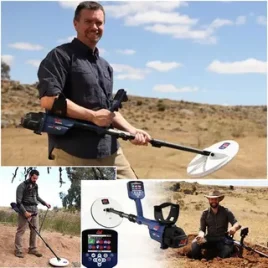


Choosing a gold nugget detector in 2026 is not simply a matter of buying the device with the highest price or the largest search coil. Successful raw-gold detection depends on matching the detector’s technology to the expected nugget size, soil mineralization, search depth, and terrain.
A high-frequency detector may recover tiny gold pieces from shallow bedrock that a larger pulse induction machine could overlook. However, pulse induction technology usually provides better stability and penetration when prospecting in highly mineralized soil.
This commercial guide compares leading detector models, their advantages, disadvantages, realistic depth performance, typical price levels, and the environments in which each device offers the best value.
Buyer Intent for Gold Nuggets
A person searching for a gold nugget detector generally needs a machine designed to locate naturally occurring gold rather than only coins, jewelry, or buried treasure.
Natural gold is particularly difficult to detect because it may be:
- Smaller than a grain of rice
- Mixed with quartz or other minerals
- Located between narrow bedrock cracks
- Buried in iron-rich soil
- Surrounded by hot rocks
- Irregular in shape and orientation
- Located in areas containing metallic waste
The best detector must therefore provide strong sensitivity without becoming unstable whenever the coil passes over mineralized ground.
Buyers should compare frequency, ground balance, coil size, threshold response, weight, search modes, weather protection, available accessories, warranty, and after-sales support.
For a wider overview of machines across different detection categories, review Best Gold Detector – Top 10 Ranked & Compared.
Best Gold Nugget Detectors
The following models represent different buying levels, from accessible high-frequency VLF systems to professional pulse induction equipment.
| Detector | Technology | Nugget Size Focus | Best Ground Type | Experience Level | 2026 Price Position |
|---|---|---|---|---|---|
| Minelab Gold Monster 2000 | Simultaneous multi-frequency | Ultra-fine to medium nuggets | Mild to difficult mineralized soil | Beginner to advanced | Around $1,999 |
| Minelab Gold Monster 1000 | 45 kHz VLF | Fine and small nuggets | Mild to moderate mineralization | Beginner | Around $899 |
| Nokta Gold Finder 2000 | 61 kHz VLF | Tiny shallow nuggets | Dry, mild to moderate ground | Beginner to intermediate | Dealer-dependent |
| Garrett Goldmaster 24K | 48 kHz induction balance | Fine and small nuggets | Mild to changing mineralization | Intermediate | Dealer-dependent |
| Minelab SDC 2300 | MPF pulse induction | Small elusive nuggets | Harsh, wet, mineralized, or salty terrain | Intermediate | Around $3,699 |
| Garrett Axiom | Ultra-pulse induction | Small to larger nuggets | Highly mineralized and hot ground | Intermediate to advanced | Around $1,999–$2,999 |
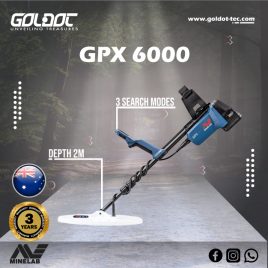
| Minelab GPX 6000 | GeoSense-PI | Sub-gram to large nuggets | Severe mineralization and salt-affected soil | Advanced | Around $6,999 |
The listed Minelab prices are current US manufacturer prices as of July 2026 and may vary by market, taxes, package contents, promotions, and distributor. Garrett lists the Axiom Lite around $1,999.99 and the expanded Axiom package around $2,999.99.
Minelab Gold Monster 2000
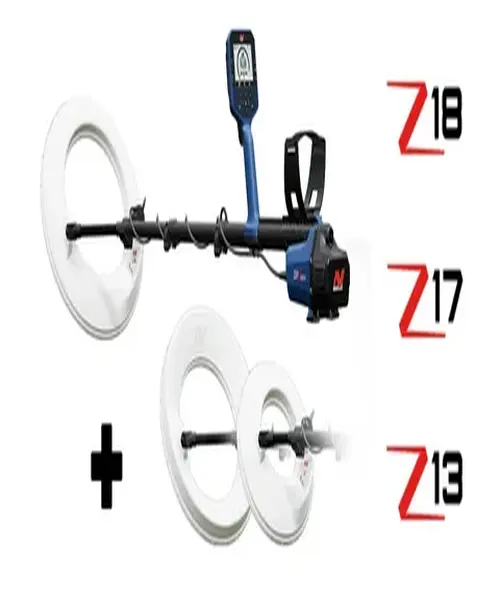
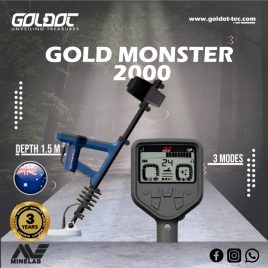
The Minelab Gold Monster 2000 is a strong all-round recommendation for buyers who mainly want fine and small raw gold but expect to search across varying mineralized conditions.
Its Multi-Au technology operates across a simultaneous frequency range of approximately 12 to 76 kHz. This provides sensitivity to extremely small targets while using advanced ground processing to reduce the instability commonly associated with high-frequency single-frequency machines.
The detector includes Normal, Benign, and Difficult ground modes, manual and automatic sensitivity settings, 0–99 Target ID, a five-level depth indicator, and audio that separates high-tone potential gold responses from lower-tone iron or hot-rock signals.
It weighs approximately 1.25 kilograms and includes a compact 5-inch Double-D coil for working around rocks, narrow cracks, tailings, and excavated material.
Main Advantages
- Strong response to ultra-fine gold
- Simultaneous multi-frequency operation
- Better ground handling than basic VLF systems
- Automatic settings for new users
- Numeric Target ID and depth indicator
- Lightweight, compact construction
- Effective small coil for narrow bedrock areas
- Suitable as a companion to a larger PI detector
Main Disadvantages
- Costs more than traditional VLF machines
- Standard small coil covers less ground per sweep
- Not a replacement for a deep professional PI detector
- Control pod is rainproof rather than fully submersible
- Wireless headphones are not included as a standard audio feature
Best Use
The Gold Monster 2000 is best for prospectors working shallow gold patches, historic tailings, exposed bedrock, dry washes, excavated soil, quartz areas, and locations where ultra-fine gold may have been missed.
Read the detailed Minelab Gold Monster 2000 Review – Still the King of Nuggets? before deciding whether its advanced features justify the higher price.
Minelab Gold Monster 1000
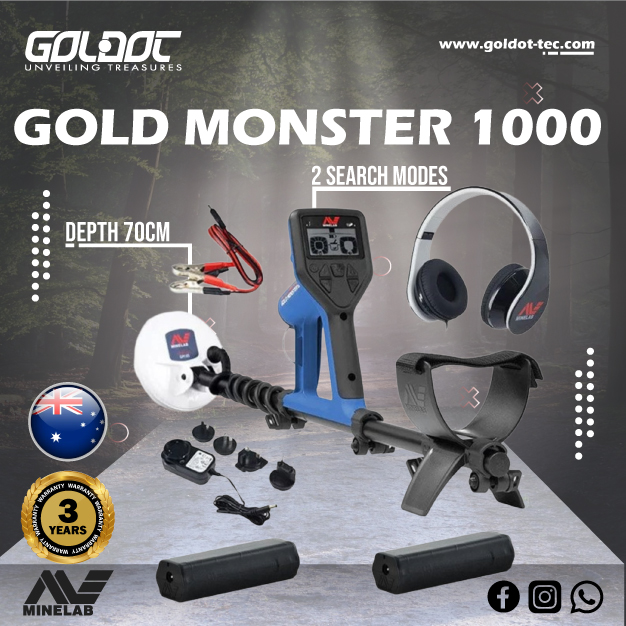
The Gold Monster 1000 remains one of the most accessible specialist options for beginners. Its 45 kHz VLF frequency and 24-bit signal processing provide strong sensitivity to fine natural gold without requiring complicated setup.
Automatic ground balance, automatic noise cancellation, automatic sensitivity options, and a simple Gold Chance indicator help reduce the learning curve.
At approximately 1.33 kilograms, the detector is light enough for long prospecting sessions. The standard configuration uses a compact 5-inch coil, while a larger optional coil can improve ground coverage and response to larger targets.
Main Advantages
- Easy turn-on-and-detect operation
- Sensitive to fine and small nuggets
- Competitive specialist-detector price
- Lightweight and easy to transport
- Automatic ground adjustment
- Clear ferrous and non-ferrous probability indicator
- Suitable for first-time prospectors
Main Disadvantages
- Fixed single-frequency technology
- Less stable than PI systems in severe mineralization
- Limited advanced manual controls
- No numeric Target ID
- No wireless audio
- Control box cannot be submerged
Best Use
The Gold Monster 1000 performs best in mild or moderately mineralized soil, particularly around shallow bedrock, old workings, tailing piles, quartz outcrops, and narrow cracks containing small gold.
Nokta Gold Finder 2000
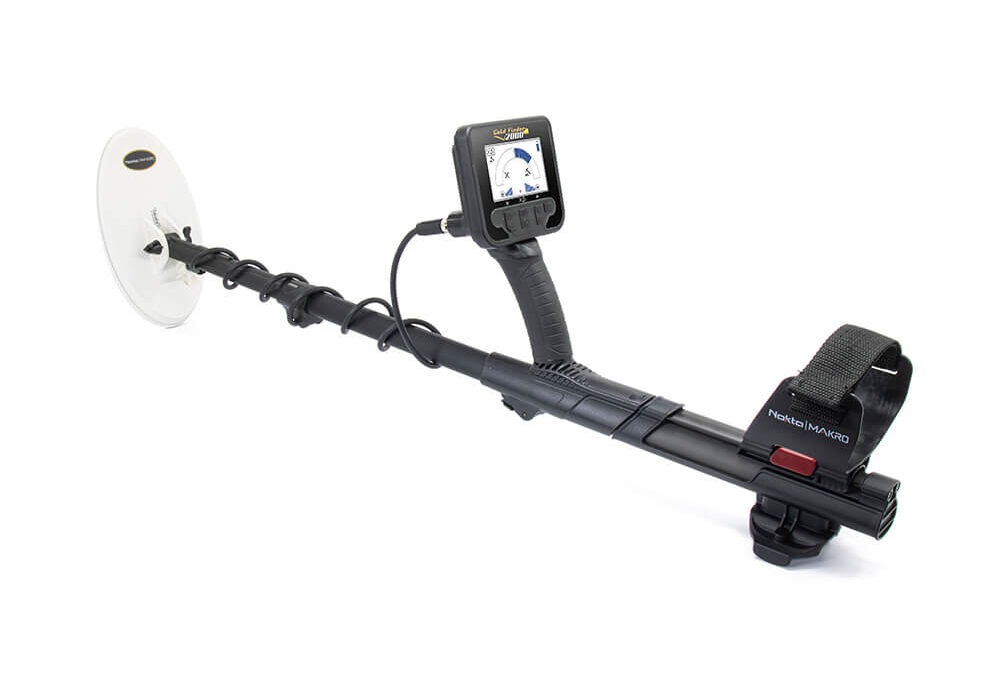
The Nokta Gold Finder 2000 uses a high 61 kHz operating frequency designed to produce a strong response from tiny gold nuggets.
The detector simplifies prospecting through automatic ground balance and a straightforward visual interface. It includes an all-metal search option for maximum sensitivity and a discrimination mode that can help reduce responses from iron contamination.
Its retractable shaft makes it convenient for transportation, while available small coils allow prospectors to search around rocks and confined bedrock locations.
Main Advantages
- High 61 kHz operating frequency
- Strong sensitivity to small shallow gold
- Automatic ground balance
- Simple controls for less experienced users
- Rainproof design
- Retractable shaft
- Wireless audio compatibility
- Useful illumination for low-light prospecting
Main Disadvantages
- High-frequency VLF operation can become noisy in severe ground
- Limited depth on larger deeply buried nuggets
- Fewer advanced settings than professional systems
- Primarily specialized for raw gold
- Performance may decline in conductive salt conditions
Best Use
The Gold Finder 2000 is best suited to dry goldfields, shallow deposits, exposed bedrock, narrow cracks, quartz areas, and previously searched locations where tiny pieces of gold may remain.
A direct comparison of its characteristics is available in Gold Monster 1000 vs Gold Finder 2000 raw gold detector.
Garrett Goldmaster 24K
The Garrett Goldmaster 24K is a 48 kHz high-frequency prospecting detector designed for sensitivity to small natural gold.
Its XGB ground balance system uses multiple ground balance points to manage changing soil conditions. This gives the operator greater control than many fully automatic beginner detectors.
The machine also provides adjustable threshold, sensitivity, ground tracking, iron and hot-rock cancellation, and different search coil options. Garrett positions the detector for small nuggets, bedrock cracks, and shallow gold deposits.
Main Advantages
- Strong 48 kHz sensitivity
- Effective response to fine gold
- Advanced ground tracking
- Adjustable threshold and sensitivity
- Greater operator control
- Useful iron and hot-rock cancellation
- Good balance between price and field performance
Main Disadvantages
- Requires more adjustment than automatic models
- Learning threshold changes takes time
- VLF technology remains limited in extreme mineralization
- Not intended for maximum large-nugget depth
- Incorrect discrimination settings may hide weak targets
Best Use
The Goldmaster 24K suits intermediate users who want to fine-tune their machine while prospecting in mild, moderate, or frequently changing mineralized ground.
Minelab SDC 2300
The Minelab SDC 2300 is a compact pulse induction detector built for small, elusive gold in environments where high-frequency VLF machines may become unstable.
Its Multi Period Fast technology uses rapid transmit-and-receive switching to improve signal clarity on small gold. Automatic Ground Tracking and Noise Cancel reduce the amount of manual adjustment required.
The detector is waterproof to approximately 3 meters, folds to about 40 centimeters, and uses a compact 8-inch Monoloop coil. This combination makes it particularly useful in creeks, wet gullies, narrow rocky locations, and mineralized ground.
Main Advantages
- Pulse induction stability
- Strong sensitivity to small elusive nuggets
- Waterproof to approximately 3 meters
- Compact folding construction
- Automatic ground tracking
- Normal and Salt ground modes
- Rugged field design
- Suitable for wet and difficult terrain
Main Disadvantages
- Considerably more expensive than VLF models
- Heavier than lightweight beginner detectors
- Fixed standard coil limits configuration choices
- Limited target identification
- Audio responses require practice
- Small coil covers less ground during open-area searches
Best Use
The SDC 2300 is recommended for mineralized creek beds, wet goldfields, salt-affected ground, rocky gullies, shallow water, and heavily searched locations containing small pieces missed by less stable detectors.
Garrett Axiom
The Garrett Axiom is a lightweight pulse induction machine developed for serious prospecting in mineralized soil.
Unlike entry-level VLF equipment, the Axiom is designed to maintain a smoother threshold around hot rocks, iron-rich soil, and difficult goldfield conditions. Different search modes and coil packages allow it to target a broader range of nugget sizes.
Its built-in rechargeable battery can provide approximately 16 hours of operating time, while the Lite configuration gives buyers access to the main detector technology at a lower package price.
Main Advantages
- Stable pulse induction operation
- Suitable for difficult mineralized soil
- Sensitive to different nugget sizes
- Lightweight compared with many PI machines
- Long internal battery runtime
- Multiple coil choices
- Upgradeable software
- Lower-priced Lite package available
Main Disadvantages
- Higher cost than specialist VLF detectors
- Limited target discrimination
- Weak audio responses require experience
- Package contents vary considerably
- Extra coils increase the total investment
- More machine than many occasional users need
Best Use
The Axiom is suitable for desert goldfields, iron-rich soils, hot-rock areas, old mining locations, salt-affected ground, and larger prospecting projects where both small and deeper nuggets may be present.
Minelab GPX 6000
The GPX 6000 is a premium gold nugget metal detector designed for prospectors who need strong performance across multiple nugget sizes and difficult ground types.
Its GeoSense-PI technology analyzes ground and target signals in real time to maintain threshold stability. The detector is designed to respond to sub-gram pieces as well as medium and larger deep nuggets.
It weighs approximately 2.1 kilograms and supports an 11-inch Monoloop coil for fine gold, a 14-inch Double-D coil for salt and interference, and an optional 17-inch Monoloop coil for broader coverage and larger targets.
Main Advantages
- Excellent mineralized-ground performance
- Detects small, medium, and larger nuggets
- Automatic ground balance
- Automatic noise cancellation
- Multiple specialized coil options
- Lightweight for a professional PI system
- Clear wireless audio
- Suitable for large-scale field coverage
Main Disadvantages
- High professional purchase price
- Limited metal discrimination
- Requires careful coil control
- Faint signals take experience to interpret
- Optional coils increase costs
- Excessive investment for casual users
Best Use
The GPX 6000 is best for experienced prospectors searching productive goldfields, severe mineralization, salt-affected ground, deep old patches, and large areas that require a combination of sensitivity and coverage.
Compare additional specialist options through The Ultimate Gold Nugget Metal Detector Showdown.
Key Nugget Detection Technologies
Understanding the detector’s technology helps buyers avoid paying for features that do not suit their search environment.
High-Frequency VLF Detection
High-frequency VLF machines are especially responsive to small, low-conductive targets. Frequencies around 45, 48, or 61 kHz can produce excellent sensitivity to fine gold close to the surface.
These detectors are usually lighter and less expensive than PI systems. They also tend to provide more useful iron indication.
Their main weakness is mineralized ground. As soil conditions become more difficult, sensitivity may need to be reduced to maintain stable operation, which can reduce depth.
Simultaneous Multi-Frequency Detection
A simultaneous multi-frequency detector processes more than one frequency during the search. This can improve responsiveness across different nugget sizes and provide better adaptability when soil conditions change.
The Gold Monster 2000 uses frequencies from approximately 12 to 76 kHz and combines them with enhanced ground handling. Minelab states that the system is designed to detect extremely fine gold, including pieces below 0.01 grams under suitable conditions.
Pulse Induction Detection
Pulse induction systems are commonly chosen for highly mineralized or salt-affected ground. They can maintain a smoother response in soil that causes a VLF machine to produce constant false signals.
PI detectors also perform well on medium and larger nuggets at greater depth. Their disadvantages are higher prices, limited discrimination, and a greater dependence on audio interpretation.
Depth and Nugget Size
There is no universal depth figure for a gold nugget detector. The same machine can detect one target clearly while missing another at a much shallower level.
Depth depends on:
- Nugget weight
- Nugget thickness
- Target orientation
- Gold purity
- Soil mineralization
- Ground moisture
- Search coil size
- Coil shape
- Detector settings
- Electromagnetic interference
- Sweep speed
- Operator experience
A tiny flat piece of gold may only produce a signal when it is very close to the coil. A dense multi-gram nugget can be detected considerably deeper.
Small coils generally provide stronger sensitivity to tiny targets and better separation between rocks. Larger coils cover more ground and may provide greater depth on medium and large nuggets, but they can be less effective around tight bedrock cracks.
Manufacturer depth claims and air-test results should never be treated as guaranteed field performance.
Accuracy and Target Identification
No standard detector can identify natural gold with complete certainty before the target is recovered.
Gold may produce a non-ferrous response similar to lead, aluminum, brass, or other metals. A target indicator can help reject obvious iron, but it cannot prove that every positive signal is gold.
Accuracy should instead be evaluated through:
- Stable ground balance
- Repeatable target response
- Clear threshold changes
- Consistent signal direction
- Effective hot-rock handling
- Correct sensitivity adjustment
- Slow and controlled coil movement
Aggressive discrimination can save time in contaminated areas, but it can also reject weak or unusual gold signals. Serious prospectors often investigate faint repeatable responses rather than depending completely on the display.
Best Uses Beyond Nuggets
A specialist detector may locate other metal objects, but it is not always the best option for every type of search.
Raw Gold Prospecting
High-frequency VLF and multi-frequency machines are ideal for small shallow gold. PI systems are stronger choices for difficult ground and deeper nugget hunting.
Buried Treasure
Large buried objects may require bigger coils, lower-frequency equipment, PI systems, or specialized deep-search technology. A small-nugget machine is not automatically suitable for deep treasure caches.
Coin Detecting
A general-purpose detector normally provides better numerical identification, discrimination, recovery speed, and coin-search programs. Gold machines can detect coins but may provide less information about them.
Beach Searching
Dry beach sand may be manageable for several VLF detectors. Wet salt sand is more challenging because it can cause false signals.
The SDC 2300 provides a Salt mode and is waterproof to 3 meters, making it one of the more practical specialist options for wet environments. Most other nugget detectors have waterproof coils but control boxes that should not be submerged.
Buyers new to the category can read CAN YOU USE A METAL DETECTOR TO FIND GOLD? for a clearer explanation of the difference between general metal detectors and specialist gold machines.
Price and Long-Term Value
Price should be compared against the ground you can access and the type of gold present there.
Entry-Level Nugget Detectors
Approximately $700 to $1,000.
This category generally includes high-frequency single-frequency detectors. It offers strong value for beginners, shallow nuggets, mild soil, and occasional prospecting.
Advanced Fine-Gold Detectors
Approximately $1,500 to $2,200.
This category includes advanced multi-frequency models and entry configurations of some PI detectors. Buyers receive improved ground handling, more field flexibility, or greater sensitivity across varying nugget sizes.
Professional PI Detectors
Approximately $3,000 to $7,000 or more.
These detectors are intended for serious users with access to productive mineralized goldfields. The increased price can be justified by better ground stability, broader nugget-size performance, and the ability to search locations where VLF detectors struggle.
The complete ownership cost should also include:
- Additional search coils
- Spare batteries
- Headphones
- Carrying cases
- Coil covers
- Digging tools
- Shipping and import fees
- Local taxes
- Training and technical support
Pros and Cons Comparison
| Detector | Strongest Advantage | Main Limitation |
|---|---|---|
| Gold Monster 2000 | Balanced ultra-fine sensitivity and ground handling | More expensive than basic VLF models |
| Gold Monster 1000 | Easy and affordable specialist operation | Reduced performance in severe ground |
| Gold Finder 2000 | Strong 61 kHz small-gold response | Limited large-nugget depth |
| Goldmaster 24K | Adjustable ground control and high sensitivity | Requires more operator learning |
| SDC 2300 | Small-gold PI performance in wet and difficult terrain | High price and limited coil flexibility |
| Garrett Axiom | Lightweight PI system with several coil options | Limited discrimination |
| GPX 6000 | Premium all-size nugget performance | High professional investment |
Choosing the Right Detector
Start by identifying the expected nugget size. Fine shallow gold requires different equipment from large deeply buried nuggets.
Next, evaluate mineralization. A high-frequency machine may offer excellent value in mild ground but become unstable in highly mineralized soil. PI technology may justify its higher price when ground conditions are severe.
Consider the search area as well. A compact coil is ideal for rocks, cracks, and tailings. A larger coil is more efficient across open ground.
The final decision should account for:
- Target nugget size
- Soil mineralization
- Search depth
- Terrain
- Water exposure
- Detector weight
- User experience
- Available budget
- Warranty
- Local technical support
Buying Mistakes to Avoid
Do not purchase a detector based only on an advertised maximum depth. Target size and ground conditions have a major effect on real performance.
Avoid assuming that the highest frequency is always best. A very high-frequency VLF detector may find tiny gold in mild ground but lose stability when mineralization becomes severe.
Do not select a large coil for every search. Large coils can miss tiny targets and become difficult to use between rocks.
Avoid relying completely on discrimination. Weak gold signals can overlap with iron or produce inconsistent target information.
Do not ignore the detector’s weight and balance. Field coverage declines when the machine becomes uncomfortable after a short session.
Buy only from a trusted dealer that can verify the serial number, warranty, included accessories, return policy, and product authenticity.
Always confirm local detecting laws, land ownership, permit requirements, protected sites, and recovery restrictions before beginning a search.
Final Gold Nugget Detector Recommendation
The Minelab Gold Monster 1000 is the best entry recommendation for new users who want simple operation and strong sensitivity to small shallow nuggets.
The Nokta Gold Finder 2000 is suitable for buyers who prioritize very high-frequency response and easy controls at a competitive price level.
The Garrett Goldmaster 24K provides strong value for intermediate users who want greater control over ground balance, threshold, and sensitivity.
The Minelab Gold Monster 2000 is the best balanced fine-gold recommendation. It combines ultra-small-target sensitivity, simultaneous multi-frequency operation, useful identification features, and improved performance across changing mineralized soil.
The Minelab SDC 2300 is the strongest compact recommendation for small nuggets in wet, salty, rocky, or highly mineralized terrain.
The Garrett Axiom is the best value-oriented PI recommendation for users who need difficult-ground performance and multiple coil choices without paying the highest professional price.
The Minelab GPX 6000 is the premium recommendation for serious prospectors who need one machine capable of locating sub-gram pieces, medium nuggets, and larger targets in highly mineralized goldfields.
The right gold nugget detector is ultimately the machine that matches the gold size, soil conditions, location, experience level, and realistic budget—not simply the detector with the highest price.
Frequently Asked Questions
What is the best gold nugget detector for beginners?
The Gold Monster 1000 is one of the easiest specialist models for beginners because it provides automatic ground balance, automatic noise cancellation, and simple target information.
Which detector is best for very small gold nuggets?
The Gold Monster 2000, Gold Finder 2000, Goldmaster 24K, and Gold Monster 1000 are strong choices for fine shallow gold. Performance still depends on soil conditions and coil selection.
Is a VLF or PI detector better for gold nuggets?
VLF detectors generally provide excellent fine-gold sensitivity in mild ground. PI detectors are normally more stable in severe mineralization and can perform better on deeper or larger nuggets.
How deep can a gold nugget detector find gold?
There is no fixed depth. Nugget size, shape, orientation, mineralization, coil size, moisture, settings, and operator technique all affect the result.
Can a gold nugget detector identify gold accurately?
It can identify promising non-ferrous responses, but it cannot confirm with complete certainty that a buried target is gold before recovery.
Which search coil is best for tiny nuggets?
A small Double-D or Monoloop coil is generally preferred for fine gold, tight bedrock cracks, and improved target separation.
Can I use a nugget detector on wet beaches?
Some PI models can operate effectively in salt conditions. Check whether the entire detector is waterproof or only the search coil before entering water.
Is an expensive detector always more effective?
Not necessarily. An affordable high-frequency detector can outperform a professional PI system on ultra-fine shallow gold in mild soil, while the PI system may perform better in highly mineralized ground.