

Finding the best detector for gold nuggets in 2026 depends on more than choosing the newest or most expensive machine. The detector must match the expected nugget size, soil mineralization, search depth, terrain, and the operator’s experience.
For example, a lightweight high-frequency detector can recover tiny pieces of raw gold from shallow bedrock. However, an advanced pulse induction system may deliver better stability and depth in difficult mineralized ground. In contrast, professional flagship detectors can search deeper, although their price and weight may not suit every buyer.
This guide compares the strongest options by technology, advantages, disadvantages, realistic field use, price, and long-term value.
What Buyers Actually Need
The word “best” does not describe one detector that performs equally well in every goldfield.
For instance, a prospector searching for sub-gram gold around shallow bedrock needs different equipment from someone covering open mineralized land for large, deep nuggets. Therefore, choosing the Best Detector for Gold Nuggets should begin with the target and ground conditions rather than the product price.
Buyers should evaluate:
- Expected nugget size
- Ground mineralization
- Required detection depth
- Search coil dimensions
- Detector technology
- Total equipment weight
- Waterproofing level
- Battery operating time
- Available adjustments
- Warranty and technical support
A broader comparison across several detector categories is available in Best Gold Detector – Top 10 Ranked & Compared.
Top Gold Nugget Detectors
The following comparison focuses on specialized raw-gold machines rather than general-purpose coin detectors.
| Detector Model | Technology | Best Buying Reason | Ideal Nugget Size | Best Ground | Approximate US Price |
|---|---|---|---|---|---|
| Garrett Goldmaster 24K | 48 kHz VLF | Best affordable manual-control option | Fine and small gold | Mild to moderate mineralization | $679.99 |
| Minelab Gold Monster 2000 | Multi-Au simultaneous multi-frequency | Best balanced fine-gold detector | Ultra-fine to medium gold | Mild to difficult ground | $1,999 |
| Garrett Axiom Lite | Pulse induction | Best-value professional PI option | Small to large nuggets | Highly mineralized ground | $1,999.99 |
| Minelab SDC 2300 | MPF pulse induction | Best compact waterproof detector | Fine and elusive nuggets | Wet, salty, rocky, or mineralized ground | $3,699 |
| Minelab GPX 6000 | GeoSense-PI | Best lightweight professional detector | Sub-gram to large gold | Severe mineralization | $6,999 |
| Minelab GPZ 8000 | GeoZVT | Best flagship depth option | Small to large deep nuggets | Mineralized and conductive ground | $9,999 |
The Minelab prices shown are current US manufacturer prices in July 2026. Garrett lists the Goldmaster 24K at $679.99 and the standard Axiom Lite price at $1,999.99, although temporary promotions may change the checkout price. Regional taxes, shipping, coils, and dealer packages can also affect the final cost.
For an additional comparison of specialist machines, read The Ultimate Gold Nugget Metal Detector Showdown.
Garrett Goldmaster 24K

The Garrett Goldmaster 24K is the strongest budget-focused recommendation for buyers who want a specialist gold nugget detector with more control than a fully automatic beginner machine.
Its Best Detector for Gold Nuggets performance is supported by a 48 kHz frequency designed to respond strongly to small, low-conductive gold. The XGB Ground Balance system uses multiple ground balance points to help the detector adjust as soil conditions change.
Consequently, this combination makes it particularly useful in locations containing fine gold, quartz, bedrock cracks, and moderate mineralization. Moreover, Garrett currently lists the model at $679.99, placing it well below the price of specialist PI systems.
Main Advantages
- Competitive specialist-detector price
- High 48 kHz sensitivity
- Effective response to fine shallow gold
- Adjustable threshold and sensitivity
- Advanced ground tracking
- Useful hot-rock and iron controls
- Lightweight field construction
- Different coil options available
Main Disadvantages
- Requires more adjustment than automatic detectors
- Threshold changes take time to understand
- VLF performance declines in severe mineralization
- Not designed for maximum depth on large nuggets
- Aggressive rejection may hide weak gold signals
- Less suitable for conductive salt ground
Best Field Use
The Goldmaster 24K is best for buyers searching shallow bedrock, quartz areas, old tailings, dry washes, and mild-to-moderately mineralized goldfields.
It is also suitable for intermediate users who want to learn manual ground balancing and threshold-based prospecting before investing in a professional PI detector.
Minelab Gold Monster 2000
The Gold Monster 2000 is the best balanced recommendation for buyers focused on fine and small natural gold.
Unlike a conventional single-frequency machine, it uses Multi-Au simultaneous multi-frequency technology across approximately 12 to 76 kHz. This range is designed to provide sensitivity across different nugget sizes while improving ground processing in difficult conditions.
The detector includes Normal, Benign, and Difficult ground modes, manual and automatic sensitivity, 0–99 Target ID, a five-level depth indicator, and separate audio responses for likely gold and iron or hot rocks. It weighs approximately 1.25 kilograms and has an official US price of $1,999.
Main Advantages
- Exceptional sensitivity to very small gold
- Simultaneous multi-frequency operation
- Better ground handling than basic VLF machines
- Automatic operation for less experienced users
- Manual sensitivity for greater control
- Numeric Target ID
- Compact five-inch search coil
- Lightweight for long prospecting sessions
Main Disadvantages
- More expensive than traditional VLF models
- Small standard coil covers less ground
- Not intended to replace a deep flagship detector
- Control housing is not fully submersible
- No built-in wireless audio
- Less suitable for large open areas without a larger coil
Best Field Use
The Gold Monster 2000 is particularly effective around shallow bedrock, narrow crevices, quartz deposits, old mining waste, exposed slopes, and locations containing sub-gram nuggets.
The available 10 × 6-inch Double-D coil can provide increased ground coverage and better depth on larger targets, while the standard five-inch coil remains better for tight areas and fine gold.
See Minelab Gold Monster 2000 Review – Still the King of Nuggets? for a dedicated analysis of its features and field value.
Garrett Axiom Lite
The Garrett Axiom Lite is the best-value PI recommendation for buyers who need improved performance in mineralized ground but do not want to enter the highest professional price category.
The Best Detector for Gold Nuggets uses pulse induction technology and advanced timing options to maintain stability around mineralized soil and hot rocks. Garrett states that the detector is sensitive to small, sub-gram gold and provides approximately 16 hours of operation from its built-in lithium-ion battery.
Meanwhile, the Lite package provides the main detection technology with fewer bundled accessories than the full Axiom package. However, the standard list price is $1,999.99, although temporary promotional prices may reduce the checkout cost.
Main Advantages
- Pulse induction ground stability
- Competitive price for a professional PI system
- Responsive to small and larger nuggets
- Approximately 16 hours of battery operation
- Multiple timing and ground options
- Lightweight compared with many older PI machines
- Interchangeable search coils
- Suitable for serious field prospecting
Main Disadvantages
- Costs substantially more than entry VLF models
- Limited target identification
- Audio interpretation requires practice
- Lite package includes fewer accessories
- Additional coils increase the full investment
- Not fully waterproof
Best Field Use
The Axiom Lite suits iron-rich desert soil, hot-rock areas, highly mineralized goldfields, historic mining locations, and open land where prospectors want to search for different nugget sizes.
It is a practical upgrade for users whose VLF detector becomes unstable or requires such low sensitivity that important targets may be missed.
Minelab SDC 2300
The Minelab SDC 2300 is the strongest compact recommendation for wet, rocky, or highly mineralized locations.
First, its MPF pulse induction system switches rapidly between transmitting and receiving. As a result, the detector can respond to small, elusive nuggets while maintaining stability in difficult ground.
The detector weighs approximately 2.3 kilograms, folds to around 40 centimeters, and is waterproof to three meters. It uses a compact eight-inch Monoloop coil and provides Normal and Salt modes for different terrain. Its current official US price is $3,699.
Main Advantages
- Strong sensitivity to small elusive gold
- Stable pulse induction performance
- Waterproof to three meters
- Compact folding design
- Automatic ground tracking
- Dedicated Salt mode
- Durable military-style construction
- Suitable for creeks and wet gullies
Main Disadvantages
- Higher price than the Gold Monster 2000 and Axiom Lite
- Heavier than lightweight VLF detectors
- Fixed standard coil limits flexibility
- Limited visual target information
- No standard wireless audio
- Small coil provides limited coverage in open terrain
Best Field Use
The SDC 2300 is ideal for rocky creek beds, shallow water, mineralized gullies, salt-rich terrain, difficult bedrock, and previously searched locations where small gold may remain.
Its compact coil also helps users work between large stones and around narrow spaces that cannot be searched effectively with oversized coils.
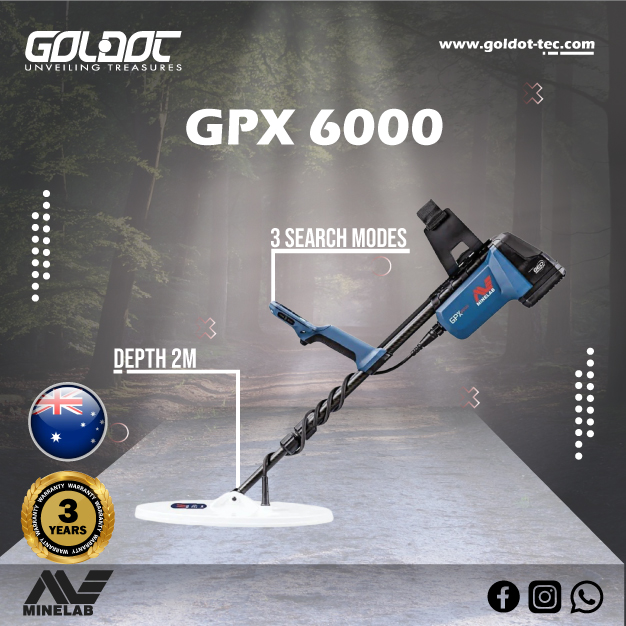
Minelab GPX 6000
The GPX 6000 is the best lightweight professional option for prospectors who need PI performance across a broad range of nugget sizes.
Its GeoSense-PI technology analyzes ground and target signals continuously to improve threshold stability in mineralized soil. Minelab positions it for targets ranging from sub-gram gold to larger deep nuggets.
The Best Detector for Gold Nuggets weighs approximately 2.1 kilograms, collapses to 67 centimeters, provides up to eight hours of battery operation, and supports different coils for fine gold, salt-affected ground, and increased coverage. The official US price is currently $6,999.
Main Advantages
- Strong performance across several nugget sizes
- Excellent mineralized-ground stability
- Automatic ground balance
- Automatic noise cancellation
- Relatively lightweight professional design
- Multiple coil options
- Clear low-latency wireless audio
- Suitable for large prospecting projects
Main Disadvantages
- High purchase price
- Limited metal discrimination
- Requires careful listening to weak signals
- Optional coils increase ownership cost
- Control housing is rainproof rather than submersible
- Excessive for occasional hobby use
Best Field Use
The GPX 6000 is recommended for experienced prospectors covering productive goldfields where small, medium, and larger nuggets may be present.
The standard 11-inch Monoloop coil is designed for fine gold, the 14-inch Double-D coil suits conductive or salt-affected ground, and the optional 17-inch coil offers broader coverage and improved response to larger targets.
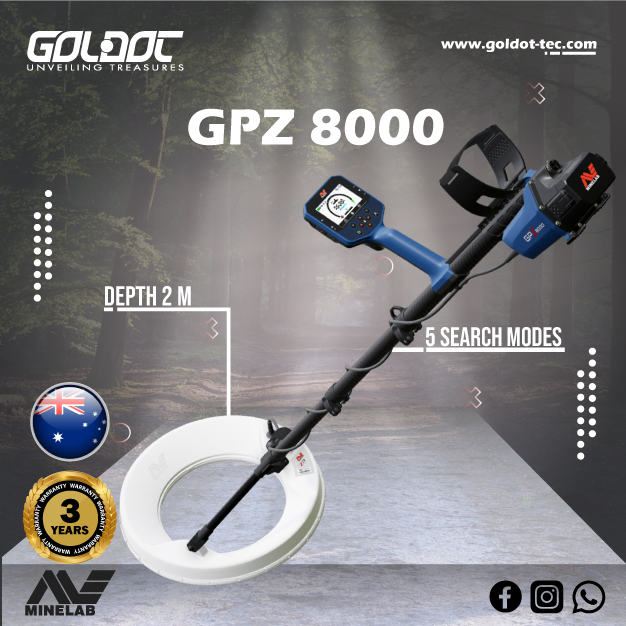
Minelab GPZ 8000
The Minelab GPZ 8000 is the flagship recommendation for buyers prioritizing depth, advanced ground control, and professional performance over price.
It uses GeoZVT technology and Z-Set concentric toroidal coils designed for mineralized, conductive, and electromagnetic-interference-heavy environments.
For example, the single-coil package includes the 18-inch Z18 coil, which is intended for broad coverage and deeper penetration on medium and large gold. By comparison, the additional Z17 and Z13 coils are designed for conductive ground, high interference, vegetation, and small-to-medium targets.
The GPZ 8000 weighs approximately 2.78 kilograms and has an official US price of $9,999 for the single-coil package.
Main Advantages
- Flagship depth capability
- Advanced performance in mineralized ground
- Suitable for small through large gold
- Multiple ground type selections
- Advanced layered stereo audio
- Full-color display
- Three specialized coil options
- Harness and guide arm support long searches
Main Disadvantages
- Highest price in the comparison
- Heavier than the GPX 6000
- Large standard coil is less suitable for narrow crevices
- Requires careful setup and audio interpretation
- Additional coils represent a major extra investment
- Unnecessary for most beginner prospectors
Best Field Use
The GPZ 8000 is the best detector for gold nuggets for experienced or commercial prospectors searching proven goldfields where deeper, larger nuggets may justify the investment.
It is particularly suitable for open mineralized ground that has already been searched with less powerful detectors.
Choosing by Nugget Size
The expected gold size should influence both the detector and coil.
| Expected Target | Recommended Detector Type | Strong Choices |
|---|---|---|
| Fine flakes and micro nuggets | High-frequency VLF or gold multi-frequency | Goldmaster 24K, Gold Monster 2000 |
| Sub-gram nuggets | Multi-frequency or sensitive PI | Gold Monster 2000, SDC 2300, GPX 6000 |
| Small nuggets in mineralized soil | Pulse induction | Axiom Lite, SDC 2300, GPX 6000 |
| Medium nuggets at increased depth | Advanced PI or GeoZVT | Axiom Lite, GPX 6000, GPZ 8000 |
| Large deep nuggets | Flagship PI or GeoZVT | GPX 6000, GPZ 8000 |
Generally, high-frequency systems provide a stronger response to very small, shallow gold. On the other hand, larger coils and powerful PI or GeoZVT detectors are more appropriate when ground coverage and depth on medium or large gold are priorities.
However, a larger coil is not automatically better. It may provide less sensitivity to micro targets and can become difficult to use around rocks, bushes, and uneven bedrock.
Gold Detection Technologies
Technology should be matched to the ground rather than selected according to advertising language.
High-Frequency VLF
High-frequency VLF detectors are sensitive to small, low-conductive gold. They are usually affordable, light, and capable of providing more useful iron information than PI machines.
Their main limitation is ground mineralization. Severe soil conditions can create false signals and force the user to reduce sensitivity.
The Goldmaster 24K is a strong example of this category. Buyers considering simpler high-frequency alternatives can compare Gold Monster 1000 vs Gold Finder 2000 raw gold detector.
Simultaneous Multi-Frequency
Simultaneous multi-frequency technology processes several frequencies during the same search. This can increase sensitivity across different nugget sizes and improve performance when ground conditions change.
The Gold Monster 2000 operates across approximately 12–76 kHz and was developed specifically for fine natural gold. Minelab states that it can respond to extremely small targets, including pieces below 0.01 gram under suitable conditions.
Pulse Induction
Best Detector for Gold Nuggets models that use PI technology transmit powerful pulses and analyze the returning signal. They generally perform better than standard VLF machines in highly mineralized or salt-affected soil.
Their disadvantages include higher prices, less reliable discrimination, and the need to interpret subtle audio responses.
GeoZVT Detection
GeoZVT is positioned as Minelab’s premium solution for depth and signal control in difficult ground. It is used in the GPZ 8000 with concentric toroidal coils and multiple ground settings.
This system is aimed at advanced users who require maximum performance rather than an affordable entry point.
Realistic Detection Depth
No manufacturer or dealer can responsibly guarantee one detection depth for every nugget.
Depth changes according to:
- Nugget weight
- Nugget thickness
- Target orientation
- Gold purity
- Search coil size
- Coil type
- Soil mineralization
- Ground moisture
- Salt content
- Electromagnetic interference
- Sensitivity settings
- Sweep speed
- Operator experience
A thin sub-gram flake may only produce a response very close to the coil. A dense multi-gram nugget can be detected considerably deeper under favorable conditions.
Air tests can demonstrate comparative sensitivity, but they do not recreate mineralized soil, hot rocks, moisture, target masking, or natural orientation.
Buyers should therefore compare detectors by target size and ground performance rather than accepting a single advertised depth figure.
Accuracy and Target Signals
A detector cannot confirm that every positive signal is raw gold before excavation.
The Best Detector for Gold Nuggets may still detect lead, brass, aluminum, and other non-ferrous targets because they can produce similar responses. Even advanced Target ID systems may become less accurate on very small or deep objects.
Reliable field investigation should focus on:
- Repeatable audio from more than one direction
- A controlled and consistent coil sweep
- Correct ground balance
- Stable sensitivity
- Clear threshold changes
- Reduced interference
- Careful excavation and rescanning
Discrimination should be used cautiously. A weak gold target can sometimes produce an inconsistent or iron-like response, particularly when it is deep, small, or positioned near mineralized rocks.
Best Uses Beyond Raw Gold
A machine that detects gold can usually locate other metals, but that does not make it the best option for every search type.
Natural Gold
Specialized high-frequency, multi-frequency, PI, and GeoZVT detectors provide the most appropriate performance for raw-gold prospecting.
Buried Treasure
Treasure caches and large objects may require bigger coils, lower frequencies, PI systems, or specialized deep-search equipment. A micro-nugget detector is not designed for every deep treasure target.
Coins and Relics
General-purpose multi-frequency machines normally offer more detailed Target ID, discrimination, recovery speed, and dedicated coin programs.
A specialist PI detector can locate coins, but its limited discrimination may result in more excavation of iron and other unwanted objects.
Beaches and Water
Dry beach sand can be searched with many detectors, but wet salt ground may cause instability in single-frequency VLF machines.
Therefore, the waterproof SDC 2300 and its dedicated Salt mode make it a practical specialist option for wet environments. Meanwhile, the GPX 6000 provides a Double-D coil mode for conductive ground, although its control unit should not be submerged.
Read CAN YOU USE A METAL DETECTOR TO FIND GOLD? to understand when a general metal detector is sufficient and when a dedicated gold machine is more appropriate.
Price and Buyer Value
The lowest-priced detector can offer the greatest value when it matches the target and terrain.
Under $1,000
The Goldmaster 24K provides specialist high-frequency performance without requiring a professional budget. It is the strongest option in this guide for mild or moderate ground and fine shallow gold.
Around $2,000
The Gold Monster 2000 and Axiom Lite serve different buyers at a similar price.
Choose the Gold Monster 2000 for ultra-fine gold, lightweight handling, visual target information, and narrow bedrock work.
Choose the Axiom Lite for difficult mineralization, wider nugget-size performance, and pulse induction stability.
From $3,500 to $4,000
The SDC 2300 costs more than the Axiom Lite but adds full waterproofing, compact folding construction, and proven small-gold PI performance in wet or difficult areas.
From $6,000 to $7,000
The GPX 6000 is intended for serious prospectors who need lightweight professional performance across different nugget sizes.
Around $10,000
The GPZ 8000 represents a specialist flagship investment. Its value depends on access to productive ground where increased depth and advanced ground processing could justify the purchase.
Advantages and Disadvantages
| Detector | Main Advantage | Main Disadvantage |
|---|---|---|
| Goldmaster 24K | Affordable fine-gold sensitivity | Limited severe-ground performance |
| Gold Monster 2000 | Excellent balance of sensitivity and simplicity | Small standard coil limits coverage |
| Axiom Lite | Professional PI performance near the $2,000 level | Limited target identification |
| SDC 2300 | Waterproof compact PI system | High price for fixed-coil configuration |
| GPX 6000 | Lightweight professional all-size performance | Expensive for occasional users |
| GPZ 8000 | Maximum flagship depth and ground control | Very high purchase price |
How to Choose Your Detector
Begin with the ground you will actually search. A detector bought for imaginary future locations may provide poor value in the terrain available to you now.
Choose Fine-Gold Performance
Select the Goldmaster 24K when the budget is limited and the ground is not severely mineralized.
Choose the Gold Monster 2000 when fine-gold sensitivity, automatic operation, low weight, and improved ground handling are the main priorities.
Choose Mineralized-Ground Stability
Select the Axiom Lite when you need PI performance at a comparatively accessible professional price.
Choose the SDC 2300 when compact construction, waterproofing, and small-gold performance in wet or difficult terrain are essential.
Choose Professional Coverage
Select the GPX 6000 when you need to cover productive mineralized ground for different nugget sizes without carrying a very heavy detector.
Choose the GPZ 8000 when maximum depth and flagship performance matter more than initial cost.
Check the Full Package
Before purchasing, confirm:
- Search coils included
- Coil covers
- Headphones
- Battery and charger
- Carrying case
- Harness
- Warranty period
- Software updates
- Training support
- Shipping and taxes
- Availability of spare parts
Buying Mistakes to Avoid
Do not choose a detector using price alone. An expensive deep-search system may perform poorly for your needs if the real targets are tiny and shallow.
Do not assume a high operating frequency is always superior. High-frequency detectors excel on fine gold but may struggle in severe mineralization.
Avoid selecting the largest available coil for every location. Large coils can reduce small-target sensitivity and are difficult to control between rocks.
Do not depend entirely on visual Target ID. Small and deep gold often produces uncertain information.
Avoid operating at maximum sensitivity when the detector becomes unstable. A quieter detector at a slightly lower sensitivity setting may reveal targets more effectively.
Do not buy from an unverified seller. Confirm product authenticity, serial number, warranty, package contents, return policy, and after-sales service.
Always review local laws, land ownership, permit requirements, protected areas, and recovery restrictions before detecting.
Final Detector Recommendations
The Garrett Goldmaster 24K is the best detector for gold nuggets, an affordable choice for fine and shallow nuggets in mild or moderate mineralization.
The Minelab Gold Monster 2000 is the best overall recommendation for most buyers focused on small raw gold. It combines simultaneous multi-frequency operation, strong fine-gold sensitivity, manageable controls, low weight, and useful target information.
The Garrett Axiom Lite is the best-value PI detector. It is recommended when mineralization requires V requirements, protected areas, and recovery restrictions before detecting.
Final Detector Recommendations
The Garrett Goldmaster 24K is the best affordable choice for fine and shallow nuggets in mild or moderate mineralization.
The Minelab Gold Monster 2000 is the best overall recommendation for most buyers focused on small raw gold. It combines simultaneous multi-frequency operation, strong fine-gold sensitivity, manageable controls, low weight, and useful target information.
TheLF operation difficult and the buyer wants professional technology near the $2,000 level.
For wet, rocky, salty, or highly mineralized locations, the Minelab SDC 2300 is the strongest choice because it combines compact construction with full waterproofing.
Meanwhile, prospectors searching productive ground containing different nugget sizes may prefer the lightweight professional performance of the Minelab GPX 6000.
Finally, experienced users who can justify a premium investment should consider the Minelab GPZ 8000 for advanced ground control and flagship depth performance.
The best detector for gold nuggets is therefore not one universal model. The correct choice is the detector that offers the right sensitivity, ground handling, coil configuration, depth, and price for the goldfield you will actually search.
Frequently Asked Questions
What is the best detector for gold nuggets for most buyers?
The Gold Monster 2000 is the strongest balanced option for buyers focused on small natural gold, lightweight operation, and changing ground conditions.
What nugget detector?
The Garrett Goldmaster 24K is a strong affordable choice for fine and shallow gold in mild or moderate mineralization.
Which detector is best for highly mineralized ground?
PI detectors such as the Garrett Axiom Lite, Minelab SDC 2300, and GPX 6000 are generally more stable than conventional VLF machines in severe mineralization.
Which detector is best for tiny gold nuggets?
The Gold Monster 2000 and Goldmaster 24K provide strong sensitivity to very small shallow gold. The SDC 2300 is also effective when the ground is too difficult for VLF operation.
Which detector offers the greatest depth?
The GPZ 8000 is the flagship depth recommendation in this comparison, particularly for medium and large gold in proven mineralized ground.
Is the GPX 6000 suitable for beginners?
Its automatic ground balance and simplified controls make it easier to operate than many professional detectors, but its price is more appropriate for serious prospectors.
Can a gold nugget detector find coins?
Yes, butspecialist raw-gold detectors generally provide less detailed discrimination and Target ID than dedicated coin and relic machines.
Should I buy a VLF or pulse induction detector?
Choose VLF or gold-focused multi-frequency technology for fine shallow gold in manageable soil. Choose pulse induction when the ground is severely mineralized or deeper nuggets are expected.