

Choosing a gold mining detector in 2026 requires a clear understanding of the ground, the expected gold size, and the role the detector will perform within the mining project. A detector used to recover tiny nuggets from crushed ore and tailings needs different technology from a machine used to search open mineralized land for deeper gold.
Modern equipment ranges from lightweight detectors for testing exposed bedrock to advanced pulse induction systems designed for difficult mining environments. This guide compares the leading models, technologies, prices, strengths, limitations, and recommended applications to help buyers select the right equipment safely.
What This Keyword Means for Buyers
A buyer searching for a gold mining detector may be looking for equipment to support one or more stages of a prospecting or small-scale mining operation.
The detector may be used to:
- Inspect exposed bedrock before excavation
- Search surface soil for natural nuggets
- Test quartz and mineralized material
- Scan old mine waste and tailing piles
- Check excavated soil before disposal
- Recover missed gold from previously worked ground
- Follow nugget patches across open terrain
- Confirm whether metallic signals remain after digging
A handheld detector does not measure the gold grade of an ore body and cannot replace geological mapping, laboratory assays, drilling, or systematic sampling. Its value is in locating individual metallic targets and helping miners identify productive ground more efficiently.
Buyers comparing the wider market can start with Best Gold Detector – Top 10 Ranked & Compared before narrowing the choice according to the mining environment.
Gold Mining Detector Roles
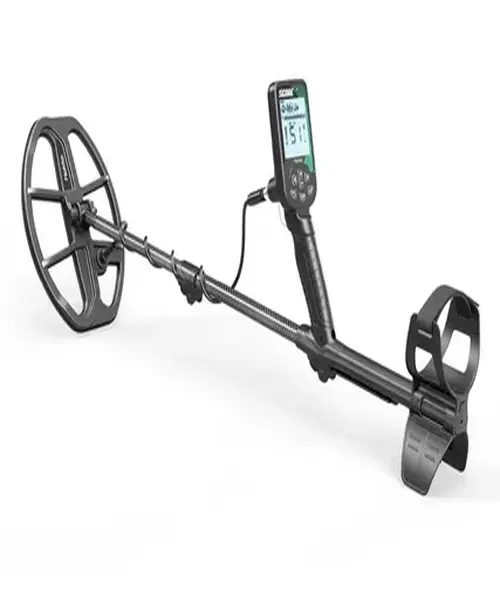
The right detector depends on the stage of the operation.
| Mining Stage | Detector Role | Recommended Technology |
|---|---|---|
| Initial surface reconnaissance | Locate shallow nuggets and identify promising patches | High-frequency VLF or multi-frequency |
| Bedrock inspection | Detect fine gold in cracks and shallow crevices | Small-coil VLF or hybrid multi-frequency |
| Tailing pile recovery | Find nuggets missed during earlier processing | High-frequency VLF or sensitive PI |
| Mineralized-ground exploration | Maintain stability around iron-rich soil and hot rocks | Pulse induction |
| Open-area patch hunting | Cover broad ground for multiple nugget sizes | Lightweight PI with medium coil |
| Deeper target investigation | Search for medium or large gold below worked surfaces | Advanced PI or GeoZVT |
| Wet creek and shallow-water work | Detect in water and mineralized gravel | Fully submersible PI detector |
This distinction is important because no single model delivers the highest sensitivity, depth, ground coverage, portability, and discrimination in every mining situation.
Top Detector Models to Consider
The following comparison includes machines for different levels of gold mining and prospecting.
| Detector Model | Technology | Main Mining Strength | Best Use | Approximate 2026 Price |
|---|---|---|---|---|
| Garrett Goldmaster 24K | 48 kHz VLF | Affordable fine-gold sensitivity | Bedrock, quartz, tailings | About $680 |
| Minelab Gold Monster 2000 | Hybrid simultaneous multi-frequency | Fine-gold recovery with improved ground handling | Testing exposed ground and mine waste | $1,999 |
| Garrett Axiom Lite | Pulse induction | Professional PI performance at a lower package price | Mineralized mining ground | About $1,700–$2,000 |
| Minelab SDC 2300 | MPF pulse induction | Small-gold detection in wet and difficult terrain | Creeks, gullies, rocky workings | $3,699 |
| Nokta Magnetar 9000 | Advanced pulse induction | Deep and small gold with two coils | Serious field exploration | Manufacturer listing from $4,999 |
| Minelab GPX 6000 | GeoSense-PI | Broad nugget-size performance with low weight | Large mineralized search areas | $6,999 |
| Minelab GPZ 8000 | GeoZVT | Premium depth and advanced ground control | Proven goldfields and deep targets | $9,999 |
Prices are based on official US or manufacturer listings available in July 2026. Promotions, taxes, shipping, regional packages, currency conversion, and distributor policies can change the final purchase cost. Minelab currently lists the Gold Monster 2000 at $1,999, SDC 2300 at $3,699, GPX 6000 at $6,999, and GPZ 8000 single-coil package at $9,999.
Garrett Goldmaster 24K
The Garrett Goldmaster 24K is an accessible specialist option for buyers who need strong sensitivity to fine gold without paying for a professional pulse induction system.
The Gold Mining Detector operates at 48 kHz, making it responsive to small, low-conductive targets. Its XGB ground balance system is designed to follow changing ground conditions through multiple ground balance points.
The detector also provides adjustable sensitivity, threshold control, ground tracking, and tools for reducing responses from iron and hot rocks. Garrett positions the model for shallow gold, bedrock cracks, and small nuggets.
Main Advantages
- Affordable entry into specialist gold detection
- Strong sensitivity to fine raw gold
- Adjustable ground balance and threshold
- Lightweight for extended searches
- Useful around bedrock and mine tailings
- More operator control than basic automatic machines
- Different search coils available
Main Disadvantages
- Less stable than PI equipment in severe mineralization
- Requires practice to interpret threshold changes
- Limited depth on large nuggets
- Performance may decline in conductive salt ground
- Incorrect rejection settings can mask weak gold signals
Best Mining Use
The Goldmaster 24K is recommended for inspecting crushed material, shallow mine waste, quartz areas, narrow bedrock cracks, and tailing piles in mild or moderately mineralized ground.
It offers particularly good value for small-scale miners who need a sensitive secondary detector to check material after excavation or processing.
Minelab Gold Monster 2000
The Gold Monster 2000 is one of the best balanced choices for mining teams focused on ultra-fine to small natural gold.
Its Multi-Au system combines simultaneous multi-frequency VLF sensitivity with a pulse induction-based soil-handling engine. This design aims to preserve fine-target response while reducing ground noise in mineralized soil.
The machine provides automatic ground balance and sensitivity, numeric Target ID, a Gold Chance indicator, and layered Echo Wave audio. It weighs approximately 1.25 kilograms and collapses to 65 centimeters, making it convenient for transporting between mining sites.
Main Advantages
- High sensitivity to ultra-fine gold
- Improved performance in mineralized soil
- Automatic operation for less experienced workers
- Clear numeric target information
- Compact coil for inspecting cracks and ore piles
- Lightweight enough for all-day testing
- Easy to carry between excavation areas
Main Disadvantages
- Higher cost than conventional VLF detectors
- Small standard coil covers limited ground
- Not intended for maximum large-target depth
- Control unit should not be submerged
- Less suitable for rapid coverage of large mining areas
Best Mining Use
The Gold Monster 2000 is especially effective for checking exposed bedrock, quartz zones, excavated soil, dry wash material, old mine dumps, and tailings that may contain small pieces missed by earlier recovery methods.
A detailed evaluation is available in Minelab Gold Monster 2000 Review – Still the King of Nuggets?.
Garrett Axiom Lite
The Garrett Axiom Lite is a practical upgrade for mining areas where mineralization makes a VLF detector unstable.
Its pulse induction technology is designed for iron-rich soil, hot rocks, and difficult goldfield conditions. It provides the same central detection platform as the full Axiom but is offered with a reduced package of coils and accessories.
The built-in lithium-ion battery provides approximately 16 hours of operation, which is valuable for remote mining locations where access to power may be limited. Garrett’s official listing places the regular Axiom Lite price around $1,999.99, with temporary discounts sometimes available.
Main Advantages
- Stable operation in highly mineralized soil
- Sensitive to small and larger nuggets
- Long internal battery life
- Lightweight compared with many older PI systems
- Multiple search and ground options
- Interchangeable coil support
- More affordable than many professional PI detectors
Main Disadvantages
- Limited target identification
- Requires experience to interpret subtle audio
- Lite package contains fewer accessories
- Additional coils increase total cost
- Higher initial investment than VLF equipment
- Detector is not designed for complete underwater use
Best Mining Use
The Axiom Lite is suitable for open mineralized ground, iron-rich mining areas, old workings, hot-rock zones, and locations where a VLF machine produces excessive false signals.
It is also a strong option for miners who need one PI detector for surface reconnaissance and deeper investigation without entering the highest professional price level.
Minelab SDC 2300
The Minelab SDC 2300 is designed for compact, rugged gold recovery in difficult or wet terrain.
The Gold Mining Detector uses Multi Period Fast pulse induction technology, which is especially effective on small elusive targets. The detector uses an eight-inch Monoloop coil, weighs approximately 2.3 kilograms, folds to 40 centimeters, and is waterproof to three meters.
The compact design allows it to reach between rocks, along narrow gullies, inside shallow creek beds, and around uneven mining excavations where larger detectors become difficult to maneuver.
Main Advantages
- Strong response to small gold
- Pulse induction stability
- Fully submersible to three meters
- Compact folding construction
- Effective around rocks and narrow workings
- Automatic ground tracking
- Salt mode for conductive ground
- Rugged design for demanding mining locations
Main Disadvantages
- More expensive than the Axiom Lite
- Heavier than lightweight VLF detectors
- Limited coil flexibility
- Small coil provides slower area coverage
- Limited visual target information
- Audio signals require practice
Best Mining Use
The SDC 2300 is ideal for creek mining, wet gullies, shallow water, mineralized gravel, rocky excavation zones, and tailing areas where small nuggets may remain between stones.
It also works well as a cleanup detector for inspecting hard-to-reach places after larger machinery has moved material.
Nokta Magnetar 9000
The Magnetar 9000 is a newer advanced PI platform designed for buyers who want both deep-target capability and sensitivity to smaller gold.
Nokta describes the detector as suitable for deep gold and micro nuggets in harsh mineralized ground. It includes Easy and Expert interfaces, two dual-receiver coils, Bluetooth audio, a color display, and two rechargeable batteries.
The detector is IP68 waterproof to three meters. It weighs approximately 2.4 kilograms with the smaller coil and 2.8 kilograms with the larger coil. Each battery provides up to ten hours of use, giving up to twenty hours with both included packs. The manufacturer’s main product page listed an all-inclusive package price of $4,999 at the time of review.
Main Advantages
- Advanced pulse induction technology
- Designed for both deep and small gold
- Two included search coils
- Easy interface for faster setup
- Expert controls for experienced users
- Waterproof to three meters
- Up to twenty hours using both batteries
- Comprehensive field package
Main Disadvantages
- Premium purchase price
- Heavier with the larger search coil
- Newer platform with a shorter field history than established models
- Expert settings require training
- Large package may be excessive for occasional prospecting
- Regional prices should be confirmed before ordering
Best Mining Use
The Gold Mining Detector Magnetar 9000 is suitable for professional exploration teams, remote mining operations, highly mineralized ground, open-area searching, and projects that need both smaller-target sensitivity and deeper coverage.
The smaller coil is more appropriate for ore piles, target separation, and rough ground. The larger coil is better for open areas and potential deeper nuggets.
Minelab GPX 6000
The GPX 6000 is a professional PI detector designed to cover different nugget sizes across difficult mining terrain.
Its GeoSense-PI system analyzes ground and target signals in real time to maintain a stable threshold. Minelab states that it is designed to detect everything from sub-gram pieces to large, deeper nuggets.
The detector weighs 2.1 kilograms, folds to 67 centimeters, and offers coils for fine gold, conductive ground, and broader search coverage. Its rechargeable battery provides up to eight hours of operation.
Main Advantages
- Detects a broad range of gold sizes
- Excellent performance in mineralized soil
- Automatic ground balance and noise cancellation
- Lightweight for a professional PI detector
- Choice of specialized coils
- Useful for large-scale field coverage
- Wireless audio included
- Simple controls compared with older professional systems
Main Disadvantages
- High purchase price
- Limited target discrimination
- Weak signals require careful listening
- Control housing is rainproof, not submersible
- Optional coils increase ownership cost
- May be excessive for occasional or unproven sites
Best Mining Use
The GPX 6000 is recommended for professional prospectors and small mining operations covering productive ground containing different nugget sizes.
The 11-inch Monoloop coil is useful for fine gold, the 14-inch Double-D coil performs better in conductive or salt-affected ground, and the optional 17-inch coil improves coverage and response to larger targets.
Minelab GPZ 8000
The GPZ 8000 is a flagship deep gold detector intended for serious prospectors working proven mining areas.
Its GeoZVT technology is designed for mineralized, conductive, and electromagnetic-interference-heavy ground. The detector supports three Z-Set concentric toroidal coils for different target sizes and environments.
The Gold Mining Detector includes multiple coil options: the 18-inch coil focuses on depth and large-area coverage, the 17-inch coil is designed for conductive ground and high interference, and the 13-inch coil is more manageable around vegetation and smaller targets. The detector weighs approximately 2.78 kilograms and includes a harness to distribute its weight during extended searches.
Main Advantages
- Premium depth capability
- Advanced mineralized-ground performance
- Detects small through large gold
- Multiple ground type options
- Three specialized coil sizes
- Detailed layered stereo audio
- Full-color display
- Harness and guide arm for controlled sweeping
Main Disadvantages
- Highest price in the comparison
- Heavier than the GPX 6000
- Large standard coil is difficult in narrow areas
- Advanced audio requires training
- Additional coils involve considerable expense
- Not justified for untested or low-potential land
Best Mining Use
The GPZ 8000 is suited to established goldfields where earlier detectors have already removed shallow targets and the mining team needs to investigate deeper ground.
It is most commercially sensible when geological evidence, historical production, or earlier discoveries justify the premium investment.
Key Features and Technologies
Different detector technologies support different parts of the mining workflow.
High-Frequency VLF
High-frequency VLF detectors are responsive to small, low-conductive targets. They are useful for shallow bedrock, quartz samples, ore piles, and fine-gold recovery.
They are generally lighter and less expensive than PI systems, but their performance may decline in severe mineralization.
Examples include the Goldmaster 24K, Gold Monster 1000, and Gold Finder 2000.
Buyers comparing established high-frequency choices can read Gold Monster 1000 vs Gold Finder 2000 raw gold detector.
Hybrid Multi-Frequency
The Gold Monster 2000 uses simultaneous multi-frequency VLF sensitivity combined with a PI-style ground-handling engine. This aims to increase small-target sensitivity without producing the same level of ground noise as a basic high-frequency detector.
This technology is particularly relevant when inspecting fine material across ground that changes between mild and mineralized conditions.
Pulse Induction
PI detectors are usually selected for mineralized mining environments. They transmit pulses into the ground and analyze the returning signal while reducing the influence of iron minerals.
These detectors offer improved stability and can provide greater depth on medium and large nuggets. Their main limitations are higher prices and less reliable discrimination.
GeoZVT
GeoZVT is Minelab’s flagship gold-detection platform. It is designed to combine depth with advanced signal control in mineralized and conductive ground.
The technology is intended for professional users searching proven areas rather than for buyers conducting occasional recreational searches.
Depth Performance and Accuracy
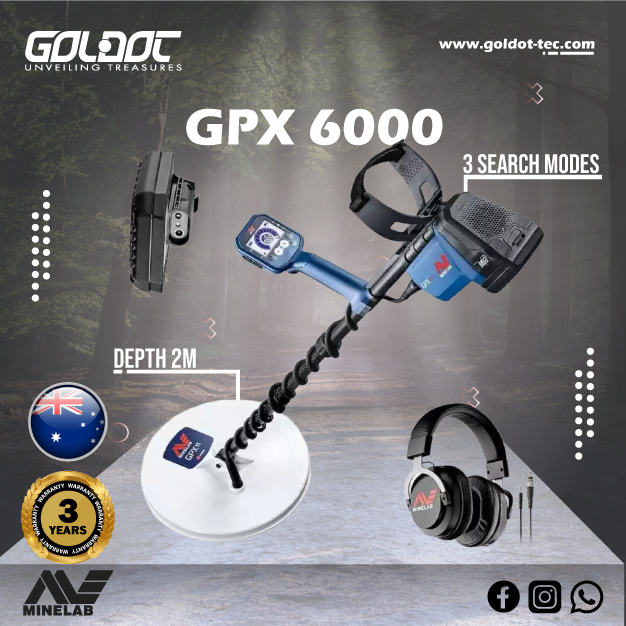
A gold mining detector does not have one guaranteed depth.
Detection depth depends on:
- Gold size and thickness
- Target orientation
- Gold purity
- Search coil size
- Coil design
- Soil mineralization
- Moisture and salt
- Distance from electrical interference
- Sensitivity setting
- Ground balance
- Sweep speed
- Operator experience
A tiny piece of gold may only create a detectable response close to the coil. A dense multi-gram nugget can be detected considerably deeper.
Larger coils generally improve depth and coverage for larger targets, but they may provide weaker responses from micro nuggets. Smaller coils are more effective for inspecting narrow bedrock cracks, ore piles, and contaminated mining areas.
An air test should not be considered a guarantee of mining-site depth because it does not reproduce soil mineralization, hot rocks, moisture, target masking, or natural gold orientation.
Accuracy in Mining Ground
Accuracy means more than displaying a target number.
A useful mining detector should maintain a stable threshold, respond consistently from multiple directions, and reduce signals caused by the soil.
Gold can produce a similar response to lead, brass, aluminum, and other non-ferrous metals. Even an advanced detector cannot confirm with complete certainty that a target is gold before excavation.
Operators should evaluate:
- Signal repeatability
- Threshold stability
- Ground balance quality
- Audio strength
- Signal shape
- Response from several directions
- Target response after removing surface soil
Aggressive discrimination should be avoided in productive ground. Small or deep gold can produce an uncertain or iron-like response, particularly when positioned near mineralized rocks.
Best Uses for Mining and Prospecting
A detector may locate many metals, but specialist gold equipment should be selected according to its main application.
Natural Gold Mining
Use high-frequency or hybrid detectors for shallow fine gold. Choose PI or GeoZVT equipment when mineralization is severe or when larger, deeper nuggets are expected.
Mine Tailings
Tailings can contain targets overlooked by older equipment or recovery methods. Small coils and high-frequency detectors are effective when the material is shallow and accessible.
PI machines may provide better stability when the tailings contain heavy mineralization or hot rocks.
Buried Treasure
A gold mining detector can locate metallic treasure, but deep caches may require a different coil, lower-frequency system, imaging technology, or specialized large-object detector.
Do not assume that a fine-gold machine will provide maximum depth on every treasure target.
Coins and Relics
Specialist gold detectors can locate coins and relics, but general-purpose machines usually offer better discrimination, Target ID, tone options, and recovery speed.
Beaches and Water
Wet salt sand creates difficult conditions for many high-frequency VLF detectors. A waterproof PI model such as the SDC 2300 or Magnetar 9000 may be more practical in salt and shallow water, although beach trash can result in frequent digging.
New buyers should review CAN YOU USE A METAL DETECTOR TO FIND GOLD? to understand the difference between general metal detection and purpose-built gold equipment.
Price Range and Value Comparison
Price should be compared with the role the detector will perform.
Under $1,000
This category includes specialist VLF machines such as the Goldmaster 24K and Gold Monster 1000.
They provide strong value for shallow gold, tailings, exposed bedrock, quartz areas, and mild-to-moderate mineralization.
From $1,500 to $2,500
The Gold Monster 2000 and Axiom Lite occupy this level but serve different needs.
Choose the Gold Monster 2000 for small gold, low weight, visual target information, and detailed inspection work.
Choose the Axiom Lite for highly mineralized soil, broader nugget-size performance, and PI stability.
From $3,500 to $5,500
This range includes rugged compact PI equipment and advanced two-coil systems.
The SDC 2300 is suited to small gold in wet and difficult locations. The Magnetar 9000 provides broader package contents, larger coil options, and deeper-search potential.
From $6,000 to $7,500
The Gold Mining Detector GPX 6000 is designed for serious field coverage and different nugget sizes while remaining lighter than many flagship machines.
Around $10,000
The GPZ 8000 represents a premium investment for proven mining ground. Its cost is difficult to justify unless the location and project potential support deeper professional exploration.
Pros and Cons of Leading Options
| Detector | Primary Advantage | Main Limitation |
|---|---|---|
| Goldmaster 24K | Affordable sensitivity to fine gold | Limited performance in severe ground |
| Gold Monster 2000 | Fine-gold sensitivity with easier ground handling | Limited open-area coverage with small coil |
| Axiom Lite | Strong PI value for mineralized soil | Limited Target ID |
| SDC 2300 | Waterproof small-gold PI performance | Expensive with limited coil flexibility |
| Magnetar 9000 | Two-coil PI package for small and deep gold | High cost and greater weight |
| GPX 6000 | Lightweight professional all-size performance | Premium purchase price |
| GPZ 8000 | Flagship depth and ground control | Very high total investment |
Further specialist comparisons are available in The Ultimate Gold Nugget Metal Detector Showdown.
How to Choose the Right Device
Begin with the actual mining task rather than the model name.
Choose by Material Size
Select a high-frequency or hybrid detector when checking fine material, bedrock cracks, and shallow tailings.
Choose PI equipment for larger nuggets, difficult mineralization, or increased depth.
Choose by Ground Condition
A VLF detector can provide excellent sensitivity in mild soil. In iron-rich or hot-rock ground, a PI machine may maintain better stability and allow higher usable sensitivity.
Choose by Search Area
Small coils are suitable for ore piles, trenches, rocks, and confined excavations.
Medium coils offer a balance between sensitivity and coverage.
Large coils are more appropriate for open areas and deeper medium-to-large targets.
Choose by Mining Scale
A small-scale miner testing material occasionally may receive better value from the Goldmaster 24K or Gold Monster 2000.
A team working daily in mineralized terrain may justify the Axiom, SDC 2300, Magnetar 9000, or GPX 6000.
The GPZ 8000 should primarily be considered for serious exploration of proven ground.
Compare the Full Package
Before ordering, verify:
- Included search coils
- Spare batteries
- Battery chargers
- Vehicle charging options
- Headphones
- Harness or bungee support
- Carrying case
- Software updates
- Warranty coverage
- Local repair support
- Import duties and taxes
- Training availability
Common Buying Mistakes to Avoid
Do not buy a detector based only on the highest advertised depth. Real depth depends on the target and ground.
Avoid choosing a fine-gold VLF detector for severe mineralized soil without first confirming that it can remain stable at a useful sensitivity level.
Do not use the largest coil for every mining task. It may miss fine targets and perform poorly around rocks or contaminated material.
Avoid assuming that a detector can measure the amount of gold in ore. A detector locates metallic responses; it does not replace assay testing.
Do not rely completely on discrimination. Weak gold signals can be rejected as iron.
Avoid purchasing from an unverified seller. Confirm the serial number, manufacturer warranty, package contents, return policy, and availability of spare parts.
Do not ignore weight, battery life, and charging options. These details become critical at remote mining locations.
Always confirm land ownership, prospecting rights, mining permits, environmental rules, protected areas, and local recovery regulations before operating equipment.
Final Recommendation
The Garrett Goldmaster 24K is the best budget recommendation for shallow fine gold, mine waste, and exposed bedrock in manageable soil.
The Minelab Gold Monster 2000 is the best choice for detailed fine-gold recovery. It is particularly effective for testing bedrock, excavated soil, quartz areas, and tailings.
The Garrett Axiom Lite is the best-value PI recommendation for mineralized mining ground. It combines professional technology, long battery life, and a comparatively accessible price.
The Minelab SDC 2300 is the best compact waterproof choice for creeks, gullies, rocky workings, and wet mineralized locations.
The Nokta Magnetar 9000 is the best complete two-coil package for buyers who want advanced PI performance across both small and deeper gold targets.
The Minelab GPX 6000 is the best professional recommendation for broad field coverage and different nugget sizes. Its low weight makes it suitable for long daily searches.
The Minelab GPZ 8000 is the premium depth recommendation for experienced prospectors working proven goldfields where deeper discoveries could justify the investment.
The right gold mining detector should complement the mining operation rather than replace proper exploration methods. Buyers should match the detector to the target size, mineralization, work area, mining scale, and realistic project budget.
Frequently Asked Questions
What is the best gold mining detector for beginners?
The Goldmaster 24K is suitable for beginners who want adjustable VLF performance, while the Gold Monster 2000 offers more automatic operation and improved ground handling.
Which detector is best for mine tailings?
The Gold Monster 2000 and Goldmaster 24K are strong choices for shallow tailings containing small gold. A PI detector may perform better if the material is highly mineralized.
Which gold mining detector provides the greatest depth?
The GPZ 8000 is the premium depth-focused option in this comparison, especially for medium and large gold in proven mineralized ground.
Can a detector identify gold inside solid rock?
A detector may respond to a sufficiently large metallic gold target near the rock surface, but it cannot determine ore grade or reliably identify microscopic gold distributed through stone.
Is pulse induction better for mining?
Pulse induction is generally better in severe mineralization and for deeper targets. High-frequency VLF detectors may be more sensitive to very small shallow gold in milder ground.
Can a gold detector replace geological testing?
No. A detector supports target recovery and surface exploration, but geological mapping, sampling, assays, and drilling are still needed to evaluate a mineral deposit.
Which coil is best for checking excavated material?
A small or medium coil is usually better because it provides improved target separation and is easier to control over ore piles, trenches, and uneven material.
Is the most expensive detector always the best choice?
No. A lower-priced detector can offer better results when it matches the target size and ground. Premium equipment only provides good value when the mining site and search objectives justify its capabilities.