

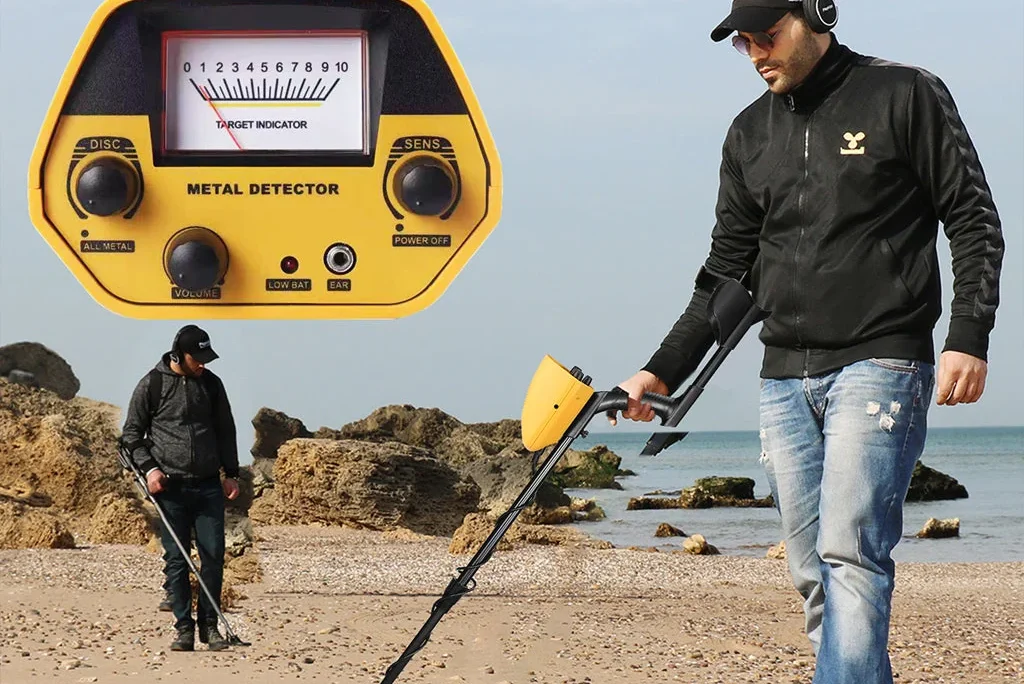
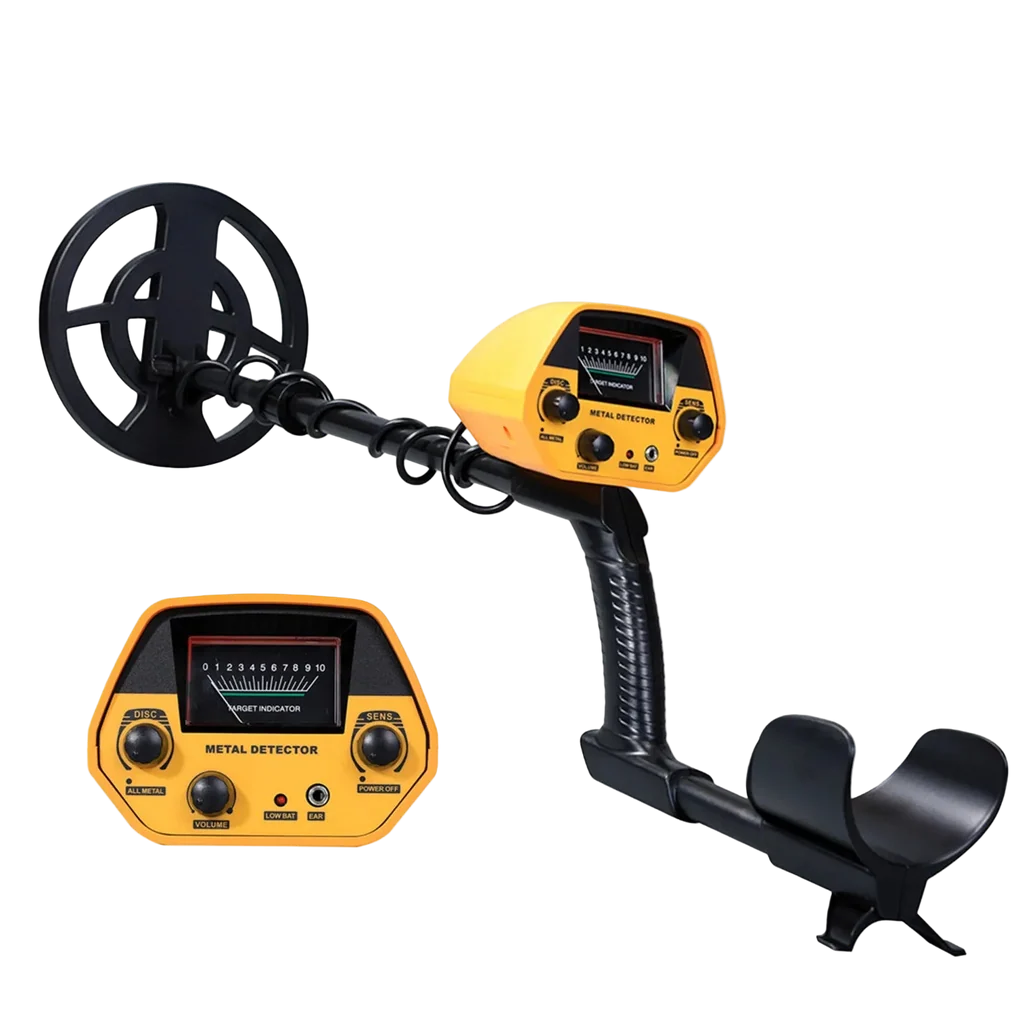
The Beelines metal detector is currently marketed as a conventional hobby detector for searching for coins, jewelry, and different metal targets across areas such as grass, sand, beaches, and shallow water. Before buying one in 2026, however, buyers should distinguish published product features from specifications that are not clearly documented.
The current Beelines product page describes target discrimination, visual and audio feedback, an adjustable shaft, a waterproof search coil, and sensitivity intended for buried targets. It does not publish a specific operating frequency, universal detection depth, detector weight, coil dimensions, or detailed model number in the product-page text reviewed.
For that reason, evaluating a Beelines metal detector should begin with product identification and documentation rather than maximum-depth claims.
Beelines Metal Detector: Identify the Exact Product First
The current Beelines listing uses the general name “Beelines Metal Detector” and offers yellow and black versions. A detailed model designation or SKU is not displayed in the product information reviewed.
Before payment, request:
- Full model number
- Product serial number
- Search-coil dimensions
- Operating frequency or technology
- Detector weight
- Power requirements
- User manual
- Exact waterproof rating
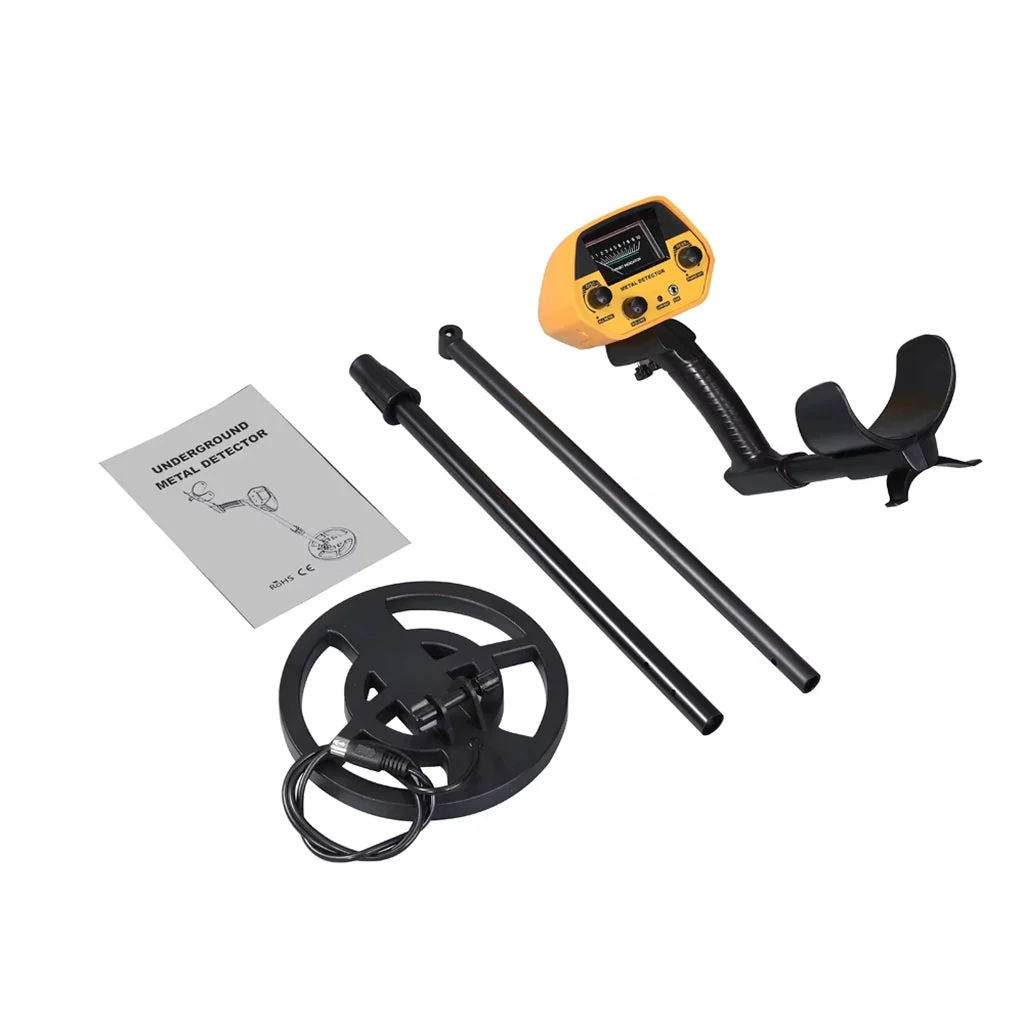
- Package contents
- Warranty documentation
This matters because two detectors with similar external designs can use different electronics, coils, and controls.
What Type of Detecting Is It Designed For?
The Beelines product page presents the detector primarily for conventional treasure hunting rather than as a long-range locator.
Its documented seller-described applications include:
- Coins
- Jewelry
- Gold-colored and other metallic targets
- Grass
- Sand
- Hillsides
- Beaches
- Shallow-water searching
The seller also describes discrimination between gold, iron, silver, aluminum, and bronze, together with visual and audio target indications. These are seller claims and should be evaluated through practical field testing rather than interpreted as guaranteed identification accuracy.
Buyers specifically seeking remote area scanning should compare the operating concept with long range metal detectors rather than assuming Beelines belongs to that category.
Verifying Specifications From Reliable Documentation
Several important specifications remain unclear from the current online listing.
| Specification | Current Documentation Status | Buyer Action |
|---|---|---|
| Exact model number | Not clearly published | Request before purchase |
| Operating frequency | Not published in page text | Request manual/specification sheet |
| Coil dimensions | Not clearly stated | Confirm exact coil |
| Target discrimination | Seller describes multiple-metal identification | Test with known targets |
| Ground adjustment | Not clearly documented | Confirm available controls |
| Waterproofing | Search coil described as waterproof | Confirm whether control box is waterproof |
| Detector weight | Not published | Request measured weight |
| Detection depth | No fixed figure published | Test by target size and soil |
| Manual | Not clearly linked on product page | Request before ordering |
The main advantage of this approach is simple: unknown specifications remain unknown until supporting documentation is provided.
Expected Controls and Search Workflow
Based on the current product description, the Beelines detector uses a visual meter together with audio signals and includes controls intended to keep operation relatively simple.
A sensible field workflow is:
- Assemble and inspect the detector.
- Confirm that the coil connection is secure.
- Begin with moderate sensitivity.
- Sweep the coil slowly and at a consistent height.
- Investigate repeatable signals from multiple directions.
- Compare visual and audio information.
- Reduce sensitivity if instability becomes excessive.
- Confirm uncertain targets before excavation.
Avoid judging metal detector accuracy from a single sweep. A repeatable signal is generally more useful than an isolated response.
Matching the Detector to Soil and Terrain
The seller describes the Beelines detector for grass, sand, hillsides, wet sand, and shallow-water environments.
Actual performance may still change with:
- Ground mineralization
- Salt concentration
- Soil moisture
- Electrical interference
- Target orientation
- Target size
- Nearby metal
- Search-coil height
- Sensitivity settings
Beach users should pay particular attention to the distinction between a waterproof search coil and a fully waterproof detector.
The current listing explicitly identifies the coil as waterproof, but buyers should not submerge the control housing unless its waterproof rating is confirmed separately.
Beelines Detection Depth: How to Judge Claims Responsibly
There is no single verified Beelines metal detector detection depth published on the product page reviewed.
That is preferable to assigning an unsupported number because detector depth varies considerably.
A useful depth test should record:
- Target metal
- Target dimensions
- Burial depth
- Soil type
- Target orientation
- Sensitivity setting
- Number of successful passes
For example, detecting a large buried metal object cannot be used to predict the depth available for a small coin.
Any dealer giving a fixed depth should therefore be asked what target and soil conditions were used.
Target Discrimination and Accuracy
Beelines markets the detector as capable of distinguishing several metal categories and describes a filtering system for helping users separate desirable targets from unwanted metal.
The practical way to evaluate this feature is with known test targets:
- Iron nail
- Aluminum pull tab
- Copper coin
- Silver object
- Gold jewelry item
Test each individually and at several orientations.
Real buried objects may produce less consistent identification than controlled surface tests because conductivity, corrosion, depth, neighboring objects, and soil can influence the response.
Accessories and Replacement-Part Availability
Before purchasing a lesser-known detector, replacement parts deserve almost as much attention as the original unit.
Confirm availability of:
- Replacement search coil
- Coil cover
- Shaft components
- Armrest
- Charging or battery equipment
- Headphones
- Connector cables
- Protective covers
Also ask whether replacement components are model-specific.
If proprietary parts become unavailable, even a functioning detector may become difficult to maintain.
Comparing Beelines With Similar-Priced Metal Detectors
The U.S. Beelines store currently lists the detector at $169, although promotional pricing can change.
That places it near several documented beginner detectors.
| Detector | Current U.S. Listing | Key Documented Difference |
|---|---|---|
| Beelines Metal Detector | $169 | Waterproof coil, visual/audio feedback, seller-described discrimination |
| Minelab GO-FIND 66 | $169.99 | Four Find Modes, Pinpoint Mode, Easy-Trak ground tracking |
| Minelab VANQUISH 340 | $199 | Multi-IQ, three modes, four sensitivity levels, documented 3-year warranty |
Minelab currently lists the GO-FIND 66 at $169.99 and the VANQUISH 340 at $199.
The comparison highlights an important buying issue: Beelines is priced within an established beginner-detector category, so documentation, warranty, replacement parts, and after-sales support should be considered alongside the purchase price.
More conventional alternatives can be reviewed through the metal detectors store.
Warranty, Returns, and Dealer Support
The Beelines product page reviewed does not clearly state a detector-specific warranty period.
Its U.S. return-policy page currently provides a 14-day return window. It also contains both a 20% restocking-fee statement and separate language referring to a 15% handling fee. Because those terms are not completely consistent, buyers should obtain the applicable return charges in writing before ordering.
Ask:
- What warranty specifically covers the detector?
- Where are repairs performed?
- Who pays warranty shipping?
- Are replacement coils available?
- What fee applies to a normal return?
- Can a tested detector still be returned?
- How long are replacement parts supported?
A Safe Buyer Checklist for Beelines
Before ordering a Beelines metal detector, confirm:
- Exact product identity
- Operating frequency
- Coil size
- Waterproof components
- Ground controls
- Target discrimination settings
- Package contents
- Detector weight
- Replacement-part availability
- Written warranty
- Return costs and conditions
- Seller contact details
Also check local requirements before detecting. Permission and metal-detecting or excavation rules vary by country, state, property type, archaeological status, and landowner. Obtain landowner permission and check relevant local authorities when required.
Frequently Asked Questions
Is Beelines a long-range metal detector?
The current product page presents it as a conventional coil-based treasure detector, not a remote long-range locating system.
What metals can the Beelines detector identify?
The seller claims discrimination involving gold, iron, silver, aluminum, and bronze. Practical identification should be tested with known targets.
How deep does the Beelines metal detector detect?
No universal depth specification was found in the current product-page text. Depth varies by target size, soil, coil, settings, and interference.
Is the Beelines detector waterproof?
The search coil is described as waterproof. That does not automatically establish that the control unit can be submerged.
What is the Beelines metal detector price?
The U.S. store currently lists it at $169, but promotions and regional pricing can change.
Is Beelines suitable for beginners?
Its visual meter, audio feedback, adjustable stem, and straightforward controls suggest a beginner-oriented design, but buyers should compare its documentation and support with established alternatives.
The Beelines metal detector may be worth considering as a lower-cost conventional detector, but the buying decision should depend on verified specifications rather than broad claims about depth or accuracy. Confirm the exact model, frequency, coil, waterproof rating, warranty, return conditions, and replacement-part availability, then compare those details with similarly priced detectors before purchasing.