

The Proton Elic Standart is better evaluated as an underground imaging and ground-scanning system than as a conventional coil-based metal detector. Buyers considering this model should focus on the exact package version, sensor configuration, scanning workflow, software, training requirements, warranty support, and the ability to repeat suspicious readings before making an excavation decision.
One complication is product naming. A current retailer page lists the unit as Proton Elic Standart, while parts of the same description refer to “Proton Elic Smart.” Assuva’s current product catalog primarily highlights newer Proton Elic LB and RB configurations. Buyers should therefore confirm the exact model, serial number, included sensors, software version, and package contents in writing before payment.
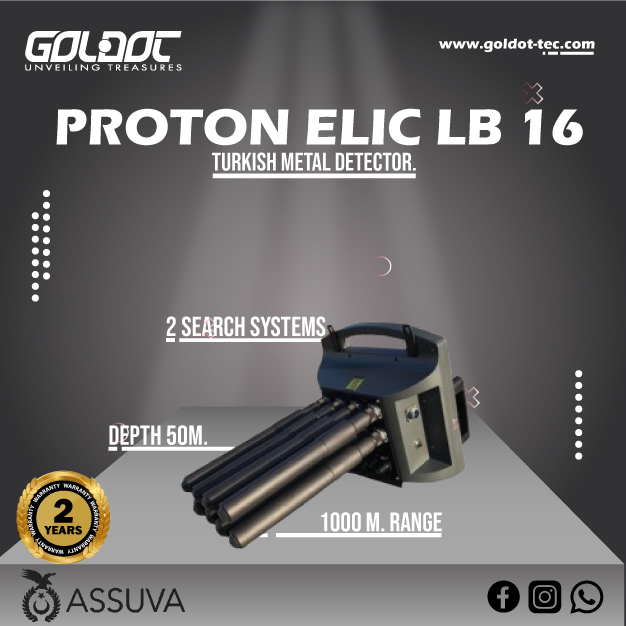
Proton Elic Standart: Entry-Level Positioning and Use
The Proton Elic Standart is positioned below more elaborate Proton configurations that use larger sensor arrays and additional scanning technologies.
A retailer description for the Standart version lists an electromagnetic phase-reading system, a thermal sensor, an MS sensor, computer-based 3D/4D visualization, and functions marketed for investigating underground metal, cavities, tunnels, and structural differences. These are seller specifications and should not be interpreted as independently verified performance results.
The original Proton Elic documentation describes the Proton family as equipment that collects information about underground structure and transfers recorded data to a computer for visual interpretation.
This makes the system most relevant to users who want to investigate:
- Underground anomalies
- Possible metallic structures
- Cavities and voids
- Tunnel-like features
- Larger buried objects
- Changes in subsurface conditions
- Areas requiring repeated imaging analysis
Buyers primarily interested in coins, jewelry, shallow relics, or individual natural-gold nuggets should also compare conventional equipment through a broader metal detector store before choosing an imaging system.
What the Standard Package Should Be Checked For
Package contents should be verified for the exact unit being sold rather than assumed from another Proton Elic configuration.
One retailer listing identifies components including:
- Main unit
- MS sensor
- External power source
- Computer
- 3D/4D software
- Operating material
- User manual
- Carrying case
- Practical training
The same listing advertises a two-year warranty, while an older Proton Elic user guide also describes a two-year parts-and-labor warranty subject to its stated conditions.
Before purchasing, request a written package list containing:
| Item to Verify | Why It Matters |
|---|---|
| Exact model designation | Avoids confusion between Standart, Smart and newer versions |
| Main sensor configuration | Determines what data the system collects |
| Computer or tablet | Required for some analysis workflows |
| Software version | Affects visualization and compatibility |
| Charger and battery | Necessary for field operation |
| Carrying case | Protects the scanning equipment |
| Training | Important for consistent scanning technique |
| Warranty documents | Defines repair and service obligations |
| Serial number | Helps verify the specific unit |
Do not assume that photographs from another Proton configuration represent the package you will receive.
Learning the Core Scan Workflow
The Proton Elic should not be treated as a simple switch-on-and-dig detector.
The available Proton documentation emphasizes data collection, computer visualization, and interpretation. It also warns that environmental conditions, low power, other electronic devices, and interference can affect data collection.
A practical workflow should therefore include several stages.
Prepare the Equipment
Before scanning:
- Charge the equipment correctly
- Inspect sensor connections
- Confirm software communication
- Check available storage
- Verify that the correct scan mode is selected
- Keep unnecessary electronic equipment away from the survey area
The older Proton manual specifically warns about strong magnetic fields and other electronic devices that may interfere with data collection.
Define the Survey Area
Mark the area before collecting data.
A useful survey may use:
- Parallel scan lines
- Fixed starting and ending points
- Consistent spacing
- Clearly numbered areas
- Recorded scan direction
This makes suspicious locations easier to revisit.
Maintain Consistent Movement
Changing movement speed, angle, height, or direction between scans can make comparisons more difficult.
For useful repeatability, maintain the same:
- Operator
- Device orientation
- Scan direction
- Approximate movement speed
- Survey dimensions
- Sensor position
Consistency is especially important when comparing one scan with another.
Preparing a Site for Consistent Measurements
A clean survey area can improve the usefulness of the collected data.
Before scanning, identify possible interference from:
- Vehicles
- Metal fences
- Electrical installations
- Power lines
- Large surface metal
- Communication devices
- Machinery
- Strong magnetic sources
The Proton user guide notes that electronic interference, environmental conditions, power level, and strong magnetic fields can influence data collection.
Record these conditions so they can be considered during analysis.
Reviewing Results and Repeating Suspicious Areas
One unusual image should not automatically be considered proof of a buried object.
A stronger process is:
- Complete the first survey.
- Save and label the scan.
- Identify the suspicious area.
- Repeat the same line.
- Scan from another direction when appropriate.
- Compare whether the anomaly remains in the same physical position.
- Confirm the area using another detection method before excavation.
Repeatability matters because a real subsurface feature should generally remain associated with the same location even when the survey is repeated carefully.
Users comparing ground-imaging equipment can review other 3D imaging detectors to determine whether a different sensor configuration better matches the intended application.
Saving and Labeling Proton Elic Scans
Organized records make later analysis significantly easier.
For every survey, record:
- Site name
- Scan number
- Date
- Starting position
- Direction
- Survey dimensions
- Ground conditions
- Nearby interference
- Operator
- Notes about visible anomalies
Use names such as:
Site-A_Scan-01_North-South
rather than generic names such as “scan1” or “new.”
This becomes particularly valuable when multiple areas are scanned during the same project.
Training Needs for First-Time Scanner Users
The Proton Elic Standart should not be selected solely because its control procedure appears simple.
Operating the equipment is only one part of the process. Users also need to learn:
- Site preparation
- Consistent survey movement
- Software operation
- Data storage
- Image interpretation
- Recognition of interference
- Repeat scanning
- Independent target confirmation
A seller listing for the Standart package specifically includes practical training, which is worth confirming before purchase.
Ask whether training covers only device startup or also includes real survey planning and scan interpretation.
Proton Elic Standart vs Higher Proton Configurations
Newer Proton models document more elaborate sensor arrangements than the Standart listing.
| Configuration | Documented Sensor Approach | Practical Buying Consideration |
|---|---|---|
| Proton Elic Standart | Seller describes thermal and MS sensing | Simpler configuration to verify |
| Proton Elic LB2S | 64-pixel thermal sensor, multiple magnetic sensors and LiDAR | More sensor inputs and analysis functions |
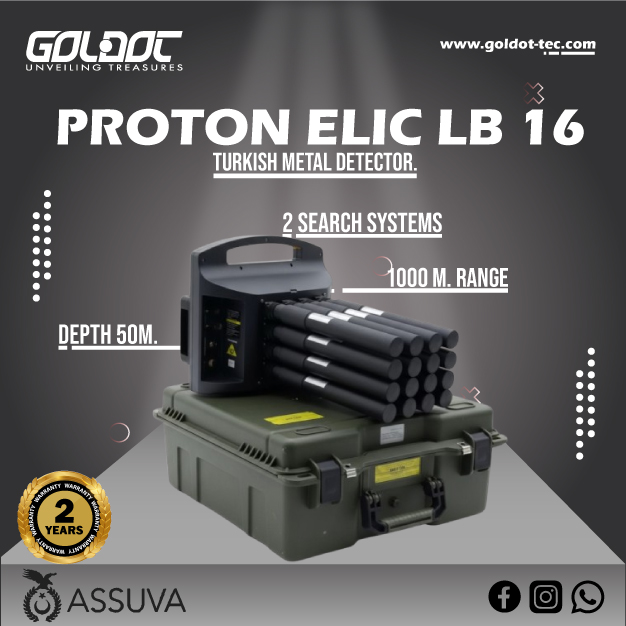
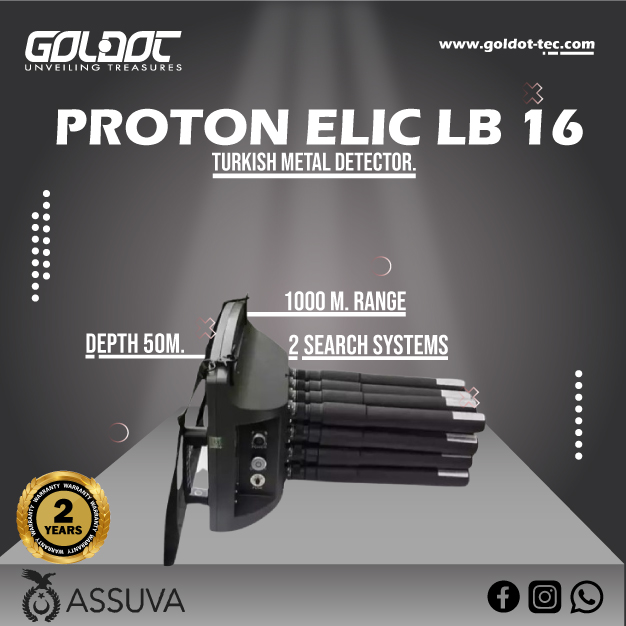
| Proton Elic LB16 | 64-pixel thermal camera and 16 magnetic sensors | Larger simultaneous sensor array |
Assuva describes the LB2S as using customized LiDAR, a 64-pixel thermal sensor, and four magnetic sensors. Its LB16 documentation describes a 4-row by 16-column thermal camera together with 16 magnetic sensors and computer data transfer.
More sensors do not automatically mean that the more expensive system is the right choice. The correct question is whether the additional measurements solve a genuine requirement in your surveys.
Support, Warranty, and Software Questions
Before purchasing a Proton Elic Standart, ask the seller:
- Is this specifically the Standart version?
- Is the unit new or previously used?
- What is the serial number?
- Which sensors are supplied?
- Which software version is included?
- Which operating system is required?
- Is software activation permanent?
- Are future updates included?
- Is remote technical support available?
- Is practical training included?
- Where are warranty repairs performed?
- Who pays shipping for warranty service?
- Are replacement batteries available?
- Can scan files be exported or backed up?
Software support is particularly important with imaging equipment because losing access to the analysis program can reduce the usefulness of the hardware.
Who Benefits From the Standard Version?
The Proton Elic Standart may be worth investigating when the buyer wants:
- Ground-imaging capability rather than basic target audio
- Computer-based scan analysis
- Repeatable site surveys
- A simpler Proton configuration
- Training before using more complex imaging equipment
- An upgrade path toward higher Proton systems
A conventional detector may be more practical when the main goal is fast recovery of small individual metal targets.
Purchase Checklist Before Payment
Before paying for a Proton Elic Standart, confirm:
- Exact model and version
- Authentic serial number
- Complete package contents
- Sensor configuration
- Computer or tablet inclusion
- Software license
- Software compatibility
- Battery and charger
- Training
- Warranty terms
- Repair location
- Return conditions
- Technical-support channel
- Upgrade availability
Also check whether the intended search and any excavation are permitted. Metal detecting, archaeological investigation, land access, and excavation rules vary by country, state, property type, and landowner. Obtain the necessary landowner permission and check the appropriate local authorities before fieldwork.
Frequently Asked Questions
Is the Proton Elic Standart a conventional metal detector?
Not in the usual coil-detector sense. Available documentation presents the Proton Elic family as underground scanning and imaging equipment that collects data for computer-based visualization.
What comes with the Proton Elic Standart?
A retailer listing includes the main unit, sensor, power equipment, computer, software, operating documentation, case, and training. Package contents should still be confirmed for the individual unit before purchase.
What is the Proton Elic Standart detection depth?
Seller pages publish depth claims, but depth depends on the exact version, target, ground conditions, device position, and test methodology. A buyer should request documented test conditions rather than treating one maximum figure as guaranteed field performance.
Does Proton Elic Standart provide 3D imaging?
The Standart retailer description lists computer-based 3D/4D software. Confirm that the software, license, and compatible computer are actually included in the package being purchased.
How should suspicious Proton Elic results be checked?
Repeat the survey under similar conditions, approach the same area from another direction when appropriate, compare the physical location of the anomaly, and use a second suitable detection method before excavation.
Is training important?
Yes. Consistent movement, site preparation, software operation, and interpretation can all affect the usefulness of a scan.
Should I choose the Standard version or a higher Proton configuration?
Choose based on the required sensors and survey workflow. Newer LB models document larger sensor arrays and additional technologies, but those additions only provide value when they match the intended application.
The Proton Elic Standart should therefore be evaluated through exact model verification, package contents, sensor configuration, software support, practical training, repeatable field measurements, and after-sales service. Avoid choosing it only from advertised depth or range figures. A properly documented and repeatable scanning workflow provides a much stronger basis for deciding whether the Standard configuration is suitable for your underground investigation needs.