Minelab GPX 6000 vs GPX 5000 is a comparison between two pulse induction prospecting systems with different control styles. The right choice depends on the gold size, mineralized ground, coil package and time you can spend learning settings. Neither model can make soil transparent or guarantee a fixed detection depth. This guide compares documented differences and the buying questions they create.
| Decision factor | GPX 6000 | GPX 5000 |
|---|---|---|
| Core technology | GeoSense-PI | MPS, DVT and SETA pulse-induction processing |
| Ground approach | Automatic assistance with Normal, Difficult and Severe options | Multiple selectable soil timings and adjustable controls |
| Operator emphasis | Streamlined field setup and carrying comfort | More deliberate timing and configuration choices |
| Package check | Supplied coils, battery and audio | Supplied coil, power system and accessories |
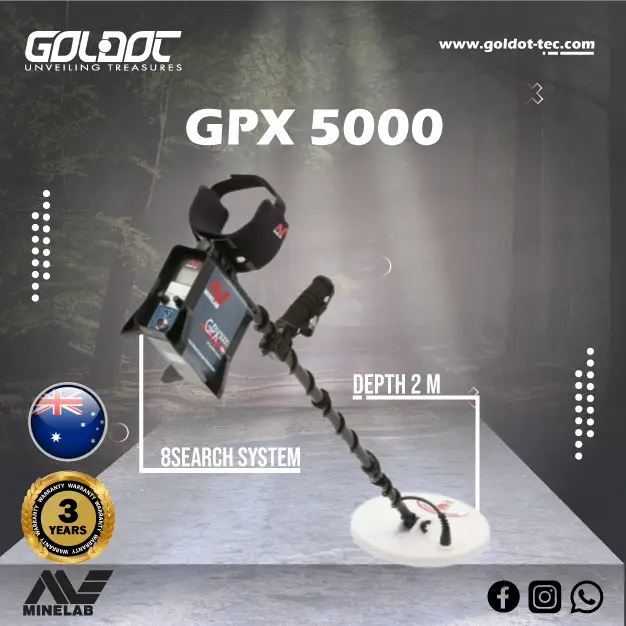
Minelab lists the GPX 6000 at about 2.1 kg with its 11-inch coil. Its coils are waterproof to one metre, while the control unit is splash and rain resistant. Do not assume that this makes the entire detector submersible. For the GPX 5000, the manufacturer documents eight soil timing options; check the offered package and manual before selecting a field setup.
The GPX 6000 uses GeoSense-PI to analyze ground and target signals while prospecting. Its automatic features can reduce the amount of setup work for a user who wants to move between search locations. It still needs correct coil choice, sensible sensitivity and interpretation of repeatable signals. The 2.1 kg figure applies to a specified coil configuration; the complete working package can differ.
Review the Minelab GPX 6000 package to confirm its supplied coils, battery, headphones and current availability. Minelab’s GPX 6000 technical specifications provide the manufacturer’s baseline for its controls and water protection.
The GPX 5000 uses MPS, DVT and SETA processing, with eight soil timing options documented by Minelab. Those choices give an experienced operator more deliberate ways to adapt a setup to ground and target conditions. They also demand practice: an incorrect timing, coil or sensitivity choice can reduce usable performance.
Compare the Minelab GPX 5000 configuration for its coil and power equipment, and review the manufacturer’s GPX 5000 manual before judging whether those additional timing choices serve your ground.
A small nugget in a noisy goldfield does not pose the same search problem as a larger, deeper target. Soil mineralization, hot rocks, electromagnetic interference, coil geometry and target orientation all affect the response. A detector’s technology is one part of a field setup, not a universal ranking.
Ask which target and ground were used for any depth demonstration. Compare like with like and document the coil and settings. A reliable field signal should be checked from more than one direction, but only recovery establishes whether the target is gold. Our gold nugget detector comparison explains how VLF and PI choices change with the site.
For either machine, get a written list of the included coil or coils, battery, charger, audio accessories, warranty and training. A headline price without the package may compare unlike offers. If your decision is driven by the current quote, read our GPX 6000 price and package guide; this article focuses on operating fit.
Choose the GPX 6000 shortlist when you value a lighter specified configuration and more automatic field assistance. Keep the GPX 5000 on the shortlist when you are comfortable tuning soil timings and can show why those controls serve your ground. Test both, if possible, with comparable targets and an appropriate coil before deciding. Avoid treating either detector as a guaranteed winner at every site.
No universal depth ordering follows from their model numbers. Target, coil, ground and settings determine the outcome of a specific test.
Minelab specifies waterproof coils to one metre, while the detector control unit is splash and rain resistant. Follow the manufacturer’s full-device instructions.
Minelab documents eight soil timings for GPX 5000. GPX 6000 instead emphasizes its GeoSense-PI workflow and ground-type options.