
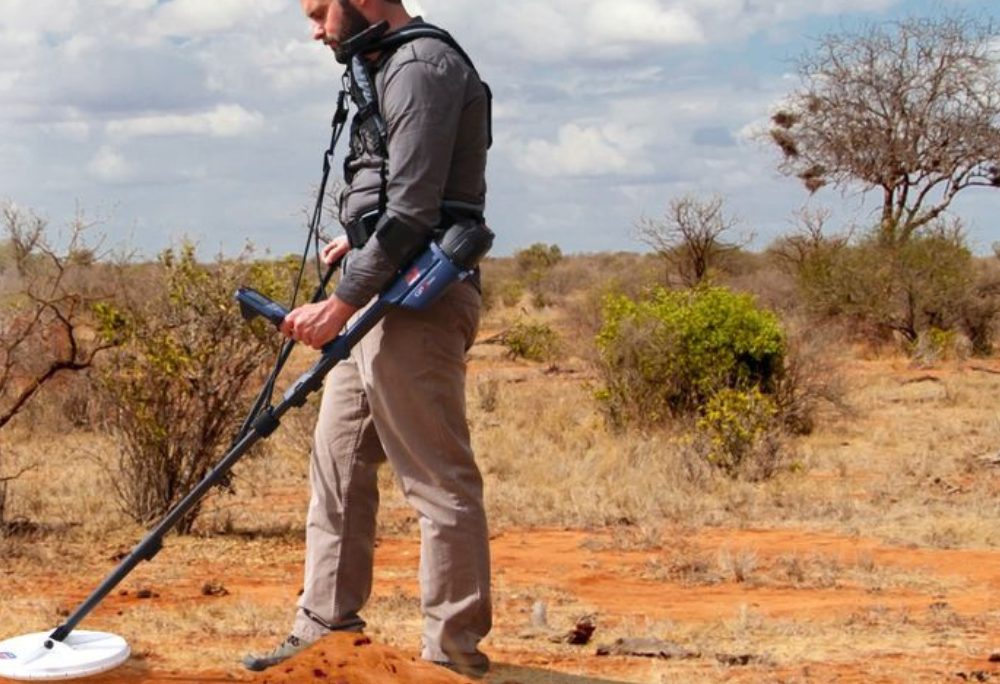
The Minelab GPZ 7000 and OKM eXp 7000 Professional Plus are often compared because both have “7000” in the name and appear in high-end prospecting searches. They are built for different jobs. The GPZ 7000 is a coil-based gold detector using Minelab’s ZVT technology to search directly for buried metallic targets. The OKM eXp 7000 is a multi-sensor 3D ground-scanning system that also includes VLF metal-detection modes. A price comparison is useful only after you decide which job you need done.
If your main task is finding natural gold with a sweep coil, start with the GPZ 7000’s field workflow. If your project calls for mapping ground anomalies, cavities or larger buried features and interpreting 3D data, examine the OKM package. Neither a scan image nor a detector tone alone proves that a particular target is gold. This guide separates the technologies, explains what the current quote must include, and points to each product page for live price and availability.
GPZ 7000 vs eXp 7000: the decision in one table
| Buying question | Minelab GPZ 7000 | OKM eXp 7000 Professional Plus |
|---|---|---|
| Main purpose | Direct coil search for natural gold targets | 3D ground survey with additional direct VLF modes |
| Core method | ZVT and Super-D search coil | Multiple sensor and software workflows, including 3D scans |
| Primary output | Repeatable audio/visual target response in a coil sweep | Survey measurements and interpreted 3D views; VLF response in a separate mode |
| Training focus | Ground balance, coil movement and target recovery | Grid design, sensor selection, software interpretation and confirmation |
| Price check | Current GPZ package, coil, battery and warranty | Exact Professional Plus sensor package, software, training and warranty |
Do not read a claimed 3D scan depth as a head-to-head result against a coil detector’s recovery depth. They refer to different targets, methods and evidence. Compare like with like in a representative field test.
What the Minelab GPZ 7000 actually does
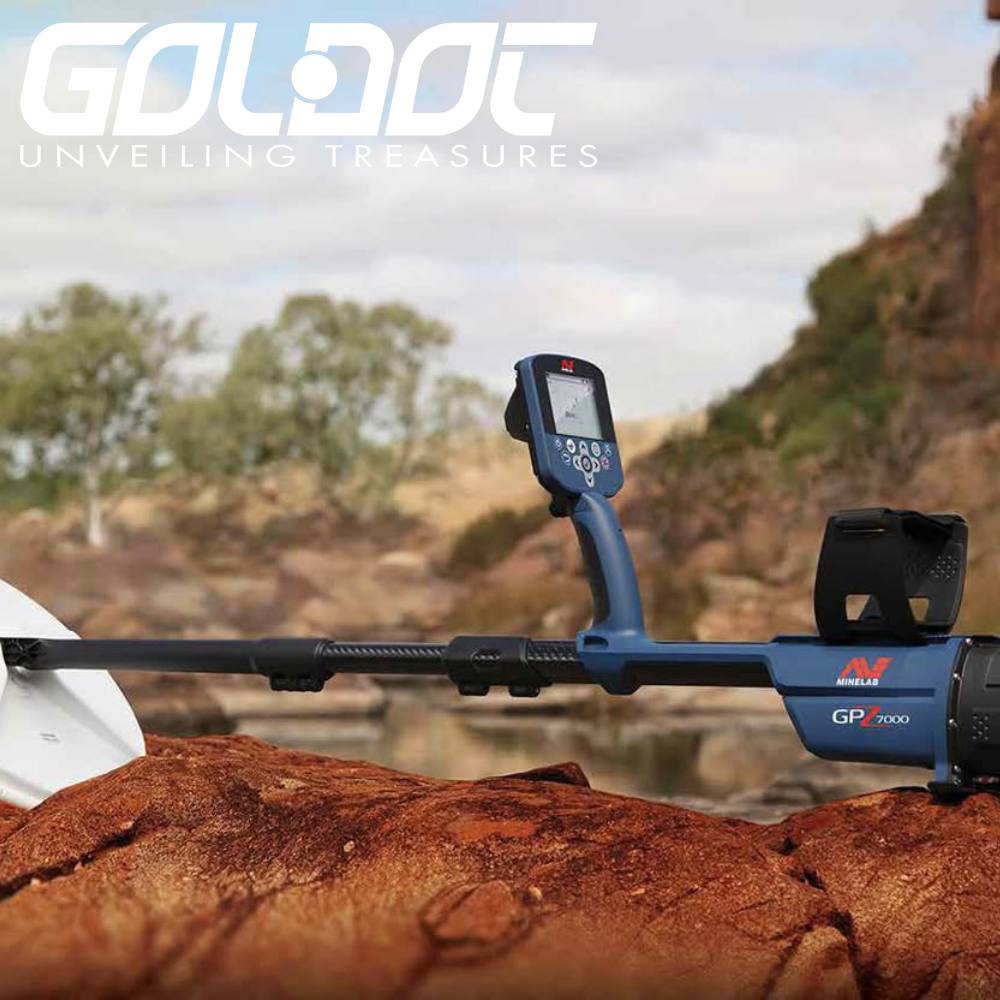
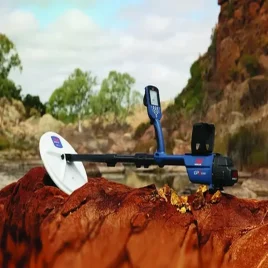
Minelab specifies Zero Voltage Transmission, or ZVT, and the GPZ14 Super-D coil for the standard GPZ 7000 kit. The searcher moves the coil over the ground, listens to signals and checks their repeatability. Its Gold Mode options include High Yield, General and Extra Deep, while Ground Type choices account for different conditions. These settings are search tools, not certificates of target composition. A faint response needs careful investigation, and a non-response can reflect an unsuitable setting or a target too small or deep for the conditions.
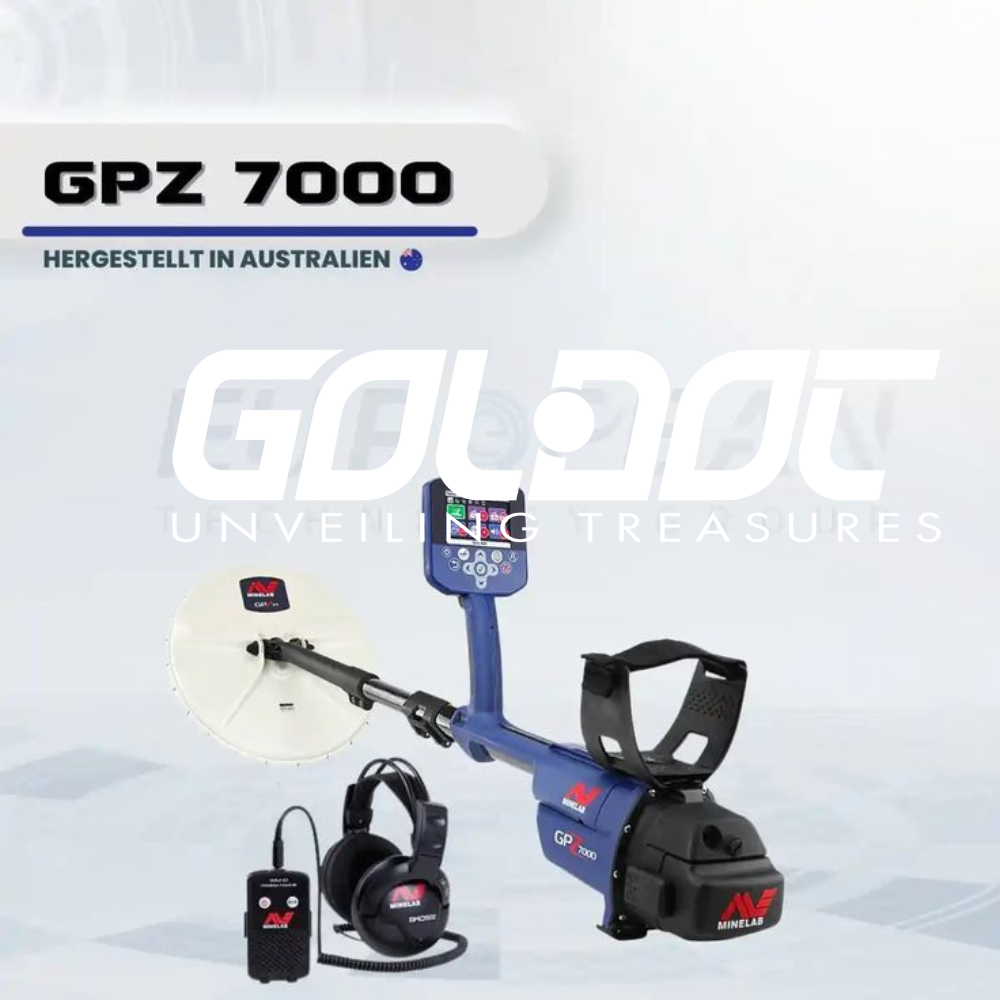
Minelab’s manual lists a detector weight of about 3.32 kg with the standard coil and battery. The coil is waterproof to one meter, but the detector housing is weatherproof rather than submersible. That distinction matters if your site includes streams. The published kit also lists a rechargeable battery, harness, audio options and charging equipment; verify the local bundle and warranty before paying.
For the current offer, inspect the Minelab GPZ 7000 product page. Ask which GPZ14 coil and accessories are included and whether training covers ground balancing and signal recovery in your soil. If you are deciding between Minelab generations instead, read the separate GPZ 8000 versus GPZ 7000 comparison.
What the OKM eXp 7000 Professional Plus actually does
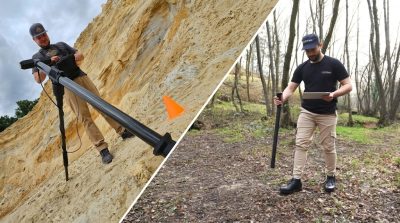
OKM presents the eXp 7000 Professional Plus as an eight-mode system. Its published mode list includes 3D Ground Scan, 3D VLF Scan, Mineral Scan, Tunnel Scan, Live Scan, Magnetometer, Pinpointer and VLF Metal Detection. Those modes do not all answer the same question. A ground scan gathers and visualizes subsurface measurements; a VLF metal-detection mode uses a more direct electromagnetic search. Ask which sensor or coil is attached for the specific mode you intend to use.
The 3D workflow is suited to a planned survey where the operator can mark a grid, make consistent passes and interpret the data. It can help investigate anomalies and possible voids, but colors and shapes in software are not an assay of gold. OKM advertises maximum scan and VLF figures on its product page; those figures concern different methods and are conditional on target, soil, sensor and procedure. Do not compare them as if they were both a direct buried-nugget depth.
Review the OKM eXp 7000 Professional Plus configuration and ask for a written inventory of sensors, software, licenses, power equipment and training. The word “Professional Plus” matters because a smaller package may not include every advertised attachment. For another comparison of this OKM system with a 3D and PI package, see our eXp 7000 versus GR-4 Dual guide.
Why the GPZ 7000 price cannot be judged alone
A listed GPZ 7000 price covers a particular detector kit, while an eXp 7000 quote covers a multi-sensor scanning platform and its associated accessories and services. The amounts are not directly comparable unless the deliverables and purpose are made explicit. A low quote can omit a coil, sensor, software license, charger or training that is essential to the task. A high quote may include items you will never use. Ask for an itemized offer rather than deciding from the headline amount.
Record the exact model and revision, included sensors or coils, battery count, warranty region, return conditions, shipping, taxes, setup and service support. Check live product pages for current pricing and availability, since an article can become stale. If you already own one device, compare the marginal cost of the other against the specific new capability it provides. Two devices may complement each other in a survey, but that does not make either a substitute for the other.
Matching the tool to the search problem
For a prospector walking a mineralized goldfield and listening for natural gold, the GPZ 7000 is the more direct candidate. It is intended for repeated coil sweeps and target recovery. The meaningful test is whether it gives stable, repeatable responses to representative buried gold targets in your ground.
For a team surveying a suspected cavity, structure or larger anomaly and preparing a map for further investigation, the OKM eXp 7000 offers the relevant 3D workflow. The meaningful test is whether the team can collect consistent data over a known control site, interpret it without knowing the target locations, and then confirm the anomaly independently. Its separate VLF mode can be assessed as an additional detector function rather than being confused with the 3D scan.
If you need both a direct gold detector and a subsurface survey, budget and train for two distinct methods. Read the deep-scan technologies guide to distinguish a metal response, a ground anomaly and a GPR-like survey before purchasing a kit.
A field test before committing to either package
- Define the target: nugget size and soil for a GPZ test, or anomaly type and area for an OKM scan.
- Use a control: hide a representative target or known feature and include blank ground so the operator cannot guess the answer.
- Match the method: balance and sweep the GPZ coil correctly; plan and repeat the OKM grid with the stated sensor and software settings.
- Record misses and false positives: document conditions, settings, scan direction and every result, not just the strongest demonstration.
- Confirm independently: recover a metal target when appropriate or use a separate investigation method before excavation decisions.
A salesperson’s demonstration at a known target location is less informative than a blinded trial in ground like yours. Do not infer gold content from a visualization or infer exact dimensions from one detector tone. The output must be interpreted within the limits of its method.
Which 7000 should you buy?
Choose the GPZ 7000 if natural gold recovery with a coil is the primary task and the current package and training suit your site. Choose the eXp 7000 Professional Plus if a documented 3D survey and multiple sensor modes are the primary task and your team can operate and verify them. Compare the itemized quotes and a controlled field test before drawing a price conclusion. The shared number in the two names does not imply a shared technology or a common performance scale.
Frequently asked questions
Does the GPZ 7000 make a 3D map?
No. It is a direct-search gold detector. Its display and stored search information do not turn it into OKM-style 3D ground imaging.
Can the eXp 7000 directly detect metal?
OKM lists VLF Metal Detection among its modes. Assess that mode with its intended coil and a suitable metal target, separately from the 3D scan.
Which one finds gold deeper?
No universal answer follows from marketing maxima. The target, soil, method and field setup differ too much for an unqualified comparison.
Why does the OKM quote cost more?
It may cover sensors, software and training beyond a direct coil detector. Compare the exact package and support rather than a headline figure alone.
Does the waterproof GPZ coil make the whole detector waterproof?
No. Minelab rates the coil for submersion to one meter, while the detector housing is weatherproof rather than submersible.