

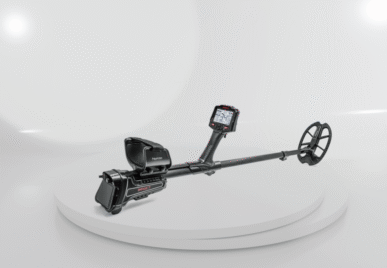
Choosing the best professional metal detector in 2026 requires a clear understanding of the target, soil conditions, search depth, and the type of information needed before excavation. A professional detector is not simply a more expensive version of a beginner device. It may include advanced pulse induction technology, 3D ground scanning, multiple search frequencies, interchangeable coils, cavity detection, target imaging, and specialized software.
The right detector for natural gold prospecting may not be suitable for locating underground chambers. A deep-seeking pulse detector can identify large metallic objects at impressive depths, but it may not provide the detailed visual analysis available from a professional ground scanner.
This guide compares leading professional devices, explains their strongest applications, and helps buyers select a detector based on real field requirements rather than promotional depth claims.
Buyers can begin with the Best Metal Detector – Top Models Compared to understand the differences between general, professional, gold, and underground-imaging systems.
Top Detector Models to Consider
The following models represent different professional applications. Each device is powerful in a specific category, so the final choice should depend on the intended project.
| Professional Detector | Main Technology | Best Professional Use | Main Advantage |
|---|---|---|---|
| OKM eXp 7000 Pro Plus | 3D scanning and multi-frequency VLF | Underground imaging, treasure, tunnels, and minerals | Multiple professional search modes |
| Lorenz Deepmax Z2 | Pulse Ground Balancing System | Large deep metal and treasure caches | Strong large-target depth performance |
| Nokta Invenio Pro | VLF smart imaging system | Target analysis and cavity investigation | Displays estimated target shape and dimensions |
| Minelab GPZ 8000 | GeoZVT gold technology | Natural gold prospecting | Specialized performance in challenging goldfields |
| Nokta Deephunter 3D | Multi-system treasure detector | Deep treasure, cavities, coins, and jewelry | Combines deep and general detection modes |
OKM eXp 7000 Pro Plus
The OKM eXp 7000 Pro Plus is a professional underground exploration system created for buyers who need several detection methods within one platform.
The device includes eight operating modes designed for different applications. These include 3D Ground Scan, 3D VLF Scan, VLF Search, Magnetometer, Mineral Scan, Tunnel Scan, Live Scan, and Pinpointer.
Its professional value comes from the ability to investigate different underground conditions without depending on one conventional search coil. Operators can use the system to locate metallic targets, study underground anomalies, investigate mineralized areas, and search for possible tunnels or cavities.
The collected 3D data can be analyzed to estimate the position, dimensions, and depth of underground anomalies. However, the quality of the result depends on correct scanning paths, sensor movement, soil settings, and data interpretation.
OKM markets the eXp 7000 Pro Plus for archaeologists, professional treasure hunters, and gold prospectors, with eight operating modes covering several search scenarios.
Best professional applications:
- Buried treasure investigation.
- Archaeological surveys.
- Tunnel and chamber detection.
- Natural gold mineral scanning.
- Underground cavity searches.
- Large-area 3D ground analysis.
Main advantages:
- Multiple search technologies.
- Professional 3D visualization.
- Modes for metals, minerals, and cavities.
- Live target localization.
- Software-based scan analysis.
Potential limitations:
- Requires structured field training.
- More complex than ordinary metal detectors.
- Professional results depend on operator technique.
- Represents a premium investment category.
The eXp 7000 Pro Plus is the strongest overall recommendation for buyers who need an advanced and versatile underground scanning platform.
Lorenz Deepmax Z2
The Lorenz Deepmax Z2 is a specialist professional detector focused primarily on deep metal detection. It uses pulse ground-balancing technology and can operate with small, medium, large, and frame-style search coils.
Large coils are suitable for substantial buried objects because they generate a broad and deep-reaching magnetic field. Smaller coils offer better sensitivity to individual coins, gold nuggets, and relatively compact targets.
This flexibility makes the Lorenz Deepmax Z2 suitable for exploration projects where target dimensions may vary. Professional operators can select a coil according to the expected target rather than using one coil for every search.
The manufacturer describes the Z2 as a specialist detector designed for small and large interchangeable coils. Large coils prioritize large deep targets, while small coils are preferred for coins and gold nuggets.
Best professional applications:
- Large buried treasure caches.
- Deep ferrous and non-ferrous metals.
- Archaeological metallic objects.
- Military and historical relics.
- Gold nuggets with smaller coils.
- Professional area surveys.
Main advantages:
- Strong depth performance on large metals.
- Pulse stability in difficult ground.
- Wide selection of compatible coils.
- Detection of ferrous and non-ferrous targets.
- Professional metal-analysis functions.
Potential limitations:
- Primarily designed to detect metal rather than empty cavities.
- Full data mapping may require additional equipment.
- Large frame coils require open search space.
- Correct coil selection is essential.
For buyers specifically interested in German detection systems, the Gold Detector Made in Germany Discover Most Powerful Devices guide provides additional comparisons.
Nokta Invenio Pro
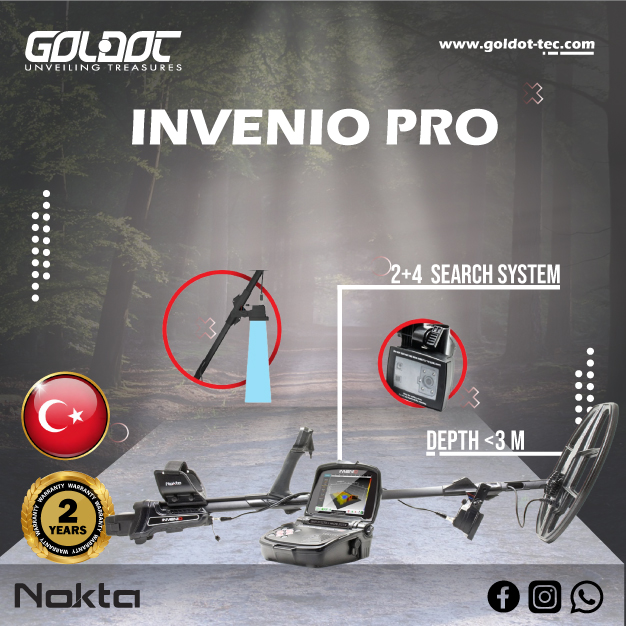
The Nokta Invenio Pro combines professional metal detection with smart target visualization. Instead of providing only an audio signal and target-identification number, the system tracks coil movement and processes the collected information into a visual target representation.
The device can estimate several characteristics, including:
- Target position.
- Estimated depth.
- Approximate shape.
- Length and width.
- Target dimensions.
- Metal discrimination.
- Possible ground anomalies or cavities.
The visual result should not be treated as a photographic image of the buried target. It is a calculated interpretation created from the detector’s signals and the movement of the coil across the search area.
Nokta describes the Invenio Pro as a real-time smart detection and imaging system capable of displaying the estimated shape, depth, dimensions, and discrimination of underground metals and ground anomalies. Its Pro version provides three operating frequencies.
Best professional applications:
- Treasure target investigation.
- Metal discrimination.
- Cavity and anomaly searches.
- Archaeological target analysis.
- Pre-excavation target evaluation.
- Visual confirmation of signal dimensions.
Main advantages:
- Real-time target visualization.
- Estimated target dimensions.
- Multiple operating frequencies.
- Positional tracking technology.
- More information than an audio-only detector.
Potential limitations:
- Requires controlled coil movement.
- Target images require experienced interpretation.
- More complicated than conventional VLF detectors.
- Ground conditions can affect visual accuracy.
The Invenio Pro is recommended for professional users who need to study the probable target before beginning excavation.
Minelab GPZ 8000
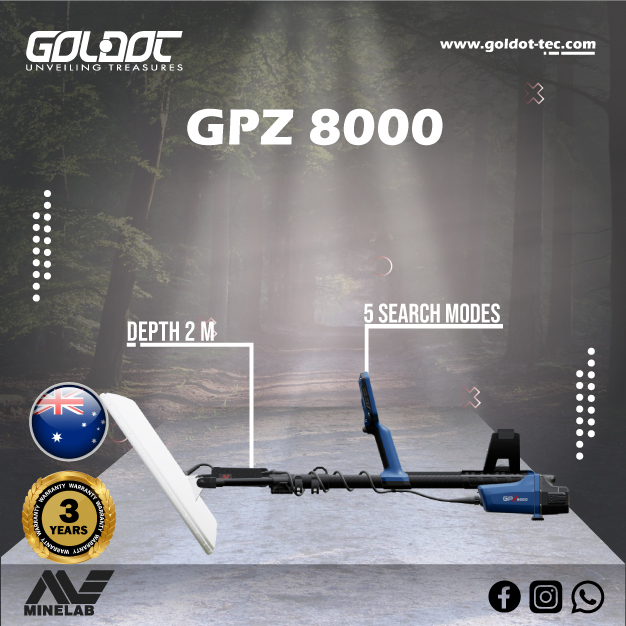
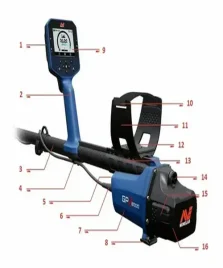
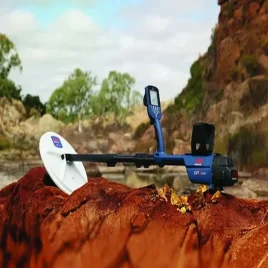
The Minelab GPZ 8000 is a specialist professional gold detector. Unlike general-purpose treasure detectors, its technology, coils, search modes, and audio system are designed around natural gold prospecting.
The device uses GeoZVT technology and supports different Z-Set concentric toroidal coils. Each coil is intended for particular target sizes, ground conditions, or detecting environments.
Its search modes include settings for difficult and normal soil, with options focused on high-yield, deep, or extra-deep gold searching. These controls allow prospectors to adapt the system to different goldfields.
Minelab identifies the GPZ 8000 as its flagship gold detector and offers multiple search modes and coil configurations for different target sizes and challenging ground conditions.
Best professional applications:
- Natural gold nuggets.
- Mineralized goldfields.
- Small and large gold targets.
- Deep gold prospecting.
- Professional desert exploration.
- Difficult and conductive soil.
Main advantages:
- Specialized natural-gold technology.
- Multiple ground-optimized modes.
- Different coils for varied gold targets.
- Professional audio controls.
- Designed for demanding prospecting environments.
Potential limitations:
- Specialized mainly for natural gold.
- Does not create 3D underground images.
- Cannot replace a cavity or tunnel scanner.
- Premium technology may be unnecessary for general coin hunting.
The GPZ 8000 is the recommended option when natural gold is the buyer’s main commercial or professional target.
Nokta Deephunter 3D
The Nokta Deephunter 3D is designed for buyers who need both deep treasure detection and conventional searching within one device.
Its deep non-motion mode is intended for large metallic targets and underground cavities. The device also provides a faster mode for individual coins, jewelry, and smaller precious-metal targets.
Users can connect different search coils according to the application. A larger optional coil is intended to improve coverage and performance on substantial targets.
Nokta states that the Deephunter 3D can operate in a deep non-motion mode for precious metals and cavities, while a larger optional coil is available for larger targets requiring additional depth.
Best professional applications:
- Treasure caches.
- Precious metals.
- Underground cavities.
- Coins and jewelry.
- Large buried metal.
- Mixed-target search projects.
Main advantages:
- Deep and fast search modes.
- Detection of metal and cavities.
- Different coil configurations.
- Suitable for large and small targets.
- More versatile than a single-purpose detector.
Potential limitations:
- Less advanced imaging than a dedicated 3D ground scanner.
- Search modes require different operating techniques.
- Large-coil results depend on target dimensions.
- Not as specialized for natural gold as the GPZ 8000.
The Deephunter 3D is a practical professional choice for buyers who want several treasure-detection applications without moving directly to the most advanced scanning systems.
Key Features and Technologies
Understanding detector technology is essential before comparing professional metal detectors for sale.
Pulse Induction Detection
Pulse induction detectors send powerful magnetic pulses into the ground and analyze the returning signals.
They are commonly selected for:
- Deep metallic objects.
- Natural gold.
- Mineralized ground.
- Wet salt beaches.
- Large treasure caches.
- Archaeological metal.
PI systems can provide excellent stability in difficult soil. However, some pulse detectors offer less detailed discrimination than advanced VLF systems.
The VLF vs PI Metal Detectors – Which Technology Wins for Gold? comparison explains when each technology is more appropriate.
VLF Detection
VLF technology is widely used for identifying coins, jewelry, relics, gold, and other metallic objects.
Professional VLF detectors may offer:
- Adjustable or multiple frequencies.
- Detailed target identification.
- Iron rejection.
- Ground balancing.
- Search-mode customization.
- Accurate pinpointing.
VLF systems can provide excellent target separation, but their depth and stability may be affected by severe ground mineralization.
3D Ground Scanning
A 3D ground scanner collects data across a structured search field. The system then processes the measurements to display underground anomalies.
It may help identify:
- Large buried metal.
- Treasure containers.
- Chambers.
- Tunnels.
- Graves.
- Cellars.
- Cavities.
- Mineralized areas.
Professional results require parallel scanning lines, consistent speed, correct sensor orientation, and accurate field settings.
Smart Imaging Technology
Smart imaging combines target signals with information about coil position and movement.
The system uses this data to estimate the target’s shape, size, location, and depth. This can help operators determine whether a target is worth excavating.
However, imaging accuracy depends on signal quality and scanning technique.
Interchangeable Search Coils
A professional metal detector may support several coil sizes.
| Coil Configuration | Recommended Application | Main Benefit |
|---|---|---|
| Small coil | Nuggets, coins, and crowded ground | Better sensitivity and target separation |
| Medium coil | General professional searching | Balance between depth and sensitivity |
| Large coil | Large relics and treasure objects | Greater coverage and large-target depth |
| Frame coil | Substantial deep metallic objects | Wide and deep magnetic field |
| Specialized gold coil | Natural gold prospecting | Optimized response to gold targets |
The largest coil is not automatically the best choice. A very large coil may overlook small targets that a compact coil can detect more clearly.
Depth Performance and Accuracy
Professional detection depth cannot be judged by one fixed number.
A large metal chest creates a stronger detectable response than a small coin. A detector may locate the chest at considerable depth while detecting the coin only near the surface.
Practical depth is affected by:
| Factor | Effect on Professional Detection |
|---|---|
| Target size | Larger targets are generally detectable at greater depth |
| Metal composition | Conductivity influences target response |
| Target orientation | Position can strengthen or weaken the signal |
| Soil mineralization | Strong minerals may reduce stability |
| Coil size | Larger coils favor substantial targets |
| Search frequency | Different frequencies suit different targets |
| Ground balance | Incorrect adjustment creates noise or lost depth |
| Surface contamination | Shallow metal may mask deeper targets |
| Moisture and salinity | Wet or salty ground challenges unsuitable systems |
| Operator experience | Poor technique reduces accuracy and repeatability |
Professional buyers should avoid suppliers that guarantee the same depth for all objects and soil types. Reliable recommendations should be based on a defined target and field environment.
Best Uses: Gold, Treasure, Coins, Beach
Best for Professional 3D Surveys
The OKM eXp 7000 Pro Plus is the leading choice in this comparison for multi-mode underground scanning.
It is suitable for professionals who need to investigate metal, minerals, tunnels, and cavities through one platform.
Best for Large Deep Treasure
The Lorenz Deepmax Z2 is recommended for large metallic objects and treasure caches.
Its interchangeable large and frame coils make it suitable for professional deep-search projects.
Best for Target Visualization
The Nokta Invenio Pro is the preferred option when the buyer needs estimated shape, depth, position, and dimensions before excavation.
Best for Natural Gold
The Minelab GPZ 8000 is the specialist recommendation for professional gold prospectors working in challenging ground.
Best for Mixed Treasure Applications
The Nokta Deephunter 3D is suitable for projects involving large treasure, cavities, coins, and jewelry.
Best for Coins and Jewelry
Professional coin hunters should prioritize accurate discrimination, target separation, ergonomic handling, and suitable VLF or simultaneous multi-frequency technology.
An advanced underground scanner may be unnecessarily complex when the main targets are shallow coins and jewelry.
Best for Beach Searching
Beach hunters should select a waterproof detector designed to handle wet saltwater sand.
A large professional ground scanner is generally less practical for routine beach searching than a waterproof pulse induction or simultaneous multi-frequency detector.
Price Range and Value Comparison
The price of an expert metal detector depends on more than the control unit.
The complete investment may include:
- Search coils.
- Scanning probes.
- Software licenses.
- Tablets or display units.
- Batteries and chargers.
- Carrying cases.
- Data loggers.
- Training.
- Shipping.
- Import costs.
- Technical support.
| Professional Detector | General Investment Category | Best Value for |
|---|---|---|
| OKM eXp 7000 Pro Plus | Ultra-premium | Advanced multi-mode exploration |
| Lorenz Deepmax Z2 | Premium professional | Large deep metallic targets |
| Nokta Invenio Pro | Premium imaging | Visual target analysis |
| Minelab GPZ 8000 | Ultra-premium specialist | Professional natural gold prospecting |
| Nokta Deephunter 3D | Professional | Mixed treasure and cavity searching |
Exact prices should be confirmed according to the selected package and destination. Goldot-Tec can provide current package information without relying on outdated figures.
Read Your Comprehensive Guide to Metal Detector Price and Investment before comparing quotations from different suppliers.
Pros and Cons of Leading Options
| Model | Professional Advantages | Possible Disadvantages |
|---|---|---|
| OKM eXp 7000 Pro Plus | Multiple modes, 3D data, tunnel and mineral scanning | High investment and advanced training needs |
| Lorenz Deepmax Z2 | Excellent large-target depth and flexible coils | Mainly focused on metal detection |
| Nokta Invenio Pro | Real-time visualization and target dimensions | Requires careful scanning and interpretation |
| Minelab GPZ 8000 | Specialized professional gold performance | Not designed for cavities or 3D imaging |
| Nokta Deephunter 3D | Combines deep and conventional searches | Imaging is less advanced than dedicated scanners |
How to Choose the Right Device
Identify the Main Target
Start by determining whether the project focuses on:
- Natural gold.
- Deep treasure caches.
- Coins and jewelry.
- Archaeological objects.
- Underground tunnels.
- Cavities and chambers.
- Beach targets.
- Mixed exploration.
A detector should be selected for the primary target rather than every possible future use.
Study the Ground Conditions
Inform the supplier whether the search area contains:
- Mineralized soil.
- Volcanic rock.
- Wet saltwater sand.
- Black sand.
- Dry desert ground.
- Agricultural soil.
- Rocky mountain terrain.
- Modern metallic contamination.
Ground conditions may determine whether VLF, PI, or 3D scanning technology is most suitable.
Decide Whether Imaging Is Required
A conventional detector may be sufficient when the user only needs to locate metal.
A professional scanner becomes more valuable when the project also requires information about dimensions, underground structures, or cavities.
Evaluate Training and Support
An advanced detector without proper training can provide confusing results.
Before buying, confirm the availability of:
- Operating instructions.
- Field training.
- Software guidance.
- Technical support.
- Scan-analysis assistance.
- Warranty service.
- Original spare parts.
The Ultimate guide to professional gold metal detectors provides additional guidance for evaluating high-performance devices.
Common Buying Mistakes to Avoid
Choosing Only by Maximum Depth
Depth claims are meaningless without knowing the test object, coil, soil, and device settings.
Buying an Imaging System for Simple Targets
A buyer searching mainly for coins may achieve better results with a lighter discrimination detector.
Using One Coil for Every Target
Different coils are designed for different object sizes and ground conditions.
Expecting Automatic 3D Results
Professional scans require accurate field setup and consistent movement.
Confusing Metal and Cavity Detection
An empty tunnel may not contain enough metal for a conventional detector to identify it.
Ignoring the Complete Package
A low quotation may exclude important coils, probes, software, or support.
Purchasing from an Unverified Seller
Professional buyers should confirm that the detector is original and includes a valid serial number, warranty, and manufacturer-supported accessories.
Ignoring Local Regulations
Metal detecting, excavation, archaeological searches, and gold prospecting may be regulated. Buyers should confirm local requirements before starting a project.
Final Recommendation and FAQs
The best professional metal detector depends on the buyer’s main search objective.
The OKM eXp 7000 Pro Plus is the strongest overall recommendation for professional 3D scanning, underground structures, minerals, and complex exploration projects.
The Lorenz Deepmax Z2 is recommended for large and deeply buried metallic targets.
The Nokta Invenio Pro is the preferred option for buyers who prioritize real-time target visualization and dimensional analysis.
The Minelab GPZ 8000 is the specialist choice for professional natural-gold prospecting.
The Nokta Deephunter 3D offers a balanced option for treasure, cavities, coins, and mixed-target projects.
Before ordering, provide Goldot-Tec with details about the target, ground conditions, search location, required applications, and previous experience. This information allows the team to compare suitable configurations and recommend the correct professional package.
What is the best professional metal detector in 2026?
The OKM eXp 7000 Pro Plus is a strong overall option for multi-mode underground scanning. The Lorenz Deepmax Z2 is better suited to large deep metals, while the Minelab GPZ 8000 specializes in natural gold.
What makes a detector professional?
A professional detector usually provides advanced ground balancing, specialized search modes, high-quality coils or sensors, detailed controls, reliable construction, and technical options suitable for serious field projects.
Which professional detector is best for buried treasure?
The Lorenz Deepmax Z2 is suitable for large metallic treasure targets. The OKM eXp 7000 Pro Plus is preferable when the project also requires underground imaging or cavity investigation.
Which professional metal detector is best for gold?
The Minelab GPZ 8000 is designed specifically for natural-gold prospecting. Other professional scanners may be more appropriate for buried gold objects, treasure containers, or gold associated with underground structures.
Can a professional metal detector find tunnels?
A conventional metal detector cannot reliably find an empty non-metallic tunnel. A specialized ground scanner with a tunnel or cavity mode is normally more appropriate.
Are professional metal detectors difficult to use?
Some conventional professional detectors are relatively straightforward, while 3D ground scanners and smart imaging systems require structured training and data interpretation.
How deep can a professional metal detector detect?
Depth depends on the target size, metal type, coil, soil, device settings, and operator. Large metallic objects can normally be detected deeper than individual coins or small nuggets.
Where can I find professional metal detectors for sale?
Professional devices should be purchased from a reliable supplier that offers original products, appropriate packages, warranty coverage, training, and after-sales technical support.