The Most Powerful Metal Detector for a US deep-target project is not necessarily the machine with the greatest advertised depth. Target size, coil, mineralization, interference, and operator skill affect usable performance. Define the intended metallic target and site before choosing a system.
A buried container on an authorized Texas property calls for different equipment from a small nugget or empty cavity. This guide helps US buyers assess large-target evidence, select coils, and request a suitable Goldot-Tec package without depth guarantees.
What Most Powerful Means for Deep Detection
Depth matters only in relation to the target. A detector capable of locating substantial metal may be unsuitable for a small coin at the same depth. Therefore, evaluate the Most Powerful Metal Detector through repeatable performance on targets like those in your project.
Large Targets Create Stronger Responses
Target size changes response significantly. A large metal container often produces a stronger signal than a small item. A relevant demonstration should disclose the object’s dimensions, composition, orientation, coil, ground, and settings. Otherwise, maximum-depth claims have limited value.
Also distinguish air tests from buried-target demonstrations, because the ground changes detector behavior.
Small Targets Require Another Priority
Small targets call for suitable sensitivity and controlled coil movement. A large search frame designed for substantial metal can overlook small coins or nuggets. Choose a smaller conventional or prospecting coil when those are your actual targets.
Depth Is Not the Only Form of Power
Stability matters alongside depth. Mineralized ground and electrical interference can conceal signals when settings are too aggressive. The coil also determines practical coverage. Evaluate the entire system rather than the control unit alone.
Deep-Target Detector Choices for US Projects
Professional depth projects begin with classifying the expected target. Is the primary objective metallic, or is the team investigating a nonmetallic structure? This question decides whether direct metal detection belongs at the center of the project.
Direct Metal Detection
A professional Pulse Induction or Pulse Ground Balancing system can be relevant when the target is believed to be substantial metal. Possible projects include:
- Large buried metallic containers and caches.
- Substantial ferrous or non-ferrous objects.
- Large historical or military metallic relics on authorized sites.
- Professional investigations of identified metallic anomalies.
- Open-area surveys for objects whose approximate size is already known.
In these applications, the goal is a repeatable metallic response. A specialist pulse-based platform may be more relevant than a conventional recreational detector, but the coil still needs to match target dimensions and terrain.
Empty Cavities Are Different
An empty cavity may contain no metal, so direct deep-metal detection may be the wrong tool. Ground-survey methods measure different properties, and visual anomalies are not photographs or proof of a tunnel.
If your project may involve metal as well as underground anomalies, consult the deep scan system selection guide before choosing the technology. It is important to keep conventional metal detection, 3D imaging, ground-penetrating radar, and unverified long-range claims technically distinct.
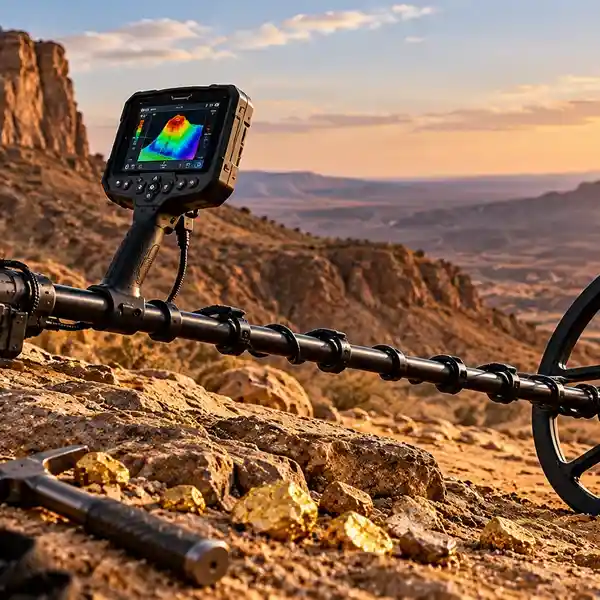
Natural Gold Is Another Specialist Task
Small natural gold calls for sensitivity and suitable ground handling, not the large-target emphasis of a frame detector. Select this separate category by likely nugget size and mineralization.
Lorenz Deepmax Z2 for Large Metallic Targets
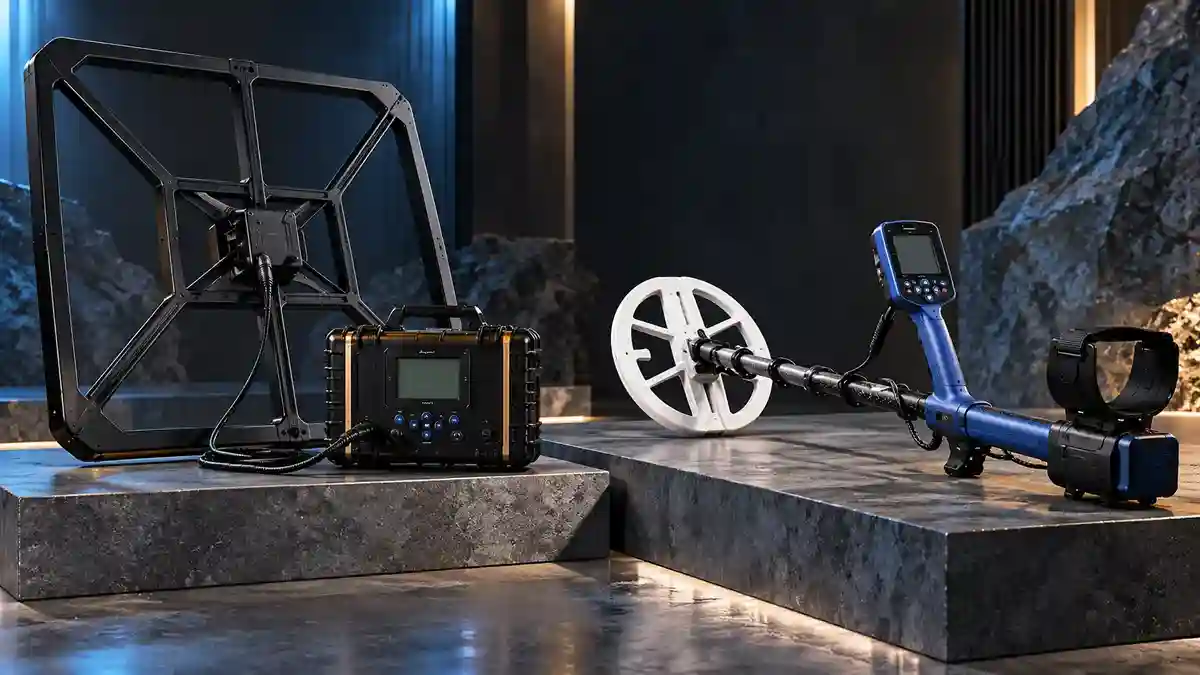
The Lorenz Deepmax Z2 uses non-motion Pulse Ground Balancing and supports several coils and frame arrangements. Its buying value lies in matching those configurations to a substantial metallic target and the actual site.
Pulse GBS as a Deep-Search Platform
The Z2 transmits pulses and evaluates responses from metallic objects. It is a direct metal detector, not a guaranteed cavity detector. Ground handling can improve usability in some conditions, but cannot establish unlimited depth.
Small Coil Versus Frame Coil
Compact coils suit smaller objects, pinpointing, and obstructed sites. Large frames emphasize substantial metal and wider coverage while often overlooking small targets. Choose according to the object’s likely dimensions.
A buyer should define target scale before choosing the package. Review the Lorenz Deepmax Z2 configuration and ask Goldot-Tec to identify the compatible coil or frame for the expected target, rather than ordering the largest possible arrangement automatically.
Why Z2 Fits Large-Target Projects
At an open authorized site with a suspected large metallic object, an appropriate frame may provide good coverage. Its limited response to small surface metal can be helpful or harmful, depending on the goal. Frame size is a specialization, not an absolute measure of power.
Lorenz offers optional data logging. Confirm hardware and software requirements for the actual Z2 version; the manufacturer notes incompatibilities between older and revised display software.
Depth Variables Buyers Must Understand
A credible comparison of the Most Powerful Metal Detector cannot begin and end with one number. Several variables interact, and a result from one test should not be transferred to a different target or site without qualification.
Target Size
A large metallic object usually produces a stronger response than a much smaller one. Request tests with comparable target dimensions, not a demonstration using an oversized plate to imply coin performance.
Metal Composition
Metal conductivity and magnetic properties affect the response. Identify the demonstration material and never treat detector classification as proof of an object’s composition or value.
Target Orientation
The position of an object can affect its response. A broad metal surface facing a coil may produce a different signal from the same object turned on edge. Consequently, burial depth alone is not sufficient to explain a field test.
Ground Mineralization
Mineralized ground adds noise and can require less aggressive settings. A mild-soil result may not transfer to another site. Ground balancing helps but does not eliminate all effects.
Moisture and Conductivity
Moisture and salt can alter performance. Tell Goldot-Tec whether the soil is dry, wet, mineralized, or conductive and whether conditions change seasonally.
Electromagnetic Interference
Power lines, communications equipment, machinery, other detectors, and electronics can introduce EMI. A noisy site may favor different settings or a compensated coil instead of a large standard frame.
Search Coil Size Selection for the Most Powerful Metal Detector
For large-target searching, the coil is not a minor accessory. It changes the likely target range, coverage, sensitivity, and physical practicality of the entire setup. Choose a compatible coil only after identifying the target size, available search space, mineralization, and likely interference.
| Coil Configuration | Expected Target Scale | Space and Handling Requirements | Main Selection Limitation |
|---|---|---|---|
| Compact search coil | Individual or relatively small metallic targets | Useful in rocky, vegetated, or restricted areas; easier localization | Less coverage and potentially less large-target depth capability than a suitable frame |
| Medium search coil | Mixed or uncertain target sizes | Practical for one-operator sweeps in moderately open terrain | A compromise that may not optimize either extreme |
| Large frame coil | Substantial buried metallic objects | Open ground, stable movement, suitable transport; some frames need two operators | Can greatly reduce sensitivity to small metal and be impractical around obstacles |
| Very large frame coil | Large targets where the target scale justifies it | Broad, relatively unobstructed search lanes and careful assembly | Greater handling difficulty and possible sensitivity to electrical interference |
| Compensated or double-frame coil | Large-target work in sites affected by EMI | Compatible frame setup and correct operating procedure | Interference reduction can involve a sensitivity or target-scale trade-off |
Compact Coils for Smaller Targets
Compact coils can improve localization and maneuverability around obstacles, especially for smaller targets. They cover less ground and may not match large frames on substantial objects.
Medium Coils for Balanced Use
Medium coils balance coverage with smaller-target response when dimensions are uncertain. That compromise does not optimize either extreme, so ask why it suits your project.
Large Frame Coils
Large frames can cover more ground and emphasize substantial buried metal, but may overlook coins, nails, and other small objects. This trade-off is deliberate. They are useful only when the target and working area justify them.
Very Large Frames Need Space
Very large frames need assembly space, transport capacity, and sometimes extra operators. Uneven land, fences, and EMI can limit effectiveness. Bigger is not always more practical.
Compensated Coils for Interference
Lorenz documents compensated and double-frame coils for EMI management. Improved stability can cost sensitivity to certain targets. Select them when interference control matters to the project.
For model-specific alternatives and assembly considerations, compare Lorenz Z2 coil configurations before finalizing your package. Ask which designs are compatible with your detector version and whether the necessary frame components are included.
Detector Settings and Practical Depth
Advanced controls may improve a deep search, but incorrect adjustments can reduce field performance. Professional buyers should include setup instructions and training in the purchase plan, especially when several operators will share the system.
Ground Balance
Ground balance helps control the response from soil. An unsuitable setting can create instability or conceal subtle metallic signals. Operators should use the manufacturer-approved procedure for the actual soil rather than assuming one setup works across every US project.
Sensitivity
Maximum sensitivity is not always maximum usable depth. Aggressive settings can increase noise and make repeatable responses harder to distinguish. Stable sensitivity is more valuable than constant audio changes that create uncertain target indications.
Threshold
A controlled threshold can help an experienced user recognize changes in audio response. However, an unstable threshold can also create confusion. Learn the normal sound of the detector before interpreting subtle deep targets, and document the settings used in a field test.
Metal Classification
Some professional systems provide ferrous and non-ferrous indications. These can help decide which signals deserve investigation, but large, deep, or unusual targets may yield uncertain classification. Such features do not guarantee that a target is valuable or establish its composition before recovery.
Electromagnetic Interference Checks
EMI should be evaluated before choosing the final coil and before trusting a field demonstration. The same detector can behave differently beside electrical infrastructure than at an isolated site.
Inspect the Site Before Choosing the Coil
Check for nearby power lines, communications towers, radio equipment, electrical buildings, heavy machinery, other operating detectors, and electronic installations. Explain those conditions when requesting your setup. The buyer should not treat an apparently empty field as an interference-free site without checking.
Test for Stability
Before beginning the survey, confirm normal detector operation. If interference appears, identify the likely source where possible and apply the manufacturer’s recommended noise-management settings. Increasing sensitivity is not necessarily the right response. Compare repeated passes and keep a record of operating conditions.
Coil Choice Can Help
Compensated coils may stabilize searches near electrical interference, sometimes at the cost of sensitivity. A repeatable field response matters more than maximum laboratory sensitivity.
Texas Deep-Target Project Example
Consider a hypothetical authorized Texas property with a suspected large metallic object. The owner wants better evidence before excavation, not a guarantee of recovery.
Start With the Target
A substantial metallic target makes direct deep-metal detection relevant. A cavity scanner or coin detector should not be chosen without matching the actual objective. Record what is known and uncertain.
Assess the Working Area
Inspect the site with a practical checklist:
- Open space: Is there enough room for an appropriately sized frame and repeated passes?
- Obstacles: Are fences, buildings, rocks, or vegetation likely to restrict movement?
- Nearby metal: Could reinforced concrete, buried utilities, or surface scrap complicate interpretation?
- EMI: Are power lines or machinery operating near the proposed search area?
- Team: Can the project support additional operators if the chosen frame needs them?
These conditions can change the best configuration even when the expected target remains the same.
Match the Coil and Plan Confirmation
An open site may support a frame, whereas obstacles can require a smaller coil. Repeat any signal, approach from another direction, record its location and settings, and consider independent confirmation before excavation.
Confirm the Package
Request a written Texas package covering the approved coil or frame, controller, headphones, power, transport, optional logging, and training. Never assume optional equipment is included.
Nevada Search Equipment Planning
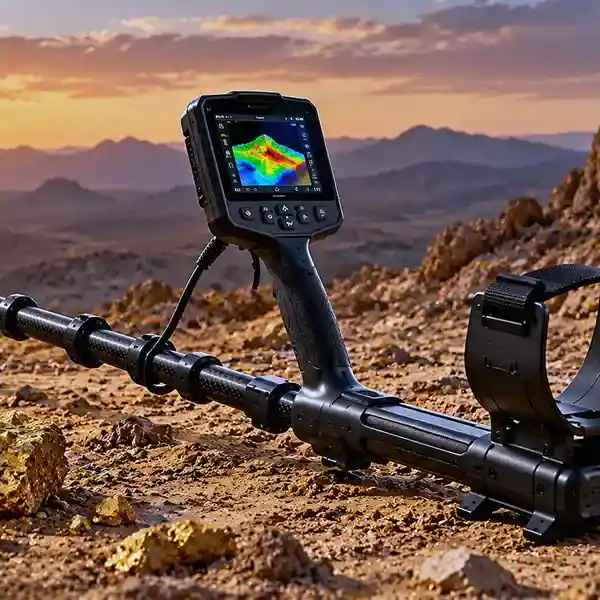
Nevada offers a second deep-search example, but site permission comes before the equipment order. Verify land status, relevant mining claims, and the activity permitted at the actual location. An apparently open area is not necessarily available for detecting or excavation.
Large Metallic Target Scenario
Consider an authorized Nevada search for a presumed large metallic object. A frame may be suitable, but this hypothetical example is not evidence of a find.
Mineralization Changes the Setup
Nevada soil varies by site. Some ground demands careful balancing; other areas are milder. Choose settings from actual conditions rather than the state name.
EMI and Transport Matter
Remote conditions may reduce some sources of interference, but many projects remain close to infrastructure. Inspect the site before choosing the final coil. Also prepare the transport plan:
- Vehicle capacity and access to the survey location.
- Search coil and any frame components.
- Protective bag, controller, and carrying equipment.
- Battery system, charger, and field power arrangements.
- Field tools and any optional logging equipment.
- Sufficient operators for frame movement and repeat tests.
A technically suitable frame cannot deliver value if it cannot be transported or moved consistently across the search area.
Operator Experience and Depth
Professional depth equipment rewards controlled technique. Therefore, a proposed setup should reflect the experience of the people who will operate it, not only the technical capabilities of the detector.
Coil Height and Sweep Pattern
Keep coil height as consistent as practical and plan overlapping, repeatable search lanes. Random movement makes comparisons less meaningful and creates coverage gaps. With frames, operator coordination and controlled positioning can be particularly important.
Search Speed
A controlled pace helps operators recognize changes in response and return to a precise area for repeated checks. Moving quickly simply to cover ground can reduce the quality of survey evidence. Plan search speed around the detector’s operating requirements and the terrain.
Repeatable Responses
Repeat interesting signals from comparable positions and another suitable direction. An inconsistent response needs caution. Repetition supports investigation but does not identify the buried object.
Deep Search Evidence Checks for the Most Powerful Metal Detector
The Most Powerful Metal Detector should be judged through transparent, relevant test evidence rather than an impressive demonstration alone. Ask for a repeatable method that can be compared with your real project.
- Define the demonstration target. Record the object’s dimensions, material, shape, orientation, and known placement. Avoid vague descriptions such as “large metal.”
- Record the actual test conditions. Note burial depth, soil type, moisture, mineralization, visible interference sources, and whether the test was conducted in the ground rather than in air.
- Identify the complete detector configuration. Record the precise detector version, search coil or frame, operating mode, sensitivity, ground balance, threshold, and other relevant settings.
- Choose a relevant target scale. A very large test plate is weak evidence for a hand-sized target, while a coin test cannot establish performance on a substantial metal container.
- Repeat the measurements. Make multiple controlled passes using comparable sweep height, speed, and direction. One successful response is insufficient evidence of general capability.
- Include target-free control areas. Check nearby zones without the test target to evaluate unwanted responses and false indications.
- Keep a written record. Note results, inconsistencies, and environmental changes so the evidence can be compared with another detector or configuration later.
A genuine field demonstration may help narrow a buying decision, but it does not guarantee that the same detector will locate an unknown object on a different property. The key is evidence relevant to your search, not a single impressive maximum-depth claim. When a supplier offers alternative coil configurations, request a comparison based on the same target and test conditions so that changes in the results can reasonably be attributed to the setup rather than differences in the demonstration. Make sure the documentation states whether the test is provided by the manufacturer, seller, or an independent operator.
Practical Depth Limitations
A responsible guide should explain what deep-metal equipment cannot do. This prevents costly mismatches and improves the quality of the buying discussion.
No Universal Maximum Depth
No single number describes performance on every metallic target. Instead of asking only how deep a detector can go, ask how a particular approved configuration performs on a target similar to the one you are investigating. Include ground and test conditions in the comparison.
Bigger Coils Favor Different Targets
Very large frames can emphasize substantial buried objects while reducing sensitivity to smaller metal. That is a target-scale trade-off, not universal superiority. An oversized frame can be the wrong purchase for coins, small nuggets, or confined terrain.
Mineralization and EMI Can Reduce Usable Performance
Strong mineralization may force less aggressive settings. Electrical interference can require a different coil or working procedure. Consequently, results from ideal conditions may not transfer to an actual US site. Always evaluate stable, repeatable detection rather than an isolated maximum response.
Operator Error Can Hide Targets
Inconsistent coil movement, incorrect balancing, and excessive sensitivity can reduce usable performance. Training and a clear survey method are therefore part of a professional package, not optional afterthoughts.
When Another Detector System Makes More Sense
The Most Powerful Metal Detector for a substantial metallic target may be entirely unsuitable for another project. Recognizing when to leave the deep-metal category is part of making a responsible purchase.
Natural-Gold Prospecting
Small nuggets require appropriate sensitivity and ground handling. A dedicated prospecting detector may fit better than the Lorenz frame configuration recommended for large metal. Do not select a deep-target system merely because a general advertisement emphasizes detection depth.
Coins and Relics
Individual coins and historical relics may require discrimination, target separation, and manageable coil handling. A conventional detector can provide a more practical workflow, especially on authorized trash-heavy sites. Detailed target information may matter more than large-object depth capability.
Empty Tunnels and Cavities
An empty underground void may have no metal response. Ground imaging, GPR, or another appropriate geophysical survey technique may be more relevant, depending on the project. Such methods still require qualified interpretation and do not produce guaranteed underground photographs.

Most Powerful vs Strongest Metal Detector
These two search intents should remain distinct. This article focuses on practical large-metal depth, how target size and coil configuration affect that objective, and what evidence to request before ordering. It is not a universal ranking of unrelated detector technologies.
Most Powerful Focuses on Depth Evidence
The buying questions here concern target dimensions, coil size, mineralization, EMI, testing methods, and whether the complete configuration is practical at the site. The outcome is a better-informed request for a professional large-target system, not a promise of a particular underground discovery.
Strongest Focuses on Task Suitability
The separate guide covers choosing between gold prospecting, coin detection, large-metal systems, and ground scanning. For that broader category decision, choose detector strength by search task. This article remains about large-target depth evidence.
Build Your US Deep-Target Setup
A professional detector quote should follow a concise description of the project rather than only a model name. Prepare these details for Goldot-Tec:
- Expected target: Is it definitely metallic? What is its likely composition, shape, and approximate size? Which facts are uncertain?
- Depth expectations: Is there a reasoned depth range based on site evidence, rather than a maximum-depth assumption?
- Ground conditions: Describe mineralization, moisture, salt, rocky terrain, and likely surface metal.
- Search area: State whether the site is an open field, a small defined area, or an obstructed location where a large frame is impractical.
- Interference: Note power infrastructure, machinery, communications equipment, and other possible EMI sources.
- Operator experience: Explain the team’s familiarity with PI systems, frame coils, ground balance, repeatable searches, and data logging.
- Package requirements: Request the detector and version, approved coil or frame, headphones, power equipment, transportation components, optional logger or software, training, warranty, and technical support.
- US order details: Ask the seller to confirm current availability and shipping options for the actual destination state.
If the team is new to specialist systems, professional detector package planning can help identify the experience and accessories that should be considered. Request a written itemized configuration so that standard components are distinguished from optional upgrades.
Most Powerful Metal Detector Purchase Checklist
Before accepting an offer, use the following final sequence:
- Confirm the legal project and target. Verify permission to search, the expected object’s metallic nature, approximate size, and any uncertainty that changes technology selection.
- Check ground and site access. Describe mineralization, moisture, EMI, obstacles, and the available width for coil or frame movement.
- Select the detector and coil together. Ask why the configuration suits your actual target and whether a smaller, medium, large, or compensated coil would be better.
- Request evidence relevant to the job. Ask for controlled test conditions, repeated responses, the full settings record, and clear limitations of any demonstration.
- Evaluate the operator and equipment package. Confirm transport, power, headphones, software or data logging if needed, training, warranty, and after-sales support.
- Confirm the US offer in writing. Verify current availability, the precise included components, and delivery options before completing the order.
These checks create a more useful purchasing specification than a claim about the most powerful detector available. The objective is to order equipment that your team can actually operate effectively on its intended site. For example, a large frame may look suitable from target size alone, but a narrow access path, reinforced structures, or persistent EMI can make a different coil more practical. Discuss those restrictions before the final quotation so Goldot-Tec can explain the trade-offs and identify any training or transport equipment required.
Frequently Asked Questions
How does target size affect the Most Powerful Metal Detector choice?
Large metallic targets can justify frame coils; small targets may need another configuration. Give Goldot-Tec the object’s likely dimensions and terrain, rather than judging a large-metal system by coin performance.
Which coil configuration is best for a deep metallic target?
Coil choice depends on target scale, ground, EMI, and available space. Large frames favor substantial objects; smaller coils offer localization; compensated designs help in noisy settings but may trade sensitivity.
What proof should I request before trusting a detector depth claim?
Request the test object’s dimensions, material, orientation, burial conditions, coil, settings, and repeated passes. Include target-free checks when practical. One large-object demonstration does not guarantee results elsewhere.
Request Your US Deep-Target Setup
The Most Powerful Metal Detector for large buried metal is a setup matched to the target, soil, EMI, coil, and operator. Ask for relevant testing evidence and a clearly itemized package rather than universal depth promises.
For a US project, contact Goldot-Tec for Availability. Share the expected metallic target, terrain, interference, search-area size, and experience; request a suitable Z2 coil configuration and confirmation of package contents and delivery options.