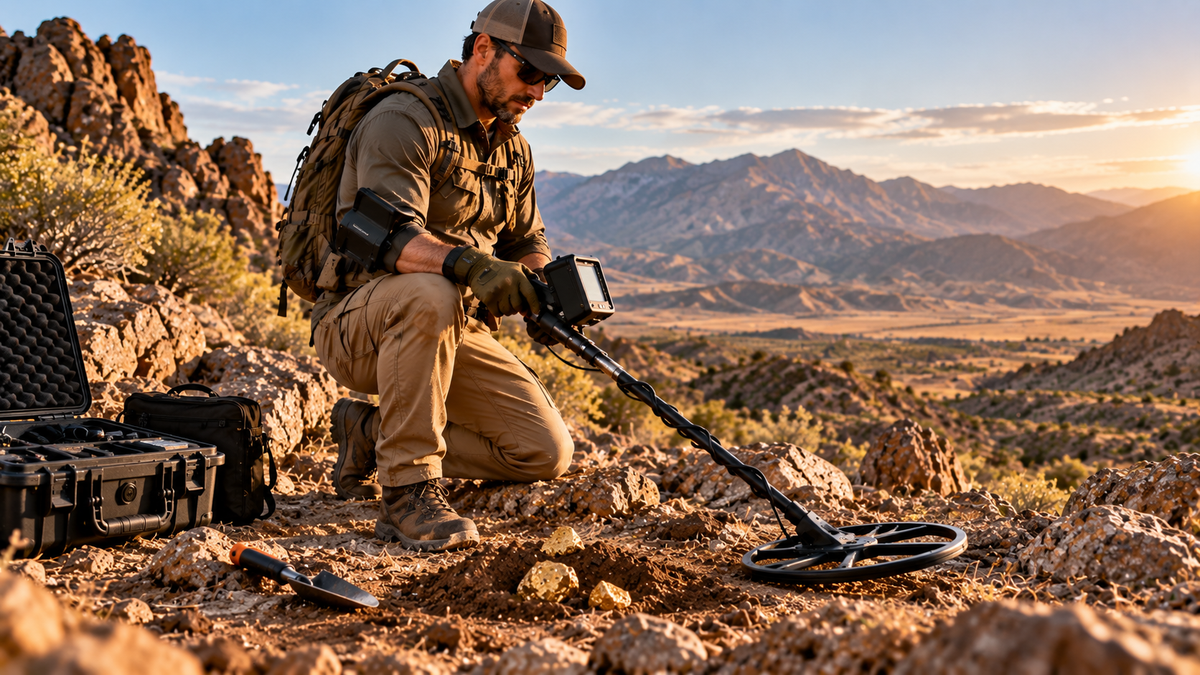
The Strongest Metal Detector is not one machine for every underground target. Strength depends on the job, target size, ground conditions, search method, and equipment configuration.
Therefore, this guide helps US buyers choose detector strength by application. A Nevada gold project, Texas metallic-target search, and professional cavity survey can require completely different systems.
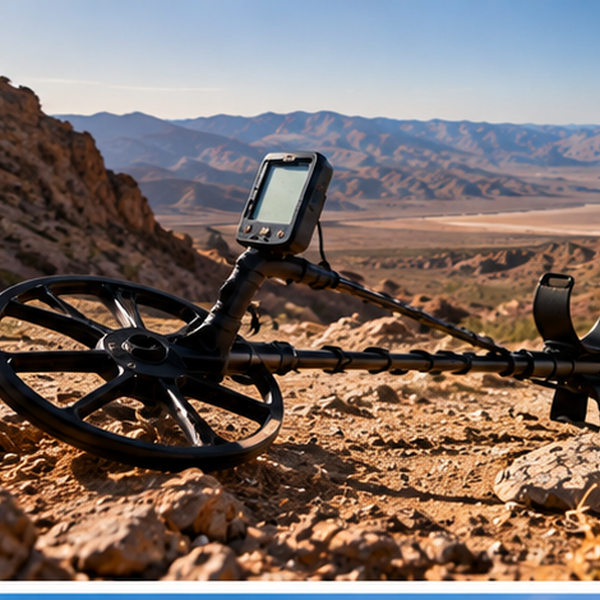
Detector Strength for Specific US Search Tasks
Detector strength becomes useful only when you define what the detector needs to do.
A powerful response on large buried metal does not prove strong small-gold sensitivity. Likewise, a professional ground scanner cannot replace fast direct metal detection.
Strength Means Task Fit
Start with the search question.
Do you need to find natural gold?
Are you searching for a substantial metallic object?
Do you need underground anomaly data?
Does the project involve a possible tunnel or cavity?
Do you need target visualization before excavation?
Each answer points toward a different detector category.
Therefore, do not begin with the model name.
Begin with the task.
Target Scale Changes the Meaning of Strength
Target size has a major effect on detector response.
A large buried metallic object can produce a much stronger response than a small nugget.
Meanwhile, tiny natural gold requires sensitivity that a large-frame deep-search system may not prioritize.
For this reason, target scale should appear in every serious detector comparison.
The Strongest Metal Detector for a large metal cache may be unsuitable for fine gold.
Likewise, the strongest small-gold system may not be the right tool for a substantial buried container.
Ground Conditions Change Practical Power
Soil can reduce the value of an otherwise capable detector.
For example, mineralization may increase ground noise.
Salt can create another challenge.
Electromagnetic interference can also affect stability.
Therefore, practical strength includes the ability to provide usable information in the intended environment.
A detector that remains controllable in difficult ground can provide more value than one with an impressive specification but poor site compatibility.
Strongest Metal Detector System Roles
The systems below represent different forms of detector strength.
They are not ranked from strongest to weakest.
| Search Task | Technology Role | Example System | Strength to Evaluate |
|---|---|---|---|
| Large metallic targets | Pulse GBS / PI | Lorenz Deepmax Z2 | Target-scale response and coil flexibility |
| Natural gold | Specialist gold technology | Minelab GPZ 8000 | Gold sensitivity and ground handling |
| Complex underground survey | Multi-mode 3D scanning | OKM eXp 7000 Pro Plus | Measurement options and survey flexibility |
| Structured anomaly scanning | 3D Ground Scan | OKM Rover C4 | Controlled ground measurements |
| Target visualization | VLF + positional imaging | Nokta Invenio Pro | Metal response plus target visualization |
| Large metal in difficult ground | Pulse Induction | Garrett ATX Deepseeker | Ground stability and large-coil capability |
This approach avoids one universal “power” score.
Instead, it connects detector capability to the search task.
For a broader model-by-model comparison, buyers can compare detectors by intended search task before selecting a package.
Lorenz Deepmax Z2 for Large Metallic Targets
The Lorenz Deepmax Z2 becomes relevant when the project focuses on substantial buried metal.
Its Pulse GBS platform provides direct metallic-target detection. In addition, the system supports different search-coil configurations.
That coil flexibility defines much of its practical strength.
Pulse GBS for Direct Metal Search
Pulse GBS works as a direct metal-detection system.
Therefore, the detector responds to conductive metallic targets rather than simply measuring general underground anomalies.
This makes it relevant to projects involving:
Large metallic caches.
Buried containers.
Substantial relics.
Military metal.
Archaeological metallic objects.
Professional deep-metal investigation.
However, target size still matters.
A large object creates a different response from a coin.
Coil Size Controls the Search Role
Large frame coils can support searches for substantial metallic targets.
Meanwhile, smaller coils provide greater control for smaller objects.
Therefore, the strongest Z2 configuration depends on the expected target.
Do not choose the largest coil automatically.
A large frame can become difficult to use in restricted terrain.
It can also reduce sensitivity to compact objects.
Instead, tell Goldot-Tec the approximate target size and working area before selecting the configuration.
When Z2 Is Not the Strongest Choice
An empty cavity creates a different problem.
It may contain no useful metal response.
Therefore, Deepmax Z2 should not replace a dedicated ground scanner when underground structures are the main objective.
Likewise, a small-gold prospector may need another technology.
The Z2 becomes strong when the project actually involves direct detection of substantial metal.
GPZ 8000 Strength for Natural Gold
Natural-gold prospecting needs another definition of strength.
A large treasure detector does not automatically perform well on natural nuggets.
Therefore, prospectors need gold-focused technology and suitable ground handling.
GeoZVT and Goldfield Use
Minelab GPZ 8000 uses GeoZVT technology.
Its role focuses on natural-gold prospecting rather than general treasure scanning.
Therefore, the platform becomes relevant when gold is the primary target.
Ground conditions also form part of the design.
This matters because mineralized soil can hide weak gold responses behind ground noise.
However, the technology still requires good operator technique.
The detector cannot compensate for poor coil control or inconsistent searching.
Z-Set Coil Configuration
GPZ 8000 supports Z13, Z17, and Z18 coils.
Each coil serves a different field requirement.
Z13 supports tighter vegetation-heavy terrain and small-to-medium gold.
Z17 addresses conductive soil and higher EMI while targeting small-to-medium gold.
Meanwhile, Z18 supports wider coverage and a stronger medium-to-large-gold focus.
Therefore, the strongest configuration changes with terrain.
An open Nevada prospecting site may create different priorities from a rocky or vegetation-heavy location.
GPZ 8000 Capability Limits
GPZ 8000 is not a tunnel scanner.
It does not produce professional 3D ground images.
Likewise, it should not be purchased primarily for park coins or general jewelry hunting.
Its strength comes from specialization.
If natural gold is your central target, you can use Goldot-Tec’s gold detector comparison guide to compare specialist prospecting platforms before finalizing your setup.
3D Scanning Strength for Underground Projects
A professional ground scanner measures a different type of information.
Therefore, scanner strength should not be compared directly with PI target depth.
The operator collects measurements across a structured area.
Software then converts those measurements into a visualization.
Measurement Quality Is the Real Strength
A 3D ground scan depends heavily on data quality.
Straight survey lines matter.
Consistent movement matters too.
Sensor orientation also affects the result.
Therefore, buying a more advanced scanner does not remove the need for training.
Poor scanning can create poor data.
A trained operator can produce a more useful survey.
3D Output Is Not a Photograph
A professional scanner does not take a photograph underground.
Instead, it visualizes measured differences.
Those differences may relate to:
Metallic objects.
Ground disturbances.
Cavities.
Tunnels.
Chambers.
Mineralized zones.
Other subsurface anomalies.
However, the operator still needs to interpret them.
Therefore, a colorful shape should not become automatic proof of treasure.
eXp 7000 Pro Plus for Complex Surveys
OKM eXp 7000 Professional Plus serves projects that need several investigation methods.
Its available workflows include 3D Ground Scan, Tunnel Scan, Mineral Scan, Live Scan, Magnetometer, Pinpointer, VLF Metal Detection, and 3D VLF Scan.
This gives the system a different form of strength.
Strength Through Multiple Survey Methods
One project may focus on a cavity.
Another may involve a mineral zone.
A third may require metal detection after a broader survey.
Therefore, having several methods within one platform can reduce the need for separate devices.
However, each mode still needs correct technique.
Do not treat every mode as another version of the same detector.
When Multiple Modes Add Value
The eXp 7000 makes more sense when your projects genuinely vary.
For example, a professional survey team may investigate structures during one job and metallic anomalies during another.
The platform can support that broader workflow.
However, a user searching only large metal may not need this complexity.
In that case, a specialist direct metal detector can provide a simpler buying route.
Training Becomes More Important
More capabilities mean more learning.
The buyer may need to understand several sensors and measurement methods.
Software analysis also becomes part of ownership.
Therefore, support and training should form part of the package discussion.
Rover C4 for Structured Ground Scanning
OKM Rover C4 provides another form of scanner strength.
It focuses on structured 3D measurements with several specialized modes.
These include 3D Ground Scan, Magnetometer, Pinpointer, and Mineral Scan.
Strength Through Controlled Data Collection
Rover C4 becomes relevant when the project needs consistent ground measurements.
The operator can first evaluate surface interference.
Next, a structured scan can collect underground data.
Afterwards, Pinpointer can support closer localization.
This creates a step-by-step survey workflow.
Mineral Scan Has a Specific Role
Mineral Scan serves natural mineral investigations.
However, it should not be confused with a handheld gold-nugget detector.
The system collects another form of underground information.
Therefore, natural-gold buyers should decide whether they need ground analysis or direct target recovery.
When Rover C4 Is Excessive
Fast hobby coin hunting does not require a professional 3D survey.
Likewise, an operator focused solely on one large metallic target may prefer PI.
The Rover C4 becomes strong when structured underground analysis forms the project.
Buyers unsure whether they need PI or ground imaging can review Goldot-Tec’s deep scan metal detector guide before requesting equipment.
Invenio Pro for Target Visualization
Some professional users want more information about a metallic target before excavation.
Nokta Invenio Pro serves this buying requirement.
It combines VLF metal detection with IPTU positional tracking.
Direct Detection Plus Positional Data
The system tracks coil position while the detector records target responses.
Therefore, the software can estimate information about the detected area.
This can include target position, dimensions, shape, and estimated depth.
For professional projects, that additional context can support excavation planning.
However, the image remains a calculated interpretation.
It is not an underground photograph.
When Visualization Creates Value
Imagine a project with a substantial metallic response.
The team may want more information before excavation begins.
In that case, target visualization can support the decision.
However, a recreational coin hunter may not need this workflow.
Likewise, a dedicated natural-gold prospector may prefer a specialist gold platform.
Invenio Pro becomes strong when visualization directly solves a project problem.
Target Information Is Not Material Certainty
A visual result can help classify a target.
However, it cannot guarantee valuable metal.
Recovery still provides the final confirmation.
Therefore, treat imaging as decision support.
Do not turn it into a guaranteed target-identification claim.
Garrett ATX Deepseeker for Difficult Ground
The Garrett ATX Deepseeker serves another specialist role.
It uses Pulse Induction and includes a large Deepseeker coil configuration for larger metallic targets.
Therefore, its practical strength comes from direct metal detection in challenging ground.
Ground Stability as a Strength
Mineralization and salt can make some detector systems difficult to operate.
A PI platform can provide another approach.
Therefore, buyers working demanding ground may prioritize stability over detailed visual target identification.
This can be particularly useful when the target is substantial metal.
Deepseeker Coil for Larger Targets
The Deepseeker configuration includes a large search coil.
This supports a different target scale from ordinary coin hunting.
Therefore, buyers should not compare its capability with a small recreational coil through one depth number.
Target size controls the comparison.
When a Lighter Detector Makes More Sense
A Texas hobby detectorist searching individual coins may gain little from a large professional PI setup.
In that case, a lighter conventional detector can provide better discrimination and easier operation.
Again, detector strength depends on the task.
Target Scale and System Configuration
Target scale should control the package before the order is placed.
This is one of the most important buying rules in the article.
Small Natural Gold
Small natural-gold targets need sensitivity and controlled coil movement.
Therefore, specialist gold technology becomes relevant.
A large frame coil would solve the wrong problem.
Individual Coins and Relics
Coins and relics often appear around unwanted iron and other trash.
Consequently, target identification and separation can matter more than extreme large-target depth.
A conventional multi-frequency detector can outperform a larger professional system for this job.
Medium and Large Metallic Targets
As target size increases, another detector category becomes useful.
Professional PI or Pulse GBS systems can support larger coils.
Therefore, buyers can match the search field to the expected object.
Empty Cavities and Tunnels
An empty tunnel may contain no target metal.
Therefore, large-coil PI does not automatically solve the search.
Structured 3D scanning or another appropriate geophysical method may provide more relevant information.
Mixed Projects
Some projects involve uncertain target types.
A professional multi-mode system may add flexibility.
However, the buyer should still define when each mode will be used.
More modes do not remove the need for a survey plan.
Nevada Detector Task Planning
Nevada provides a useful example because target type can completely change the strongest equipment choice.
However, buyers should verify land status and existing mining claims before prospecting.
Nevada Natural-Gold Project
Imagine a permitted prospecting site where natural gold is the primary target.
The search question is not:
“Which detector has the largest maximum depth?”
Instead, the buyer should consider:
Expected gold size.
Mineralization.
Terrain.
Electromagnetic interference.
Coil maneuverability.
Operator experience.
In this case, a specialist gold platform such as GPZ 8000 can make more sense than a large treasure system.
Nevada Large-Metal Project
Now imagine a different authorized site.
The target is believed to be a substantial buried metallic object.
The buying priorities change immediately.
Large-target response and coil configuration move higher.
Therefore, a professional Pulse GBS or PI system can become more appropriate.
This example shows why one Nevada recommendation would be misleading.
Check Claims Before Prospecting
Nevada contains a large number of active mining claims.
Therefore, buyers should verify land and claim status before planning a gold search.
A high-performance detector does not provide access rights.
Project planning should come before the equipment order.
Texas Search Project Scenarios
Texas creates another useful contrast between search tasks.
Again, use only authorized sites.
Authorized Large-Metal Project
Imagine a private Texas property where the owner wants to investigate a substantial metallic target.
Direct PI detection may provide the clearest starting point.
Therefore, target dimensions and available search space should guide the coil choice.
If the site is open, a large frame may be practical.
However, restricted terrain could require another configuration.
Coins and Smaller Relics
Now change the project to individual coins and smaller relics.
The strongest professional deep detector can suddenly become the wrong tool.
Target ID and separation matter more.
Therefore, a conventional detector may provide stronger practical performance.
This is exactly why the Strongest Metal Detector should be defined by the task.
Possible Underground Structure
A third Texas project may involve a suspected void or structure rather than confirmed metal.
In that case, direct metal detection may not answer the project question.
A professional scanner can provide another measurement workflow.
However, buyers should confirm that the operator understands structured scanning and data interpretation.
Terrain Requirement Assessment
Terrain changes what a strong system looks like in the field.
Therefore, configuration planning should include physical site conditions.
Open Ground
Open sites allow larger coils and wider scanning paths.
This can benefit large-target PI work.
Likewise, larger scanner grids may become practical.
However, open terrain does not automatically justify the biggest equipment.
Target scale still comes first.
Rocky or Vegetated Ground
Large frames can become awkward around rocks and vegetation.
Therefore, smaller coils can provide better control.
Compact sensors may also simplify structured survey work.
Mineralized Soil
Mineralization can make stability a major buying factor.
PI platforms and specialist gold technologies often enter the comparison here.
However, the correct choice still depends on the target.
Salt Conditions
Salt creates another ground challenge.
Some PI systems can suit salt environments.
Meanwhile, modern multi-frequency detectors can provide better workflows for conventional beach targets.
Therefore, match technology to both target and ground.
Operator Skill Is Part of Detector Strength
Professional capability only creates value when the operator can use it correctly.
Therefore, training belongs in the buying decision.
Audio-Based Systems
PI and specialist gold detectors often rely strongly on audio interpretation.
The operator needs to recognize repeatable signals.
Ground behavior also matters.
Therefore, new users should practice before relying on subtle responses during an important project.
Imaging Systems
3D scanners require another skill set.
The operator must maintain consistent survey lines.
Sensor height and orientation also matter.
Afterwards, software interpretation becomes important.
Therefore, a powerful scanner with poor technique can produce weak project data.
Smart Imaging Systems
Systems such as Invenio Pro combine direct detection with positional information.
The user needs to understand both layers.
Therefore, operator preparation remains important even when software provides more visual information.
Portability and Field Requirements
A detector can provide suitable technology but still create an impractical field package.
Therefore, buyers should consider the complete system.
Coil and Frame Transport
Large frame coils require more transport space.
They may also take more time to assemble.
Therefore, field logistics should be considered before ordering.
Scanner Equipment
Professional scanners can include sensors, controllers, software devices, chargers, and carrying cases.
A project team should plan how this equipment reaches the survey area.
Long Search Sessions
Weight matters during repeated sweeping.
A lighter detector can improve comfort.
However, do not choose low weight at the expense of the technology required by the project.
Instead, balance capability and portability.
Strongest vs Most Powerful Metal Detector Intent
Goldot-Tec should keep these two pages separate.
They answer different buyer questions.
Strongest Means Best Task Fit
This page defines strength through system role.
The buyer starts with:
Target type.
Target scale.
Ground.
Terrain.
Workflow.
Experience.
Then the detector category follows.
Therefore, this page helps buyers select the right system for a specific US search task.
Most Powerful Focuses on Depth Limits
Buyers whose main question centers on depth capability should use the separate Most Powerful Metal Detector depth guide.
That page can explore the limits of depth claims, target size, coil size, and system category in more detail.
Keeping the two pages separate reduces overlap.
It also creates a clearer internal search journey.
Build Your Detector Configuration Before Ordering
A professional purchase should include more than a model name.
Therefore, confirm the full configuration.
Technology
First, confirm whether the project needs:
Direct metal detection.
Natural-gold detection.
3D scanning.
Target visualization.
A multi-mode survey platform.
This removes unsuitable systems.
Coil or Sensor
Next, match the coil or sensor to the target.
Large metal may justify a larger coil.
Meanwhile, small targets can require more sensitivity and maneuverability.
Scanner sensors should match the survey workflow.
Power and Audio
Confirm batteries and charging equipment.
For direct detectors, review the audio setup as well.
Remote projects may require additional power planning.
Software and Training
Professional scanners can depend on software.
Therefore, ask which edition or platform comes with the package.
Also confirm training.
Advanced equipment only delivers value when the team understands it.
Warranty and Support
Ask which warranty applies to the US order.
Then confirm technical support.
Professional systems can require help with coils, software, or survey technique.
Therefore, after-sales support should influence the purchase.
Strongest Metal Detector Purchase Checklist
Before requesting an offer, prepare a short project description.
Target
What are you searching for?
How large is the expected target?
Is the target definitely metallic?
Could it be an empty structure?
Ground
Is the soil mineralized?
Does the site contain salt?
Is electromagnetic interference likely?
Terrain
Is the site open?
Rocky?
Vegetated?
Restricted?
Search Method
Do you need a direct target response?
A 3D survey?
Target visualization?
More than one method?
Operator
How experienced is the user?
Does the project team understand PI?
Can the team perform structured scans?
Who will interpret the software?
Package
Which coil or sensor is included?
What power equipment comes with the system?
Is software included?
Does the package include training?
What warranty applies?
Which US delivery options are available?
These answers allow Goldot-Tec to recommend a system based on the project rather than advertising language.
Frequently Asked Questions
How do I choose the Strongest Metal Detector for my target type?
Start with the physical target rather than the detector brand. Small natural gold needs a different system from a large metallic cache. Meanwhile, an empty cavity or tunnel requires another measurement approach. Next, consider ground conditions, terrain, target size, and operator experience. Then compare only the detector categories that solve that specific search problem.
Why can two powerful detector systems perform very different jobs?
Detector technologies measure different things. Pulse Induction and Pulse GBS systems provide direct responses to metal. Specialist gold platforms prioritize natural-gold targets and difficult ground. Meanwhile, 3D scanners collect structured underground measurements, and smart-imaging systems add positional information to metal detection. Therefore, a system can be highly capable within one role while remaining unsuitable for another.
Can Goldot-Tec help select the right system for a Nevada or Texas project?
Yes. Provide the expected target, approximate size, terrain, soil conditions, search method, and operator experience. Also confirm that the intended site is authorized for the planned activity. Goldot-Tec can then compare appropriate system categories, coils or sensors, package requirements, current availability, and delivery options for your state.
Select Your US Search Setup
The Strongest Metal Detector is the system that matches the task. Natural gold, large metallic targets, conventional relics, and underground structures each require different forms of detector strength.
Buying in the United States? Ask Goldot-Tec about availability and delivery options for your state. Send your target size, terrain, ground conditions, and search method, then request a configuration built around your Nevada, Texas, or other authorized US project.