

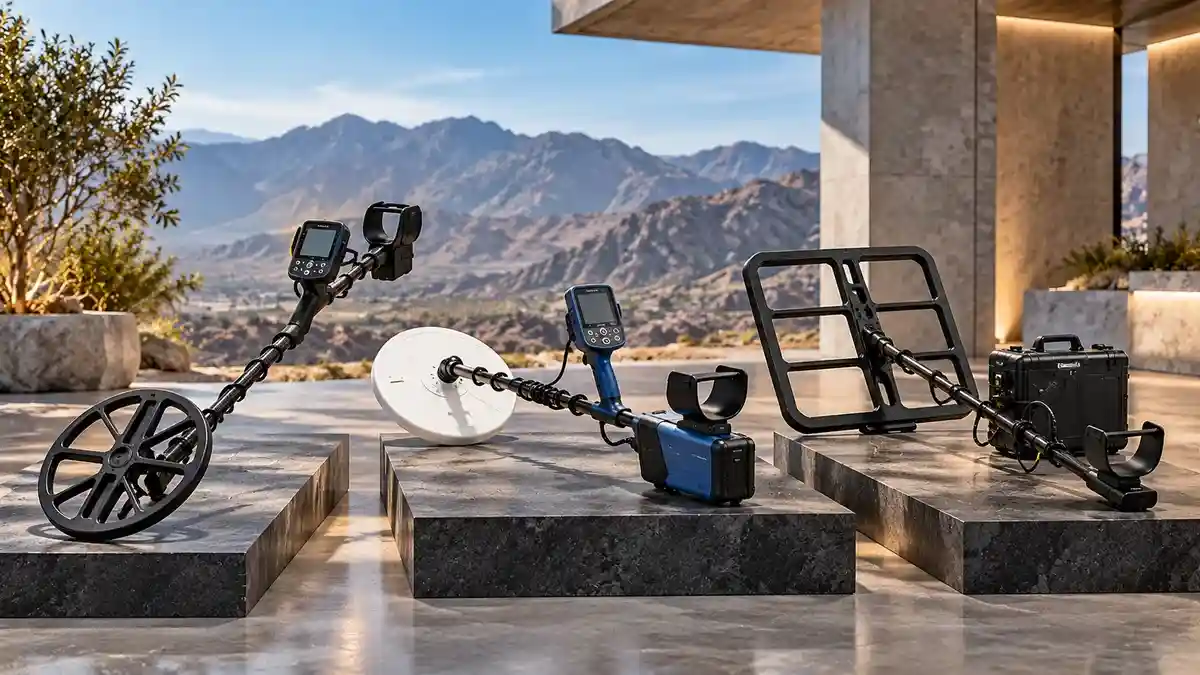
The Best Professional Metal Detector is the system that supports your team’s actual search work, not simply the machine with the longest feature list. Natural-gold prospecting, direct detection of large buried metal, positional target imaging, and structured underground surveys require different technologies, operator skills, and equipment packages. Before requesting a US quote, define your target, ground conditions, team experience, and the evidence you need to collect.
This guide retains the distinction between professional prospecting and survey work. It covers Minelab GPZ 8000, Lorenz Deepmax Z2, OKM eXp 7000 Professional Plus, Nokta Invenio Pro, and Nokta Deephunter 3D Pro. Use the project-planning, software, training, and package checklists to request a configuration from Goldot-Tec without assuming guaranteed depths, discoveries, stock, or delivery.
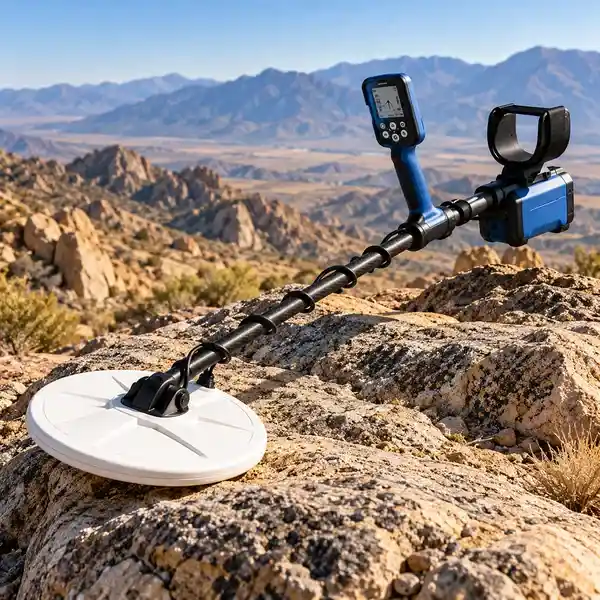
What Makes a Detector Professional?
A professional detector is not just a recreational machine with more buttons. It should answer a defined project question using a repeatable operating method. Equipment selection starts with the required result and ends with a configuration that a trained operator can actually use.
Professional Prospecting and Surveying Are Different
A natural-gold team works with ground signals and repeatable metallic target responses. Its purchasing priorities often include:
- Ground handling appropriate to the mineralization at the site.
- Compatible coils that match expected nugget size and terrain.
- Audio that the operator can interpret over long search sessions.
- Manageable weight, harness support, and stable coil movement.
- Batteries, charging equipment, and a workable field routine.
- Setup and training for sensitivity, noise control, and target checking.
A professional underground-survey team has a different workflow. It may need planned survey grids, consistent sensor height, analysis software, saved project files, repeat measurements, and a process for interpreting anomalies. A scanner is not automatically a better gold detector, just as a specialist gold machine is not a substitute for a cavity survey.
Professional Means Repeatable Work
A prospector should be able to revisit a possible signal and compare it from another direction. A scanner operator should repeat a grid with controlled line spacing and sensor position. In either case, the field team must record settings and site conditions so an interesting result can be investigated rather than accepted as proof of a valuable target.
Professional Does Not Mean Maximum Complexity
More operating modes create value only when the job uses them. Lorenz Deepmax Z2 can suit a focused metallic-target project, whereas OKM eXp 7000 Professional Plus supports several survey methods. The Best Professional Metal Detector is the system whose complexity, accessories, and training requirements fit the team’s deliverable.
Equipment Planning for US Professional Projects
A Best Professional Metal Detector purchase begins with a brief written project specification. It does not need to be long, but it must be specific enough for Goldot-Tec to compare equipment categories and prepare an itemized quote.
Define the Main Project Target
Record the target or problem before choosing a model:
- Natural gold: Expected nugget size, mineralization, and prospecting terrain.
- Large metallic objects: Likely size, material, site access, and room for a coil or frame.
- Coins and smaller relics: Target identification, iron contamination, and recovery workflow.
- Suspected cavities or tunnels: The structural question and method needed to investigate an anomaly.
- Mineralized zones: Whether the goal is surveying mineral patterns or recovering an individual nugget.
- Mixed targets: Which work requires direct metal detection and which requires scanning.
An empty cavity may contain no metal response. That is why a team must not select a PI detector merely because a site is described as deep or underground.
Define the Information You Need
Decide what the equipment must measure. A metallic-target project may only need a stable response and a marked location. Another project needs consistent 3D survey data for later analysis. A positional-imaging project may seek an estimate of target location or dimensions. These outputs are different, and none independently proves an object’s material or value.
Define the Project Deliverable
State what the team must hand over after fieldwork:
- Marked locations of repeatable metal responses.
- Named and saved survey files linked to search areas.
- Repeat scans and documented test conditions.
- An anomaly map with interpretation limits explained.
- Estimated target position or dimensions when the system supports that output.
- Recommendations for independent confirmation before excavation.
This final deliverable determines the software, storage, documentation, and operator roles that belong in the package. Also confirm that prospecting or surveying is authorized at the specific US site; owning a detector does not confer access rights.
Professional Prospecting Equipment
The Best Professional Metal Detector for a goldfield team needs equipment designed for natural-gold targets, not an imaging system chosen simply because its screen looks advanced. Soil mineralization, target scale, audio recognition, and coil control remain the principal selection factors.
Minelab GPZ 8000 for Professional Gold Prospecting
Designed for professional gold prospecting, the Minelab GPZ 8000 combines advanced GeoZVT technology with the Z-Set concentric toroidal coil system. The Z13, Z17, and Z18 coils offer different options based on terrain conditions, interference levels, and target sizes. The standard Single Coil Pack includes the Z18 coil, while additional coil availability depends on the dealer package. With an operating weight of approximately 2.78 kg, this detector is built for demanding gold exploration projects.
For professional buyers, this specialization has a clear advantage. A team conducting regular nugget searches in challenging gold-bearing ground can prioritize ground handling and controlled, repeatable audio responses. The GPZ 8000 is not a tunnel scanner and does not provide a professional 3D cavity-survey workflow.
Review the GPZ 8000 professional prospecting package to identify the appropriate coil strategy, then request written confirmation of the actual detector, batteries, headphones, harness, carrying equipment, warranty, and support supplied with a US order.
When GPZ 8000 Fits the Team
This platform deserves consideration when natural gold is the primary target, operators are prepared to interpret subtle audio, mineralization is a recurring issue, and several coil strategies may be useful. The team must be comfortable carrying the full field kit during long sessions. It should not become the automatic choice for routine coins, beach jewelry, or suspected empty structures.
Training Needs for Gold Prospecting
Training should cover initial setup, sensitivity, noise cancellation, ground behavior, search speed, coil height, repeatable signal checks, and battery preparation. Operators should also practice harness adjustment and the effect of the selected coil on target response. Automatic functions reduce some setup tasks but do not remove the need for disciplined searching.
Professional Deep-Metal Detection
The Best Professional Metal Detector for large metallic targets requires another equipment role. Here, the expected object dimensions, available search space, and physical coil configuration can be more important than conventional coin-style target identification.
Lorenz Deepmax Z2 for Large Metal
Lorenz Deepmax Z2 uses non-motion Pulse GBS technology. Its manufacturer documents support for different coil systems, including frame configurations intended for substantial metallic objects. Smaller coils provide more manageable searches for compact targets, whereas large frames emphasize another target scale and require suitable space.
Projects may involve buried containers, substantial military or historical metal, larger ferrous or non-ferrous objects, or authorized professional metal surveys. The Z2 directly responds to metal; an optional data-logging workflow does not make it a GPR system or prove the presence of an empty cavity.
Before ordering, discuss the Lorenz Z2 large-metal project setup with Goldot-Tec and confirm the frame or search coil, power pack, audio gear, any optional logger, and compatibility with the exact detector version.
Small and Large Coil Roles
- Compact coil: Easier movement around rocks and obstacles, more practical localization of smaller metallic objects, less coverage per sweep.
- Medium coil: A compromise when dimensions are uncertain; not necessarily the optimum for either extreme.
- Large frame: Relevant to substantial metal in open ground; requires physical room and can miss small targets.
- Interference-conscious configuration: Consider manufacturer-approved compensated coils when electrical noise is significant, while confirming any sensitivity trade-offs.
A large frame is not automatically the best or deepest option for every target. The operator should describe target scale and site restrictions before choosing the package.
Operator and Team Requirements
Very large frames can change staffing and transport needs. Ask how many people will handle the equipment, whether the survey lanes are open, how locations will be marked, and whether the project needs recorded detection data. A detector that cannot be deployed consistently at the site is not the right professional setup, regardless of its laboratory claims.
Professional 3D Survey Systems
For buyers evaluating the Best Professional Metal Detector for subsurface anomalies, ground scanning follows a different workflow from direct metal detection. The key buying requirement is the ability to collect and interpret structured measurements about underground anomalies. The color or shape of a software graphic is not proof of gold, a tunnel, or a chamber.
Buyers evaluating this category can review professional ground survey system options before deciding whether they need a scanner rather than a direct prospecting detector.
OKM eXp 7000 Professional Plus
OKM documents eight operating modes for the eXp 7000 Professional Plus: 3D Ground Scan, 3D VLF Scan, Mineral Scan, Tunnel Scan, Live Scan, Magnetometer, Pinpointer, and VLF Metal Detection. These modes answer different questions, not eight versions of the same measurement. The platform is relevant when professional teams need several field-survey workflows and can commit to the related training.
Before purchasing, review the eXp 7000 Professional Plus configuration and ask Goldot-Tec to confirm the supplied sensors, VLF coil, analysis software, compatible hardware, licensing, power, and training. A product-page illustration does not establish what a specific dealer quote includes.
3D Ground Scan Workflow
A team lays out a defined area, collects controlled scan lines, and uses compatible software such as Visualizer 3D Studio to assess the collected information. Survey direction, line spacing, sensor orientation, and walking speed affect the dataset. A repeatable workflow makes later comparison possible; an attractive single image alone does not establish a finding.
Tunnel and Cavity Projects
Tunnel Scan offers a workflow for investigating possible void-like anomalies. It does not prove that every unusual response is a tunnel. Operators should record the location, repeat appropriate scan lines, and consider another suitable geophysical method if the project needs stronger confirmation. GPR is a distinct technique based on subsurface reflections and must not be described as identical to all 3D scanners.
Mineral Projects
Mineral Scan can support investigation of mineralized zones. This is not the same task as recovering tiny natural nuggets with a handheld prospecting detector. Explain whether the project deliverable is a mineral survey, a target location, or both, and select technology accordingly.
Professional Target Imaging
Some teams searching for the Best Professional Metal Detector with target imaging want estimated location and dimensional information for a metallic response before deciding on excavation. Target imaging may add a useful layer, but a displayed shape is calculated from measurements, not an underground photograph.
Nokta Invenio Pro
Nokta Invenio Pro is a VLF detector equipped with an Integrated Positional Tracking Unit (IPTU). Its documented selectable operating frequencies are 5, 14, and 20 kHz. The system uses position and target-response information to generate graphical estimates of target location, dimensions, shape, and depth. These estimates should be treated as aids to investigation, not reliable identification of gold or another specific material.
When Invenio Pro Fits
Consider it when metal is the primary target, the team values positional information, and excavation planning benefits from repeatable visual records. Operators must understand the detector’s motion and non-motion modes, coil control, and graphical limitations. A natural-gold nugget team or a survey seeking nonmetallic voids may be better served by a different dedicated system.
Mixed Professional Treasure Projects
Some teams need both a larger-target workflow and a faster approach to individual metallic objects. This does not always require a separate PI detector and 3D survey platform; a purpose-built dual-mode treasure detector may suit the tasks, provided its actual detection principles are understood.
Nokta Deephunter 3D Pro
Nokta documents Deephunter 3D Pro as a dual-mode VLF system. Mode 1 uses a non-motion visual workflow for larger metallic targets and potential cavity-related indications, while Mode 2 uses motion detection and audio information for smaller individual targets. These functions should not be mislabeled as a separate PI system or equated with the structured survey workflow of OKM eXp 7000.
The manufacturer lists T44 and T100 coils for the larger-target mode and C32 and C47 options for motion searching. Confirm the actual configuration, since package components can vary.
Mode 1 and Mode 2 Buying Roles
Mode 1 belongs to projects prioritizing larger metallic responses and evaluating possible cavity-related indications. Such indications require verification, rather than being treated as a guaranteed underground map. Mode 2 offers a quicker conventional workflow for coins and smaller metals with audio discrimination. Decide which mode your team will actually use and whether the included coils suit its field conditions.
Professional Limitations
Deephunter’s visual output does not replace controlled 3D geophysical surveys, and its target indications do not guarantee valuable metal or an empty chamber. Conversely, a professional gold team may gain more value from a dedicated prospecting detector. The right professional purchase solves today’s field question, not every imaginable future task.
Training, Data Handling and Team Workflow
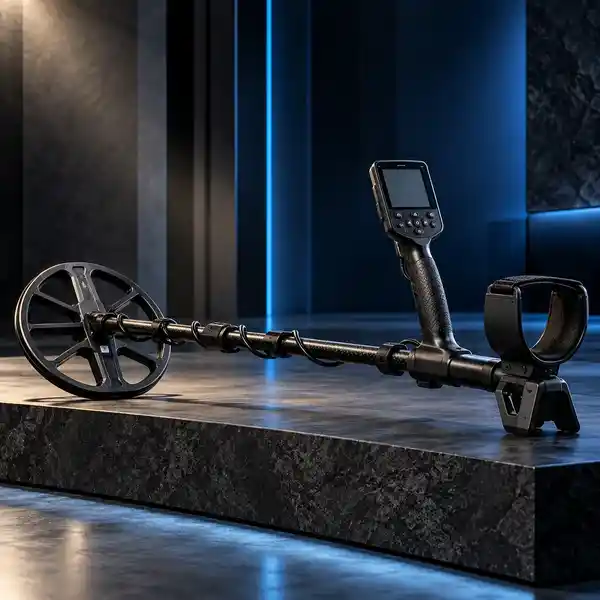
The Best Professional Metal Detector package should fit the people responsible for using it. Training, note-taking, file storage, and interpretation are part of the operational plan, not optional tasks after delivery. A skilled metal detectorist is not automatically a trained ground-scanning operator.
Assign Responsibilities Before the Survey
| Team Role | Primary Responsibility | Evidence or Deliverable |
|---|---|---|
| Project lead | Define site permissions, targets, scope, and follow-up decisions | Project brief and approved survey plan |
| Direct detector operator | Perform controlled sweeps, balance ground, and repeat metallic responses | Marked locations, detector settings, and repeat-signal notes |
| Scanner operator | Prepare grids, control sensor movement, and collect consistent lines | Labeled scan files and grid records |
| Data analyst | Review software outputs, compare scans, and document uncertainty | Anomaly notes, comparison files, and interpretation limits |
| Field support and safety | Manage access, equipment, batteries, logistics, and site hazards | Equipment checklist and daily field log |
Smaller teams may combine roles. However, each responsibility should be assigned so that survey evidence does not depend on vague recollections after the work is complete.
Detector Operator Skills
Direct operators need practice with ground balance, sweep height, search patterns, sensitivity, target audio, metal classification, and repeatable checks. GPZ 8000 and Lorenz Z2 demand different target and coil approaches, so training should be specific to the selected platform.
Scanner Operator Skills
Scanner operators need consistent grid setup, line spacing, direction, walking speed, sensor orientation, file transfer, and repeated measurements. Incorrect technique can create misleading graphics even when the equipment works normally. Goldot-Tec should clarify what demonstrations or training are actually available with the selected package.
Document and Review the Project
Useful field records include project name, date, area and grid number, operator, coil or sensor, search mode, ground conditions, starting point, settings, interesting responses, repeat tests, and secondary confirmation. Store files by site and date so another team member can locate the measurements and understand the methodology.
Software Requirements Before Purchase
Professional software must be compatible with the delivered hardware and the team’s computers or tablets. Ask which edition, license, and operating-system requirements apply rather than assuming every illustration represents an included feature.
3D Analysis Software
OKM uses Visualizer 3D Studio for detailed review of relevant saved survey data. Confirm whether the quoted eXp 7000 configuration includes the required software, compatible device, transfer tools, and training. Ask how measurements are named, exported, backed up, and reanalyzed after a field session.
Invenio Data Display
Invenio Pro presents calculated target information on its own system display. Operators should understand how positional tracking and recorded metal responses influence the graphics. Shape or material interpretations remain uncertain until independent verification.
Data Storage and Backup
For multi-day professional work, use consistent file naming, preserve original readings, and retain an additional backup when practical. Label each dataset with the grid, time, operator, and settings. Teams comparing several passes should not overwrite the earlier files that reveal changes or contradictions.
Colorado Professional Project Planning
Colorado provides useful hypothetical US examples, but the state name alone does not determine soil or technology. Each project must take place at an authorized location. It also does not imply a Goldot-Tec local service branch.
Colorado Gold Prospecting Team
For permitted natural-gold work, a project may prioritize nugget-size sensitivity, mineralization, terrain access, and long working sessions. GPZ 8000 can enter the shortlist when the team’s experience and requirements justify it.
- Target: Describe the expected nugget size and prospecting objective.
- Ground: Record known mineralization, rocks, and electrical interference.
- Operators: Confirm audio and ground-handling experience.
- Package: Confirm Z-Set coil, batteries, harness, audio, and transport provisions.
Colorado Underground Survey Team
A separate hypothetical project may involve a suspected void or underground structure. In that case, eXp 7000 or another appropriate professional scanning system may be more relevant than a gold detector.
- Survey question: Identify what structural or anomaly evidence is needed.
- Site: Plan grids around slopes, vegetation, and accessible lanes.
- Team: Assign scanning, data-review, and documentation responsibilities.
- Package: Verify sensors, software, compatible computer, power, protection, and training.
A larger scan is not automatically better. Consistency and the ability to repeat important lines matter more than covering an impressive area once.
Texas Field Equipment Selection
Texas offers another useful comparison of authorized project types. No example below describes a verified discovery or guarantees a field result.
Large Metallic Target Project
A private authorized site involving suspected substantial buried metal may justify Lorenz Z2 with a coil or frame suited to the likely object size. Check open space, fences, utilities, nearby metal, and the ability to move the selected frame. Document repeatable responses before considering any excavation.
Mixed Treasure Project
If a team needs both larger-target checks and quick individual-metal searches, Deephunter 3D Pro may be worth comparing for its two VLF operating workflows. Verify the T-series and C-series coils offered, and train the team on the difference between Mode 1 and Mode 2. Do not interpret the graphics as material proof.
Target Visualization Project
Where the main target is metallic but position and estimated dimensions matter to the investigation, Invenio Pro can add positional information. A controlled test and consistent operation are still necessary. The system should support, rather than replace, independent evidence about the object.
Equipment Transport Requirements
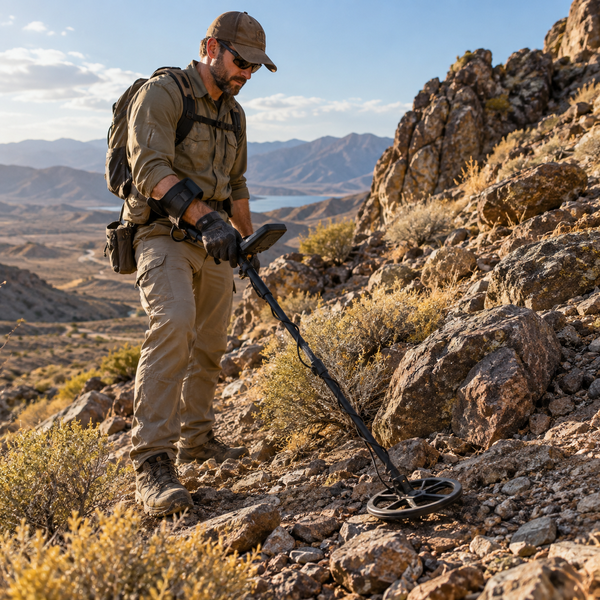
Even the Best Professional Metal Detector can fail operationally when buyers plan only for its specifications. Consider the full system’s size, protection, transport method, and power needs before accepting a quote.
Large Coils and Frames
Frame configurations require enough vehicle space, careful assembly, and suitable site access. Confirm coil bags, fittings, mounting hardware, and whether one or more operators are needed. A frame that cannot be moved consistently through the target area is not an effective purchase.
Scanner Systems
Scanner teams may need sensors, controllers, tablets, chargers, cables, software equipment, protective cases, and marking tools. Verify which are supplied and which must be arranged separately. Avoid assuming that every sensor and accessory pictured in a product demonstration is included.
Battery Planning and Weather Protection
Check battery count, chemistry, charging time, compatible chargers, vehicle or backup power, and storage requirements. Also verify environmental protection. A waterproof coil does not make a whole detector waterproof, and a survey instrument may require additional rain or dust protection.
Team Workflow Requirements
A single operator may be sufficient for some searches, but professional documentation still needs a repeatable process. Another team member can help with frame movement, GPS or location marking, battery management, and field notes. Larger projects can separate scanning, data interpretation, and project leadership so results are reviewed rather than accepted without challenge.
Set the roles before selecting accessories. A team that depends on shared computers, a two-person frame, or repeated scanning should ask for an equipment package that supports those tasks, not a showroom configuration that is difficult to deploy.
Professional Package Checks
An acceptable professional quote identifies the complete working setup. Do not rely on labels such as “full kit” without an itemized list. Group the components by purpose to compare offers more easily.
- Hardware: Exact model and edition, control unit, supplied coils, sensors, probes, frames, mounting parts, and display.
- Power: Batteries, charging units, power adapters, compatible vehicle charging, and any field backup plan.
- Software: Program name and edition, license, supported devices, updates, file transfer, data storage, and training.
- Transport: Cases, coil bags, sensor protection, harnesses, and necessary carrying components.
- Documents: Manual, serial information, warranty terms, support procedure, and training scope.
- US order: Current availability of the exact configuration, delivery options for the state, and any components shipped separately.
A comparison should distinguish standard equipment from optional additions. Professional teams should also confirm what they already own so they do not order duplicate accessories that add no project value.
Support Scope Before Ordering
Support needs vary by equipment category. Ask Goldot-Tec what assistance actually comes with the order instead of assuming all products include the same service.
Prospecting Support
GPZ 8000 buyers may need familiarization with ground modes, target audio, coil choices, harness adjustment, power planning, and troubleshooting. This is different from training on 3D survey files.
Deep-Metal Support
Lorenz buyers may need frame assembly, appropriate coil selection, ground balancing, target classification, repeat testing, and Data Logger compatibility. Ask whether any specialist hardware or software requires an additional order.
Survey-System Support
Scanner buyers should clarify sensor setup, grid planning, software installation, data transfer, scan-quality checks, interpretation training, and project-file organization. Confirm whether training applies to the exact product edition and software version.
Capability Limits Professional Buyers Should Accept
The Best Professional Metal Detector is still subject to environmental and operational limitations. Responsible purchasing requires recognizing those limits before commissioning fieldwork.
No Universal Depth
Target size, conductivity, orientation, ground mineralization, moisture, coil, settings, interference, and operator skill affect response. A demonstration on a large metallic object cannot predict performance on a nugget or coin, and no depth claim guarantees recovery.
Imaging Is Not Photography
3D ground scans and positional graphics are calculated representations of measurements. Colors and shapes do not establish the presence of gold, treasure, or an empty tunnel. GPR measures subsurface reflections through a separate technique; long-range locator claims should not be conflated with PI, VLF, or structured geophysical surveys.
One System Cannot Solve Every Project
Gold prospecting, large metallic targets, conventional coin hunting, and suspected voids need different methods. More modes are valuable only when the team uses them competently. Repeat important responses and seek a suitable secondary method when the project warrants it.
Best Professional Metal Detector Purchase Checklist
Before requesting a formal US quote for the Best Professional Metal Detector, turn your planning into a short buyer-ready specification. This prevents the final discussion from becoming another list of features with no project connection.
Compare the Professional Systems by Project
| System | Best Project Fit | Required Team Capability | Package and Software Check | Practical Limit |
|---|---|---|---|---|
| Minelab GPZ 8000 | Specialist natural-gold prospecting | Ground handling, coil control, audio interpretation | Z-Set coil, power, audio, harness, setup support | Not a 3D cavity scanner or general coin platform |
| Lorenz Deepmax Z2 | Substantial buried metallic objects | PI operation, coil/frame handling, repeatable lanes | Coil or frame, battery, audio, optional compatible logger | Direct metal detection, not empty-void proof |
| OKM eXp 7000 Professional Plus | Structured anomalies, mineral and tunnel-related surveys | Grid planning, sensor operation, software interpretation | Exact probes and VLF accessories, Visualizer software, computer, training | Results are interpreted anomalies, not photographs |
| Nokta Invenio Pro | Metallic targets needing positional information | VLF target interpretation and consistent positional tracking | Correct coils, display, charging and training | Target shape and depth are estimates |
| Nokta Deephunter 3D Pro | Mixed larger and smaller metallic targets with dual-mode VLF use | Proper switching between non-motion and motion modes | T-series and C-series coils, power, control parts, instruction | Not interchangeable with structured 3D geophysical scanning |
Prepare the Quote Request
- Project type: State whether the main work is natural gold, large metal, positional imaging, cavities, or a mixed survey.
- Target details: Describe the expected material, approximate dimensions, and what is still uncertain. Do not invent a guaranteed depth.
- Ground and access: Report mineralization, moisture, rocky terrain, slopes, vegetation, nearby infrastructure, and permission to work on the site.
- Required evidence: Clarify whether you need a marked metal response, saved scan, estimated position, anomaly report, or repeatable confirmation.
- Operators: State the number of staff, prior equipment experience, and whether training or dedicated data interpretation is needed.
- Field logistics: Define transport, working hours, battery access, software devices, carrying equipment, and environmental protection.
- Package and order: Ask for an itemized list of standard and optional components, warranty, support, availability, and delivery options for your US state.
If you are still deciding between direct metal detection and structured surveys, compare deep-search project systems before requesting the final configuration. The objective is a professional package that your team can operate and document, not simply the greatest number of features.
Frequently Asked Questions
What operator skills should I consider before buying a professional detector?
Direct prospecting and large-metal teams need ground balancing, coil control, target-audio interpretation, and repeatable checks. Scanner teams also need grid planning, stable sensor movement, project-file management, and interpretation training. Match the system to skills already available and confirm what additional instruction the seller can provide.
Should I choose professional prospecting equipment or a ground scanner?
Choose a specialist metal detector when the main goal is direct detection of natural gold or substantial metallic objects. Consider a suitable survey method when the project focuses on underground anomalies, cavities, or structural questions. Imaging or mixed-mode systems are useful only when their additional measurements support a defined deliverable.
What should Goldot-Tec confirm in a professional US quote?
Ask for the exact model and configuration, compatible coils or sensors, batteries, chargers, software and license requirements, transport gear, warranty documents, training, technical support, stock status, and delivery options for your state. Request these details in writing and verify all optional items before ordering.
Request Your US Professional Detector Quote
The Best Professional Metal Detector is the one that supports a repeatable workflow and a useful project deliverable. GPZ 8000 addresses specialist natural-gold prospecting; Lorenz Z2 serves substantial metallic targets; eXp 7000 supports professional ground surveys; Invenio Pro adds positional metal-target visualization; and Deephunter 3D Pro offers two VLF workflows for different metallic target scales.
Buying in the United States? Contact Goldot-Tec for Availability and share the target, authorized site, ground conditions, team skills, software needs, and deliverable. Ask for a written professional recommendation that confirms the appropriate technology, package, training, warranty, current stock, and delivery options before placing your order.