

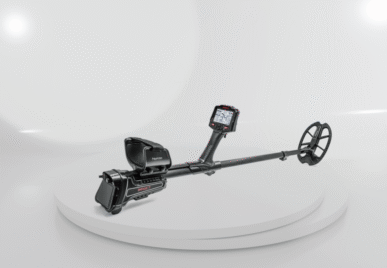
Comparing the top 10 metal detectors in 2026 requires more than ranking devices according to price or advertised depth. Every detector is built for a particular combination of targets, soil conditions, search environments, and operator experience.
A premium multi-frequency detector may be an excellent choice for coins, jewelry, relics, and beaches, while a pulse induction system is generally more suitable for natural gold or heavily mineralized ground. Professional treasure hunters may need large search coils, real-time target imaging, or 3D ground-scanning technology instead of a conventional audio detector.
This expert buyer guide ranks ten leading models across the most important detecting categories. The ranking considers versatility, technology, current manufacturer support, professional capability, field usability, and suitability for specific targets.
For a wider introduction to the main categories, read Best Metal Detector – Top Models Compared.
Top Detector Models Ranked
The following ranking identifies the strongest role for each detector instead of presenting one model as the best for every search.
| Rank | Metal Detector | Best Application | Main Technology | Experience Level |
|---|---|---|---|---|
| 1 | Minelab MANTICORE | Premium all-purpose detecting | Multi-IQ+ multi-frequency | Advanced |
| 2 | XP DEUS II | Lightweight relic and all-terrain searches | Fast Multi-Frequency | Intermediate to advanced |
| 3 | Minelab EQUINOX 900 | Coins, beaches, relics, and occasional gold | Multi-IQ multi-frequency | Intermediate to advanced |
| 4 | Nokta The LEGEND 2 | Best-value multi-purpose detecting | Simultaneous multi-frequency | Beginner to advanced |
| 5 | Garrett Vortex VX9 | Mid-range coins, relics, and beaches | Multi-frequency | Intermediate |
| 6 | Garrett Axiom | Gold prospecting in mineralized soil | Pulse induction | Intermediate to professional |
| 7 | Minelab GPZ 8000 | Premium natural-gold prospecting | GeoZVT gold technology | Professional |
| 8 | Lorenz Deepmax Z2 | Large and deeply buried metals | Pulse GBS and PST | Professional |
| 9 | Nokta Invenio Pro | Real-time target imaging | Smart VLF imaging | Professional |
| 10 | OKM eXp 7000 Pro Plus | 3D surveys, tunnels, treasure, and cavities | 3D scanning and VLF | Professional |
1. Minelab MANTICORE
The Minelab MANTICORE takes the first position because it provides a strong combination of versatility, target information, waterproof performance, and advanced controls among the Top 10 Metal Detectors.
Its Multi-IQ+ system processes multiple frequencies, while the two-dimensional identification map displays both conductive and ferrous target characteristics. This gives experienced operators more information than a conventional target-identification number.
The detector weighs approximately 1.3 kilograms, uses a collapsible carbon-fiber shaft, and is IP68 waterproof to 5 meters. These features make it suitable for parks, historical fields, dry beaches, wet sand, and underwater searching.
Best for:
- Coins and valuable jewelry.
- Historical relics.
- Wet and dry beaches.
- Underwater detecting.
- Iron-contaminated locations.
- Advanced target analysis.
Main advantages:
- Detailed two-dimensional target information.
- Strong target separation.
- Simultaneous multi-frequency technology.
- Waterproof construction.
- Lightweight carbon-fiber shaft.
- Several compatible coil options.
Main limitations:
- Premium investment category.
- Advanced controls require practice.
- Not designed for underground cavity imaging.
- Specialist gold prospectors may prefer pulse induction.
The MANTICORE is the strongest overall recommendation for experienced users seeking one premium conventional detector.
2. XP DEUS II
The XP DEUS II is top 10 metal detectors and earns second place because of its extremely lightweight construction, fast recovery, wireless design, and strong land and underwater capabilities.
Its Fast Multi-Frequency technology can process simultaneous frequencies, while users can also select from 49 individual frequencies between 4 and 45 kHz. This provides considerable flexibility for coins, relics, beaches, and different soil conditions.
The detector can be configured with wireless coils, headphones, and a remote control. XP specifies waterproof operation to 20 meters when the correct underwater configuration is used. The company also released its Version 4.1 software update in 2026, expanding audio options and accessory compatibility.
Best for:
- Historical relics.
- Coins near iron targets.
- Long detecting sessions.
- Beaches.
- Underwater searches.
- Experienced audio-based detecting.
Main advantages:
- Lightweight and well balanced.
- Wireless detector ecosystem.
- Fast target response.
- Simultaneous and selectable frequencies.
- Advanced audio customization.
- Continued software support.
Main limitations:
- Several package versions may complicate selection.
- Advanced menus require learning.
- Underwater use requires the appropriate accessories.
- It cannot replace a professional 3D scanner.
The DEUS II is especially suitable for relic hunters working in locations containing closely spaced iron and valuable targets.
3. Minelab EQUINOX 900
The Minelab EQUINOX 900 offers a balanced combination of advanced controls, gold capability, beach performance, and all-terrain versatility.
Its Multi-IQ technology transmits multiple frequencies simultaneously. It also offers selectable frequencies from 4 to 40 kHz, allowing experienced operators to adjust the detector for particular targets or search conditions.
The detector includes Park, Field, Beach, and Gold modes, with two custom profiles for each environment. Gold Mode adds sensitivity for small targets in mineralized soil, while the beach programs are designed for conductive salt conditions.
Best for:
- Coins and jewelry.
- Historical fields.
- Wet and dry beaches.
- Small natural-gold targets.
- Buyers upgrading from entry-level equipment.
- Users wanting customizable audio and discrimination.
Main advantages:
- Multi-IQ operation.
- Selectable single frequencies.
- Dedicated Gold and Beach modes.
- Detailed tone controls.
- Good balance between power and usability.
- Suitable for several target categories.
Main limitations:
- Less detailed visual identification than the MANTICORE.
- Requires practice to use advanced controls effectively.
- Gold Mode does not replace a specialist pulse detector.
- Not suitable for detecting empty underground cavities.
The EQUINOX 900 is one of the best choices for buyers who want advanced performance without moving into the highest premium category.
4. Nokta The LEGEND 2
The Nokta LEGEND 2 ranks highly because it provides simultaneous multi-frequency technology and broad search versatility within a competitive commercial category.
Nokta presents the LEGEND 2 as an updated multi-frequency platform with smarter software, improved power, and enhanced precision. It is designed for coin, relic, beach, and gold applications.
Best for:
- Coins and jewelry.
- Historical relics.
- Dry and wet beaches.
- Small-gold searches.
- Mineralized locations.
- Buyers wanting strong overall value.
Main advantages:
- Simultaneous multi-frequency operation.
- Search programs for different targets.
- Waterproof construction.
- Modern target-identification system.
- Suitable for new and experienced users.
- Several compatible coil options.
Main limitations:
- Audio settings require familiarization.
- Not designed for extreme-depth cache hunting.
- Cannot provide 3D underground images.
- Serious natural-gold projects may require pulse induction.
The LEGEND 2 is the best value-focused recommendation among the top ten models.
5. Garrett Vortex VX9
The Garrett Vortex VX9 is the top 10 metal detectors model in Garrett’s Vortex range. It is designed for buyers who want multi-frequency performance, detailed target information, strong beach capability, and an upgradeable platform.
Garrett highlights its advanced target separation, Multi-Salt performance, fast recovery, and waterproof construction. The Vortex range also allows compatible lower-tier models to be upgraded through firmware, giving buyers a potential development path.
Best for:
- Coins.
- Jewelry.
- Relics.
- Wet and dry beaches.
- Iron-contaminated locations.
- Intermediate detectorists.
Main advantages:
- Multi-frequency search capability.
- Three-tier target information.
- Multi-Salt beach performance.
- Adjustable recovery controls.
- Waterproof construction.
- Upgradeable detector platform.
Main limitations:
- Less specialized than premium gold detectors.
- Cannot detect non-metallic cavities.
- Advanced target information requires interpretation.
- Package availability may vary by market.
The VX9 is a practical mid-range choice for users who want modern functions and a clear upgrade route.
6. Garrett Axiom
The Garrett Axiom is the first specialist pulse induction detector in this ranking. It is designed primarily for natural-gold prospecting and difficult mineralized soil.
Garrett describes the Axiom as its most powerful pulse induction gold detector. Available configurations use mono and DD coils, allowing prospectors to adapt the system to small nuggets, larger targets, and different ground conditions.
Best for:
- Natural-gold nuggets.
- Mineralized goldfields.
- Black sand.
- Difficult desert terrain.
- Relics in challenging soil.
- Remote prospecting projects.
Main advantages:
- Pulse induction ground stability.
- Sensitivity to small gold.
- Different mono and DD coil options.
- Rechargeable power system.
- Wireless audio support.
- Lighter than many traditional PI detectors.
Main limitations:
- Less detailed discrimination than premium coin detectors.
- Not the best choice for modern parks.
- No 3D target visualization.
- Audio responses require experience.
Buyers comparing specialist gold systems can review gold detection equipment Comparison Top Rated Gold Detectors.
7. Minelab GPZ 8000
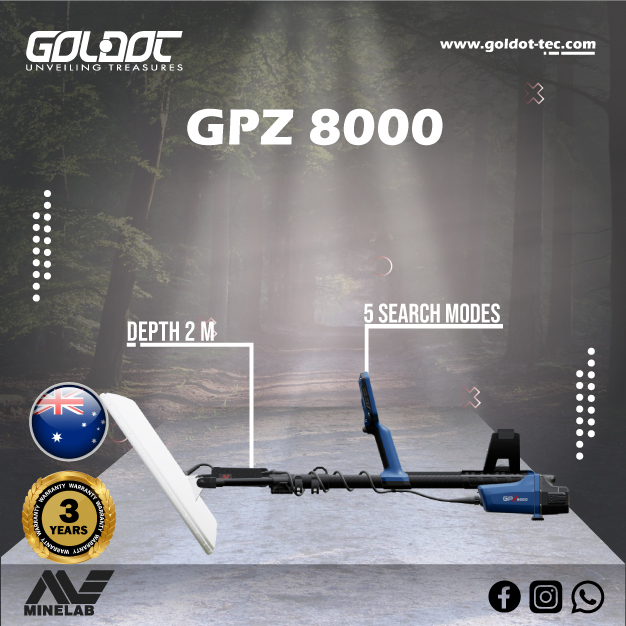
The Minelab GPZ 8000 is one of the most specialized devices in the top 10 metal detectors. It is intended for serious prospectors who prioritize natural-gold performance over general coin or treasure hunting.
Minelab describes the GPZ 8000 as its newest flagship gold detector. It uses GeoZVT technology and supports Z-Set concentric toroidal coils selected according to target size, terrain, and ground conditions. The detector also includes ground-optimized search modes and Echo Sonic Pro audio.
Best for:
- Professional gold prospecting.
- Small and large natural-gold targets.
- Mineralized and conductive soil.
- Remote goldfields.
- Buyers requiring a flagship specialist system.
Main advantages:
- Technology developed specifically for natural gold.
- Several coil configurations.
- Ground-focused search modes.
- Detailed layered audio.
- Suitable for serious prospecting campaigns.
Main limitations:
- Ultra-premium investment category.
- Heavier than conventional coin detectors.
- Not designed for cavity or tunnel detection.
- Excessive for general recreational detecting.
The GPZ 8000 is the premium gold recommendation, while the Axiom offers a more accessible pulse induction route.
For another specialist comparison, read Top Rated Gold Detectors Comparison Klayzer Max 2D vs KS-900.
8. Lorenz Deepmax Z2
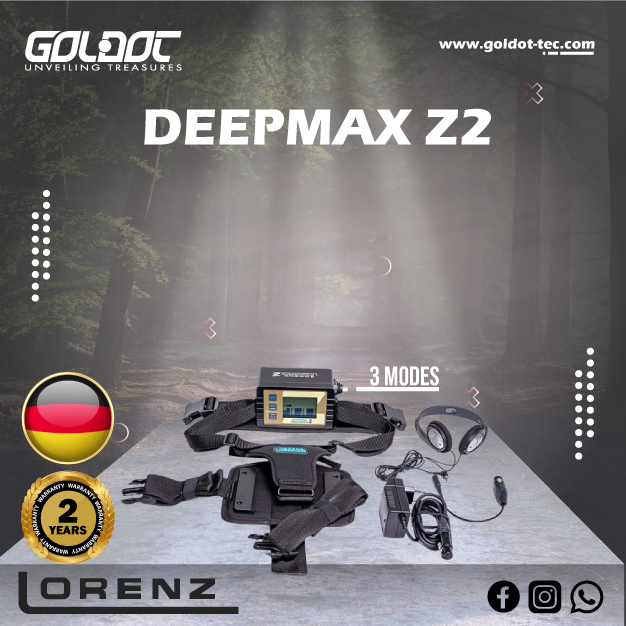
The Lorenz Deepmax Z2 is a professional deep-seeking detector designed for both small and large interchangeable coils.
It uses Pulse GBS and Pulse Shaping Technology. Large frame coils prioritize large metallic objects at depth, while smaller coils provide greater sensitivity to individual coins and natural-gold nuggets.
The manufacturer states that the Z2 is engineered for stable performance in saltwater, magnetic soil, and changing environmental conditions. Lorenz also introduced a revised display and software refinements for its 2025 Z2 version while retaining the established technical performance.
Best for:
- Large treasure caches.
- Deep metallic objects.
- Archaeological metals.
- Military relics.
- Open-area surveys.
- Ferrous and non-ferrous targets.
Main advantages:
- Strong large-target depth capability.
- Large selection of search coils.
- Stable pulse ground balancing.
- Metal-analysis functions.
- Optional survey-data mapping.
- Rugged professional construction.
Main limitations:
- Primarily detects metal rather than empty cavities.
- Large frame coils need open ground.
- Small objects require a suitable smaller coil.
- Full mapping requires additional hardware and software.
The Deepmax Z2 is the strongest recommendation in this list for large and deeply buried metallic targets.
9. Nokta Invenio Pro
The Nokta Invenio Pro is a professional smart imaging detector. It tracks the movement of the search coil and combines positional information with detected signals.
The system displays an estimated target shape, position, depth, dimensions, and discrimination. It can also identify ground anomalies and possible cavities, providing more information than an ordinary audio detector for users comparing the Top 10 Metal Detectors.
Best for:
- Professional treasure investigation.
- Target-shape analysis.
- Depth and dimension estimation.
- Metal discrimination.
- Ground-anomaly searches.
- Pre-excavation evaluation.
Main advantages:
- Real-time target visualization.
- Estimated dimensions and location.
- Ferrous and non-ferrous analysis.
- Ground-anomaly detection.
- More target information before excavation.
Main limitations:
- Requires controlled scanning technique.
- Images are interpretations, not underground photographs.
- Ground conditions can affect the result.
- More complex than conventional detectors.
The Invenio Pro is recommended when visual target information is more important than fast recreational searching.
10. OKM eXp 7000 Pro Plus
The OKM eXp 7000 Pro Plus completes the ranking as the most advanced professional underground survey platform included in this guide.
It is placed tenth because it is highly specialized, not because it has fewer capabilities. Its price, training requirements, and professional workflow make it unsuitable for most recreational buyers.
The system provides eight operating modes, including 3D Ground Scan, 3D VLF Scan, VLF Search, Magnetometer, Mineral Scan, Tunnel Scan, Live Scan, and Pinpointer. Scan data can be displayed and analyzed as three-dimensional underground visualizations.
Best for:
- Professional treasure surveys.
- Tunnels and underground voids.
- Large buried objects.
- Natural-gold mineral zones.
- Archaeological investigations.
- Detailed pre-excavation analysis.
Main advantages:
- Eight specialist operating modes.
- 3D ground visualization.
- VLF metal detection.
- Tunnel and cavity investigation.
- Mineral Scan for natural gold areas.
- Real-time underground feedback.
Main limitations:
- Ultra-premium professional investment.
- Requires detailed field training.
- Scan quality depends on operator consistency.
- Unnecessary for ordinary coins and jewelry.
The eXp 7000 Pro Plus is the strongest professional recommendation when a project requires metals, minerals, cavities, and 3D survey data within one system.
Key Detector Technologies
Understanding technology is more useful than choosing a detector according to its ranking alone.
Multi-Frequency Detection
Multi-frequency detectors process more than one frequency during the search.
They are generally suitable for:
- Coins with different conductivity levels.
- Gold and silver jewelry.
- Historical relics.
- Wet saltwater beaches.
- Locations with changing ground conditions.
- Buyers wanting one versatile detector.
The MANTICORE, DEUS II, EQUINOX 900, LEGEND 2, and Vortex VX9 belong to this broad category.
Pulse Induction Detection
Pulse induction systems transmit powerful magnetic pulses and measure target responses after each pulse.
They are commonly preferred for:
- Natural gold.
- Mineralized soil.
- Black sand.
- Saltwater conditions.
- Large deep metal.
- Difficult ground where VLF becomes unstable.
The Garrett Axiom and Lorenz Deepmax Z2 use different forms of pulse technology for different professional applications.
A detailed technology comparison is available in the ULTIMATE GUIDE TO METAL DETECTION.
3D Ground Scanning
A 3D scanner records measurements across a structured field and converts them into a graphical underground representation.
It may help investigate:
- Large buried metals.
- Treasure containers.
- Tunnels.
- Chambers.
- Graves.
- Cavities.
- Mineralized zones.
The final image is based on measured data. It is not a direct photograph of the buried object.
Smart Target Imaging
Smart imaging systems track the coil’s movement and combine it with signal data to estimate the target’s shape and dimensions.
This technology can reduce unnecessary excavation, but its accuracy still depends on scanning technique, soil conditions, and target complexity.
Depth and Accuracy Comparison
No responsible list of the top ten metal detectors should provide one guaranteed depth for every device.
Practical depth depends on:
| Depth Factor | Effect on Results |
|---|---|
| Target size | Large objects produce stronger responses |
| Metal composition | Conductivity changes the detector response |
| Target orientation | Position may strengthen or weaken the signal |
| Coil size | Large coils favor substantial deep objects |
| Soil mineralization | Strong ground signals can reduce stability |
| Search frequency | Different frequencies favor different targets |
| Nearby iron | Shallow waste can mask valuable targets |
| Moisture and salt | Conductive ground affects unsuitable detectors |
| Device settings | Excessive sensitivity may create false signals |
| Operator technique | Correct movement improves repeatability |
A large treasure chest can be detected much deeper than a single coin or small nugget. Buyers should therefore compare detectors using a target similar to the object they actually expect to find.
Best Detectors by Use
| Search Application | First Recommendation | Alternative |
|---|---|---|
| Premium general detecting | Minelab MANTICORE | XP DEUS II |
| Lightweight relic hunting | XP DEUS II | Nokta LEGEND 2 |
| Balanced all-terrain use | Minelab EQUINOX 900 | Garrett Vortex VX9 |
| Best commercial value | Nokta LEGEND 2 | Garrett Vortex VX9 |
| Natural gold | Minelab GPZ 8000 | Garrett Axiom |
| Mineralized ground | Garrett Axiom | Minelab GPZ 8000 |
| Large deep metal | Lorenz Deepmax Z2 | OKM eXp 7000 |
| Real-time target imaging | Nokta Invenio Pro | OKM eXp 7000 |
| Tunnels and cavities | OKM eXp 7000 | Nokta Invenio Pro |
| Coins and beaches | Minelab MANTICORE | EQUINOX 900 |
Beginners comparing introductory treasure systems can also read Best Entry Level Metal Detector Titan X13 vs Titan GER-1000.
Price and Value Comparison
Exact prices vary according to the package, country, coils, software, training, shipping, and taxes. The following categories provide a safer commercial comparison.
| Detector | Investment Category | Strongest Value |
|---|---|---|
| MANTICORE | Premium | Advanced all-purpose detection |
| DEUS II | Premium | Lightweight wireless performance |
| EQUINOX 900 | Upper mid-range | Balanced technology and control |
| LEGEND 2 | Mid-range | Multi-purpose commercial value |
| Vortex VX9 | Mid-range | Features and upgrade potential |
| Garrett Axiom | Premium specialist | Natural gold and difficult soil |
| GPZ 8000 | Ultra-premium specialist | Flagship gold prospecting |
| Deepmax Z2 | Professional | Large deep metallic objects |
| Invenio Pro | High professional | Smart target imaging |
| eXp 7000 Pro Plus | Ultra-professional | Full 3D underground surveys |
Buyers should compare the complete package, including:
- Standard and optional search coils.
- Headphones.
- Batteries and chargers.
- Pinpointer.
- Software licenses.
- Carrying cases.
- Training.
- Shipping.
- Warranty.
- Technical support.
Top 10 Pros and Cons
| Detector | Main Advantage | Main Limitation |
|---|---|---|
| MANTICORE | Detailed identification and versatility | Premium price and advanced controls |
| DEUS II | Lightweight, wireless, and fast | Menu and package complexity |
| EQUINOX 900 | Balanced all-terrain performance | Less target detail than MANTICORE |
| LEGEND 2 | Strong functionality for its category | Not designed for extreme-depth treasure |
| Vortex VX9 | Upgradeable and beach capable | Limited professional imaging |
| Garrett Axiom | PI stability and gold sensitivity | Less detailed discrimination |
| GPZ 8000 | Flagship natural-gold specialization | High cost and specialized use |
| Deepmax Z2 | Large-target depth and coil flexibility | Primarily metal focused |
| Invenio Pro | Shape and dimension estimation | Requires structured scanning |
| eXp 7000 Pro Plus | Multiple scanning and detection technologies | High training and investment requirements |
How to Choose Your Detector
Choose the Main Target
Start by selecting the primary target:
- Coins and jewelry.
- Historical relics.
- Natural gold.
- Large treasure caches.
- Beach targets.
- Underground cavities.
- Tunnels and chambers.
Do not purchase a professional scanner when the main goal is recreational coin hunting. Similarly, do not expect a lightweight park detector to replace a large-coil deep system.
Match the Ground
Consider whether the location contains:
- Heavy mineralization.
- Wet saltwater sand.
- Black sand.
- Volcanic rock.
- Agricultural soil.
- Desert terrain.
- Dense iron contamination.
- Open ground suitable for frame coils.
Match Your Experience
Beginners normally benefit from automatic settings and simple identification.
Professional systems may require:
- Manual ground adjustment.
- Custom audio.
- Controlled scan lines.
- Software analysis.
- Target mapping.
- Advanced coil selection.
- Formal field training.
Check the Complete Package
A quotation should clearly state which accessories are included. Two offers for the same detector may contain different coils, software versions, training services, and warranty conditions.
Common Buying Mistakes
Choosing Only by Ranking
The first detector in a general ranking may not match a specialist gold or cavity project.
Trusting One Depth Number
Depth must be linked to a target size, coil, soil type, and test conditions.
Buying the Largest Coil
Large coils improve performance on large targets but can reduce sensitivity to small coins and nuggets.
Confusing Metal and Cavity Detection
A conventional metal detector responds to conductive objects. An empty tunnel may require a 3D scanner or another geophysical technology.
Expecting Photographic Images
Imaging systems create graphical interpretations of measured signals rather than photographs.
Ignoring Weight
A detector must remain comfortable and balanced during the expected search period.
Buying Without Support
Advanced devices may require software setup, firmware updates, training, and scan-analysis assistance.
Ignoring Local Regulations
Metal detecting, prospecting, excavation, and archaeological searches may require permission. Buyers should confirm local regulations before searching.
Final Top 10 Recommendation
The top 10 metal detectors represent different forms of performance rather than one universal winner.
Choose the Minelab MANTICORE for premium general detecting, the XP DEUS II for lightweight relic hunting, or the EQUINOX 900 for balanced all-terrain use.
The Nokta LEGEND 2 offers the best general value, while the Garrett Vortex VX9 provides an attractive upgradeable platform.
For natural gold, choose the Garrett Axiom or move to the specialist Minelab GPZ 8000 for a premium professional project.
The Lorenz Deepmax Z2 is the strongest recommendation for large deep metallic objects. The Nokta Invenio Pro is suitable for real-time target imaging, while the OKM eXp 7000 Pro Plus is recommended for advanced 3D surveys, tunnels, cavities, minerals, and complex underground investigations.
Before ordering, provide Goldot-Tec with details about the target, soil, country, required applications, and experience level. This allows the team to recommend the correct detector and package instead of selecting a device from ranking position alone.
Frequently Asked Questions
What are the top 10 metal detectors in 2026?
The list includes the Minelab MANTICORE, XP DEUS II, Minelab EQUINOX 900, Nokta LEGEND 2, Garrett Vortex VX9, Garrett Axiom, Minelab GPZ 8000, Lorenz Deepmax Z2, Nokta Invenio Pro, and OKM eXp 7000 Pro Plus.
What is the best detector in the top ten?
The MANTICORE is the best overall conventional detector in this ranking. Specialist projects may require the GPZ 8000 for natural gold, Deepmax Z2 for large deep metal, or eXp 7000 for 3D surveys.
Which top metal detector is best for beginners?
The Nokta LEGEND 2 provides a suitable balance between automatic programs and advanced functions. Beginners should start with standard settings before adjusting audio, recovery speed, or discrimination.
Which detector is best for natural gold?
The Minelab GPZ 8000 is the premium specialist recommendation, while the Garrett Axiom offers a lighter pulse induction alternative.
Which metal detector is best for deep treasure?
The Lorenz Deepmax Z2 is suitable for large metallic treasure targets. Projects involving cavities or underground structures may require the OKM eXp 7000 Pro Plus.
Which top detector is best for beaches?
The MANTICORE, DEUS II, EQUINOX 900, LEGEND 2, and Vortex VX9 all offer suitable beach capabilities. Confirm waterproof limits and saltwater settings before use.
Can one metal detector find coins, gold, treasure, and tunnels?
No detector performs every task equally. Multi-frequency detectors cover coins and jewelry, pulse detectors specialize in gold or deep metal, and 3D scanners are more suitable for tunnels and cavities.
Are professional 3D detectors more accurate?
They provide additional information about underground anomalies, but accuracy depends on scanning technique, soil conditions, software settings, and operator experience.