

Choosing from the Top 5 Metal Detectors for US use should start with your real search goal. Instead of buying from the longest feature list or an unsupported depth claim, identify the target, terrain, soil conditions, search style, and operator experience. These factors quickly remove models that do not fit your project, whether you are seeking coins at an authorized site, natural gold in mineralized ground, or underground survey information.
For example, a detector for Arizona gold prospecting may need very different capabilities from one used on Florida beaches. Likewise, relic hunting, deep metallic targets, and professional underground scanning create different buying priorities. As a result, one detector cannot serve every buyer equally well.
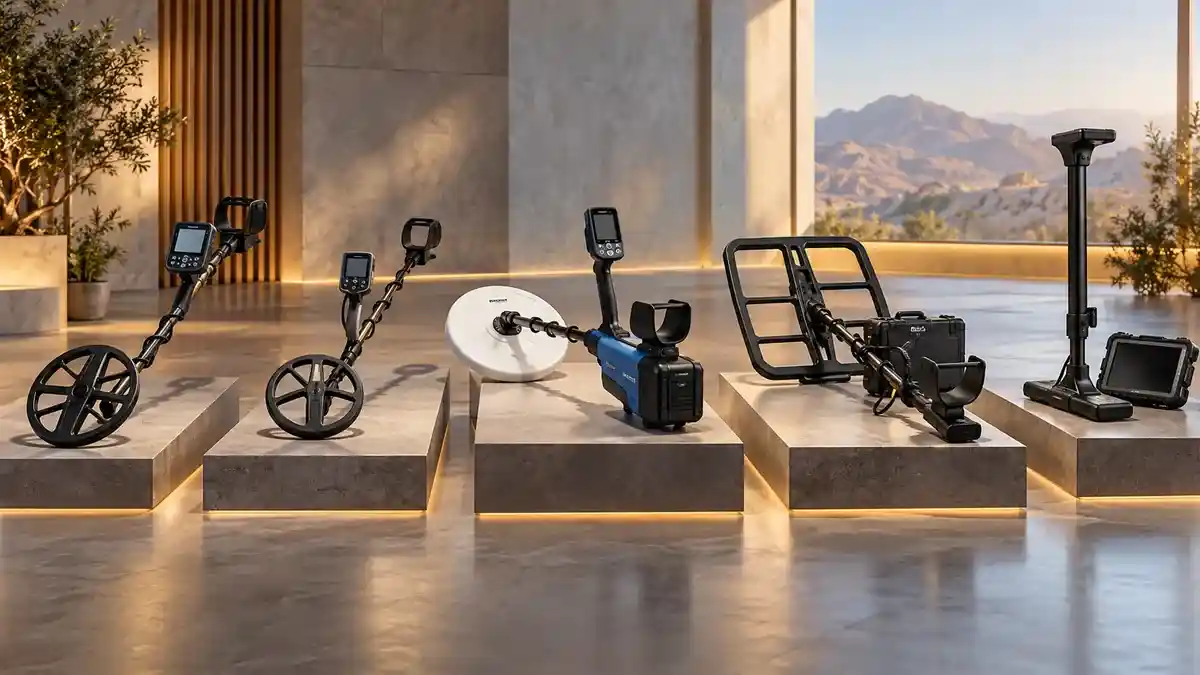
This guide keeps the shortlist focused on five systems. They are the Minelab MANTICORE, XP DEUS II, Minelab GPZ 8000, Lorenz Deepmax Z2, and OKM eXp 7000 Pro Plus. More importantly, each model represents a different purchasing role.
The goal is simple. First, understand what each detector does best. Next, decide who should buy it and when another system makes more sense. Finally, compare package details before you order. This approach helps US buyers avoid paying for functions they may never use.
If you need more alternatives after choosing the correct technology, compare the wider top 10 shortlist. That guide expands the model list. In contrast, this article stays focused on a practical five-model buying shortlist and a clear US package decision.
Five Detector Roles for US Buyers
The easiest way to compare the Top 5 Metal Detectors is to give each model one clear role. Therefore, start with the role that matches most of your searches.
| Detector | Main Buying Role | Best Match | When Another Detector Makes More Sense |
|---|---|---|---|
| Minelab MANTICORE | Premium all-purpose detecting | Coins, jewelry, relics, beaches, target identification | Choose a specialist gold or 3D survey system when natural nuggets or voids are your primary objective |
| XP DEUS II | Lightweight wireless field detecting | Relics, iron-heavy sites, long sessions, beach use | Consider a dedicated deep-metal or gold-prospecting system for a specialist project |
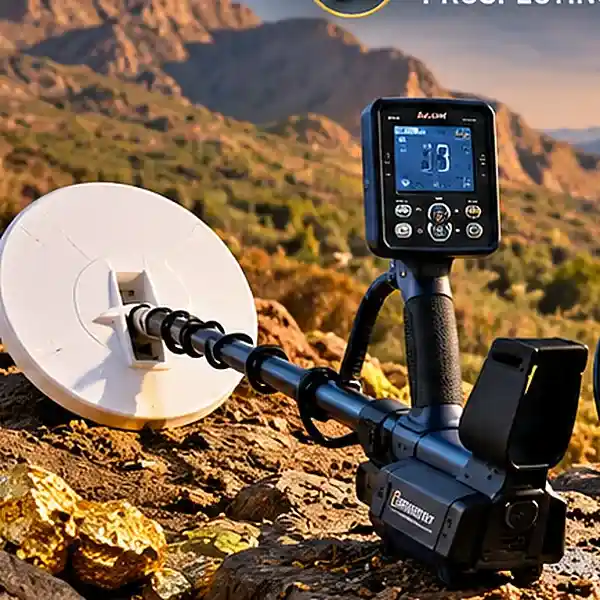
| Minelab GPZ 8000 | Specialist natural-gold prospecting | Serious nugget hunting and difficult goldfield ground | Choose conventional multi-frequency equipment for coins and beach jewelry |
| Lorenz Deepmax Z2 | Professional deep metallic-target searching | Large metallic targets and flexible coil setups | Choose a smaller-target detector or ground scanner for coins or nonmetallic cavities |
| OKM eXp 7000 Pro Plus | Multi-mode 3D underground investigation | Tunnels, cavities, structures, and complex surveys | Choose a conventional detector for fast recreational coin recovery |
This shortlist does not name one universal winner. Instead, it gives each detector a job. For example, a park hunter does not need a professional 3D survey workflow. Meanwhile, a serious gold prospector may not value the same target-identification features as a coin hunter.
A large-target operator also needs a different coil strategy from someone searching for small jewelry. Therefore, use the table as a first filter. Afterwards, compare package contents, controls, coil choices, portability, training needs, warranty support, and current availability.
The roles are not performance scores. Multi-frequency conventional detecting, GeoZVT prospecting, Pulse GBS deep metal detection, and 3D ground scanning answer different questions. None can guarantee detection depth or recovery, and survey graphics should never be treated as photographs of buried targets.
Minelab MANTICORE for Premium All-Purpose Use
Within the Top 5 Metal Detectors, Minelab MANTICORE fits buyers who want one advanced conventional detector for several common US search environments. In particular, it focuses on versatility, target information, and a broad range of everyday detecting tasks.
Its Multi-IQ+ platform supports simultaneous multi-frequency operation. In addition, the detector provides a detailed 2D target-identification display. Together, these features give experienced users more information before they dig. Compare MANTICORE all-purpose buying options and ask which search coil and audio components are included in the current package.
That extra information matters in mixed-target locations. Parks, old home sites, fields, and beaches can contain useful targets beside unwanted metal. Therefore, stronger target information can help the operator decide which signals deserve attention.
MANTICORE also suits buyers who change locations often. For example, you may search a park during one trip and wet sand on another. In that case, one adaptable detector can make the workflow easier.
Why US Buyers Consider MANTICORE
Versatility is the main buying reason. The detector can cover coins, jewelry, relics, beach targets, and other conventional goals. Moreover, it offers strong control over target behavior and search settings.
Portability adds another advantage. Compared with many large professional systems, MANTICORE is easier to carry through long conventional sessions. Consequently, it can suit buyers who walk wide areas or visit several sites in one day.
Target identification is another key factor. Buyers who dislike unnecessary digging may value the extra information on the display. However, experienced users should combine that information with audio and field behavior.
When MANTICORE Is the Wrong Choice
Do not buy MANTICORE simply because it appears near the top of a detector list. After all, it does not replace every specialist system.
A serious natural-gold project can justify a dedicated gold detector. Likewise, large deep metallic targets may call for another technology. If you need underground void investigation, a professional scanning workflow may fit better.
Therefore, choose MANTICORE when conventional metal detection is your main activity. It makes the most sense when you want versatility, detailed target information, and one premium platform.
XP DEUS II for Mobile Relic and Beach Searching
On this Top 5 Metal Detectors shortlist, XP DEUS II serves buyers who value low weight, fast field movement, wireless operation, and flexible search programs. Although it overlaps with MANTICORE, the user experience feels different.
The detector uses Fast Multi Frequency technology. In addition, its wireless ecosystem reduces the need for traditional cables between key components. As a result, the setup feels clean and mobile in the field.
Relic hunters often value those traits. Large fields, woods, old properties, and iron-heavy sites can require many hours of movement. Therefore, lower weight can reduce fatigue during those sessions.
Low Weight as a Buying Advantage
Weight should influence your buying decision. A machine that feels comfortable for ten minutes can feel different after several hours.
Because a lighter setup reduces strain, the user may maintain steadier coil control. It can also make direction changes easier around dense targets. For this reason, relic hunters may notice the advantage quickly.
Mobility matters outside relic hunting too. For example, frequent travelers may prefer a detector that packs and carries easily. Likewise, long beach walks can reward a lighter setup.
Wireless Workflow and Package Choice
DEUS II uses a modular wireless approach. Compatible coils, control components, headphones, and other parts can work together with fewer conventional cables.
However, every DEUS II package does not contain the same equipment. Therefore, buyers should check the exact configuration before ordering. One package may include a different coil, controller, or headphone setup from another.
Ask Goldot-Tec to confirm the included components. In addition, ask which optional accessories match your normal searches. This step can prevent you from paying for equipment you will not use.
When DEUS II Makes More Sense
Choose DEUS II when lightweight mobility sits high on your priority list. It also suits buyers who want fast target recovery and flexible audio.
Relic hunters can gain particular value from this setup. Meanwhile, beach users may prefer the low weight during long shoreline searches.
However, DEUS II remains a conventional detector. It does not replace a professional deep frame-coil system. Likewise, it does not provide a dedicated 3D ground-scanning workflow.
Minelab GPZ 8000 for Serious Natural-Gold Buyers
Among the Top 5 Metal Detectors, Minelab GPZ 8000 has a much narrower buying role. Specifically, it targets serious natural-gold prospecting.
That focus changes the comparison. A gold prospector cares about ground behavior, sensitivity, coil control, mineralization, and subtle target responses. In contrast, a coin hunter may care more about discrimination and visual identification.
GPZ 8000 uses GeoZVT technology. It also works with Z-Set coil options designed for different prospecting needs. Therefore, the system belongs in a specialist category.
Goldfield Performance Comes First
Natural-gold environments can create difficult ground conditions. For example, mineralization may affect stability and signal interpretation. Small nuggets can also create faint responses.
Because of that, usable field performance depends on more than raw depth. Coil control matters. Ground settings also matter. In addition, search speed can change how well the operator hears subtle signals.
The operator must learn to separate repeatable target responses from unstable ground noise. Consequently, training and practice form part of the purchase.
Arizona Gold Prospecting Scenario
Arizona provides a useful US example. A buyer may work dry ground, rocky terrain, mineralized areas, and long prospecting sessions.
In that scenario, a specialist gold detector can make more sense than a general beach or coin machine. However, the key point is the search goal, not the state name alone.
Not every Arizona detectorist needs GPZ 8000. For instance, a person searching parks or modern jewelry has a different requirement. On the other hand, a serious natural-gold prospector should compare systems built for prospecting.
Buyers can review the GPZ 8000 natural-gold package and confirm the actual Z-Set coil, battery equipment, carrying accessories, and support before ordering. The official single-coil pack includes Z18; other coils should not be assumed to come with every offer.
When Another Detector Makes More Sense
Do not choose GPZ 8000 only because gold appears in your target description. After all, gold jewelry on a beach creates a different search problem.
A Florida ring hunter may gain more value from a premium multi-frequency detector. Meanwhile, a user who searches large buried containers may need a professional deep-target system.
Therefore, choose GPZ 8000 when natural gold is the main goal. The specialist design should match most of your field work.
Lorenz Deepmax Z2 for Large Metallic Targets
Lorenz Deepmax Z2 suits buyers comparing the Top 5 Metal Detectors for substantial metallic targets. Therefore, it serves a very different buyer from a lightweight coin detector.
The system uses Pulse GBS technology and supports several coil configurations. In particular, larger or frame-style setups can serve projects where target size and coverage matter most.
Target Size Should Drive Coil Choice
Start with the expected target. A coin, a small relic, and a large buried metallic object create different detection problems.
Larger coils can make sense for substantial targets in open terrain. In contrast, smaller coils can provide easier control in restricted areas. They may also suit a different target scale.
The largest coil is not automatically the best coil. Therefore, choose the coil that fits your project.
Tell Goldot-Tec the approximate target size before ordering. Also explain the terrain and available search space. As a result, the team can discuss a more suitable setup.
Professional Deep-Target Use
Deepmax Z2 can fit professional treasure, relic, and large-object searches. In addition, it may support more structured workflows with compatible accessories.
The main buying advantage comes from specialization. Therefore, buyers who need a deep metallic-target platform can choose a setup around their search goal.
However, Deepmax Z2 remains a metal-detection system. An empty cavity or tunnel may require another investigation method.
US buyers can review the Lorenz Z2 deep-target configuration and ask Goldot-Tec to confirm the included coil or frame, charging equipment, and handling requirements.
When Deepmax Z2 Is Not the Best Fit
A weekend coin hunter may find this platform unnecessarily specialized. Likewise, a small-gold prospector may prefer a system built around nugget sensitivity.
Therefore, buy Deepmax Z2 when large metallic targets justify the platform. Do not choose it only because you want a deep-search product.
OKM eXp 7000 Pro Plus for Professional 3D Surveys
The OKM eXp 7000 Pro Plus serves a different kind of buyer in this Top 5 Metal Detectors guide. Instead of focusing only on audio detection, it combines several underground investigation modes.
Its workflow can include 3D Ground Scan, VLF-related detection, Magnetometer, Mineral Scan, Tunnel Scan, Live Scan, and Pinpointer functions. As a result, the system can support more complex professional projects.
Why 3D Scanning Changes the Buying Decision
A conventional detector responds to metallic targets. In contrast, a professional ground scanner may investigate other underground anomalies through structured measurements, which still require interpretation.
The operator collects measurements across the search area. Afterwards, software converts those measurements into a visual representation.
However, that result is not an underground photograph. It represents measured differences. Therefore, the user must interpret those differences carefully.
Tunnels, Cavities, and Complex Surveys
An empty tunnel may contain little useful metal. Consequently, a normal metal detector can become the wrong tool.
A suitable professional scanning system can support investigations involving suspected voids, chambers, disturbed ground, or other subsurface anomalies. For this reason, the eXp 7000 Pro Plus occupies a separate role in this shortlist.
Even so, the operator should confirm anomalies. One scan should not become automatic proof of a tunnel or treasure.
Training Matters Before Purchase
Professional scanning rewards consistent technique. First, the operator must control scan direction. Next, walking speed and sensor position must remain steady. Finally, line spacing should match the chosen workflow.
Software analysis also requires practice. Therefore, poor data collection can reduce the value of an advanced system.
Buyers should include training in the purchase decision. After all, a powerful scanner offers little advantage if the user cannot collect repeatable data.
You can review the eXp 7000 Professional Plus survey package and ask Goldot-Tec to confirm the sensors, Visualizer 3D Studio access, software compatibility, and practical training.
Arizona Gold or Florida Beach Searches
US buyers need different detectors because search conditions vary. These are hypothetical authorized-site scenarios, not claims about finds or Goldot-Tec branches. Check permissions before detecting.
Arizona Natural-Gold Searches
An Arizona natural-gold project may involve rocky ground, mineralization, and long sessions. GPZ 8000 can fit serious prospecting, but the exact site—not the state alone—determines the package.
- Target: Define the expected nugget size and whether natural gold is the main goal.
- Ground: Describe mineralization, rocks, interference, and vegetation.
- Package: Choose the Z-Set coil for terrain and target size; confirm batteries, harness, and transport.
A compact coil may improve handling in confined terrain, while another configuration may favor open areas. Not every Arizona detectorist needs GPZ 8000. A buyer searching parks or modern jewelry has different requirements.
Florida Beach Searches
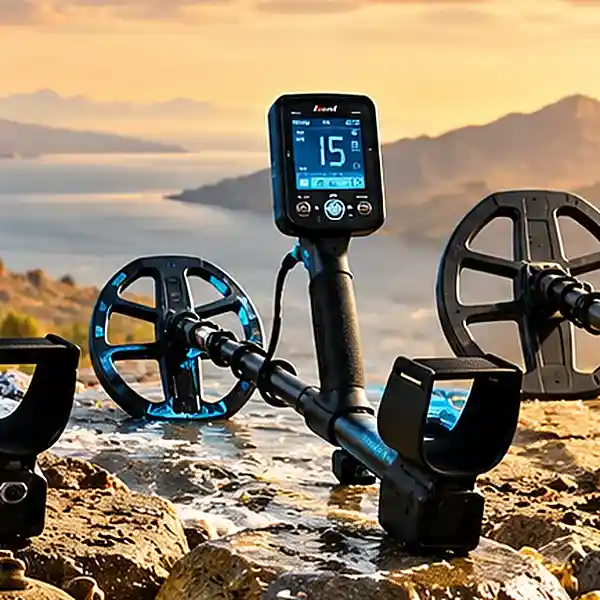
Florida creates another set of priorities. MANTICORE and DEUS II can fit beach hunting when correctly configured, but their features serve different preferences.
- Target: Identify coins or jewelry rather than natural nuggets.
- Ground: Distinguish dry sand, wet salt sand, surf, and shallow water; verify local detecting rules.
- Package: Compare coil choice, waterproof audio, charging, carrying comfort, and exact submersion limits.
Both models support conventional target recovery, but waterproof ratings do not guarantee salt stability or accessory compatibility. Ask Goldot-Tec to confirm the appropriate water-search setup and delivery options for your state.
Practical Selection Summary for US Buyers
A short, repeatable decision process makes the Top 5 Metal Detectors useful as a buying shortlist rather than another ranking. Start with your regular searches, not a rare future project.
Step 1 — Start With the Main Target
Choose your main target first. Coins, jewelry, and conventional relics point toward MANTICORE or DEUS II. Natural gold suggests GPZ 8000; substantial metallic objects lead toward Deepmax Z2; possible tunnels or cavities may justify eXp 7000 Pro Plus.
Step 2 — Match the Detector to the Terrain
Ground conditions change performance and handling. Consider mineralization, salt, iron trash, rocky access, and room for a frame or survey grid. Two buyers with similar targets can still need different coils and equipment.
Step 3 — Decide How Much Target Information You Need
Coin and jewelry hunters may value detailed Target ID and audio. Large-target teams may prioritize repeatable metallic responses and coverage rather than coin-style discrimination. Choose the response information that actually helps your decision.
Step 4 — Decide Whether You Need Imaging
Conventional detectors respond to metal; a 3D scanner collects structured measurements of underground anomalies. Survey images are interpretations, not photographs, and require confirmation. Do not add imaging unless the project needs that workflow.
Step 5 — Match the Machine to Your Experience
Advanced conventional controls, specialist gold audio, deep-target coil configuration, and survey software have different learning curves. Choose equipment you can operate consistently and include training when needed. Then confirm the final package and support with Goldot-Tec.
Top 5 vs Top 10 Metal Detectors
This Top 5 Metal Detectors guide has one job. It should shorten the buying decision.
The article groups five systems by role. Therefore, it does not repeat every model in the wider market.
Use this shortlist first. Then identify the correct technology category.
Afterwards, use the full Top 10 metal detector comparison when you need more choices inside that category.
For example, a multi-frequency buyer may want alternatives to MANTICORE and DEUS II. A gold prospector may want other specialist systems. Likewise, a survey buyer may want to compare more imaging platforms.
The two articles should work together. This page narrows the role, while the Top 10 page expands the model list.
Check the Package Before You Order
The model name does not tell you everything you will receive. Therefore, confirm the full package before payment. Use a written package comparison that identifies the included component, any optional upgrades, and who provides support. The examples below explain what matters for each detector; use the final checklist for information you should send to Goldot-Tec.
Packages can differ by coil, headphones, charging equipment, cases, sensors, software components, or other accessories. As a result, two listings with the same model name may serve different users.
For MANTICORE, ask which coil and audio equipment come with the package. In addition, confirm any optional coils that suit your target.
For DEUS II, check the controller, headphones, coil, and charging setup. Again, do not assume every listing uses the same configuration.
GPZ 8000 buyers should confirm the available coil package. Because terrain and target size vary, the right setup depends on prospecting goals.
Deepmax Z2 buyers should discuss coil size and target scale. Likewise, eXp 7000 Pro Plus buyers should confirm the scanning hardware and software-related items.
This package check turns a product name into a real buying decision. Moreover, it reduces the chance of paying for accessories you do not need.
Common Metal Detector Buying Mistakes
These errors can make a capable detector unsuitable for the project.
Choosing the First Model in a Ranking
The first model in a list is not automatically right. MANTICORE suits advanced conventional use, GPZ 8000 targets natural gold, and eXp 7000 Pro Plus belongs to structured surveys. Buy for the role.
Believing One Universal Depth Number
No single depth figure describes every target. Size, metal composition, orientation, mineralization, moisture, interference, coil choice, and operator technique affect usable response. Ask for evidence with comparable targets and test conditions.
Automatically Selecting the Largest Coil
Large coils may help cover open ground or substantial metal but can be awkward around rocks and vegetation. Small targets and iron contamination may favor a different configuration. Choose the coil for your site.
Confusing Natural Gold With Gold Jewelry
Natural nuggets and manufactured jewelry require different approaches. A beach ring hunter may prefer multi-frequency conventional detection; a prospector facing difficult ground may need a specialist gold platform.
Paying for Imaging You Do Not Need
Professional 3D scanning can be valuable for underground anomalies, but routine coins and jewelry rarely justify a controlled survey workflow. More complex does not always mean more useful.
Ordering Without Confirming the Package
A detector may be advertised with different coils, audio equipment, sensors, chargers, or software. Request a written inventory and clarify optional items, warranty, support, and availability before payment.
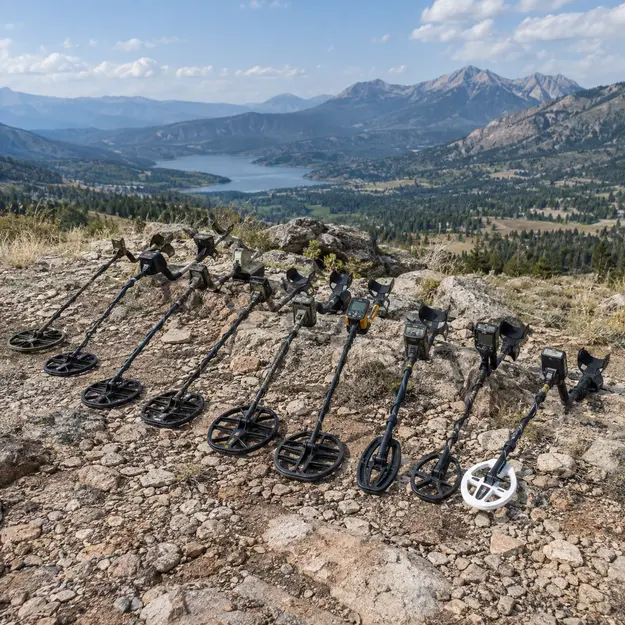
Build the Right Detector Package for Your Search
A complete purchase should follow your field plan. Therefore, package selection should come after target selection.
A park or beach hunter may need a conventional detector, suitable coil, headphones, charging equipment, and a practical carrying setup.
A relic hunter may place more value on low weight and fast recovery. In addition, extra coil options can matter when site conditions change.
A gold prospector may prioritize specialist coils and stable ground performance. Meanwhile, a deep-target operator may need a larger coil or frame configuration.
A 3D survey user may need sensors, software, control hardware, and structured training. Consequently, that buyer should check more than the detector unit alone.
Tell Goldot-Tec how you plan to use the detector. Then the team can discuss a package around your work instead of a generic accessory list.
A Simple US Buying Checklist
Before you order, gather the following facts so the recommendation and written quote match your actual fieldwork:
- Target and scale: What will you search for most often, and how large might the target be?
- Authorized site: Will you search parks, fields, beaches, desert terrain, rocky areas, or a professional survey location, and is the activity permitted?
- Ground and water: Do you expect mineralization, wet salt sand, shallow water, iron contamination, or electrical interference?
- Field routine: How long will a normal session last, and will you transport the detector on foot or by vehicle?
- Detection method: Do you need discrimination and Target ID, specialist nugget detection, frame coils for large metal, or actual 3D ground surveying?
- Operator training: What experience do you have with advanced controls, ground balancing, PI signals, or analysis software?
- Package requirements: Which coil, audio equipment, power system, sensor, software, transport accessories, warranty and training must be included?
- US order details: What is your delivery state, and which items must Goldot-Tec confirm as currently available?
Once you answer these questions, the shortlist becomes much easier to manage. Therefore, use the answers when you contact Goldot-Tec.
Frequently Asked Questions
Which of the Top 5 Metal Detectors suits my experience level?
MANTICORE and DEUS II suit buyers willing to learn advanced conventional controls. GPZ 8000, Deepmax Z2, and eXp 7000 Pro Plus make sense when you have a defined specialist goal and the training to operate the chosen system.
Should target type decide which detector I buy?
Yes. Coins, jewelry, and relics point toward conventional detection; natural nuggets favor prospecting equipment; large buried metallic targets suggest a deep-metal system. Tunnels and cavities may require structured ground surveys. Terrain and operator experience refine the choice.
How should I choose the right detector package?
Tell Goldot-Tec the target, ground, expected target size, your experience, and US delivery state. Confirm the included coil, audio, power equipment, software or sensors, warranty, training, availability, and delivery options in writing.
Choose Your US Detector with Goldot-Tec
The Top 5 Metal Detectors serve different purchasing needs. MANTICORE offers premium conventional versatility and detailed target information; DEUS II emphasizes a lightweight wireless workflow for relics and beaches. GPZ 8000 specializes in natural-gold prospecting. Lorenz Deepmax Z2 fits substantial metallic targets, while OKM eXp 7000 Pro Plus supports structured underground surveys.
No model guarantees depth or discoveries. Target size, terrain, mineralization, coil configuration, and operator technique affect results. Before ordering, define your principal search goal and the equipment you can operate confidently.
Buying in the United States? Contact Goldot-Tec for Availability and delivery options for your state. Share your target, ground, expected search duration, experience, and preferred coil or survey workflow. Request a suitable configuration, written package details, warranty information, and technical support confirmation before completing your order.