

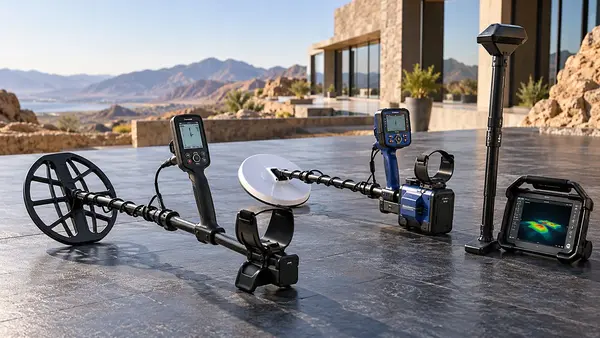
Choosing the Top Metal Detectors by Search Type begins with your actual search goal, not a universal ranking. US buyers searching for coins, natural gold, historical relics, beach jewelry, large buried metal, or underground cavities face different targets and ground conditions. A lightweight VLF detector, a pulse-induction prospecting machine, and a professional ground-imaging system cannot be assessed by one promise of depth or power.
For example, multi-frequency detection can be useful for coins and jewelry in changing ground. Natural-gold prospecting may demand effective handling of mineralized soil and sensitivity to small nuggets. A professional investigating substantial buried metal may need an appropriately configured pulse-based system. Empty tunnels present a different problem because a conventional metal detector responds to metal rather than proving the presence of a void.
This guide helps you choose the detector category before selecting a model. It focuses on targets, terrain, operating experience, coil selection, waterproofing, and the full package needed for US use. For named products and a broader shortlist, see the full model-by-model detector comparison. Here, the objective is to make the right category decision first, so you can ask Goldot-Tec for suitable equipment rather than purchase an impressive but unsuitable system.
Why Search Type Matters Before Choosing a Detector
The Top Metal Detectors by Search Type approach keeps a product ranking in its proper context. A ranking is useful when several detectors solve the same problem. However, metal detection covers many different problems. For example, a coin detector needs useful target separation, identification, and discrimination. A natural-gold detector must manage mineralized soil while responding to small low-conductive targets. Meanwhile, a deep-cache detector may prioritize larger coils and strong responses from substantial metal.
Therefore, asking for the “best detector” without defining the target can lead to the wrong purchase. The same issue affects discussions about detection depth. A large metallic container can usually generate a stronger response than a thin ring or small nugget. Consequently, comparing two machines using one advertised depth number provides limited buying value. Ground conditions create another variable.
For instance, wet salt sand can challenge detectors that perform well on dry farmland. Likewise, highly mineralized goldfields can produce ground responses that make ordinary coin hunting settings less effective. Operator experience also changes the buying decision. A beginner may benefit from automatic ground balance and clear factory programs. In contrast, an experienced detectorist may want more control over recovery speed, audio, discrimination, ground settings, and coil selection. For these reasons, this supporting guide organizes the top ten metal detectors concept by actual field requirement.
The first step is to identify the problem. After that, you can select the appropriate technology. Finally, you can compare individual models within that category.
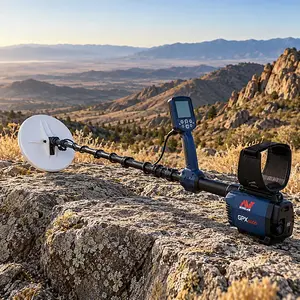
Metal Detector Types by Search Goal
The Top Metal Detectors by Search Type can be filtered by the job first. The table compares categories rather than naming or ranking ten particular models. Use it to rule out unsuitable technologies before choosing a product and accessories.
| Search Goal | Technology to Compare | Most Important Selection Factor | When Another Category Makes More Sense |
|---|---|---|---|
| Coins and jewelry | VLF or simultaneous multi-frequency | Target ID, discrimination, recovery speed | Consider specialist gold detection for tiny natural nuggets |
| Historical relics | Adjustable VLF or multi-frequency | Iron separation, audio and coil choices | Use a deep pulse system if the priority is substantial buried metal |
| Small natural gold | High-sensitivity gold-focused VLF or specialist prospecting platform | Small-target response and ground balance | Consider PI when difficult mineralization dominates |
| Highly mineralized goldfields | Prospecting PI or other specialist gold platform | Stable ground handling and appropriate coil | A high-frequency VLF may suit very small gold in milder ground |
| Large buried metallic targets | Deep-seeking PI or pulse-based frame system | Target scale, coil/frame practicality and site access | Use conventional detection for individual coins or jewelry |
| Target position and imaging | Compatible detector with positional imaging | Data quality, target visualization and operator skill | Choose a simple VLF detector when imaging adds no decision value |
| Tunnels and cavities | Suitable 3D ground survey technology; consider GPR when technically appropriate | Survey methodology, interpretation and independent checking | Use a conventional detector for direct metal targets |
| Dry and wet beaches | Salt-capable simultaneous multi-frequency or appropriate PI | Salt stability, target information and water limits | Conventional land-only equipment may fit dry sites but not surf |
| Underwater metallic targets | Fully submersible detector with compatible audio | Whole-system depth rating and practical underwater handling | A coil-only waterproof detector is not suitable for submersion |
| Mixed professional surveys | Verified multi-system detection and survey configuration | Clear separation of search modes, software and training | A single-purpose detector is often simpler when only one target type matters |
Therefore, this table should be used as a first filter. It does not identify a universal winner. Instead, it helps you remove detector categories that do not match your intended work. When a project combines direct metal detection with a survey of possible voids, ask which task each sensor actually performs rather than assuming one mode can do both.
Choosing a Detector for Coins and Jewelry
Coin and jewelry searching is one of the most common metal-detecting applications. However, maximum depth is rarely the only priority. For US buyers comparing coins and jewelry equipment, clarify whether your typical location is a permitted inland park, dry sand, wet salt sand, or a highly littered historical site. The site determines whether conventional target identification, salt-handling capability, or a smaller search coil should come first. Do not expect Target ID numbers to guarantee the identity of any buried object.
Parks, fields, beaches, and old residential sites can contain large amounts of unwanted metal. Therefore, a useful coin detector must help the operator separate potentially valuable targets from common trash. Target identification becomes important here. A modern detector may provide a numerical Target ID, audio information, visual information, or a combination of these systems. As a result, the operator can make a better-informed digging decision.
Target Separation Matters
Old locations often contain several metallic objects within a small area. For example, a valuable coin may sit close to an iron nail. If the detector cannot recover quickly between signals, the iron response may hide or distort the useful target. Consequently, recovery speed and separation become important buying factors. A smaller coil can also help in these environments. Although larger coils provide more ground coverage, smaller coils can make it easier to isolate nearby targets.
Therefore, coil selection should follow the site rather than a general belief that bigger always means better.
Discrimination Can Save Search Time
Coin and jewelry hunters usually encounter pull tabs, foil, bottle caps, nails, and other unwanted items. Discrimination can help reduce unnecessary digging. However, aggressive discrimination can also reject unusual valuable targets. Therefore, experienced users often combine Target ID, audio, repeatability, and site knowledge rather than trusting one discrimination setting.
Multi-Frequency Advantages
Simultaneous multi-frequency technology is particularly relevant for mixed target types. Coins and jewelry can have very different conductivity levels. Therefore, processing several frequency components can provide useful versatility. This can also help on beaches, where changing ground conditions create additional challenges. Buyers focused primarily on these targets can browse treasure and coin detector selection after identifying the features they need.
Choosing a Detector for Historical Relics
Relic hunting can look similar to coin hunting. However, the site conditions are often more difficult. Historic fields, military locations, abandoned settlements, and old structures may contain large amounts of iron. Therefore, detector behavior around unwanted metal becomes critical.
Recovery Speed in Iron
A detector with fast recovery can help the operator hear several adjacent targets. For example, a brass or bronze relic may sit between iron fragments. Consequently, the detector needs to recover quickly enough to provide a usable response from the non-ferrous target. Audio information also becomes important. Experienced relic hunters often learn subtle differences between clean, repeatable signals and responses caused by irregular iron. Therefore, a detector with flexible audio options may offer greater long-term value than a machine selected only for a depth claim.
Coil Choice for Historic Sites
Dense contamination often favors smaller coils. A small coil sees less ground at one time. As a result, fewer targets may enter the detection field simultaneously. However, open fields with lower contamination may benefit from a medium or larger coil. Consequently, a detector platform with several compatible coil sizes gives the relic hunter more flexibility.
Ground Conditions Still Matter
Historical sites can occur on farmland, clay, rocky soil, forests, or mineralized ground. Therefore, ground balance remains important even when gold prospecting is not the objective. An unstable detector can produce unnecessary noise. As a result, users may miss weak targets or waste time investigating false responses. For relic hunters, the right detector is usually one that combines stable ground performance, fast recovery, useful audio, and practical coil options.
Choosing for Small Natural Gold
Natural gold changes the search completely. For small natural gold, stable operation matters more than an unsupported power claim. Unlike a large treasure target, a small gold nugget may create a weak signal.
A worthwhile gold-prospecting consultation should specify whether you expect tiny nuggets near bedrock, larger pieces in open ground, or uncertain target sizes. These situations can favor different coils and technologies. If you move between locations, explain how mineralization and access change during the day so that the recommended package remains manageable. Therefore, sensitivity becomes more important. In addition, goldfields commonly contain mineralization. The detector must separate a useful target response from the ground signal.
This is why general coin detectors and specialist gold machines should not always be compared directly.
Small Nuggets Require Sensitivity
Tiny nuggets and specimen gold can behave as low-conductive targets. Therefore, detectors designed for gold often emphasize sensitivity to small targets. Higher-frequency VLF systems have traditionally played an important role here. However, modern specialist gold platforms may use other signal-processing methods. Regardless of technology, coil control is essential. The operator should maintain a consistent height and overlap sweeps carefully. As a result, a detector with excellent specifications can still underperform when field technique is poor.
Mineralization Can Hide Weak Targets
Gold-bearing ground may contain iron minerals and hot rocks. These ground responses can compete with small gold signals. Therefore, effective ground balance becomes essential. Automatic systems can reduce the amount of manual adjustment required. Meanwhile, advanced operators may prefer additional control where conditions change rapidly. The important point is stability. A detector running at extreme sensitivity but producing constant noise may be less useful than a stable setup at a slightly lower setting. Consequently, buyers should not judge gold performance from sensitivity settings alone.
Lightweight Equipment Can Improve Coverage
Gold prospecting can involve long walks across remote terrain. Therefore, detector weight deserves serious attention. A lighter setup can reduce fatigue. As a result, the operator may cover more ground and maintain better coil control throughout the day. This is particularly relevant to users searching rocky gullies, steep terrain, or wide desert areas. Buyers whose main target is natural nuggets can explore specialist gold detector options to compare purpose-built systems.
Choosing for Mineralized Goldfields
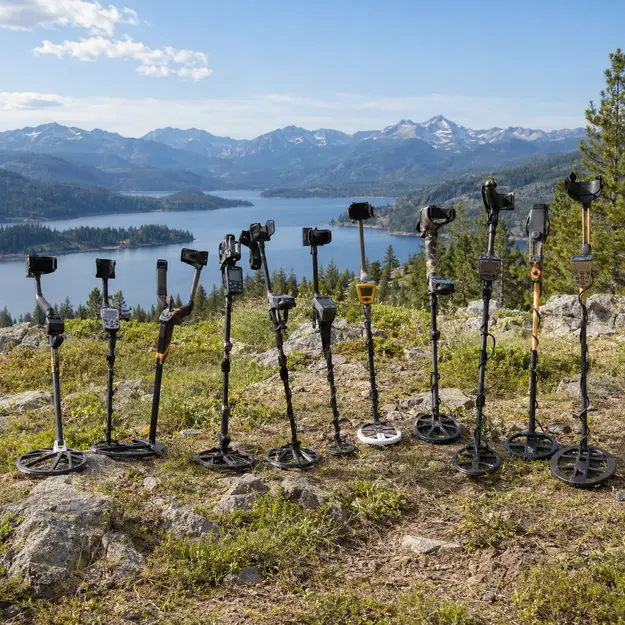
Top Metal Detectors by Search Type must account for unusually difficult gold-bearing ground. Small-gold sensitivity is not the only challenge in prospecting. Some goldfields contain difficult mineralization that can reduce the stability of conventional detectors. Therefore, a serious prospector may need Pulse Induction or another specialist technology designed for difficult ground.
Why PI Is Important
Pulse Induction systems transmit brief electromagnetic pulses and evaluate the resulting responses. Their response to difficult ground can make PI detectors useful in mineralized prospecting environments, although settings, target size, and the specific mineralization still matter. However, PI is not automatically superior in every situation. For example, some high-sensitivity VLF gold detectors may provide excellent small-nugget performance in suitable ground. In contrast, PI can become more attractive when mineralization becomes the primary challenge. Therefore, terrain should influence technology selection.
Target Size Still Changes Performance
A larger nugget normally produces a stronger response than a very small piece of gold. Consequently, no serious gold detector should be marketed with one guaranteed depth for all nuggets. Coil choice also changes performance. Smaller coils can improve sensitivity and maneuverability. Meanwhile, larger coils may provide more ground coverage and can favor larger targets. Therefore, the prospecting package should match both the gold size and terrain.
Experience Changes the Best Setup
Some specialist gold detectors simplify operation with automatic controls. Others offer more manual adjustment. Therefore, beginners and experienced prospectors may prefer different systems even when they search the same ground. A new user may benefit from easier ground handling. On the other hand, an experienced operator may value detailed control over timings, sensitivity, audio, or ground response. Consequently, the right gold detector is not only about technology. It is also about how much control the operator can use effectively.
Choosing for Large Deep Metallic Targets
Large buried metal requires another search strategy. A large buried cache, substantial metallic artifact, or container presents a different detection problem from an individual coin. Therefore, detector technology and coil size must change accordingly.
Large Targets Favor Different Coils
Large search coils and frame systems can produce broader detection fields. As a result, they may be better suited to substantial metallic objects. However, this advantage does not transfer automatically to small targets. A large frame can be impractical around small coins, thin jewelry, or dense vegetation. Consequently, buyers should never select a frame coil only because it appears more powerful. The expected target dimensions should justify the configuration.
Pulse Systems and Deep Metal
Pulse-based detectors are often used for large-target searches. They can provide strong responses from substantial metals and can remain useful in difficult ground. However, metal identification may be different from the discrimination offered by conventional coin detectors. Therefore, the operator may need to investigate more signals. This trade-off may be acceptable when the expected target is substantial and the work justifies further investigation.
Open Ground Helps Large Systems
Frame-coil systems need space. Rocky terrain, vegetation, fences, and uneven ground can reduce practicality. Therefore, site access should be considered before ordering a professional deep-target setup. A smaller coil may provide better results when movement is restricted. Consequently, the complete site description should be part of the buying consultation.
Choosing a Detector for Beaches
Beach hunting can involve coins, jewelry, lost personal items, and occasionally natural metal targets. Top Metal Detectors by Search Type should be filtered for dry sand, wet salt sand, surf, or actual underwater work before comparing specifications. However, beaches introduce one major problem: salt. For US coastal projects, verify local permissions before buying specialist accessories. Beach access and recovery rules vary by site. Also separate detecting on wet sand from entering the water: a detector stable on salt-affected ground may still be unsuitable for submersion.
Wet salt sand is conductive. Therefore, a detector that performs well on dry ground may become noisy when it reaches the wet line.
Multi-Frequency for Salt Conditions
Modern multi-frequency detectors are widely used on beaches because they can process complex ground and target responses. As a result, they can provide stable operation across dry and wet areas when configured correctly. However, each detector still uses different signal processing. Therefore, buyers should evaluate actual beach modes, waterproofing, coil options, and audio systems.
PI on Difficult Beaches
Pulse Induction can also provide useful performance in salt environments. However, PI discrimination can be more limited. Consequently, users searching trash-heavy public beaches may dig more unwanted targets. On the other hand, difficult mineralized beaches may justify that compromise.
Waterproofing Is Not One Specification
A waterproof search coil does not mean the entire detector can be submerged. Check the control unit, connectors, headphones, and approved accessories before using a detector in surf or water. Every component should be used within its stated waterproof rating. This distinction becomes critical for underwater hunters. A detector intended only for rain or shallow coil immersion should not be treated as a full underwater machine.
Before ordering for surf, compare waterproof detector configurations and distinguish occasional water exposure from full submersion. Confirm the complete assembly and the required underwater audio equipment, not only the coil’s rating.
Choosing for Underwater Detecting
Underwater detection adds several requirements beyond normal beach hunting. First, the complete detector must support the intended water depth. Next, the audio system must work underwater. Finally, controls should remain practical when visibility is limited. Therefore, waterproofing should be considered a core buying specification rather than a secondary feature.
Weight Changes Underwater
A detector’s land weight does not tell the whole story. Buoyancy can change how the detector feels underwater. Therefore, balance and shaft design matter. A machine that feels heavy on land may behave differently below the surface. However, the reverse can also happen if a coil creates excessive resistance while sweeping. Consequently, underwater users should consider the complete physical configuration.
Target Identification Can Save Time
Underwater recovery can take longer than digging on land. Therefore, useful target information can become valuable. However, saltwater and mineralized seabeds can affect signals. As a result, users should combine Target ID with audio and repeatability rather than trusting one number.
Choosing for Target Imaging
Within a Top Metal Detectors by Search Type shortlist, imaging must have a clear purpose. Some professional users need more than a simple metal-response signal. They may want estimated information about a target’s position, dimensions, or shape. Therefore, smart imaging systems occupy another category within discussions about the top ten metal detectors.
Imaging Is an Interpretation
Smart imaging systems combine detected signals with information about sensor or coil movement. The software then produces a visual representation. However, that image is not a photograph. It is a calculated interpretation of collected data. Ask for a demonstration of the exact imaging method and the conditions under which the system was evaluated. Consequently, users should not assume that a shape displayed on screen perfectly represents the buried object. Repeated scanning remains important.
When Imaging Adds Value
Target imaging can be useful when excavation is difficult. For example, a professional team may want more information before opening a large area. Estimated target dimensions can help prioritize signals. Likewise, position information may support a more controlled investigation. However, casual coin hunters rarely need this level of analysis. Therefore, smart imaging should be selected when the additional information solves a genuine field problem.
Choosing for Tunnels and Cavities
Tunnel and cavity searches should not be treated as normal metal detecting. The Top Metal Detectors by Search Type approach also protects survey buyers from expecting ordinary metal-detection signals to prove the presence of an empty tunnel. An empty void may contain no metal at all.
Before investing in a survey instrument, define what evidence would justify further investigation. Ask how the manufacturer’s method handles the suspected structure and the local soil, and whether the operator can repeat a measurement consistently. GPR is a distinct survey technology, not another name for every 3D metal-imaging product. Long-range locating claims require separate scrutiny and should not be conflated with instrumented subsurface surveys. An empty void may not produce a response that a conventional coil-based metal detector can detect.
This is where an appropriately selected 3D ground-survey instrument can become relevant. However, these methods provide different kinds of evidence and should never be treated as interchangeable proof of a cavity.
What a 3D Scanner Measures
A ground scanner collects measurements along controlled scan lines. Afterwards, software compares the collected data. As a result, the operator may identify anomalies that deserve further investigation. However, several factors can influence scan quality. Walking speed matters. Sensor orientation matters. Line spacing matters. Ground conditions matter as well. Therefore, training is essential.
A Scan Is Not Proof
An underground anomaly can have several possible causes. Consequently, one scan should not automatically be interpreted as treasure, a tunnel, or a chamber. Professional operators repeat important scans. In addition, they may scan from another direction or use another suitable technology. As a result, the decision is based on several consistent observations rather than one visual image. Buyers whose projects genuinely require this workflow can review ground scanning systems for survey work.
VLF, Multi-Frequency, PI and Ground Imaging
Understanding the technology categories makes the Top Metal Detectors by Search Type easier to compare without repeating a list of models.
VLF Detection
VLF is widely used for coins, jewelry, relics, and general metal detecting. It can provide detailed discrimination and Target ID. Furthermore, many VLF systems are lightweight and easy to use. However, severe mineralization can reduce stability. Therefore, ground balance becomes important.
Simultaneous Multi-Frequency
Multi-frequency detectors process several frequency components during the same search. Consequently, they can provide versatility across different target conductivity levels. They are especially relevant to users moving between fields, parks, beaches, and mixed-target environments. However, multi-frequency should not be treated as one identical technology across every brand. Different manufacturers use different processing and audio systems.
Pulse Induction
PI technology is highly relevant to mineralized goldfields and large metallic targets. It can also work well in certain salt environments. However, target discrimination may be less detailed. Therefore, users should choose PI because the ground or target requires it.
Smart Imaging
Smart imaging adds visual information to metal-detection data. Consequently, professional users may gain additional information before excavation. However, the displayed output remains an estimate.
3D Ground Scanning
3D scanning focuses on structured underground data collection. Depending on the instrument and survey method, it may provide information about underground anomalies that can be consistent with voids or other structures. It does not confirm their identity on its own. However, it requires controlled field technique and software interpretation. These technologies should not be mixed together in one depth ranking. The Top Metal Detectors by Search Type should instead be evaluated according to the search question each category can answer.
Top Metal Detectors by Search Type and Ground Conditions
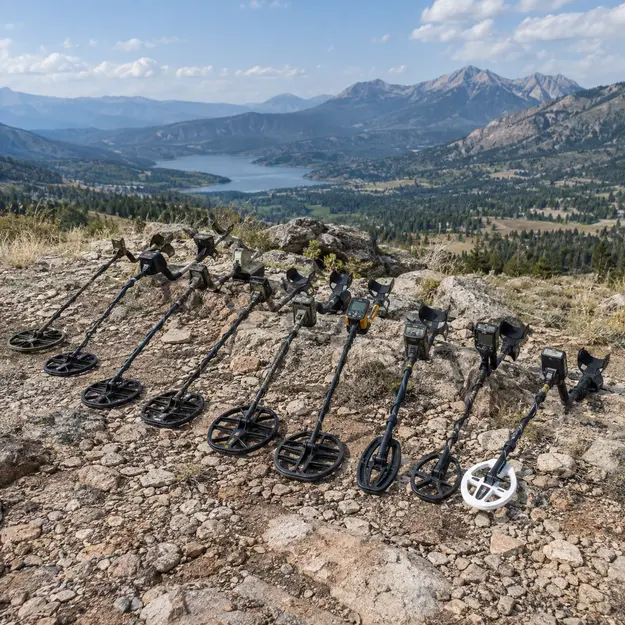
The same detector can behave differently from one site to another. Therefore, buyers should describe the ground before requesting a recommendation. Match the site conditions to the detector’s documented ground-handling options.
- Mild soil: Mild ground allows many conventional detectors to operate effectively. As a result, users can focus more heavily on discrimination, recovery speed, ergonomics, and target information.
- Mineralized soil: Mineralization creates additional signals. Consequently, the detector needs effective ground handling. Gold prospectors may move toward specialist technology. Meanwhile, relic hunters may need stronger ground-balance controls.
- Black sand: Black sand can contain magnetic minerals. Therefore, it can challenge some detectors. A stable setup may require reduced sensitivity or a different technology.
- Wet salt ground: Salt conductivity creates another form of ground response. Consequently, beach hunters often prioritize multi-frequency or suitable PI systems.
- Rocky and mountain terrain: Physical access matters in rocky terrain. Large coils may become difficult to control. Therefore, a compact detector or smaller coil can provide a better practical search.
- Open desert: Open ground can support larger coils and longer search lines. However, detector weight becomes important during extended walks. Therefore, portability should still be considered.
Before choosing a package, describe whether the area is trash-heavy, highly mineralized, salt-affected, rocky, or accessible only on foot. If the site changes seasonally, mention wet and dry conditions as well. These details help Goldot-Tec narrow coil size, ground controls, and carrying requirements without promising a particular detection depth.
Detection Depth Without Marketing Myths
Many buyers comparing detector categories focus immediately on depth. However, depth is one of the easiest specifications to misunderstand. There is no single universal detection depth. Review the following influences together:
- Target size: A large object normally produces a stronger response, so it may be detected at a greater distance than a small item. A claim without target dimensions is incomplete.
- Target orientation: An object’s position changes its response. Consequently, the same target may behave differently when turned.
- Metal composition: Conductivity and magnetic characteristics affect target response. Two objects of similar size may not produce identical signals.
- Ground mineralization and moisture: Ground signals can compete with target signals, so difficult or wet soil can reduce usable performance.
- Coil or frame size: Larger coils can favor larger targets, while smaller coils often provide better control and sensitivity to small objects.
- Detector settings: Maximum sensitivity does not always provide maximum useful performance. If the detector becomes unstable, weak signals can disappear inside noise.
- Operator skill: Experienced users recognize repeatable signals and control the coil more consistently. Technique becomes part of real-world performance.
For this reason, compare detectors under realistic target and ground conditions rather than relying on one headline number. Ask what target, soil, coil, settings, and scan procedure support any performance demonstration. A promised depth or guaranteed find should never replace matching the machine to your project.
Matching Detector Controls to Your Experience
Technology alone does not determine the right purchase. Experience also matters. Compare the amount of control you can use confidently rather than choosing the most complicated system available.
- Beginners: New detectorists often benefit from automatic ground balance, clear search programs, simple Target ID, and moderate adjustment options. Therefore, an extremely complex professional system may slow the learning process. However, a beginner with a specific professional project may still need advanced equipment; in that case, training becomes essential.
- Intermediate users: Intermediate users usually understand basic target identification and ground balance. Therefore, they can benefit from additional audio controls, recovery settings, custom profiles, and multiple coils.
- Experienced detectorists: Experienced operators may want detailed manual control. However, more settings do not automatically create better results. The user must understand when an adjustment improves the search and when it only creates noise.
- Professional survey teams: Professional ground-scanning and deep-target systems introduce another level of complexity. Operators may need to learn scan-grid preparation, data analysis, coil selection, and target confirmation. Consequently, equipment choice should include training and technical support.
If more than one person will use the equipment, ask whether setup profiles can be saved and whether the training applies to every planned mode. A straightforward interface may be more valuable for routine coin hunting, while repeatable survey technique matters more when collecting underground imaging data.
Build a Shortlist Without Repeating the Top 10
This page is intentionally different from the main Top 10 comparison. Instead of asking which detector holds position one, two, or three, use a filtering process:
- Define the primary target. Decide whether the job involves coins, jewelry, relics, natural gold, large metal, or non-metallic underground anomalies.
- Describe the terrain. Include wet salt, mineralization, trash, rocky access, and any restrictions on using large coils or survey lines.
- Select the appropriate technology. Compare VLF, multi-frequency, PI, positional imaging, or a suitable ground-survey method based on the job.
- Prioritize practical features. Decide which audio, target information, coil options, waterproof limits, and training requirements really matter.
- Then compare specific models. Confirm the current package, included accessories, support, and suitability with Goldot-Tec.
For example, a beach jewelry hunter can immediately remove 3D scanners and large frame systems from the shortlist. Meanwhile, a professional searching for an empty underground cavity can remove ordinary coin detectors. Likewise, a natural-gold prospector can prioritize gold-focused systems instead of comparing every general-purpose detector.
Therefore, this process reduces confusion. Once you know which detector category fits your project, move to the primary Top 10 comparison for the detailed model shortlist. This structure also keeps both pages useful: the main article compares named models; this supporting guide explains which type of detector is worth comparing for your search.
What to Check Before Ordering
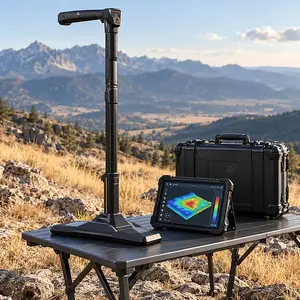
A detector should be selected as part of a complete search setup. Therefore, the control unit is only one part of the decision. When requesting a configuration from Goldot-Tec, evaluate the whole system, not just the detector model name:
- Target and terrain: State exactly what you want to locate, its expected size, and where you will search. Mention mineralization, wet salt, nearby iron, and obstacles because these details help determine the technology.
- Coil configuration: Check which coil is included. Determine whether an additional search coil or large frame is required for the main target. Do not add the largest coil automatically; confirm its suitability and handling requirements.
- Waterproofing and submersion: Confirm whether the entire detector is waterproof or only the search coil. Ask for the permitted immersion depth and whether the control unit, connectors, and accessories have matching limits.
- Audio and headphones: Confirm whether headphones are supplied, wired or wireless, and usable in noisy locations. Underwater searches may require model-specific audio equipment.
- Battery and charging: Verify the power system, standard charging equipment, expected field routine, and whether spare power is supported for remote trips.
- Software and updates: Ask whether firmware updates are supported. For professional scanners, confirm the data-analysis software, licensing, compatible devices, and required hardware.
- Training: Advanced systems may need more than a manual, especially when scan-grid technique and interpretation affect the quality of collected data.
- Warranty and technical support: Confirm the applicable warranty terms and available assistance for ground settings, coil compatibility, scanning procedures, and software.
Request a written inventory of the exact package before ordering. Confirm current availability and US delivery arrangements for the intended state. A suitable configuration is one that fits the real work and includes the accessories required to operate it, not simply a control unit with an impressive feature list.
Common Detector Buying Mistakes
The wrong detector is often purchased because the buyer starts with a model instead of the project. Even a useful Top Metal Detectors by Search Type list cannot replace the details of your own site.
Choosing by Ranking Alone
A machine near the top of a general ranking may not suit a specialist search. Therefore, ranking position should never replace use-case analysis.
Trusting Guaranteed Depth
No detector provides the same depth on every target. Consequently, universal depth guarantees should not determine a purchase.
Buying Too Much Technology
Some buyers select professional scanning systems for simple coin hunting. However, extra complexity does not automatically improve practical results.
Buying Too Little Technology
The opposite mistake also occurs. A conventional metal detector cannot reliably replace a system designed for underground voids. Therefore, the project should determine the technology level.
Ignoring Coil Choice
The standard coil may not be ideal for every target. Consequently, buyers should consider target size and terrain before adding or changing coils.
Ignoring Ground Conditions
A detector selected for mild soil may not be the best choice for mineralized or salt ground. Therefore, terrain should always be part of the recommendation request.
Expecting Imaging to Show a Photograph
Smart imaging and 3D scanning produce interpretations of measured data. They do not show literal underground photographs. Consequently, professional interpretation remains necessary.
Ignoring Training
An advanced system used poorly can produce confusing results. In contrast, correct technique can make a simpler detector much more effective.
Frequently Asked Questions
How should I use this search-type guide if it does not rank ten models?
This Top Metal Detectors by Search Type guide helps you select the correct detector category before comparing individual models. Begin with your target, terrain, technology, and required features. Then review the main Top 10 comparison for named detectors. Confirm the package details that matter to your search before ordering.
Which detector technology should I choose for gold, relics, or deep metal?
For natural gold, prioritize specialist gold systems and effective ground handling. For relics, consider fast target separation, audio control, and coil choice. Substantial buried metallic targets may justify a pulse-based deep-target system. The final selection still depends on the likely target size, terrain, and your experience.
Do I need a 3D scanner instead of a conventional metal detector?
Choose a suitable ground-survey method only if you need to investigate cavities, structures, or other underground anomalies. For direct coins, jewelry, relics, and many metallic targets, conventional metal detection is more practical. Survey data requires interpretation and cannot guarantee that a particular anomaly is a tunnel or treasure.
Choose Your Search-Type Detector with Goldot-Tec
Top Metal Detectors by Search Type are not ten machines competing to do one identical job. Each detector category solves a different search problem. Multi-frequency systems can provide versatility for coins, jewelry, relics, and beaches, while specialist gold detectors focus on natural nuggets and difficult goldfield conditions. Pulse-based systems can be relevant for mineralized ground and substantial metallic targets. Smart imaging adds interpretation of target-related measurements, while appropriate 3D surveys address underground anomalies that ordinary metal detectors cannot evaluate in the same way.
Therefore, begin with your target and its likely size. Next, describe the ground and access conditions. Then decide whether you need discrimination, sensitivity to small natural gold, a large-target coil or frame, underwater use, positional imaging, or structured ground scanning. Finally, match that technology to your experience and the accessories your work actually requires. For named detector alternatives, consult the principal model-comparison article after you have selected a category.
Buying for use in the United States? Contact Goldot-Tec for Availability and share your search goal, state, terrain, target size, experience, and intended water exposure. Ask the team to identify suitable detector categories, compare compatible coil and survey configurations, confirm current stock and support, and help you choose a package that fits your planned fieldwork. This approach makes the next purchase decision specific, practical, and free of unsupported performance promises.