

A detailed Metal Detector Comparison helps US buyers choose equipment that matches their targets, terrain, experience, and search requirements. Coins, jewelry, natural gold, large buried metallic objects, beaches, and underground cavities require different detection technologies and operating configurations.
The right comparison should examine target identification, ground performance, waterproofing, coil options, search modes, weight, training requirements, and complete package value. A detector designed for conventional coin hunting should not be judged by the same criteria as a professional pulse-induction gold detector or 3D ground scanner.
This guide compares seven detector models, highlights their purchasing advantages and practical limitations, and helps you identify a suitable package for authorized searches in the United States before requesting an offer from Goldot-Tec.
Top Detector Models to Consider
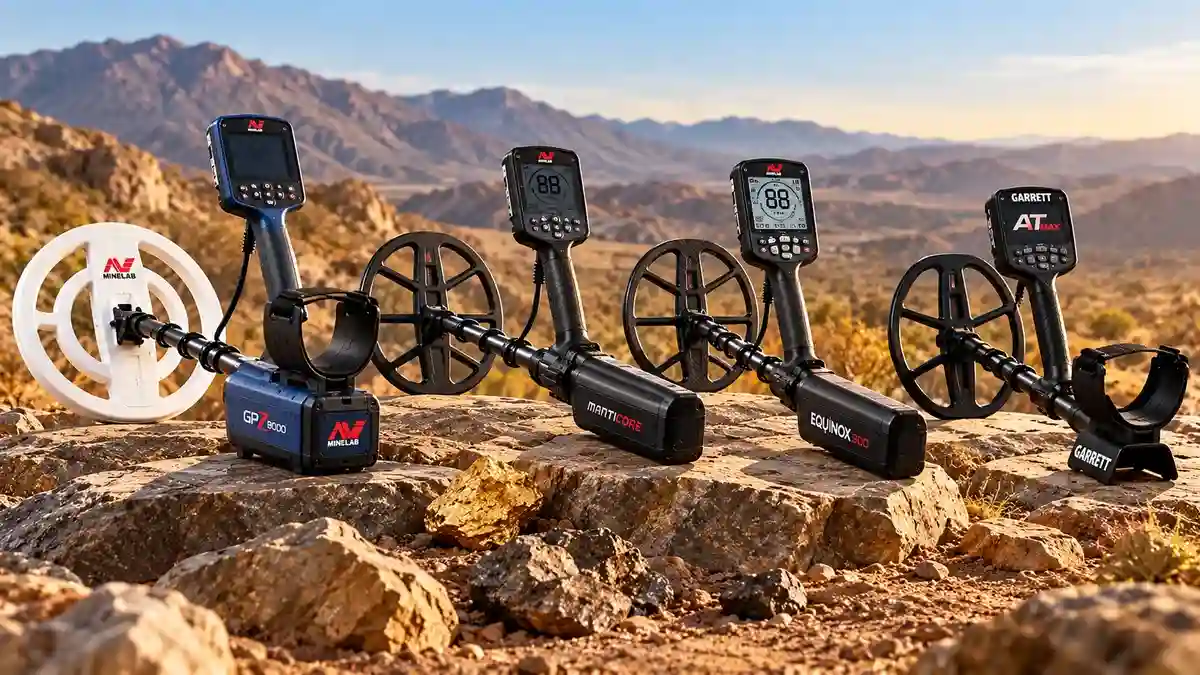
The following Metal Detector Comparison covers conventional multi-frequency detectors, specialist gold systems, deep-seeking equipment, and professional imaging technology.
Rather than ranking these detectors from strongest to weakest, the table connects each model to its intended application and the experience required to operate it effectively.
| Detector | Primary Target | Experience Level | Main Reason to Choose |
|---|---|---|---|
| Minelab MANTICORE | Coins, jewelry, relics, beaches | Intermediate to advanced | Multi-IQ+ and detailed two-dimensional target information |
| XP DEUS II | Relics, coins, beaches, mixed targets | Intermediate to advanced | Lightweight wireless operation and flexible audio controls |
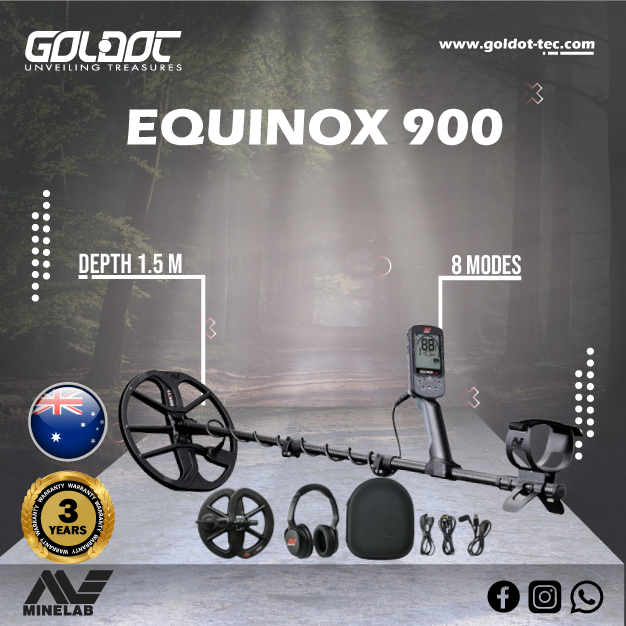
| Minelab EQUINOX 900 | Coins, jewelry, beaches, occasional natural gold | Beginner to advanced | Multi-IQ versatility and several search modes |
| Nokta LEGEND 2 | Multi-purpose conventional detecting | Beginner to advanced | Simultaneous multi-frequency operation and adjustable target information |
| Garrett Axiom | Natural-gold nuggets and mineralized ground | Intermediate to professional | Specialist PI technology and ground-handling options |
| Lorenz Deepmax Z2 | Substantial buried metallic targets | Professional | Pulse GBS and different coil and frame configurations |
| OKM eXp 7000 Pro Plus | Underground anomalies and professional surveys | Professional | Multiple scanning modes with separate VLF metal-detection functionality |
The table provides a starting point rather than a universal performance ranking. Buyers should compare the detector’s intended role with their actual target before evaluating additional features.
MANTICORE vs DEUS II
Minelab MANTICORE and XP DEUS II represent two advanced approaches to conventional metal detecting.
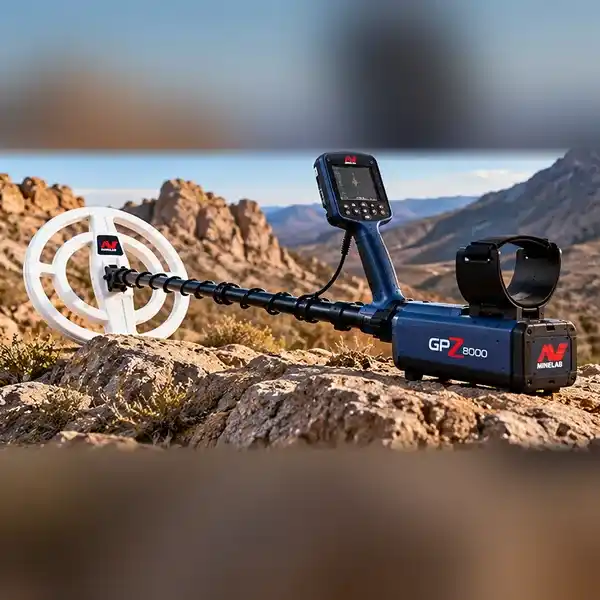
MANTICORE uses Multi-IQ+ simultaneous multi-frequency technology and provides detailed two-dimensional Target Trace information. This can help operators evaluate conductive and ferrous characteristics when searching areas containing unwanted metal.
The detector is waterproof to 5 meters within Minelab’s specified operating limits. Its advanced search settings and Target ID information make it relevant to experienced users who want detailed visual and audio feedback.
XP DEUS II uses FMF Fast Multi-Frequency technology and emphasizes lightweight construction, wireless operation, customizable audio, and flexible search programs.
The DEUS II platform supports underwater operation to 20 meters with the correct equipment configuration, including the required underwater antenna and compatible audio accessories.
Choose MANTICORE when:
- Detailed visual target information is important.
- You search coins, jewelry, and relics in mixed ground.
- You want advanced Target ID and audio controls.
- You prefer an integrated control system.
- You are comfortable learning advanced detector settings.
Choose DEUS II when:
- Lightweight equipment matters during long sessions.
- You prioritize a wireless detecting system.
- You regularly search iron-contaminated historical sites.
- Adjustable audio and recovery settings are important.
- You need an appropriately configured land-and-water detector.
Neither model is universally deeper or better at separating targets.
Performance depends on the search coil, target size, soil mineralization, recovery settings, interference, and operator technique.
Buyers can review the MANTICORE purchase configuration to confirm its coil and accessories.
Meanwhile, the XP DEUS II package choices help buyers assess controller, coil, headphone, and underwater equipment requirements.
EQUINOX 900 vs LEGEND 2
Minelab EQUINOX 900 and Nokta LEGEND 2 are relevant to buyers who want one detector for multiple conventional search environments.
EQUINOX 900 uses Multi-IQ simultaneous multi-frequency technology and provides Park, Field, Beach, and Gold search modes.
It also supports selectable individual frequencies and offers detailed numerical Target ID information.
The detector is IP68 waterproof to 5 meters, making it relevant to suitable beach and shallow-water searches.
LEGEND 2 also uses simultaneous multi-frequency technology and provides Park, Field, Beach, Relic, and Gold search modes.
Its 99-point Target ID scale and adjustable audio options allow the operator to customize target information.
Both detectors can suit:
- Coins and jewelry.
- Historical relics.
- Wet and dry beaches.
- General field detecting.
- Occasional small natural-gold searches.
EQUINOX 900 may appeal to buyers familiar with Minelab controls and Multi-IQ search programs.
LEGEND 2 deserves consideration when buyers want a versatile detector with several conventional search options and adjustable settings.
However, neither should automatically replace a specialist PI detector when difficult goldfield conditions require dedicated prospecting technology.
Compare the EQUINOX 900 all-terrain package before choosing the Minelab option.
You can also review Nokta LEGEND 2 buying details to confirm its current configuration and compatible accessories.
Garrett Axiom
Garrett Axiom differs from the previous models because it uses specialist Pulse Induction technology for natural-gold prospecting.
Its Ultra-Pulse platform and ground-handling features make it relevant to prospectors working mineralized soil.
The detector includes Fine, Normal, Large, and Salt search modes, allowing the operator to adjust its behavior according to the target and ground.
Axiom can be suitable for:
- Natural-gold nuggets.
- Mineralized goldfields.
- Difficult ground containing hot rocks.
- Prospecting with compatible Mono or Double-D coils.
- Experienced users who prioritize specialist gold detection.
However, it offers less detailed conventional target discrimination than premium multi-frequency coin detectors.
Therefore, Axiom is not automatically the better purchase for parks or heavily contaminated relic sites.
Its strength is specialist gold prospecting rather than universal detecting performance.
Lorenz Deepmax Z2
Lorenz Deepmax Z2 is a professional metal-detection system designed around Pulse GBS technology and compatible search-coil configurations.
The system can be configured for different metallic target sizes.
Smaller coils can provide more practical control around compact targets and restricted terrain.
Larger frame configurations become relevant when the project involves substantial buried metallic objects and enough space is available for proper operation.
Suitable applications include:
- Large buried metallic objects.
- Substantial metallic caches.
- Authorized archaeological metal investigations.
- Large metallic relics.
- Professional open-area searches.
However, a large frame may be unsuitable for small coins, jewelry, or restricted locations.
Moreover, the Z2 primarily detects metal. It is not a dedicated system for proving the presence of empty underground cavities.
Choose the coil according to expected target dimensions and terrain rather than assuming the largest configuration is always the most effective.
OKM eXp 7000 Pro Plus
OKM eXp 7000 Professional Plus belongs to a different category from conventional metal detectors.
The system combines multiple underground survey methods with VLF metal detection.
Its operating functions include 3D Ground Scan, 3D VLF Scan, Magnetometer, Mineral Scan, Tunnel Scan, Live Scan, Pinpointer, and VLF Metal Detection.
This makes it relevant to professional projects involving underground anomalies and different investigation requirements.
Potential applications include:
- Underground structural investigations.
- Possible cavities and tunnels.
- Mineralized zones.
- Professional archaeological surveys.
- Metallic targets requiring additional survey context.
However, the system requires controlled measurement procedures and software interpretation.
A three-dimensional visualization is not a photograph of a buried object, and a detected anomaly does not establish the presence of treasure, gold, or an empty chamber.
Consequently, eXp 7000 Pro Plus should be selected when professional scanning is required rather than for routine recreational detecting.
Key Features and Technologies
An accurate Metal Detector Comparison must explain how different technologies influence the purchasing decision.
Different metal detection technologies serve different search purposes, including conventional target detection, natural gold prospecting, deep metal searches, and underground surveying.
VLF and Multi-Frequency Detectors
VLF and simultaneous multi-frequency detectors are popular choices for locating coins, jewelry, relics, and other common metallic targets.
Their applications can include:
- Coin detection.
- Jewelry searching.
- Historical relics.
- Target identification.
- Adjustable discrimination.
- Small metallic targets.
Simultaneous multi-frequency platforms offer additional flexibility because they process multiple frequency components during detection.
These systems can be useful when buyers move between parks, fields, beaches, and different metallic targets.
However, advanced multi-frequency processing does not guarantee better performance than specialist PI equipment in every goldfield.
Pulse Induction
Pulse Induction technology is especially relevant to natural-gold prospecting and certain large-target searches.
Its advantages may include:
- Suitable operation in difficult mineralized ground.
- Specialist natural-gold detection.
- Compatible coil options for different target sizes.
- Selected applications involving large metallic objects.
- Ground-handling options for challenging conditions.
However, PI does not eliminate every unwanted ground response.
Likewise, its target discrimination may be more limited than that of conventional VLF systems.
Buyers who are uncertain about technology selection can review the VLF and PI technology comparison before choosing a specialist detector.
3D Ground Scanning
3D scanners collect structured measurements from an underground survey area.
Specialized software then processes the collected information into graphical representations.
These systems may help professional operators investigate anomalies associated with:
- Buried metallic objects.
- Possible underground structures.
- Cavities and tunnels.
- Mineralized zones.
- Ground disturbances.
However, ground scanning is not identical to direct metal detection.
Similarly, 3D scanning, GPR, and long-range locating systems should not be treated as interchangeable technologies.
Ground Penetrating Radar measures electromagnetic reflections from subsurface differences, while conventional PI systems respond directly to metallic targets.
The measurement method should always match the project’s actual question.
Depth Performance and Accuracy
Detection depth is an important consideration, but it cannot be evaluated through one universal number.
A realistic Metal Detector Comparison should examine the factors that affect target response.
| Factor | Effect on Detection | Buying Consideration |
|---|---|---|
| Target size | Larger targets can produce stronger responses | Compare detectors using similar target dimensions |
| Metal composition | Conductivity and magnetic properties influence signals | Identify the expected target material |
| Target orientation | Position can change response strength | Avoid relying on one test orientation |
| Coil size | Different sizes favor different target scales and coverage | Select a coil for the expected target and terrain |
| Frequency | Different operating frequencies influence target responses | Match technology to target and soil |
| Ground mineralization | Can introduce interference and reduce usable sensitivity | Check available ground-handling settings |
| Saltwater | Conductive salt can affect detector stability | Choose suitable beach modes and protection |
| Nearby unwanted metal | May mask or distort desirable signals | Consider separation, discrimination, and coil size |
| Operator experience | Affects settings, sweep technique, and signal interpretation | Include training when necessary |
A large buried metallic container cannot be compared directly with an individual coin or small nugget.
Likewise, an underground cavity does not produce the same information as a metallic target.
Before accepting a performance claim, ask what target, coil, ground, and settings were used during testing.
Best Uses for Gold, Treasure, Coins and Beaches
The following Metal Detector Comparison connects search applications with suitable systems and relevant alternatives.
These are starting recommendations based on intended use, not guaranteed rankings.
| Application | Model to Consider | Alternative | Main Decision Factor |
|---|---|---|---|
| Premium coins and jewelry | MANTICORE | DEUS II | Target information and operator preferences |
| Lightweight relic hunting | DEUS II | LEGEND 2 | Ergonomics, audio, and iron handling |
| Balanced all-terrain use | EQUINOX 900 | LEGEND 2 | Search modes and ground versatility |
| Natural-gold prospecting | Garrett Axiom | GPX 6000 | Mineralization and nugget-size priorities |
| Large buried metallic objects | Lorenz Deepmax Z2 | Suitable large-target PI system | Target scale and coil configuration |
| Underground imaging | eXp 7000 Pro Plus | Suitable professional scanning equipment | Survey method, software, and training |
| Beach detecting | MANTICORE | DEUS II or EQUINOX 900 | Salt stability, waterproofing, and audio setup |
Coins and Jewelry
For coins and jewelry, conventional multi-frequency detectors often offer practical advantages.
Detailed target identification, discrimination, recovery behavior, and coil selection can help users evaluate signals in areas containing unwanted metal.
MANTICORE, DEUS II, EQUINOX 900, and LEGEND 2 all deserve consideration.
Natural Gold
Goldfield prospecting requires a different buying decision.
Target size, mineralization, terrain, and coil compatibility become important.
Garrett Axiom and GPX 6000 represent specialist PI options.
However, a gold-focused VLF machine may be suitable for certain small-gold applications in less demanding ground.
Large Metallic Targets
Large metallic objects may justify a deep-target detector using appropriate coils or frames.
Lorenz Deepmax Z2 is relevant to this category.
However, large-target capability does not establish superior performance on small coins or natural-gold nuggets.
Beaches
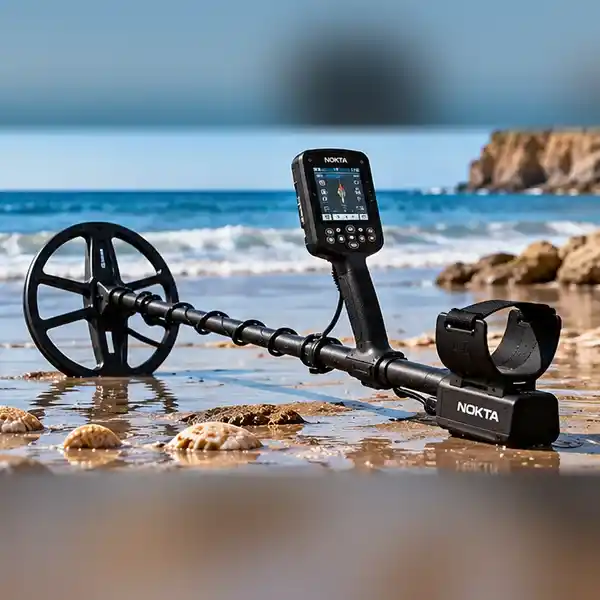
Beach buyers should consider wet salt stability, waterproof limits, target identification, and compatible audio equipment.
A fully waterproof detector is not automatically the most stable system in conductive salt conditions.
The correct configuration depends on the intended beach environment and operator experience.
Underground Investigations
Projects involving possible tunnels, cavities, or structural anomalies may require suitable ground-scanning equipment.
eXp 7000 Pro Plus is one professional option to evaluate.
However, software interpretation and survey technique remain essential.
Package Value Comparison
The value of a detector should be judged by its suitability and complete equipment configuration.
A complicated machine does not automatically provide greater practical value when most of its features do not support the buyer’s main search.
| Detector Category | Suitable Buyer | Package Requirements | Main Ownership Value |
|---|---|---|---|
| Versatile multi-frequency | Regular coin, relic, and beach hunters | Standard coil, headphones, battery equipment | Several conventional searches from one platform |
| Advanced multi-frequency | Experienced detectorists | Coil choices, advanced audio, compatible accessories | Detailed target information and customization |
| Specialist PI gold detector | Natural-gold prospectors | Approved coils, charging equipment, audio support | Goldfield-focused technology and ground handling |
| Deep-target pulse system | Professional large-metal search teams | Suitable coils or frames, transport equipment, training | Equipment matched to substantial metallic objects |
| 3D ground scanner | Professional survey operators | Sensors, software, charging, training | Structured underground data collection and analysis |
Coil and Accessory Value
Search coils can change the way a detector performs in the field.
A smaller coil may offer greater control in restricted or iron-contaminated locations.
A larger coil may provide broader coverage and suit another target-size range.
However, additional coils only create value when the user has a clear reason to use them.
Warranty and Support Value
Professional equipment may require setup guidance, software support, or help selecting compatible accessories.
Therefore, buyers should confirm warranty documentation and available technical support before ordering.
For a 3D scanner, training and software compatibility can matter as much as hardware specifications.
Complete Package Verification
Before purchasing, confirm:
- Exact detector model and version.
- Standard search coil.
- Optional compatible coils.
- Battery and charging equipment.
- Headphones and audio accessories.
- Waterproof limitations.
- Carrying equipment.
- Software requirements, when applicable.
- Warranty and technical support.
- Current availability and US delivery options.
Do not assume that every accessory shown in a product demonstration is included in the standard package.
Pros and Cons of Leading Options
Every model in this Metal Detector Comparison provides benefits for a particular type of buyer.
The following table highlights one important purchasing advantage and one practical limitation for each system.
| Detector | Main Purchasing Advantage | Practical Limitation |
|---|---|---|
| MANTICORE | Detailed 2D target analysis and versatile conventional detecting | Advanced controls require learning; not designed for cavity scanning |
| DEUS II | Lightweight wireless design and configurable detecting | Package and underwater accessory selection require attention |
| EQUINOX 900 | Broad Multi-IQ versatility for several environments | Less detailed visual target information than MANTICORE |
| LEGEND 2 | Multiple search modes and adjustable conventional detection | Not a replacement for professional PI or scanning systems |
| Garrett Axiom | Specialist gold prospecting and difficult-ground operation | Less detailed conventional discrimination |
| Lorenz Deepmax Z2 | Flexible coil and frame configurations for metallic targets | Not a dedicated empty-cavity scanner |
| eXp 7000 Pro Plus | Multiple underground scanning and detection workflows | Requires survey training and software interpretation |
These limitations do not make the devices unsuitable.
Instead, they explain when another technology may better match the project.
How to Choose the Right Device
A useful Metal Detector Comparison should lead to a clear purchase decision.
Follow these steps before requesting a detector package for use in the United States.
Step 1 — Define the Primary Target
Identify whether your main objective involves coins, jewelry, relics, natural gold, substantial metallic objects, or possible underground structures.
Do not choose the detector category before defining the target.
Step 2 — Describe the Ground Conditions
Consider whether the search area contains mineralization, conductive salt, iron contamination, rocky ground, or electrical interference.
The same detector can behave differently between sites.
Step 3 — Match the Detection Technology
Choose a VLF or simultaneous multi-frequency detector for general metal detection, depending on your target type and search conditions.
Select a specialized gold-focused VLF or pulse induction (PI) detector for natural gold prospecting.
Explore suitable deep-search detection systems when searching for larger metallic objects.
Consider professional ground survey equipment when investigating underground anomalies or subsurface features.
Step 4 — Assess Your Experience
Beginners may benefit from straightforward programs and understandable target information.
Experienced operators may value advanced audio, discrimination, or ground controls.
Professional scanning requires a different skill set involving measurement procedures and software interpretation.
Step 5 — Choose the Search Coil
Confirm the standard coil and evaluate whether the target or terrain justifies an alternative.
A larger coil should not be selected automatically.
Step 6 — Confirm Water Requirements
If the project involves beaches or underwater searches, verify the complete detector’s waterproof rating.
Also check the compatible headphones, connectors, and operating limits.
Step 7 — Prepare Your US Order
Tell Goldot-Tec your intended delivery state and describe your search project.
For example, an authorized Texas relic search may require different equipment from a Nevada goldfield project or permitted Florida beach detecting.
Ask for a written confirmation of the exact package, warranty terms, support, current availability, and delivery options.
Common Buying Mistakes to Avoid
Several mistakes can lead to unsuitable purchases, even when the detector itself offers capable technology.
Comparing Unrelated Technologies
A professional gold detector and a ground scanner measure different things.
Therefore, do not compare them through one universal performance ranking.
Assuming Greater Depth Means Better Performance
Depth depends on target size, ground, coil, settings, and operator skill.
A large-target demonstration does not establish performance on small jewelry or nuggets.
Buying a Gold Detector for Routine Coin Hunting
A specialist PI detector may offer advantages in mineralized goldfields but provide less detailed discrimination for trash-heavy parks.
Choose the technology around the main application.
Buying a Coin Detector for Empty Cavities
A conventional metal detector cannot reliably identify an underground void that contains no metallic target.
A suitable geophysical survey method may be needed.
Ignoring Weight and Ergonomics
Weight, balance, coil size, and shaft design influence comfort during long searches.
Consider the complete field setup rather than the detector control unit alone.
Ignoring Package Contents
Different configurations can include different coils, audio equipment, and accessories.
Always request written confirmation.
Using Maximum Sensitivity Everywhere
Excessive sensitivity can increase noise and reduce the clarity of weak target responses.
Stable operation is often more useful than aggressive settings.
Ignoring Training and Support
Advanced equipment requires appropriate operating knowledge.
A professional scanner used without consistent measurement technique may produce misleading data.
Therefore, training and technical assistance should influence the purchase decision.
Frequently Asked Questions
Which detector is better for coins and relics, MANTICORE or DEUS II?
Both are suitable premium conventional detectors. MANTICORE emphasizes detailed two-dimensional target information, while DEUS II offers a lightweight wireless system and flexible audio controls. The better purchase depends on terrain, preferred controls, coil configuration, and operator experience.
Should I choose VLF or PI for natural-gold prospecting?
Gold-focused VLF detectors can be suitable for small nuggets in appropriate ground. Specialist PI systems often provide advantages when mineralization becomes challenging. The correct choice depends on expected gold size, soil conditions, coil selection, and the user’s experience.
What should I confirm before ordering a metal detector from Goldot-Tec?
Confirm the exact detector version, standard coil, accessories, power equipment, waterproof limits, warranty, and technical support. For professional scanning systems, also verify software and training. Ask Goldot-Tec to confirm current availability and delivery options for your US state.
Choose Your Metal Detector with Goldot-Tec
A Metal Detector Comparison should help buyers eliminate unsuitable technologies before selecting a specific model.
MANTICORE and DEUS II suit buyers seeking advanced conventional detecting, while EQUINOX 900 and LEGEND 2 provide broader multi-purpose options.
Garrett Axiom serves specialist natural-gold prospecting, Lorenz Deepmax Z2 fits professional searches for substantial metallic objects, and eXp 7000 Pro Plus addresses projects requiring structured underground investigation.
The correct choice depends on target size, ground conditions, operator experience, coil configuration, and the complete equipment package.
No detector guarantees a particular discovery or a fixed detection depth across all environments.
Buying in the United States? Contact Goldot-Tec for Availability and a personalized detector recommendation. Share your primary target, intended search environment, experience level, required accessories, and delivery state. Ask the team to compare suitable configurations, confirm the complete package, and help you choose the model that matches your project before placing your order.








[…] depth buying guide compares leading professional detectors according to their technology, target suitability, field performance, advantages, limitations, and […]