

Choosing the best rated metal detectors in 2026 is not only about finding the device with the highest review score. A detector can be highly recommended for coins and jewelry but unsuitable for natural gold, deep treasure, underground cavities, or mineralized soil.
The most reliable comparison should consider detection technology, target separation, soil performance, waterproofing, available coils, software updates, learning requirements, and long-term value. It should also separate general-purpose detectors from specialist gold machines and professional 3D ground scanners.
This guide compares several top rated metal detectors for different uses. Instead of presenting unsupported depth promises or artificial review scores, each model is evaluated according to its strongest application, practical advantages, possible limitations, and ideal buyer.
For a broader overview of different detector categories, read Best Metal Detector – Top Models Compared.
Top Detector Models to Consider
The following selection covers general detecting, gold prospecting, beaches, relics, deep treasure, and professional underground scanning.
| Detector | Best Rating Category | Main Technology | Recommended For |
|---|---|---|---|
| Minelab MANTICORE | Best overall premium detector | Multi-IQ+ simultaneous multi-frequency | Coins, jewelry, relics, beaches, and advanced users |
| XP DEUS II | Best lightweight all-terrain detector | Fast Multi-Frequency | Relics, coins, beaches, underwater searching, and iron-contaminated sites |
| Nokta The LEGEND 2 | Best value multi-frequency detector | Simultaneous multi-frequency | Coins, jewelry, relics, beaches, and small gold |
| Garrett Vortex VX9 | Best flexible mid-range detector | Multi-frequency and selectable frequencies | Coins, relics, beaches, and developing detectorists |
| Garrett Axiom | Best rated pulse detector for gold | Pulse induction | Natural gold, mineralized soil, and relic hunting |
| OKM Rover C4 | Best professional 3D scanner | 3D ground scanning and mineral scanning | Deep treasure, cavities, natural gold zones, and underground structures |
Minelab MANTICORE
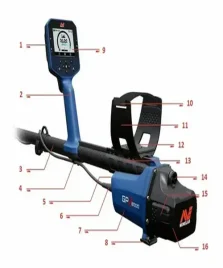
The Minelab MANTICORE is one of the strongest premium choices for buyers seeking a high-performance general-purpose detector. It uses Minelab’s Multi-IQ+ simultaneous multi-frequency technology and provides detailed target information through a two-dimensional identification display.
The detector is designed for several search environments, including parks, fields, beaches, and goldfields. Its advanced audio and visual controls allow experienced users to study target responses rather than depending on one identification number.
Minelab states that the MANTICORE transmits more power through its search coil than the EQUINOX series and combines Multi-IQ+ with advanced two-dimensional target identification. Its waterproof construction also allows underwater searching at suitable depths specified by the manufacturer.
Best applications:
- Coins and jewelry.
- Historical relics.
- Dry and wet beaches.
- Underwater detecting.
- Contaminated ground.
- Advanced target analysis.
Main advantages:
- Simultaneous multi-frequency operation.
- Detailed two-dimensional target display.
- Strong target separation.
- Multiple terrain-focused programs.
- Waterproof and lightweight construction.
- Suitable for experienced detectorists.
Possible limitations:
- Premium investment level.
- Advanced settings may require practice.
- More complex than beginner detectors.
- Not designed to replace a deep 3D ground scanner.
The MANTICORE is the best overall recommendation for buyers who want one premium machine for several conventional metal-detecting applications.
XP DEUS II
The XP DEUS II is highly rated for its low weight, wireless architecture, recovery speed, and all-terrain performance.
Its search coil, remote control, headphones, and compatible pinpointer communicate wirelessly. This reduces cables around the detector and helps create a lightweight, flexible setup.
The device uses Fast Multi-Frequency technology, transmitting and processing several frequencies simultaneously. XP positions the DEUS II as an all-terrain system suitable for inland and underwater searches. The manufacturer also released software version 4.1 in 2026, adding audio options and improving compatibility within the XP accessory ecosystem.
Best applications:
- Coin hunting.
- Relic searching.
- Iron-contaminated historical locations.
- Beach detecting.
- Underwater searches.
- Long detecting sessions.
Main advantages:
- Lightweight design.
- Fully wireless configuration.
- Fast target recovery.
- Simultaneous multi-frequency technology.
- Waterproof search capability.
- Continued software support.
Possible limitations:
- The menu system can feel advanced to new users.
- Package contents differ according to the selected configuration.
- Some accessories may increase the complete purchase cost.
- It is intended for conventional targets rather than underground cavity imaging.
The XP DEUS II is particularly suitable for detectorists who value comfort, speed, and precise separation in locations containing closely spaced targets.
Nokta The LEGEND 2
The Nokta LEGEND 2 is one of the most important new options in a 2026 comparison. It is designed as a simultaneous multi-frequency detector for coins, relics, jewelry, beaches, and small gold targets.
The LEGEND 2 includes an expanded target-identification scale, several tone choices, and dedicated programs for different search environments. Its Relic mode expands its suitability for historical sites, while its Gold mode targets small nuggets in mineralized areas.
Nokta describes the LEGEND 2 as a lighter and more powerful development of its multi-frequency platform. The model includes 99 target IDs, seven tone options, an updated user interface, and dedicated Park, Field, Beach, Relic, and Gold modes.
Best applications:
- Coins and jewelry.
- Relics.
- Beach hunting.
- Mineralized fields.
- Small natural gold.
- Buyers wanting broad functionality.
Main advantages:
- Simultaneous multi-frequency detection.
- Multiple target-specific modes.
- Expanded identification scale.
- Waterproof construction.
- Strong versatility for its category.
- Wide accessory and coil ecosystem.
Possible limitations:
- New users may need time to understand its audio settings.
- It is not intended for extreme-depth treasure caches.
- Gold mode does not replace a specialist pulse induction gold detector.
- Correct ground settings remain important in difficult soil.
The LEGEND 2 is one of the best value-focused picks for buyers seeking modern multi-frequency performance without moving directly into the highest premium category.
Garrett Vortex VX9
The Garrett Vortex VX9 is designed for serious hobbyists who want detailed target information, multi-frequency operation, waterproof construction, and adjustable search controls.
An important feature of the Vortex range is its upgradeable platform. Buyers can begin with a lower Vortex model and move to a more advanced tier through a software upgrade, depending on availability and regional support.
The VX9 is the professional model in the Vortex range and includes advanced target separation, Multi-Salt beach performance, faster recovery, and additional control options. Garrett also released firmware update 9.13 in February 2026, improving iron unmasking, Multi-Salt sensitivity, and sensitivity control.
Best applications:
- Coins.
- Jewelry.
- Relics.
- Wet and dry beaches.
- Iron-contaminated locations.
- Buyers progressing from beginner equipment.
Main advantages:
- Multi-frequency operation.
- Strong target-information system.
- Waterproof construction.
- Search modes for different terrain.
- Upgradeable detector platform.
- Recent firmware support.
Possible limitations:
- Not intended for professional 3D imaging.
- Mid-range users may need to learn advanced identification information.
- Performance depends on selecting the correct frequency and search mode.
- Available packages may vary by market.
The Vortex VX9 is a practical commercial recommendation for users who want advanced controls and a clear upgrade path without entering the premium MANTICORE or DEUS II category.
Garrett Axiom

The Garrett Axiom is a pulse induction detector focused primarily on natural gold and difficult soil. It is suitable for buyers who search in mineralized goldfields where conventional VLF detectors may lose stability or effective depth.
The detector provides several operating modes for different nugget sizes and field conditions. Different compatible coils allow the buyer to prioritize small-gold sensitivity, ground coverage, or performance on larger targets.
Garrett describes the Axiom as its most powerful pulse induction gold detector. Available configurations include mono and DD coils, while smaller DD coil options are designed to improve response on tiny nuggets.
Best applications:
- Natural gold prospecting.
- Mineralized soil.
- Small and larger gold nuggets.
- Relic hunting in difficult ground.
- Desert and remote-field searches.
Main advantages:
- Pulse induction stability.
- Strong natural-gold specialization.
- Multiple search modes.
- Different coil choices.
- Rechargeable power system.
- Lighter construction than many traditional PI detectors.
Possible limitations:
- Less detailed discrimination than premium multi-frequency VLF detectors.
- Not the ideal first choice for urban coin hunting.
- No 3D underground visualization.
- Requires careful interpretation of audio responses.
The Axiom is one of the best rated specialist choices for buyers whose main priority is natural gold rather than coins, jewelry, or underground cavities.
For more gold-focused comparisons, review gold detection equipment Comparison Top Rated Gold Detectors.
OKM Rover C4
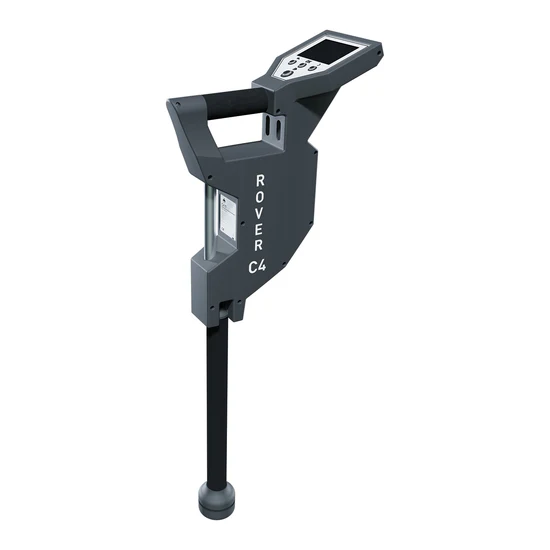
The OKM Rover C4 serves a different market from conventional audio metal detectors. It is a professional 3D ground scanner designed to collect underground measurements and display them through specialized visualization software.
Its operating modes include Magnetometer, 3D Ground Scan, Pinpointer, and Mineral Scan. These functions allow the operator to investigate buried metals, underground voids, and areas containing possible natural gold mineralization.
OKM states that the Rover C4 can use interchangeable probes and transfer scan data to Visualizer 3D Studio. The software can help the operator study the estimated position, depth, and dimensions of underground anomalies.
Best applications:
- Large buried treasure objects.
- Underground chambers.
- Tunnels and graves.
- Archaeological anomalies.
- Natural gold-bearing zones.
- Professional ground surveys.
Main advantages:
- 3D ground visualization.
- Metal and void investigation.
- Mineral Scan mode.
- Interchangeable probes.
- Software-based target analysis.
- Suitable for professional survey projects.
Possible limitations:
- Requires structured scan procedures.
- More expensive than conventional hobby detectors.
- Results depend heavily on operator skill.
- Not suitable for fast recreational coin hunting.
The Rover C4 is the recommended model in this comparison for professional users who need to investigate underground structures rather than simply receive an audio signal.
Key Features and Technologies
The best detector cannot be selected without understanding the main technologies used in current models.
Simultaneous Multi-Frequency
Simultaneous multi-frequency detectors transmit or process several frequencies during the same search.
This technology provides several practical advantages:
- Improved operation across different target conductivities.
- Better adaptation to changing ground.
- Strong performance on wet salt beaches.
- Good sensitivity to coins, jewelry, and relics.
- Reduced need to choose one fixed frequency.
The MANTICORE, DEUS II, LEGEND 2, and Vortex VX9 all use modern frequency systems, although each manufacturer applies different signal processing, audio, and identification methods.
Selectable Single Frequencies
Some detectors allow users to choose one operating frequency. Lower frequencies may favor larger or higher-conductive targets, while higher frequencies can improve sensitivity to small or low-conductive objects.
Selectable frequencies are useful when the operator understands the expected target and ground conditions.
Pulse Induction
Pulse induction technology is commonly recommended for:
- Natural gold.
- Mineralized soil.
- Black sand.
- Saltwater environments.
- Large metallic targets.
- Difficult ground where VLF detectors become unstable.
PI detectors may provide less detailed discrimination than advanced multi-frequency machines. Their value comes from ground stability and specialist performance.
Buyers comparing pulse and frequency-based systems can read VLF vs PI metal detectors within the wider metal-detection guide.
3D Ground Scanning
A 3D ground scanner measures changes within a structured search area. Software processes the data and displays underground anomalies.
It can support investigations involving:
- Buried metallic objects.
- Cavities.
- Tunnels.
- Chambers.
- Graves.
- Cellars.
- Natural mineralization.
The displayed result is not a photograph. It is a graphical interpretation based on collected measurements, soil settings, and scanning technique.
Target Identification
Target identification helps estimate whether an object may be iron, aluminum, silver, gold, or another conductive material.
Identification accuracy can be affected by:
- Target depth.
- Corrosion.
- Nearby objects.
- Soil mineralization.
- Target orientation.
- Search frequency.
- Coil movement.
Experienced users normally combine the identification number with audio quality, signal repeatability, depth information, and search direction.
Depth Performance and Accuracy
The most common mistake in detector reviews is comparing devices using one advertised depth number.
A detector does not provide the same depth for every target. A large metal container creates a much stronger signal than a small coin, thin chain, or natural gold flake.
| Performance Factor | Effect on Detection |
|---|---|
| Target size | Larger objects are usually detectable deeper |
| Metal conductivity | Different metals produce different responses |
| Target orientation | Flat and favorably positioned targets may respond more clearly |
| Soil mineralization | Heavy mineralization can reduce stability |
| Coil size | Larger coils favor coverage and large targets |
| Frequency | Different frequencies suit different target sizes |
| Surface trash | Shallow metal can mask deeper objects |
| Moisture and salt | Wet salt ground challenges unsuitable detectors |
| Search speed | Excessive speed may weaken responses |
| Operator experience | Correct settings and technique improve accuracy |
A trustworthy review should explain what the detector is intended to find instead of presenting an unsupported maximum-depth claim.
The deepest detector is not automatically the most accurate. A machine that provides stable identification at a moderate depth may offer better value for coin hunting than a specialist deep detector with limited discrimination.
Best Uses: Gold, Treasure, Coins, Beach
Best Rated Detector for Coins
The Minelab MANTICORE is the leading premium option for experienced coin hunters who need advanced identification and strong separation.
The Garrett Vortex VX9 is a more accessible alternative for users who want modern target information and an upgradeable platform.
Best Rated Detector for Relics
The XP DEUS II is a strong relic-hunting choice because of its rapid recovery, lightweight construction, and performance in iron-contaminated historical sites.
The LEGEND 2 is also suitable for relic hunters seeking a dedicated mode at a lower general investment level.
Best Rated Detector for Beaches
The MANTICORE, DEUS II, LEGEND 2, and Vortex VX9 all provide beach-focused options.
The final selection should consider:
- Saltwater stability.
- Waterproof depth.
- Detector weight.
- Coil size.
- Target identification.
- Underwater audio accessories.
Best Rated Detector for Natural Gold
The Garrett Axiom is the specialist pulse induction recommendation in this comparison.
For buyers comparing other gold-focused systems, Top Rated Gold Detectors Comparison Klayzer Max 2D vs KS-900 provides a separate technology comparison.
Best Rated Detector for Deep Treasure
The OKM Rover C4 is recommended when the search involves underground anomalies, large treasure targets, or possible cavities.
A conventional MANTICORE or DEUS II is more suitable for coins and relics but cannot provide the same 3D survey information.
Best Rated Entry-Level Direction
New buyers should avoid selecting a detector only because experts rate it highly. An advanced machine may include controls that a beginner does not yet need.
The comparison Best Entry Level Metal Detector Titan X13 vs Titan GER-1000 explains another route for buyers evaluating introductory treasure-detection systems.
Price Range and Value Comparison
Because detector packages, accessories, currencies, shipping costs, and regional taxes change, this comparison uses general investment categories rather than fixed prices.
| Detector | General Investment Level | Best Value For |
|---|---|---|
| Minelab MANTICORE | Premium | Advanced all-terrain detecting |
| XP DEUS II | Premium | Lightweight wireless performance |
| Nokta LEGEND 2 | Mid-range to upper mid-range | Multi-frequency versatility |
| Garrett Vortex VX9 | Mid-range | Advanced features and upgrade potential |
| Garrett Axiom | Premium specialist | Natural gold and mineralized ground |
| OKM Rover C4 | High professional | 3D treasure and cavity investigation |
A complete price comparison should include:
- Control unit.
- Search coil.
- Wireless headphones.
- Batteries and charger.
- Protective covers.
- Carrying case.
- Additional coils.
- Software.
- Training.
- Shipping.
- Warranty support.
The lowest price is not always the best value. A buyer who later needs a second detector or several additional coils may spend more than someone who selected the correct package initially.
Pros and Cons of Leading Options
| Model | Main Pros | Main Cons |
|---|---|---|
| Minelab MANTICORE | Powerful multi-frequency system, detailed identification, strong versatility | Premium cost and advanced controls |
| XP DEUS II | Lightweight, wireless, fast, waterproof, effective in iron | Package selection and menu learning |
| Nokta LEGEND 2 | Modern features, several modes, waterproof, good value | Not intended for extreme-depth treasure |
| Garrett Vortex VX9 | Flexible platform, useful target information, beach performance | Less specialized than premium and PI systems |
| Garrett Axiom | Strong PI gold performance and mineralized-ground stability | Limited conventional target discrimination |
| OKM Rover C4 | 3D scans, cavities, minerals, deep underground analysis | High investment and training requirements |
How to Choose the Right Device
Choose by Target
Use the expected target as the first filter.
| Main Target | Recommended Detector Type |
|---|---|
| Coins and jewelry | Multi-frequency or advanced VLF |
| Historical relics | Fast-recovery multi-frequency |
| Natural gold | Gold-focused PI or high-frequency detector |
| Wet beaches | Waterproof multi-frequency or suitable PI |
| Deep metallic treasure | Deep pulse or professional scanner |
| Tunnels and cavities | 3D ground scanner |
Choose by Experience
Beginners normally benefit from:
- Automatic ground balance.
- Clear search modes.
- Simple target identification.
- Moderate weight.
- Limited menu complexity.
Experienced users may prefer:
- Manual ground controls.
- Custom audio.
- Adjustable recovery speed.
- Detailed discrimination patterns.
- Multiple frequency options.
- Specialized coils.
Choose by Ground Conditions
Highly mineralized soil may require pulse induction or a detector with strong ground-balancing capability.
Wet salt beaches require technology specifically designed to control conductive salt signals.
Iron-contaminated historical sites require rapid recovery and effective target separation.
Choose by Search Duration
A powerful detector can become impractical if it is too heavy for the user.
Compare:
- Detector weight.
- Shaft balance.
- Battery runtime.
- Collapsed transport size.
- Headphone comfort.
- Search-coil weight.
Choose by Support
The highest rated detector may still be a poor purchase if the buyer cannot access technical support, original accessories, updates, or warranty service.
Before ordering, confirm:
- Product originality.
- Serial verification.
- Manufacturer warranty.
- Available training.
- Software updates.
- Replacement parts.
- Compatible search coils.
- Technical assistance.
Common Buying Mistakes to Avoid
Trusting Star Ratings Without Context
A five-star review from a beach hunter may not help a buyer searching for natural gold in mineralized mountains.
Choosing the Most Expensive Detector
A premium general-purpose model cannot replace a specialist 3D scanner or professional gold PI detector.
Expecting One Detector to Do Everything
Coins, small nuggets, large treasure, and empty cavities require different technologies.
Ignoring Detector Weight
Heavy or poorly balanced equipment can reduce search time and scanning consistency.
Buying the Wrong Coil
A large coil may increase coverage and large-target depth but reduce sensitivity to very small objects.
Ignoring Software Updates
Firmware updates may improve audio, stability, target separation, accessory support, or search modes.
Using Maximum Sensitivity Everywhere
Excessive sensitivity can create unstable operation and false signals. Stable settings often produce more useful field performance.
Buying Without Training
Professional systems can provide poor results when scanning paths, ground settings, or target analysis are incorrect.
Final Recommendation and FAQs
The best rated metal detectors in 2026 should be selected by application rather than one universal ranking.
The Minelab MANTICORE is the best overall premium recommendation for coins, jewelry, relics, and beach detecting.
The XP DEUS II is the strongest choice for buyers prioritizing low weight, wireless operation, fast recovery, and all-terrain performance.
The Nokta LEGEND 2 offers an attractive balance between modern multi-frequency technology and commercial value.
The Garrett Vortex VX9 is recommended for buyers who want detailed target information, waterproof performance, and an upgradeable system.
The Garrett Axiom is the specialist choice for natural gold and mineralized soil.
The OKM Rover C4 is the professional recommendation for 3D ground scanning, underground structures, deep treasure, and cavities.
Before purchasing, contact Goldot-Tec with details about your target, ground, country, experience, and preferred budget category. The correct recommendation should be based on the search project rather than a general online rating.
What are the best rated metal detectors in 2026?
The leading options depend on the target. The Minelab MANTICORE is a strong overall detector, the XP DEUS II is suitable for lightweight all-terrain detecting, the Garrett Axiom specializes in natural gold, and the OKM Rover C4 supports professional 3D scanning.
Which detector is best for coins and jewelry?
The Minelab MANTICORE, XP DEUS II, Nokta LEGEND 2, and Garrett Vortex VX9 are all suitable. The best choice depends on budget, experience, weight preference, and search environment.
Which top rated metal detector is best for gold?
The Garrett Axiom is a pulse induction detector designed for natural-gold prospecting. Multi-frequency models can detect small gold, but a specialist gold detector is usually preferable for serious prospecting.
What is the best rated detector for beach use?
Waterproof multi-frequency detectors such as the MANTICORE, DEUS II, LEGEND 2, and Vortex VX9 are suitable options. Confirm the manufacturer’s waterproof limits before underwater use.
Can a highly rated coin detector find deep treasure?
It may detect metallic objects, but conventional coin detectors are not designed to replace large-coil deep detectors or professional 3D scanners.
Are online metal detector ratings reliable?
They are useful when the reviewer explains the target, soil, settings, and experience. Ratings without search context should not be the only reason for purchasing.
Do expensive detectors always detect deeper?
No. Depth depends on technology, target size, coil, soil, and settings. A more expensive detector may offer better identification, software, construction, or specialist functions rather than greater depth on every target.
How do I choose from the top 10 metal detectors?
First remove any detectors that do not match your target or ground. Then compare technology, weight, waterproofing, coils, learning requirements, warranty, and complete package value.