

Choosing the most powerful metal detector in 2026 requires more than comparing advertised depth numbers. Detector power may refer to the ability to locate a large object at extreme depth, identify small natural gold in mineralized soil, create a 3D underground image, distinguish valuable metals from iron, or remain stable in saltwater and difficult ground.
A detector that performs exceptionally well on a large treasure cache may not be the best option for small coins or gold nuggets. Similarly, a professional 3D scanner can reveal underground anomalies and cavities, but it requires a different operating method from a conventional pulse induction or VLF detector.
This depth buying guide compares leading professional detectors according to their technology, target suitability, field performance, advantages, limitations, and overall value. It will help buyers choose a device based on real search requirements rather than marketing claims.
Top Detector Models to Consider
The following comparison focuses on different forms of detection power rather than ranking every detector by one depth claim.
| Detector | Main Technology | Strongest Capability | Best Application |
|---|---|---|---|
| OKM eXp 7000 Pro Plus | 3D ground scanning and multi-frequency VLF | Advanced underground imaging and multiple search modes | Treasure, cavities, tunnels, minerals, and professional surveys |
| Lorenz Deepmax Z2 | Pulse Ground Balancing System | Deep detection of large ferrous and non-ferrous metals | Large caches, relics, archaeological targets, and deep metal |
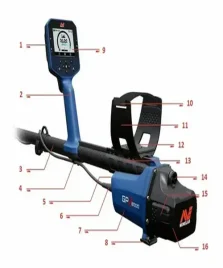
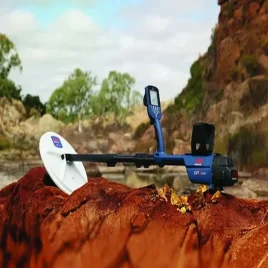
| Minelab GPZ 8000 | GeoZVT gold technology | Deep natural gold detection in challenging soil | Professional gold prospecting |
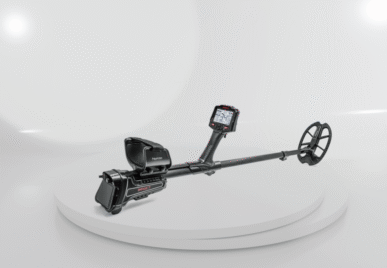
| Nokta Deephunter 3D | Multi-system deep detection | Deep treasure and cavity detection | Treasure caches, voids, coins, and precious metals |
| Nokta Invenio Pro | Smart detection and imaging | Target shape, position, depth, and dimensional analysis | Professional treasure investigation and target imaging |
| Garrett ATX Deepseeker | Pulse induction | Stable searching in mineralized soil and saltwater | Gold, relics, beaches, caches, and difficult ground |
OKM eXp 7000 Pro Plus
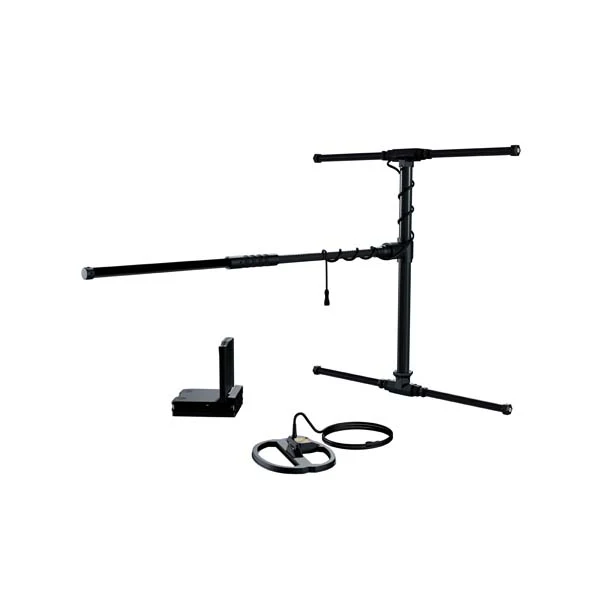
The OKM eXp 7000 Pro Plus is a premium professional system designed for buyers who need several detection technologies within one platform. It combines multi-sensor 3D ground scanning with multi-frequency VLF detection and specialist modes for different underground targets.
Its available operating modes include 3D Ground Scan, 3D VLF Scan, VLF Search, Magnetometer, Mineral Scan, Tunnel Scan, Live Scan, and Pinpointer. These modes allow the operator to investigate metallic targets, natural mineralization, cavities, tunnels, and general underground anomalies.
OKM states that its 3D Ground Scan can investigate underground structures to significantly greater depths than its conventional VLF search mode. The exact result depends on target size, soil conditions, sensor selection, and scan quality.
The system is especially powerful because it does not depend on one search method. An operator can first remove surface iron interference using Magnetometer mode, perform a structured 3D scan, and then analyze the collected data before excavation.
Best for: Professional treasure hunting, archaeological surveys, tunnel detection, cavity investigation, natural mineral zones, and large underground anomalies.
Main advantage: Multiple detection and imaging technologies in one professional package.
Main limitation: The system requires training, consistent scanning technique, and accurate interpretation of 3D data.
Lorenz Deepmax Z2
The Lorenz Deepmax Z2 is one of the strongest choices for buyers whose priority is maximum practical depth on large metallic targets. It uses a Pulse Ground Balancing System designed to provide stable performance in difficult soil while detecting both ferrous and non-ferrous metals.
Its ability to operate with different search coils is central to its power. Large frame coils create a wider and deeper magnetic field for substantial buried objects, while smaller coils improve sensitivity to individual coins, nuggets, and smaller targets.
The manufacturer explains that larger coils provide greater depth on large objects but reduce sensitivity to small targets. The detector also includes metal analysis functions and can be paired with data-logging tools to produce mapped survey results.
This makes the Lorenz Deepmax Z2 particularly valuable for searching large open areas where the expected targets may include buried containers, military objects, statues, large relics, or treasure caches.
Best for: Large deep metals, buried caches, archaeological objects, battlefield relics, and professional area surveys.
Main advantage: Powerful pulse performance combined with flexible small and large coil configurations.
Main limitation: It is primarily a metal detector. Full mapping and visualization require additional data-logging hardware and software.
Minelab GPZ 8000
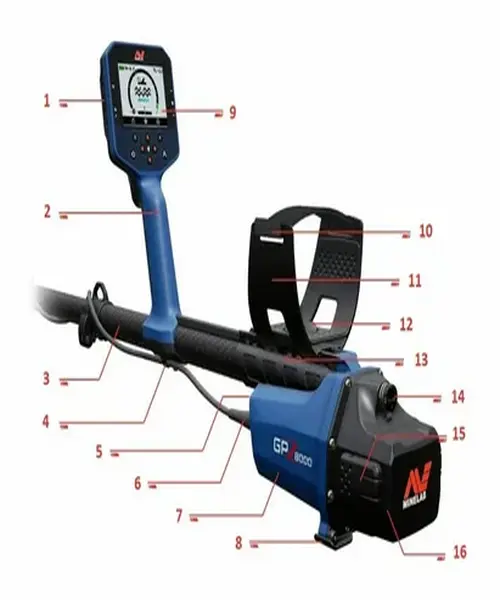
The Minelab GPZ 8000 is a specialized gold detector designed for serious natural gold prospecting. Its power should not be compared directly with a cavity scanner because it serves a different purpose.
Minelab uses GeoZVT technology and a range of Z-Set coils designed for different ground conditions, target sizes, and prospecting environments. Available coil options prioritize maximum depth, electromagnetic stability, or sensitivity to different gold sizes.
The manufacturer describes the GPZ 8000 as its flagship gold detector and states that its ground-optimized detection is designed to improve depth on small through large gold targets in challenging terrain.
For prospectors working in highly mineralized ground, selecting the correct coil and ground mode may provide more useful performance than purchasing a general deep treasure detector.
Best for: Natural gold nuggets, deep gold prospecting, mineralized ground, and professional prospecting projects.
Main advantage: Highly specialized technology for finding gold across different target sizes and soil conditions.
Main limitation: It is not designed to create 3D images or identify non-metallic tunnels and cavities.
Nokta Deephunter 3D
The Nokta Deephunter 3D combines conventional coin and precious-metal searching with a dedicated deep treasure mode. This makes it suitable for users who need to search for both smaller objects and large underground targets.
Its deep mode can detect metallic targets and underground voids. The standard deep-search coil is intended for buried treasure and anomalies, while a larger optional coil can improve coverage and depth on substantial targets.
Nokta explains that the detector’s non-motion deep mode can detect precious metals and cavities, with larger coils intended for greater depth on larger targets.
The Deephunter 3D is therefore a practical option for buyers who do not want to purchase completely separate detectors for surface objects and deep treasure searching.
Best for: Treasure caches, coins, jewelry, precious metals, caves, cellars, and underground voids.
Main advantage: Combines deep searching and general metal detection within one multi-purpose system.
Main limitation: Its imaging and survey capabilities are less advanced than dedicated professional 3D ground scanners.
Nokta Invenio Pro
The Nokta Invenio Pro is powerful because of the amount of information it provides about a detected target. It uses a smart imaging system that tracks coil movement and converts collected signals into visual target information.
The device can estimate the target’s position, depth, shape, length, width, and dimensions. It can also display underground anomalies and cavities, helping the operator evaluate the target before excavation.
Nokta’s official product information states that the Invenio Pro can display the shape and dimensions of metals, estimate target depth, and identify ground anomalies or cavities.
This does not mean the system takes a photographic image underground. It creates an interpreted visualization based on detected signals and positional data. Careful scanning remains necessary for dependable results.
Best for: Target analysis, professional treasure hunting, metal discrimination, cavity searches, and pre-excavation investigation.
Main advantage: Provides significantly more target information than a standard audio-only detector.
Main limitation: The system is more complex and requires structured scanning and correct interpretation.
Garrett ATX Deepseeker
The Garrett ATX is a pulse induction detector built for demanding prospecting and relic-hunting conditions. The Deepseeker package adds a large search coil intended for larger and deeper targets.
Garrett’s documentation states that the ATX was designed for extremely mineralized ground and saltwater environments. Its large Deepseeker coil can also support cache hunting and deep relic searches.
This makes it a strong option for operators who search in deserts, black sand, wet beaches, historical areas, or locations where conventional detectors struggle with ground signals.
Best for: Mineralized soil, saltwater beaches, natural gold, deep relics, and large caches.
Main advantage: Stable pulse induction performance in difficult ground conditions.
Main limitation: It does not provide the detailed 3D visualization available from dedicated ground scanners.
Key Features and Technologies
The power of a detector is produced by its complete system, not by one specification.
Pulse Induction Power
Pulse induction detectors transmit strong magnetic pulses and measure how conductive targets respond after each pulse. This technology is commonly used for deep metal searching, natural gold prospecting, and mineralized ground.
PI detectors are generally suitable for:
- Large metal objects at depth.
- Natural gold in difficult soil.
- Saltwater beaches.
- Black sand.
- Historical relics.
- Areas with heavy mineralization.
Their main limitation is that discrimination between valuable and unwanted metals may be less detailed than on advanced VLF systems.
The VLF vs PI Metal Detectors – Which Technology Wins for Gold? guide explains the practical differences between the two technologies.
VLF Search Technology
VLF detectors are commonly selected for coins, jewelry, relics, and relatively small metallic targets. They often provide detailed target identification and effective rejection of unwanted metals.
Modern VLF systems may use one frequency, selectable frequencies, or simultaneous multi-frequency operation. The most suitable configuration depends on target conductivity, soil conditions, and search depth.
VLF detectors can be very powerful for target separation and discrimination, but heavy ground mineralization may limit their effective depth.
3D Ground Scanning
A 3D ground scanner measures changes beneath a defined search area. The collected measurements are processed by software to create a visual representation of anomalies.
This technology is suitable for locating:
- Large buried metal objects.
- Treasure chests.
- Tunnels.
- Chambers.
- Graves.
- Foundations.
- Cavities.
- Mineralized zones.
The quality of the scan depends on consistent line spacing, walking speed, sensor direction, field dimensions, and soil settings. A powerful scanner operated incorrectly can produce misleading results.
Smart Target Imaging
Smart imaging systems use the detector’s target signals together with the coil’s position and movement. They may estimate the target’s shape, dimensions, location, and depth.
These systems provide more information than a conventional detector, but buyers should not treat the displayed result as a direct underground photograph.
Search Coil Configuration
Coil size has a major effect on detector performance.
| Coil Type | Primary Benefit | Main Trade-Off |
|---|---|---|
| Small coil | Sensitivity to small targets and improved separation | Reduced coverage and depth on large objects |
| Medium coil | Balanced depth, sensitivity, and handling | Does not maximize either extreme |
| Large coil | Greater coverage and depth on large targets | Lower sensitivity to small objects |
| Frame coil | Deep searching for large objects across open ground | Requires more space and may need two operators |
| Double-D coil | Improved stability and coverage in mineralized soil | Target response differs from concentric coils |
A maximum-depth metal detector should be configured for the expected target rather than fitted automatically with the largest available coil.
Depth Performance and Accuracy
Detector depth is always relative. A large metal container may be detected much deeper than a coin, ring, or small gold nugget.
The following factors influence practical depth:
| Depth Factor | How It Affects Results |
|---|---|
| Target size | Larger objects usually generate stronger responses |
| Metal type | Conductivity and composition affect the signal |
| Target orientation | Position in the ground can strengthen or weaken detection |
| Soil mineralization | Strong ground signals may mask targets |
| Coil size | Large coils favor large deep objects |
| Search frequency | Different frequencies respond differently to target sizes |
| Ground balance | Incorrect settings may reduce stability and depth |
| Electromagnetic interference | Power lines and electronics can create noise |
| Surface metal | Shallow waste can hide deeper targets |
| Operator skill | Poor scanning technique reduces accuracy |
Buyers should be cautious when a seller promises the same maximum depth for every target. Responsible comparisons should state the target size, soil, coil, settings, and test conditions.
Best Uses: Gold, Treasure, Coins, Beach
Most Powerful for Large Treasure Targets
The Lorenz Deepmax Z2 is a leading option for large metallic objects because it supports large frame coils and uses a pulse ground-balancing system.
The device is especially suitable when the expected target is a substantial metal cache rather than individual coins.
Most Powerful for Professional 3D Scanning
The OKM eXp 7000 Pro Plus provides the most complete combination of imaging and search modes in this comparison.
It is suitable when the operator must investigate metals, mineralized zones, tunnels, and cavities within the same project.
Buyers focusing on German detection technology can read Gold Detector Made in Germany Discover Most Powerful Devices.
Most Powerful for Natural Gold
The Minelab GPZ 8000 is the specialist recommendation for serious natural gold prospecting.
Its technology and coil options are designed around gold targets and difficult ground rather than general treasure imaging.
Most Powerful for Target Visualization
The Nokta Invenio Pro is suitable for users who want estimated target shape, dimensions, position, and depth while searching.
Most Versatile for Treasure and Cavities
The Nokta Deephunter 3D provides a useful combination of deep treasure searching, cavity detection, and general-purpose metal detection.
Most Powerful for Beaches and Difficult Soil
The Garrett ATX Deepseeker is a practical choice for saltwater, black sand, mineralized ground, deep relics, and large targets.
Price Range and Value Comparison
The price of a professional detector depends on the package, coils, sensors, software, accessories, shipping destination, taxes, training, and technical support.
| Detector | Investment Level | Best Value When |
|---|---|---|
| OKM eXp 7000 Pro Plus | Ultra-premium | Several scanning technologies are required |
| Lorenz Deepmax Z2 | Premium professional | Maximum depth on large metal is the priority |
| Minelab GPZ 8000 | Ultra-premium specialist | The project focuses primarily on natural gold |
| Nokta Deephunter 3D | Professional | One system is needed for treasure and cavities |
| Nokta Invenio Pro | Premium imaging | Target visualization is important before digging |
| Garrett ATX Deepseeker | Upper professional | Difficult soil and pulse induction stability are required |
Live prices should be confirmed before ordering because packages and accessories may change. A low initial price may not represent good value if the buyer later needs additional coils, software, or a second detector.
The Your Comprehensive Guide to Metal Detector Price and Investment provides more information about calculating the complete purchase cost.
Pros and Cons of Leading Options
| Detector | Main Advantages | Main Disadvantages |
|---|---|---|
| OKM eXp 7000 Pro Plus | Multiple modes, advanced 3D imaging, mineral and tunnel scanning | High investment and requires training |
| Lorenz Deepmax Z2 | Excellent large-target depth, flexible coils, stable pulse technology | Full mapping requires extra equipment |
| Minelab GPZ 8000 | Specialized deep gold performance and ground optimization | Limited to metal and gold prospecting applications |
| Nokta Deephunter 3D | Treasure, cavity, coin, and precious-metal modes | Less advanced imaging than dedicated scanners |
| Nokta Invenio Pro | Displays target shape, dimensions, location, and depth | More complex than traditional detectors |
| Garrett ATX Deepseeker | Strong mineralized-ground and saltwater performance | Heavy configurations and limited visual analysis |
How to Choose the Right Device
The right detector should be chosen by answering several practical questions.
Define the Main Target
Choose whether the priority is:
- Natural gold.
- Coins and jewelry.
- Large treasure caches.
- Archaeological metal objects.
- Tunnels and cavities.
- Beach targets.
- Military relics.
- General underground surveys.
Trying to purchase one detector for every possible target often results in paying for features that will not be used.
Evaluate the Search Ground
Mineralized deserts, wet beaches, rocky terrain, farmland, mountains, and archaeological sites create different challenges.
Pulse induction may be preferable in highly mineralized or salty ground, while VLF may provide better discrimination in cleaner locations containing coins and jewelry.
Decide Whether Imaging Is Necessary
A conventional detector may be enough when the user only needs to locate metal. A 3D scanner becomes valuable when the project requires information about target dimensions, underground structures, or cavities.
Consider Operator Experience
Professional scanners and imaging systems require greater field discipline than ordinary audio detectors.
New operators should evaluate whether training, technical support, and scan-analysis assistance are included with the purchase.
Compare the Complete Package
Check which coils, probes, software, batteries, chargers, cases, and accessories are included. Two quotations for the same detector may represent very different packages.
For additional model-selection advice, read the Ultimate guide to professional gold metal detectors.
Common Buying Mistakes to Avoid
Choosing by Advertised Depth Only
Maximum depth without a stated target size or soil condition provides little useful information.
Using the Largest Coil for Every Search
Large coils improve performance on large objects but may reduce sensitivity to coins and small nuggets.
Confusing Metal Detection with Cavity Detection
A metal detector responds to conductive targets. Detecting an empty tunnel or chamber may require specialized ground-scanning technology.
Expecting a 3D Scanner to Show a Photograph
Scanning software creates a visualization based on measured signals. It does not produce a camera image of the buried object.
Ignoring Ground Conditions
A detector that performs well in clean soil may become unstable in mineralized ground or wet saltwater sand.
Buying Without Technical Support
Professional systems may require software setup, calibration, training, and scan interpretation. Support should be considered part of the product’s value.
Selecting a Detector for Too Many Applications
A specialized gold detector may outperform a multi-purpose machine on natural nuggets, while a dedicated scanner will provide better cavity information.
Final Recommendation and FAQs
The most powerful metal detector depends on what type of power the buyer needs.
For maximum practical depth on large metallic targets, the Lorenz Deepmax Z2 is the strongest specialist recommendation.
For professional 3D imaging, underground structures, mineral zones, and cavities, the OKM eXp 7000 Pro Plus provides the broadest detection platform.
For deep natural gold prospecting, the Minelab GPZ 8000 offers a specialized system designed for challenging goldfields.
For treasure and cavity detection in one versatile package, the Nokta Deephunter 3D is a practical commercial choice.
For detailed target visualization, the Nokta Invenio Pro provides valuable information about target shape, position, dimensions, and estimated depth.
For saltwater beaches and heavily mineralized ground, the Garrett ATX Deepseeker offers strong pulse induction stability.
Before ordering, buyers should provide Goldot-Tec with information about the expected target, soil conditions, country of use, required depth, and previous detecting experience. This allows the team to recommend the appropriate detector package instead of relying on one general ranking.
What is the most powerful metal detector in 2026?
There is no single model that is most powerful for every target. The Lorenz Deepmax Z2 is highly capable for large deep metals, the Minelab GPZ 8000 specializes in natural gold, and the OKM eXp 7000 Pro Plus is suitable for professional 3D underground scanning.
Which metal detector provides the greatest depth?
Large-target depth depends on the target’s dimensions, metal composition, soil, coil size, and detector settings. Pulse systems with large frame coils are usually selected when substantial buried metal is the primary target.
Can a metal detector reach the same depth on gold and iron?
No. Different metals, target sizes, shapes, and orientations produce different signals. A large iron object may be detected much deeper than a small gold ring or nugget.
What is the best maximum-depth metal detector for treasure?
The Lorenz Deepmax Z2 is a strong option for large metallic treasure caches. Buyers who also need 3D visualization or cavity detection should consider the OKM eXp 7000 Pro Plus or Nokta Invenio Pro.
What is the most powerful detector for natural gold?
The Minelab GPZ 8000 is a specialist option for serious gold prospecting, particularly in challenging and mineralized ground.
Are 3D ground scanners more powerful than pulse detectors?
They provide different capabilities. Pulse detectors are powerful for locating metal, while 3D scanners provide visual information about underground anomalies, large targets, and possible cavities.
Can a deep metal detector find tunnels?
A conventional metal detector cannot reliably locate an empty non-metallic tunnel. Tunnel detection normally requires a ground scanner or another geophysical system designed to identify underground structural changes.
How much does the most powerful professional detector cost?
The total cost depends on the detector, package, coils, sensors, software, training, shipping, and applicable taxes. Buyers should request a current quotation for the complete configuration.