

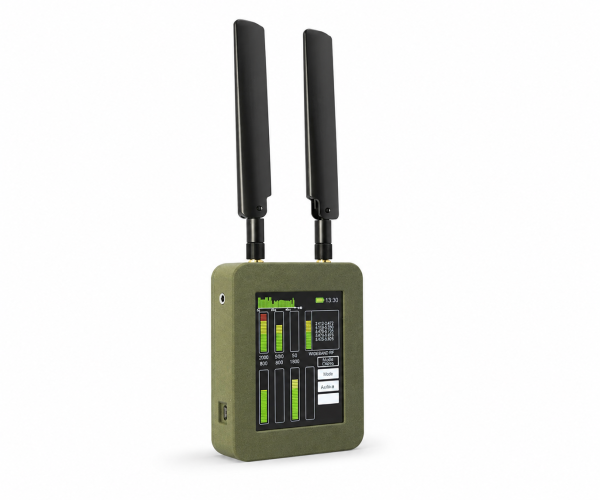
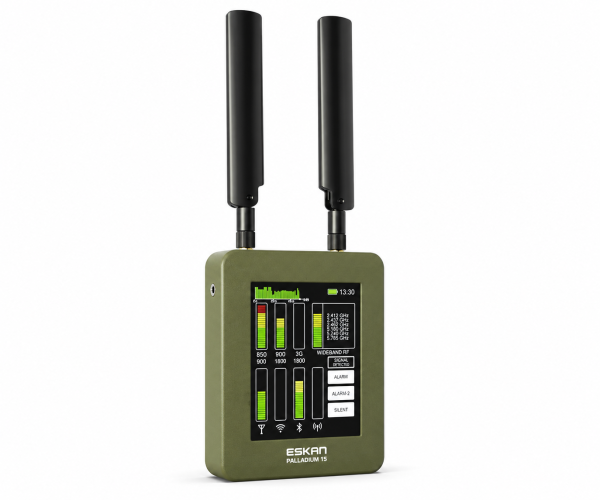
Researching the Eskan Palladium 15 in 2026 should begin with one question that is more important than advertised detection depth, accuracy, or price: what exactly is the product, and where are its technical specifications documented?
At the time of this review, Goldot-Tec’s current imaging-system catalog does not provide a dedicated product page for the Eskan Palladium 15 among the systems reviewed. Goldot currently lists professional imaging and subsurface products from brands and product families such as OKM, KS Analysis, Proton Elic, Ground Tech, Geo Ground, and other manufacturers, but no Palladium 15 listing with a technical specification table, current price, package, software, or documented scanning method was available in the reviewed catalog.
That means buyers should not assume that descriptions found elsewhere—such as a fixed detection depth, 3D imaging capability, multi-frequency operation, metal discrimination, or a particular price—are confirmed by Goldot-Tec.
Instead, this Eskan Palladium 15 buying guide focuses on verification: determining the exact system, understanding the intended project, requesting documentation, evaluating seller claims, and comparing the product with systems whose underground-imaging functions are clearly documented.
Eskan Palladium 15: What to Evaluate First
Before comparing the Eskan Palladium 15 with any ground scanner or metal detector, establish its exact product identity.
A professional product listing should provide enough information to identify:
- Manufacturer
- Exact model name
- Product category
- Operating technology
- Sensor or antenna configuration
- Intended targets
- Search method
- Display or software system
- Package contents
- Warranty process
- Service availability
Goldot separates detection equipment into clearly different categories, including imaging detectors, gold and nugget detectors, electromagnetic systems, water detectors, long-range systems, and hybrid systems.
This matters because a device should not be described as a “3D scanner” simply because it is an electronic detector.
If an Eskan Palladium 15 seller presents the product as an underground imaging system, request documentation specifically showing the sensing technology and how subsurface data is collected and visualized.
If that documentation is unavailable, do not build the buying decision around unsupported claims.
What Goldot-Tec Currently Confirms—and What It Does Not
A useful way to prevent incorrect specifications from entering a buying guide is to separate verified information from missing information.
| Buying Question | Status From Goldot-Tec Review | Recommended Action |
|---|---|---|
| Dedicated Palladium 15 product page | Not found in reviewed catalog | Request exact seller/manufacturer documentation |
| Current Goldot price | Not established | Do not quote an assumed price |
| Detection depth | Not documented by Goldot | Request test conditions |
| 3D ground scanning | Not documented by Goldot | Confirm technology before comparison |
| Metal discrimination | Not documented by Goldot | Request explanation of identification method |
| Operating frequency | Not documented by Goldot | Check technical sheet/manual |
| Included software | Not documented by Goldot | Verify before payment |
| Package contents | Not documented by Goldot | Obtain written package list |
| Model-specific warranty | Not established | Request written warranty terms |
This approach is more useful than repeating generic descriptions such as “high accuracy” or “deep detection.”
Suitable Search Tasks and Project Expectations
The Eskan Palladium 15 should only be evaluated after defining the actual project.
Goldot describes professional 3D imaging systems as equipment designed to gather subsurface measurements and generate visual representations of underground anomalies rather than relying only on conventional audio signals. Its imaging catalog is aimed at applications involving buried anomalies, cavities, treasure-related investigation, archaeological work, and geophysical surveying.
If a seller claims the Eskan Palladium 15 belongs in this category, ask what specific tasks it supports.
Possible project questions include:
- Is the objective locating individual metallic targets?
- Are you investigating large buried structures?
- Is cavity detection required?
- Do you need underground visualization?
- Is the project archaeological?
- Do you need a grid-based ground survey?
- Is the target likely metallic or non-metallic?
- Is a conventional detector sufficient?
These questions prevent buyers from paying for a sophisticated system when a simpler technology would perform the required task more efficiently.
Verify the Detection Method Before Discussing Depth
One of the biggest weaknesses in many detector descriptions is discussing “depth” before explaining how the equipment actually detects a target.
For the Eskan Palladium 15, a responsible buyer should first determine whether the claimed system uses:
- Search coils
- Magnetometers
- Gradiometers
- Ground-penetrating radar
- Electromagnetic sensors
- Multi-sensor scanning
- Another documented method
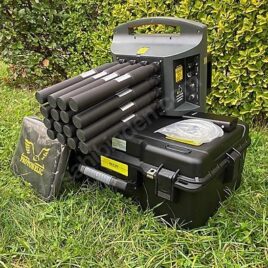
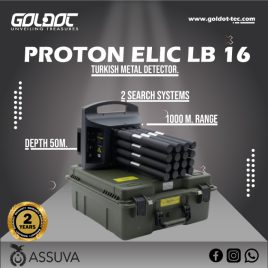
Goldot’s imaging category illustrates how different professional systems can use different technologies. It lists GPR equipment such as OKM Gepard alongside 3D ground scanners such as Rover C4, EXP systems, KS Analysis equipment, Proton Elic LB16, and other imaging platforms.
Two products can both produce an underground visualization while relying on completely different sensing technologies.
Therefore, comparing only the maximum depth can produce a misleading result.
Detection Depth Claims: Questions Buyers Should Ask
There is no Goldot-published Eskan Palladium 15 detection depth available in the information reviewed.
That means this article will not repeat the 30 cm figure contained in earlier draft material or substitute another unsupported number.
When a seller provides a depth figure, ask:
- What target was detected?
- What were the target dimensions?
- Was it metal, a cavity, or another anomaly?
- What soil was used?
- Was the target freshly buried?
- Which sensor or probe was used?
- Was the location known to the operator?
- Was the result repeated?
- Was the depth physically measured?
- Is the result included in official documentation?
Goldot’s own imaging-system information makes an important point: depth can vary significantly according to sensor model, soil composition, and target size.
The same principle should be applied before accepting any Eskan Palladium 15 performance claim.
Preparing Terrain for a Controlled Survey
If documentation confirms that the product is designed for ground scanning, site preparation becomes a major part of obtaining meaningful measurements.
A professional survey should not begin with random walking.
Define the Search Area
Mark the boundaries of the survey before starting.
Record:
- Starting point
- Ending point
- Scan direction
- Approximate dimensions
- Reference landmarks
- Known obstacles
This makes suspicious areas easier to revisit.
Identify Possible Interference
Before scanning, record obvious sources such as:
- Surface metal
- Fences
- Vehicles
- Electrical infrastructure
- Communication equipment
- Buried utilities
- Reinforced concrete
- Large machinery
The purpose is not to assume that every nearby object will cause interference. The purpose is to document conditions that may help explain unusual measurements later.
Running Consistent Scan Passes
If the Eskan Palladium 15 is being sold as a scanning system, ask the seller for the official scan procedure.
Reliable ground scanning generally requires consistent data collection.
Variables that should remain controlled can include:
- Scan direction
- Operator pace
- Sensor height
- Line spacing
- Number of scan lines
- Starting orientation
- Survey dimensions
Changing several variables between passes makes it harder to determine whether a difference comes from the ground or from the scanning method.
Repeat Important Areas
A suspicious result should be rechecked.
A useful process is:
- Complete the original scan.
- Save or record the result.
- Mark the physical location of the anomaly.
- Repeat the survey using the same method.
- Compare the anomaly position.
- Scan from another direction if the documented workflow permits.
- Confirm important targets with another suitable technology.
Repeatability provides stronger evidence than one attractive image.
Reviewing Data Without Overstating the Result
An underground image is not necessarily a photograph of the buried object.
Goldot describes imaging systems as collecting sensor data and processing it into visual information about subsurface anomalies, dimensions, orientation, and possible depth.
Therefore, if an Eskan Palladium 15 seller presents colorful scan graphics, buyers should ask what those colors actually represent.
Important questions include:
- What measurement produces the colors?
- What represents normal soil?
- What indicates metal?
- What indicates a possible cavity?
- Can mineralization produce a similar pattern?
- Does software automatically classify targets?
- How is depth calculated?
- Can the raw data be reviewed?
Avoid treating software colors as guaranteed identification of gold, silver, or archaeological objects unless the documentation supports that interpretation.
Rechecking Anomalies Before Excavation Decisions
The purpose of an imaging system should be to improve decision-making, not remove verification.
If the Eskan Palladium 15 produces a suspicious reading, a sensible workflow would be to verify that area before major excavation.
Depending on the project, confirmation could involve:
- A conventional metal detector
- Pulse induction equipment
- Ground-penetrating radar
- Magnetometer
- Another ground scanner
- Professional geophysical investigation
Goldot offers multiple detector categories precisely because different detection technologies answer different questions.
A conventional detector may confirm whether a metallic target exists near the surface, while a professional imaging system may be more useful for mapping a larger anomaly.
Skills Needed for Reliable Operation
If the Eskan Palladium 15 requires scan interpretation, buyers should consider the learning curve as part of the purchase.
Owning sophisticated equipment does not automatically make the data easy to interpret.
Potential skills include:
- Creating controlled survey grids
- Maintaining consistent scan movement
- Identifying environmental interference
- Saving scan files correctly
- Repeating suspicious areas
- Understanding software controls
- Comparing multiple scans
- Recording physical reference points
Goldot states that professional imaging systems require users to understand scan techniques, software analysis, and data interpretation, and its imaging section promotes training and scan-analysis support for these products.
This makes training an important question before buying any undocumented or less familiar scanning platform.
Package, Training, and Support Questions
Because Goldot does not provide a dedicated Eskan Palladium 15 package listing in the catalog reviewed, buyers should request the package in writing.
Ask whether the purchase contains:
- Main control unit
- Sensor or search probe
- Display device
- Tablet or laptop
- Battery
- Charger
- Carrying case
- Cables
- Software
- Software license
- User manual
- Training
- Warranty documentation
Also ask:
- Is training live or prerecorded?
- Is software installation included?
- Can the seller analyze an initial scan?
- Are spare parts available?
- Where are repairs performed?
- What happens if the software stops working?
- Can batteries be replaced?
- What is the return procedure?
A low device price can become poor value when essential software or accessories must be purchased separately.
Eskan Palladium 15 vs Documented Imaging Options
Because Goldot does not currently provide enough information to construct a technical Palladium 15 comparison, the safest approach is to compare the documentation available—not invent specifications.
Goldot’s current 3D imaging detectors category includes products such as:
- KS 700
- GR4
- GR4 Dual
- OKM EXP 7000
- Rover C4
- OKM Gepard GPR
- Proton Elic LB16
- Fusion Professional
- Evolution NTX Professional
- EXP 5500 Professional
- OKM EXP 6000 Pro
When comparing the Eskan Palladium 15 with one of these systems, use the following framework:
| Comparison Area | What to Verify |
|---|---|
| Technology | Sensor, GPR, magnetometer, coil, or other method |
| Search workflow | Grid scan, continuous scan, sweep, or another method |
| Visualization | 2D, 3D, numerical, or audio |
| Target type | Metal, cavity, structure, geological anomaly |
| Software | Included program and license |
| Display | Built-in screen, tablet, or laptop |
| Training | Included or optional |
| Warranty | Written duration and conditions |
| Parts | Battery, sensors, cables, replacement components |
| Price | Current complete package, not headline device price |
This gives the buyer a factual comparison even when one product has limited documentation.
When a Conventional Detector May Be Better
Not every project needs underground imaging.
If your primary targets are:
- Coins
- Jewelry
- Individual relics
- Small metallic objects
- Shallow recoverable targets
a conventional detector may provide a faster and easier search process.
Goldot’s wider metal detector store includes equipment designed around several different technologies and target types.
Choosing the correct category can save significant money and training time.
A complex scanner only provides value when its additional data is actually required.
Buyer Decision Checklist
Before purchasing an Eskan Palladium 15, confirm all of the following:
- Exact manufacturer identity
- Exact product model
- Official technical sheet
- Intended use
- Detection technology
- Sensor configuration
- Published operating limits
- Scan method
- Calibration procedure
- Software version
- Software license
- Display requirements
- Package contents
- Training availability
- Warranty
- Spare parts
- Repair location
- Return conditions
If the seller cannot answer basic technology and package questions, pause the purchase until the information is documented.
Also verify local requirements before scanning or excavating. Land access, archaeological exploration, underground surveying, and excavation rules can vary by country, protected status, and property ownership. Obtain landowner permission and check the relevant authority where required.
Frequently Asked Questions
Is the Eskan Palladium 15 listed on Goldot-Tec?
A dedicated Eskan Palladium 15 product page was not found in the Goldot imaging and detector catalog reviewed for this article. Therefore, its price and technical specifications should not be attributed to Goldot without a specific current listing.
What is the Eskan Palladium 15 detection depth?
Goldot does not currently provide a documented Palladium 15 depth figure in the reviewed catalog. Any depth claim should therefore be checked against the exact target size, soil conditions, sensor, and official test documentation.
Is Eskan Palladium 15 a 3D ground scanner?
That classification cannot be verified from the current Goldot-Tec information reviewed. Buyers should request documentation showing the detection technology, scan method, software, and output before treating it as an imaging detector.
What should I compare before buying?
Compare detection technology, target type, sensor configuration, software, training, package contents, warranty, spare parts, and seller support. These factors are more useful than comparing only a maximum depth claim.
Should I confirm a scan before excavation?
Yes. A repeatable anomaly provides stronger evidence than one scan. Important areas should be rescanned and, where appropriate, confirmed using another suitable detection or geophysical method before a major excavation decision.
What if I need a clearly documented 3D imaging detector?
Goldot currently lists multiple documented professional imaging systems from brands and product families including OKM, KS Analysis, Proton Elic, Ground Tech, and others. Compare those models by technology and project requirements rather than buying solely from a product name.
Conclusion
The Eskan Palladium 15 requires a verification-first approach in 2026. Goldot-Tec’s current imaging catalog does not provide enough model-specific information to responsibly claim a fixed price, depth, 3D capability, metal discrimination system, frequency, or package configuration for this product.
That lack of documentation does not automatically determine whether the system is suitable or unsuitable. It simply means the buyer should demand more evidence before comparing it with established imaging detectors.
Start by confirming exactly what the Eskan Palladium 15 is designed to detect, which technology it uses, how measurements are collected, what software is required, and what the complete package contains. Then evaluate repeatability, training, technical support, warranty, and replacement-part availability.
If the Eskan Palladium 15 cannot be documented clearly enough for your project, compare it with imaging systems currently listed on Goldot-Tec whose technology, software, specifications, and purchasing conditions are easier to verify.